
Update: Jane wound up using most of my astrophotos below in her July NASA What’s Up podcast. Check it out!
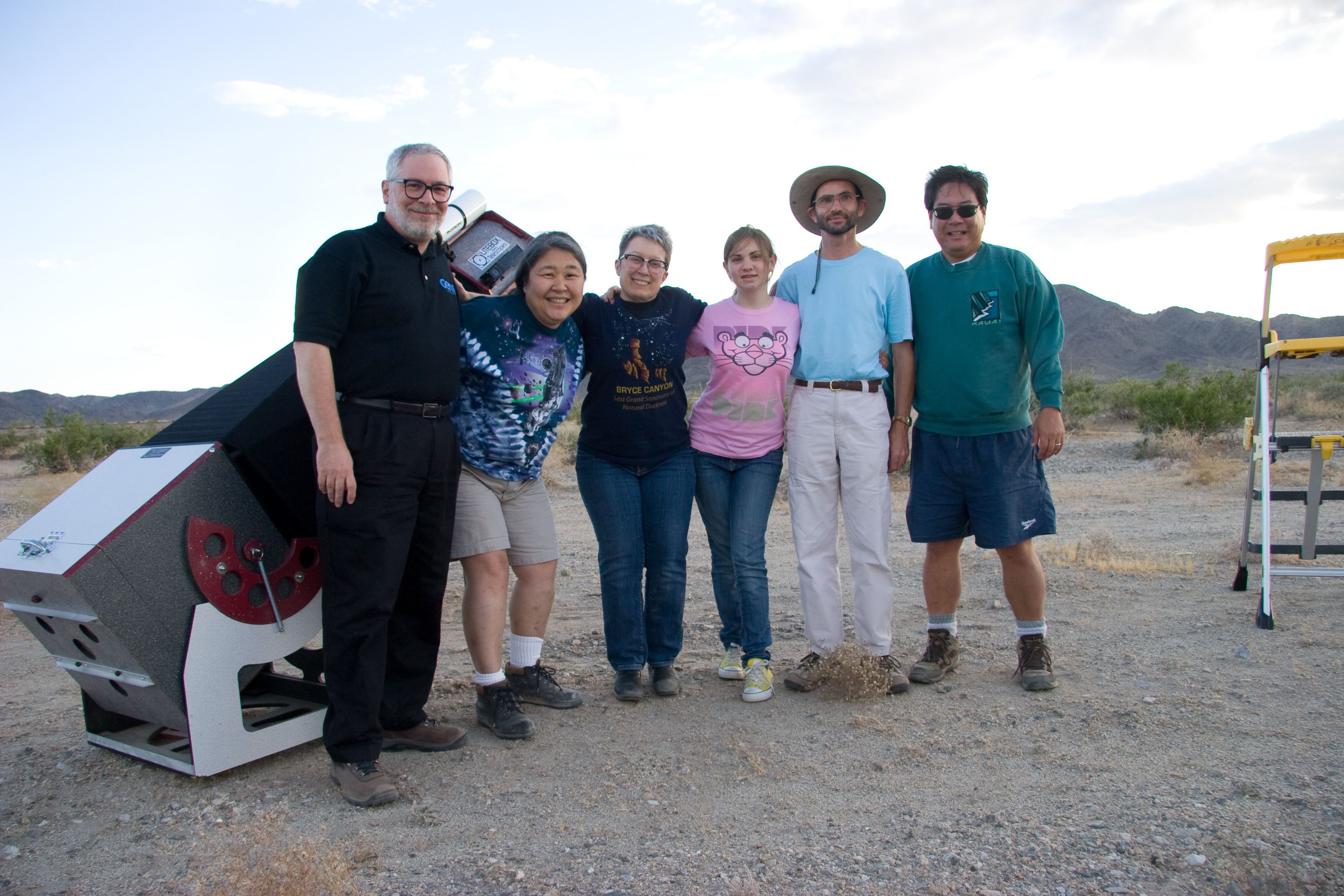
The forecast was for a very temperate desert evening, so six of the Old Town Sidewalk Astronomers headed off to the Colorado Desert to play outside all night. Seeing was forecast poor, but actual conditions seemed much better.
Jane packed her 17.5-inch dob, and I loaded the Astro-Physics Traveler 102mm f/6 refractor to do some astrophotography. The highlight of the evening promised to be comet McNaught 2009R1, but it wouldn’t be available until the pre-dawn hours. That left me with late spring galaxies and summer Milky Way targets. (Jane also had a great target which she’ll be writing about!)
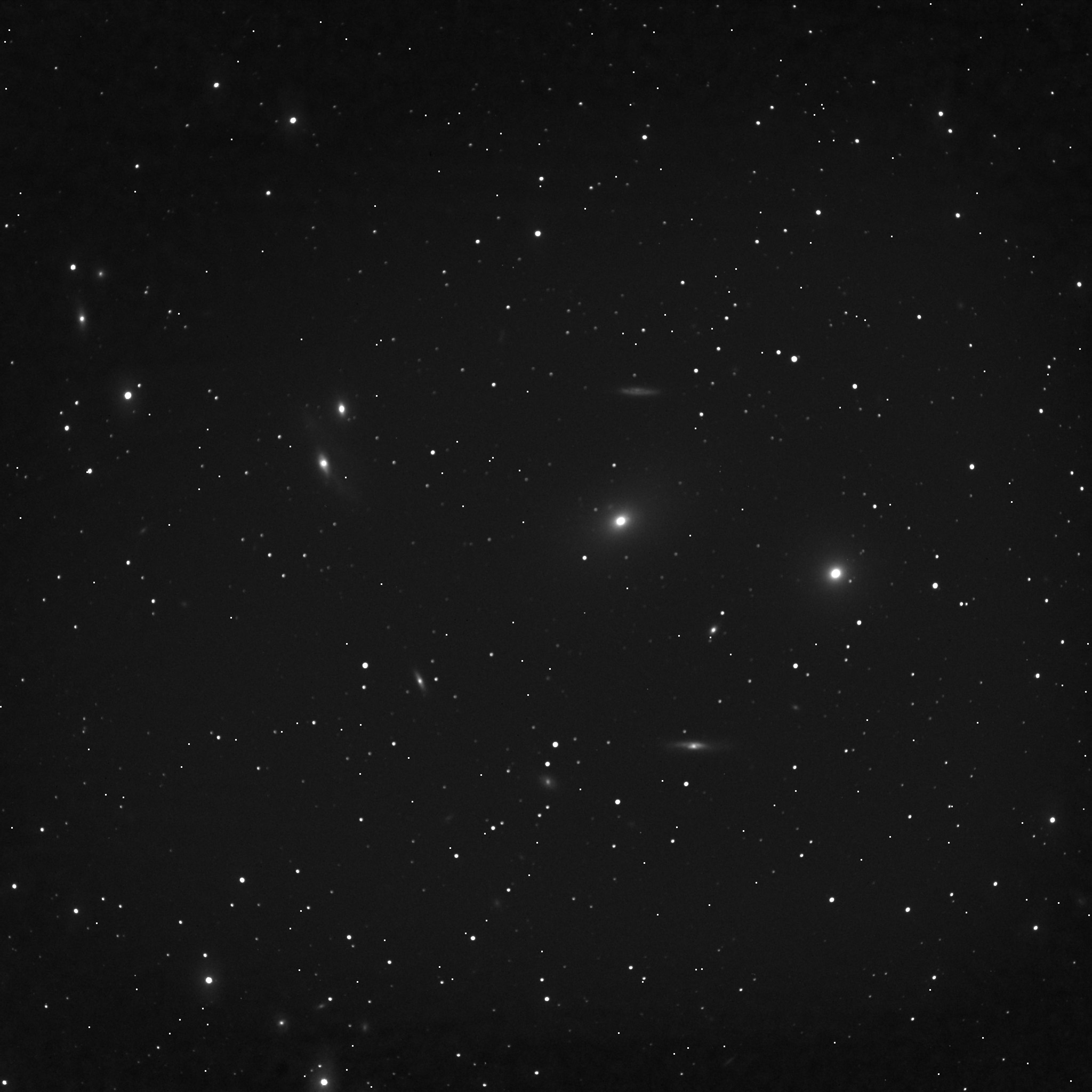
I tried the M84-M86 region of Virgo last month with the AP180, but the field of view was too narrow. I knew it’d be a good warm-up for tonight. The grey scale version looks better to me than the color rendition.
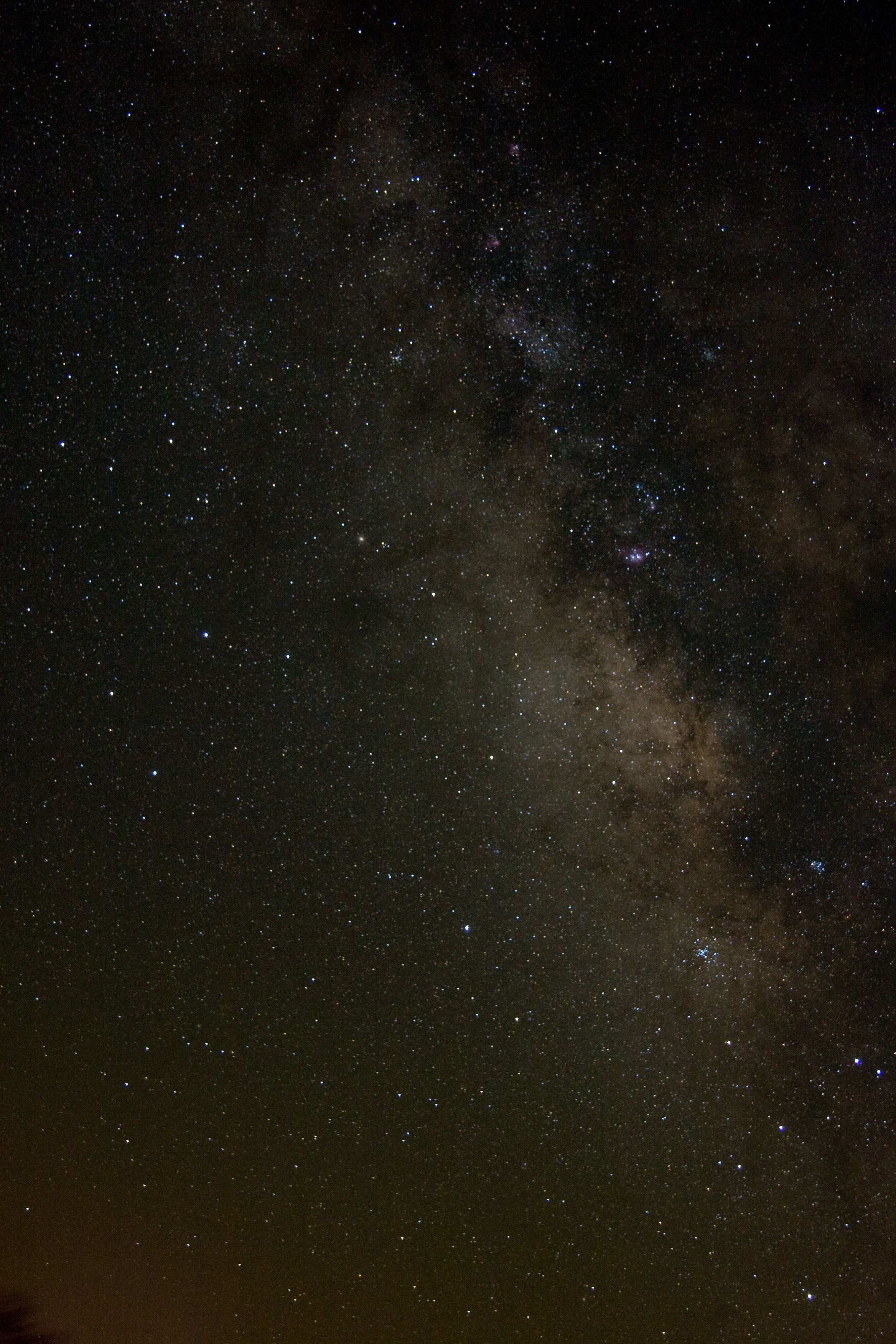
Jane and I both love piggyback pictures, taken at “naked eye” scale. This is one of “the teapot” and the Sagittarius Milky Way. The full-size image isn’t bad, but it looks better scaled back a bit. Click for the really big version. It’s fun looking through all the dark nebulae and bright clusters.
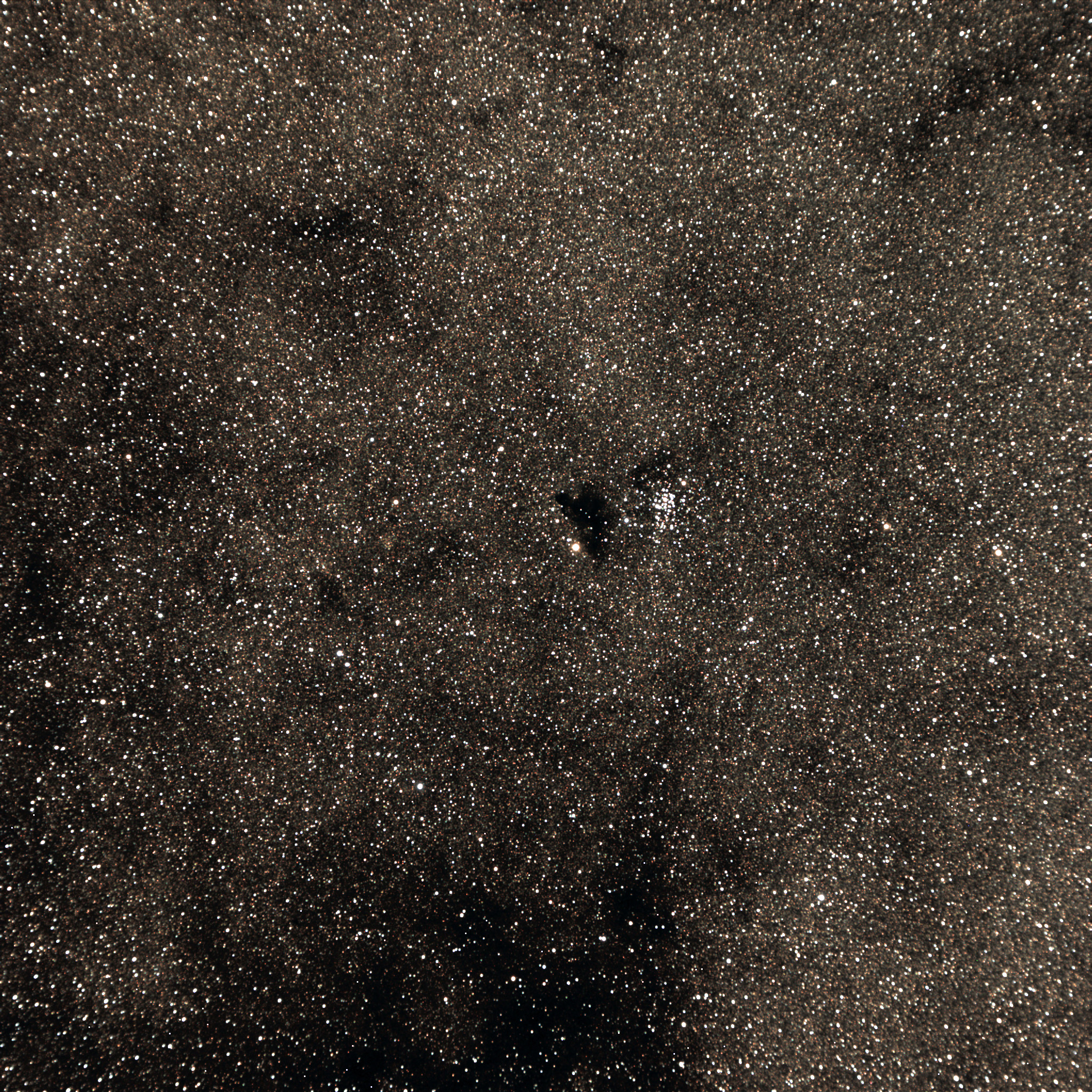
Deep in the Milky Way just above the spout of the teapot is Barnard’s famous “Ink Spot” dark nebula, B86.
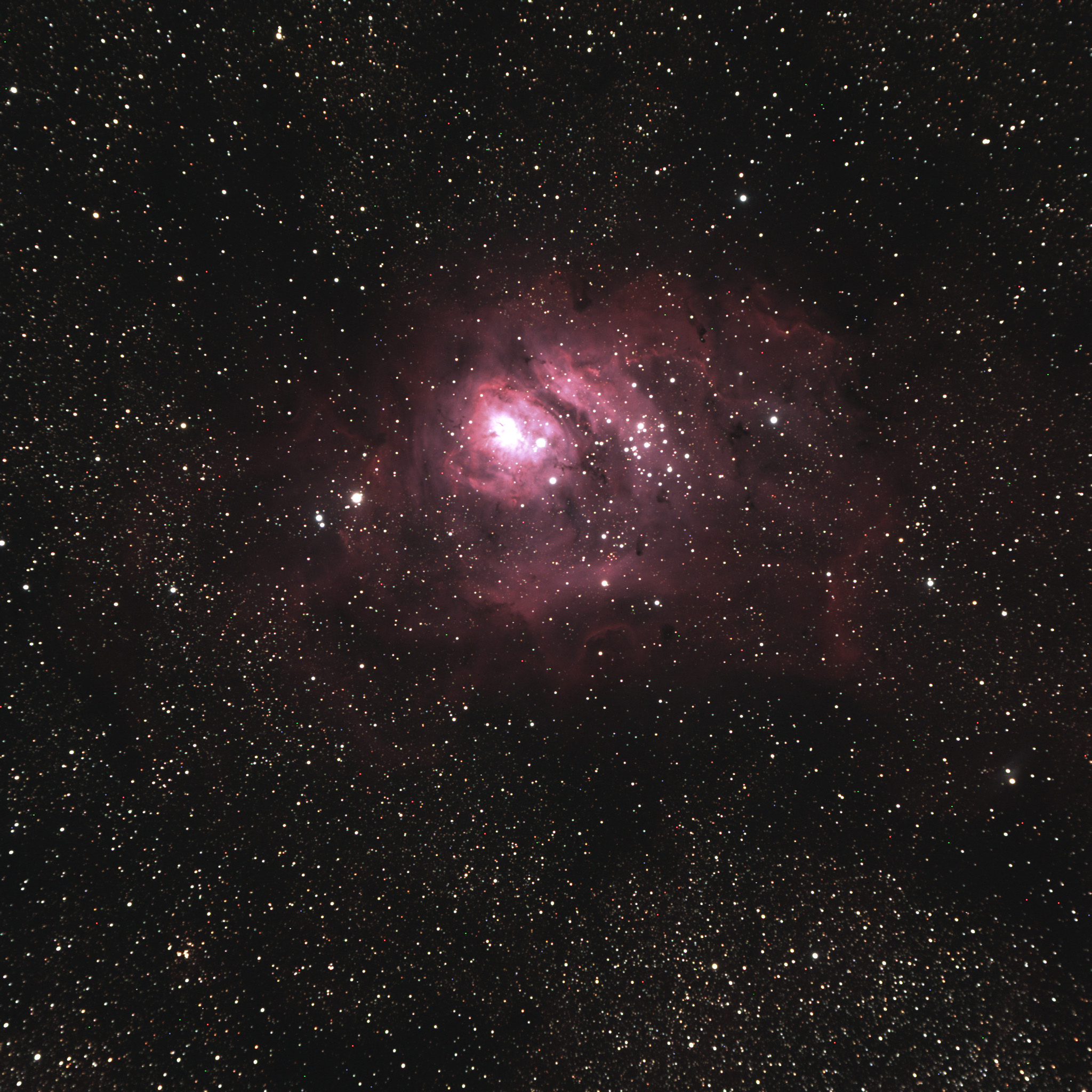
I started out trying to fit M8 “The Lagoon Nebula” in the same field as the nearby Trifid Nebula, but they wouldn’t quite fit. So I did 15 minutes just on M8, and love the result.
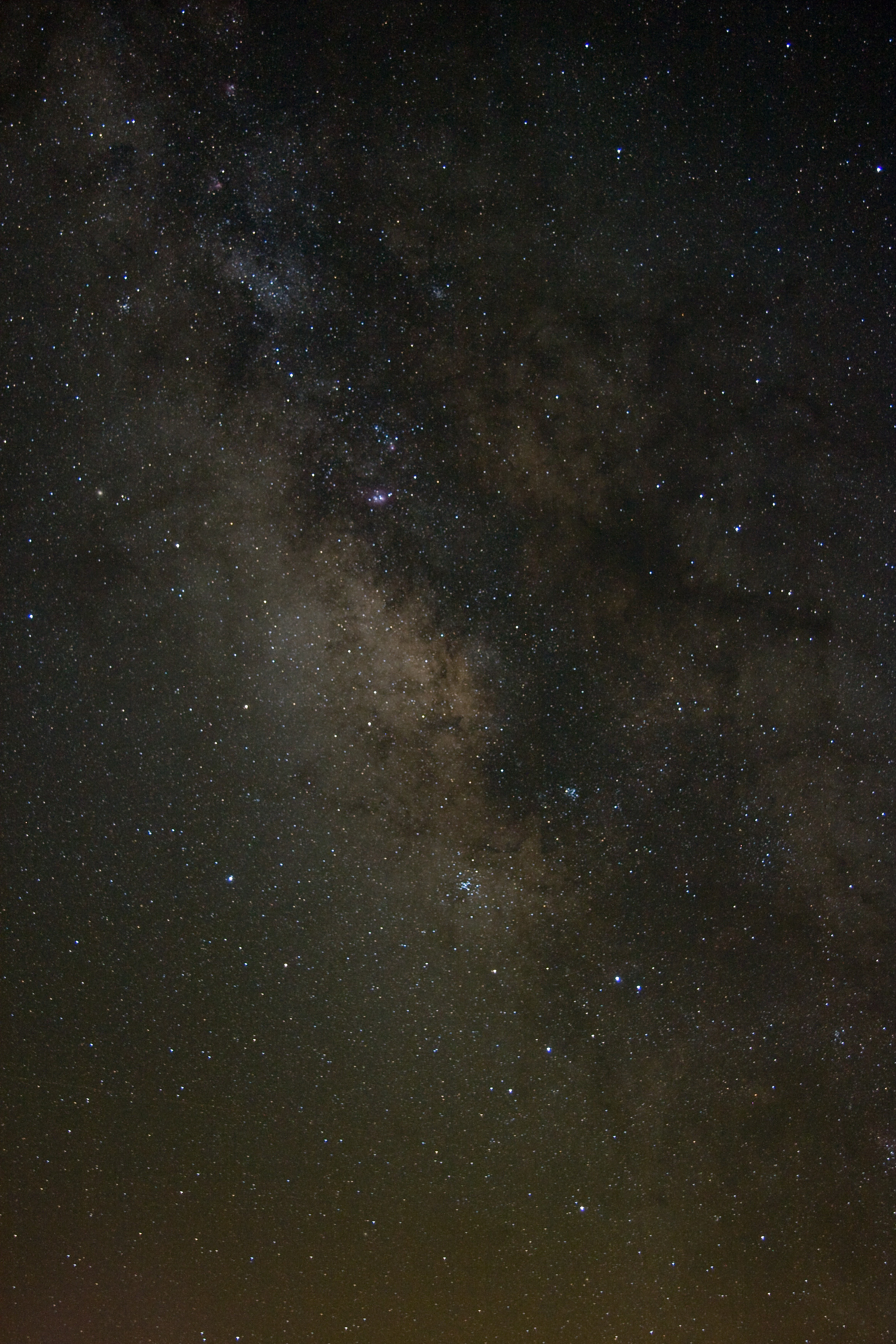
I love hunting for the Pipe Nebula, a huge dark nebula best seen in binoculars. Seeing the Pipe is a portent of great transparency and dark skies. The detail photo here is centered on the Pipe, taken piggyback with the 20D. Click for the full field, see if you can find the Pipe there.
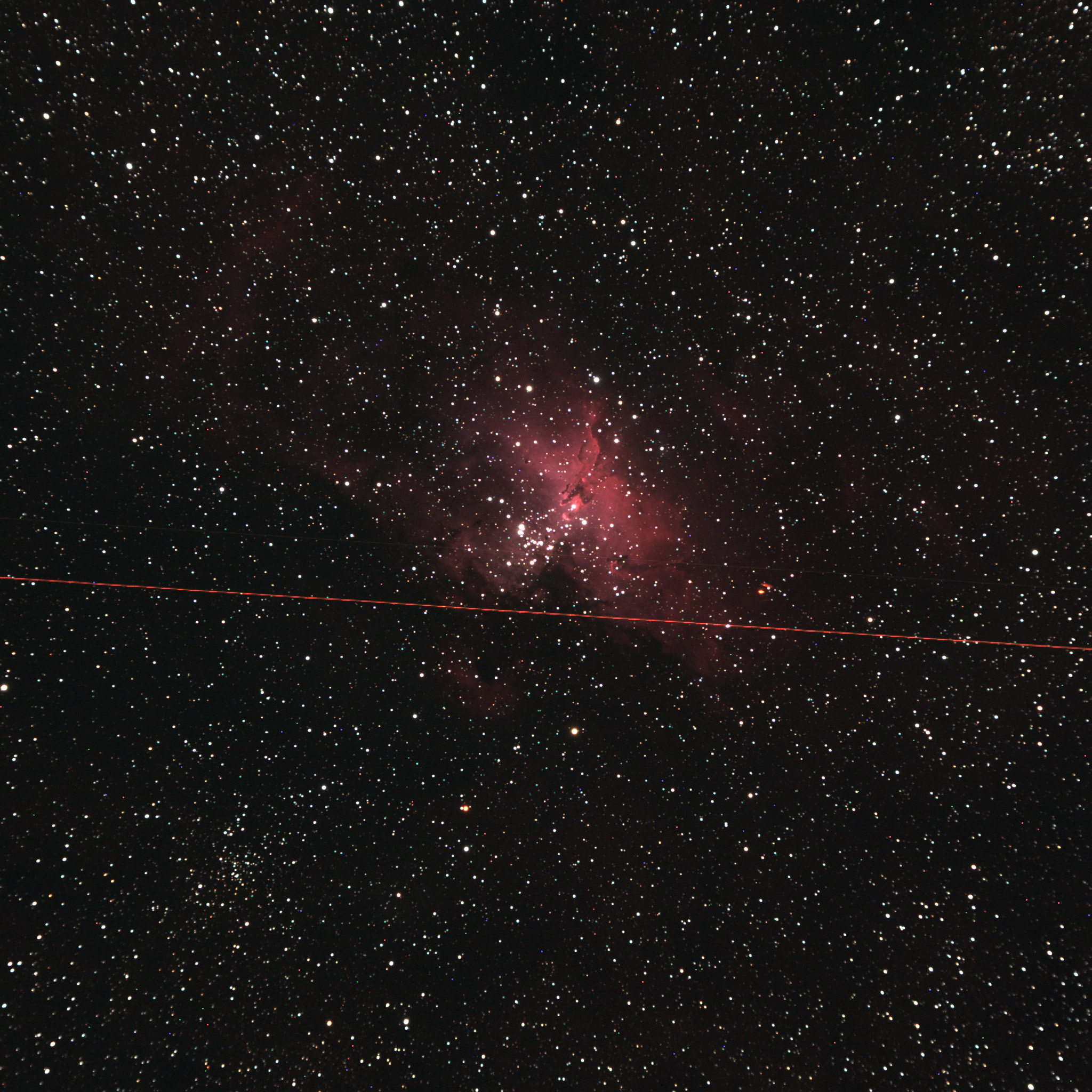
Ever since I started doing astrophotography, I’ve been waiting for the opportunity to shoot M16 The Eagle Nebula. This nebula is famous for its Hubble Space Telescope image showing the embedded dark nebulae as stellar nurseries, the “Pillars of Creation.”
I only did one fifteen minute exposure. By then it was getting quite late, and I need to catch a couple hours of sleep before getting up to catch comet McNaught. Naturally that means I had an airplane fly through the image! Should I wipe it out with Photoshop? Naaaah.
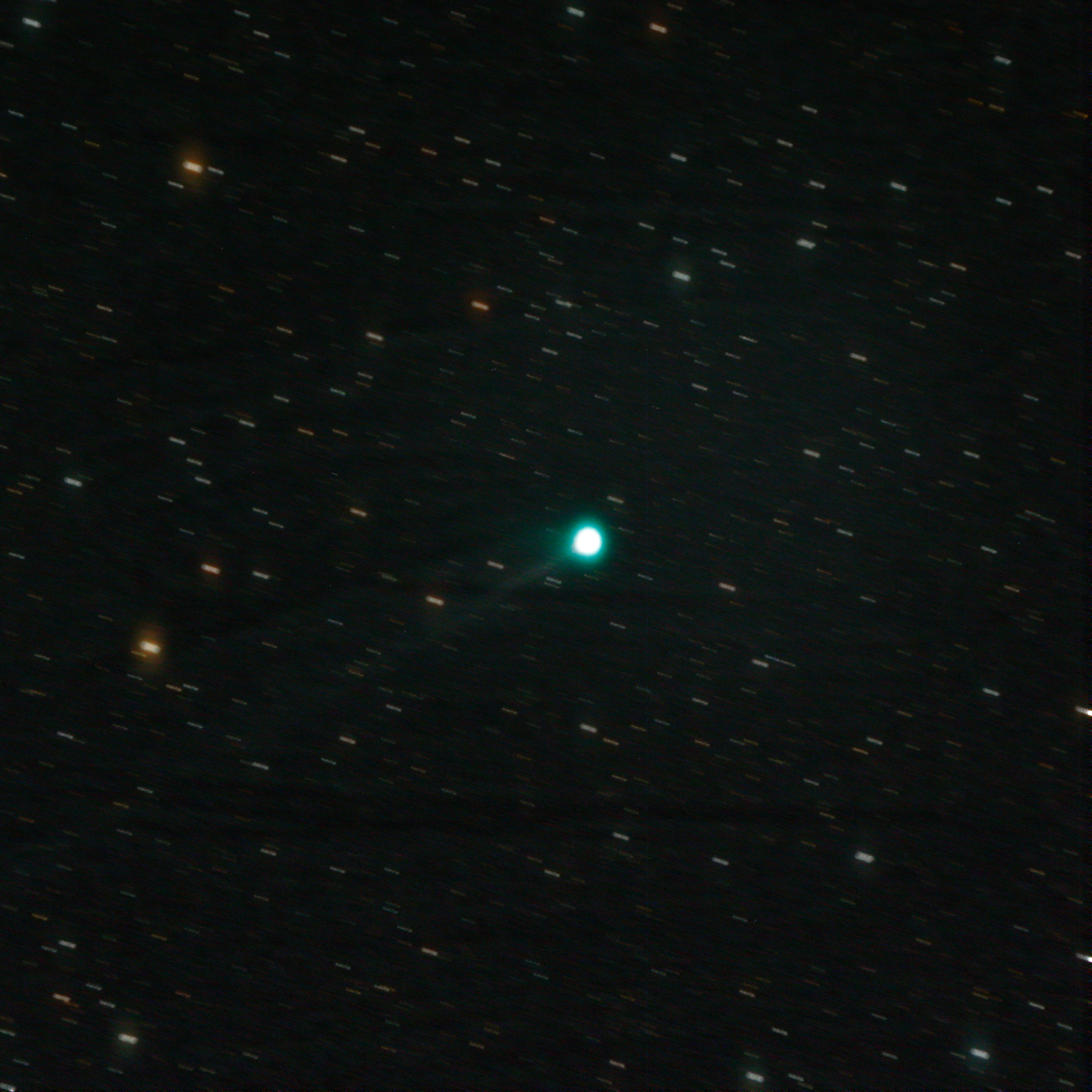
Jane and I napped for a couple of hours, with alarms set to catch comet McNaught in the early hours
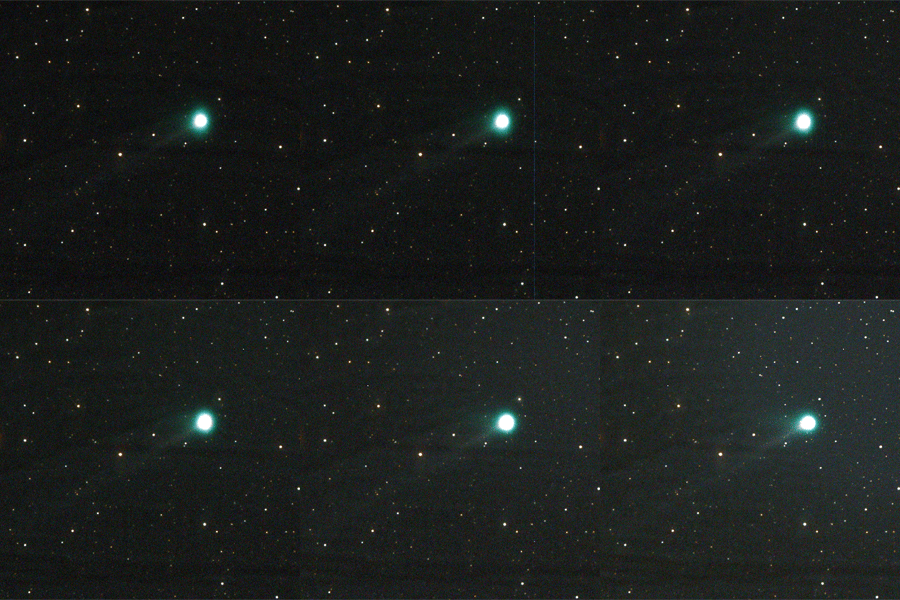
This image of McNaught is made from ten one-minute exposures. They’re stacked with the comet centered, so the background stars are streaked. It looks out of focus, but it’s actually just the motion of the comet you see.
I also took my ten comet pictures and made a little animation that shows the motion of the comet against the background stars over the course of 15 minutes or so.
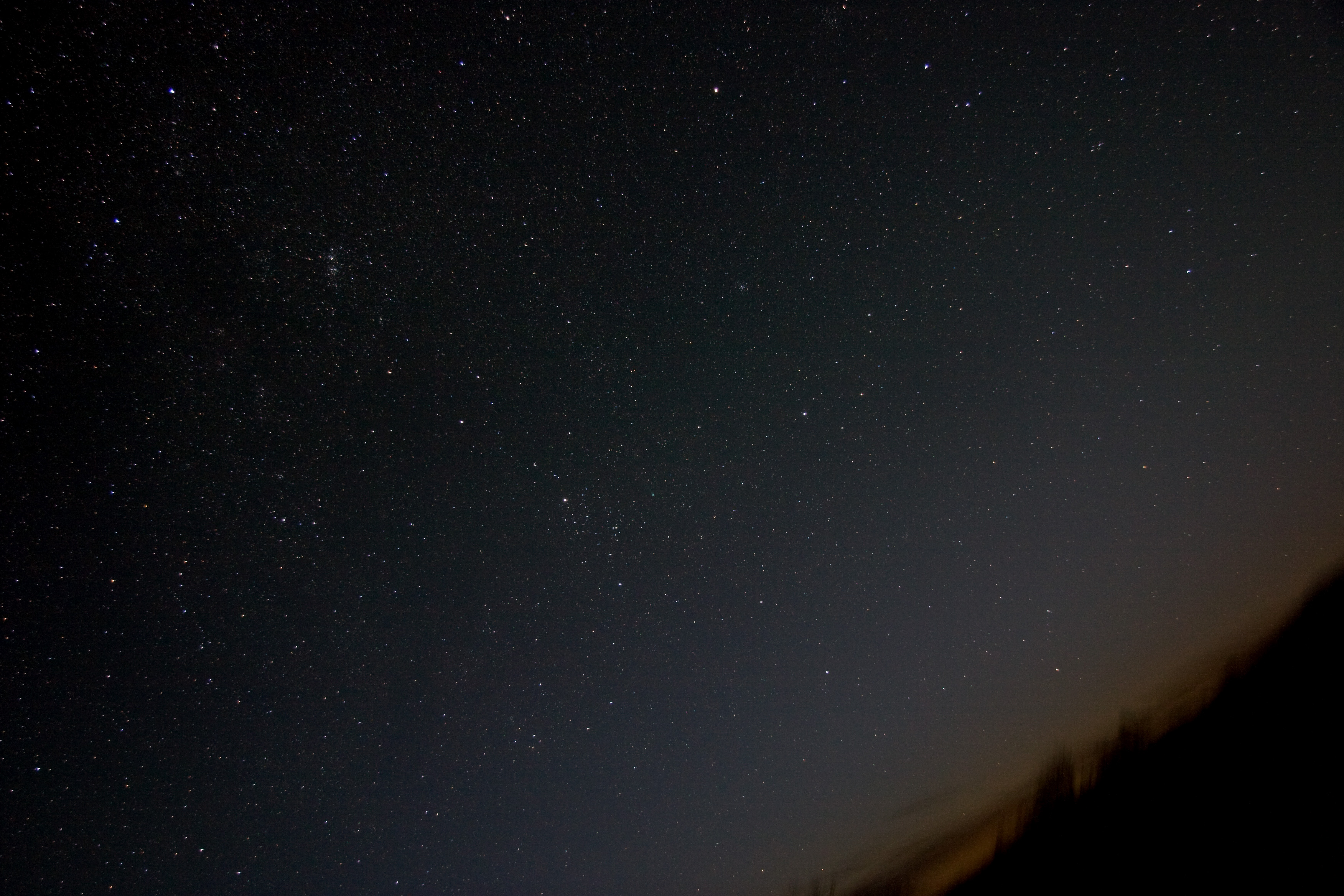
I was also taking piggyback images of the sky where McNaught was lurking. Can you find the little green dot near the center?
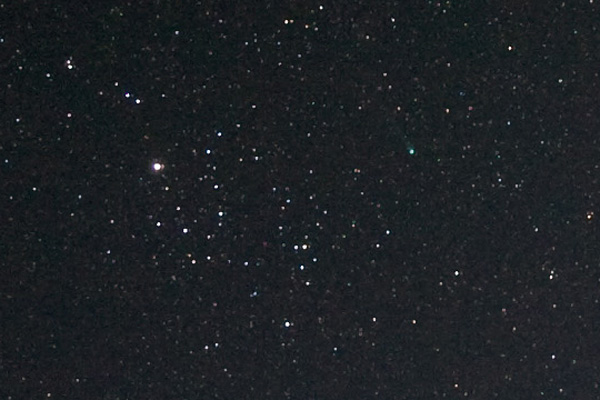
Here’s a little close up of the beautiful binocular cluster Collinder 39 in Perseus with the green dot of McNaught just to the right. The color was evident in binoculars even.
What a fabulous night of astronomy! Shirt sleeves or light jacket all evening.
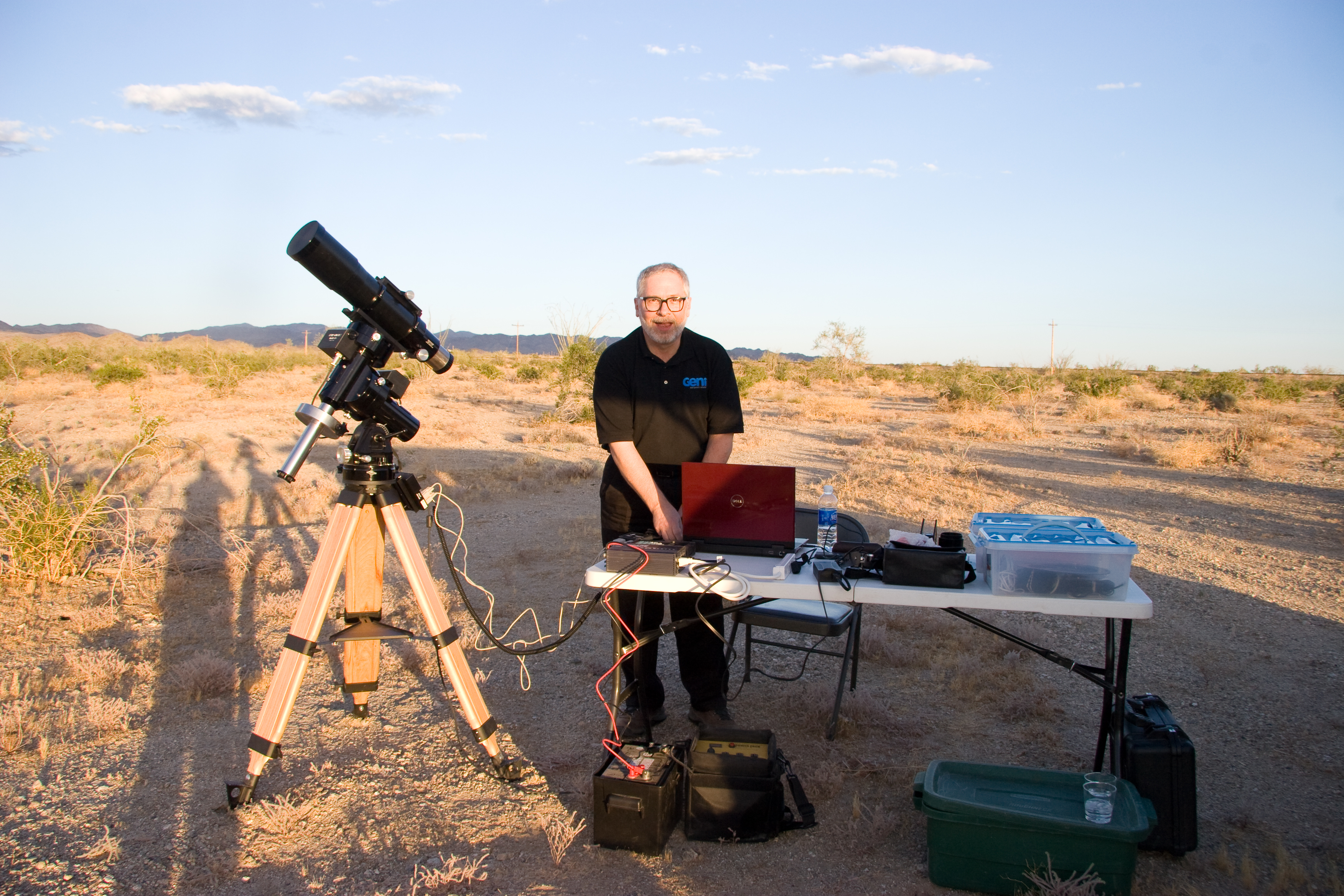
Equipment notes: The telescope shots were taken with an SBIG ST-4000XCM one-shot color CCD camera, at prime focus of an Astro-Physics Traveler 105mm f/6 refractor. The mount is an AP Mach 1 GTO on a wooden tripod. The piggyback photos were taken with an unmodified Canon 20D digital SLR camera.
Update: Be sure to see Jane’s A Ten Planet Night report from the same evening!