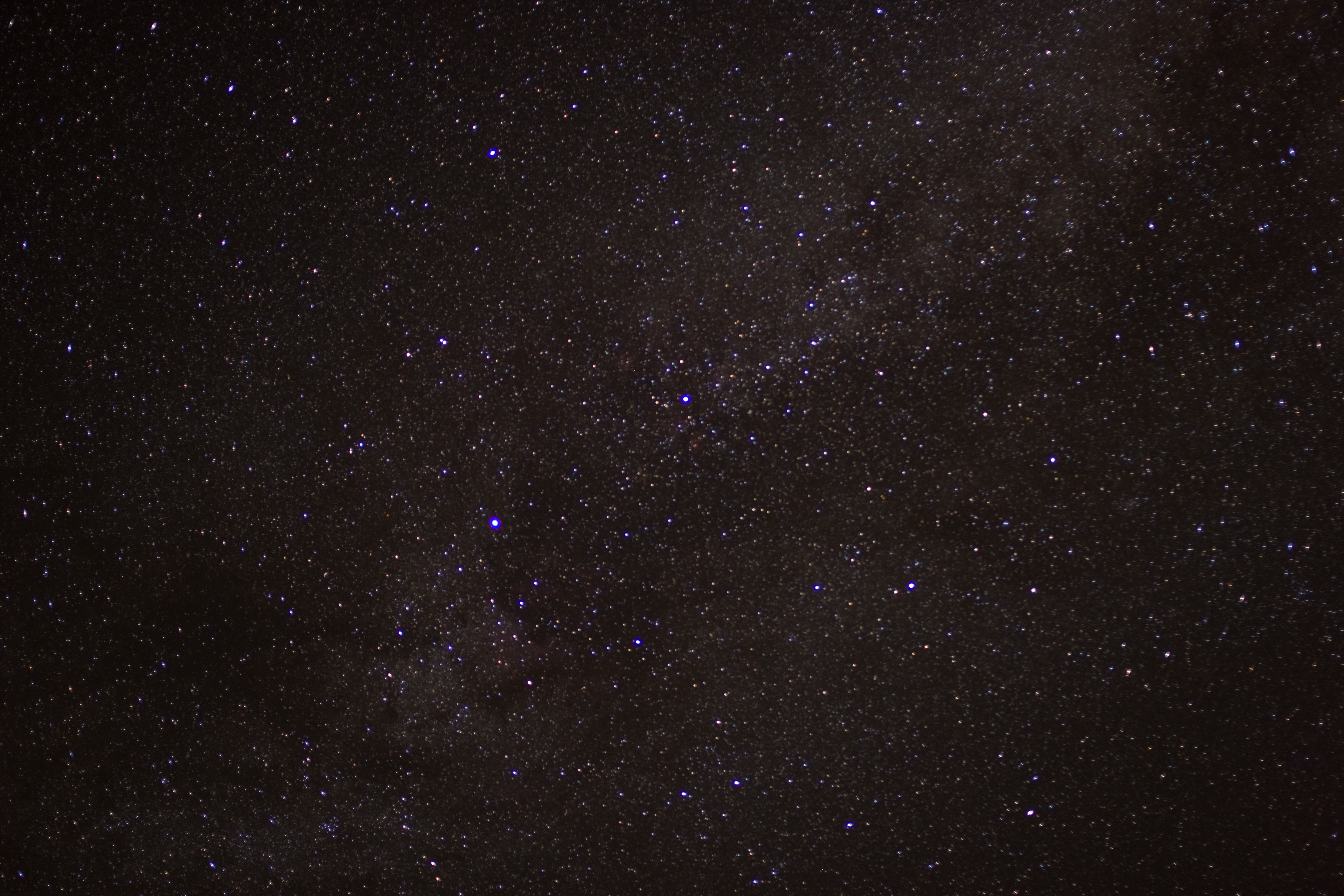
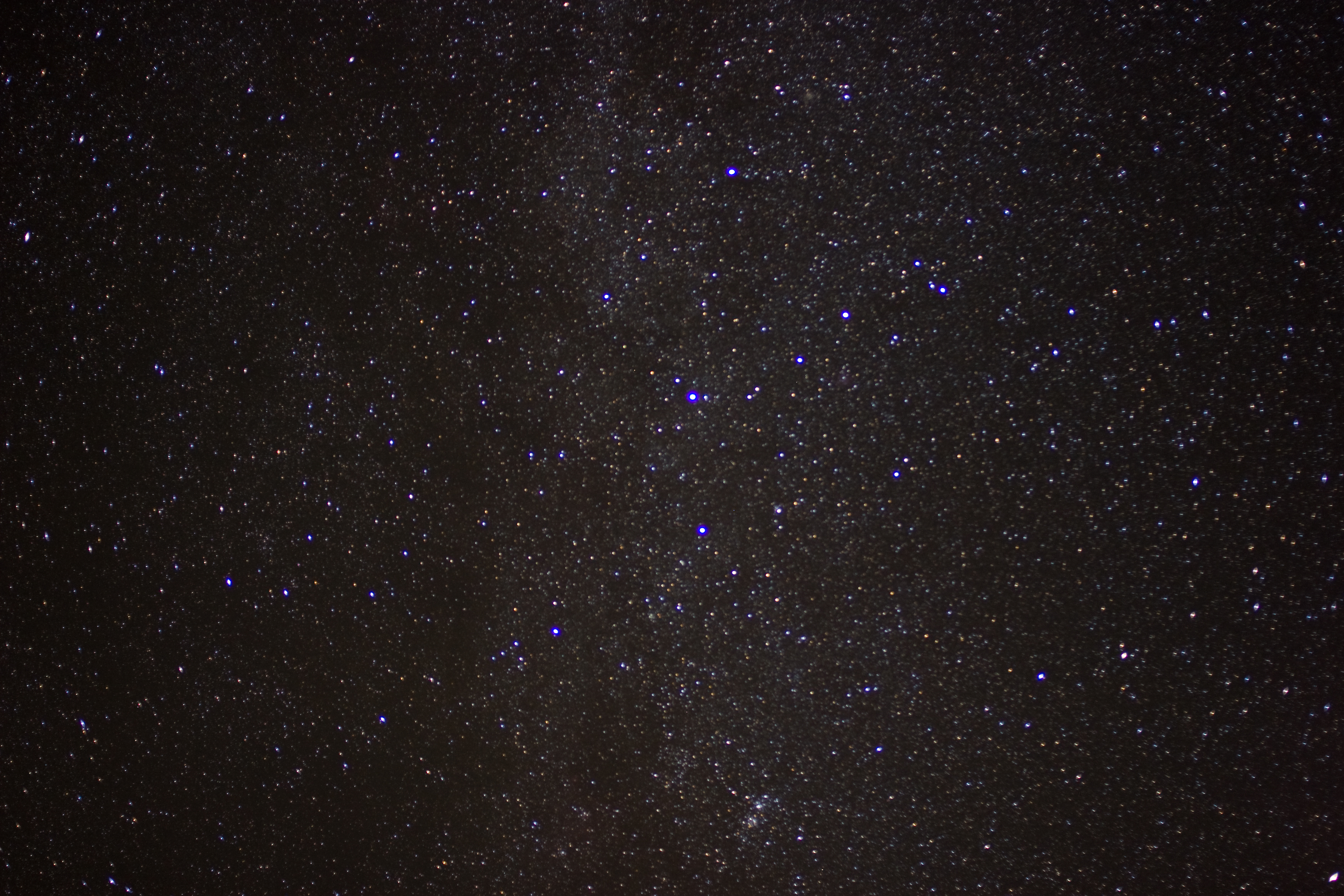
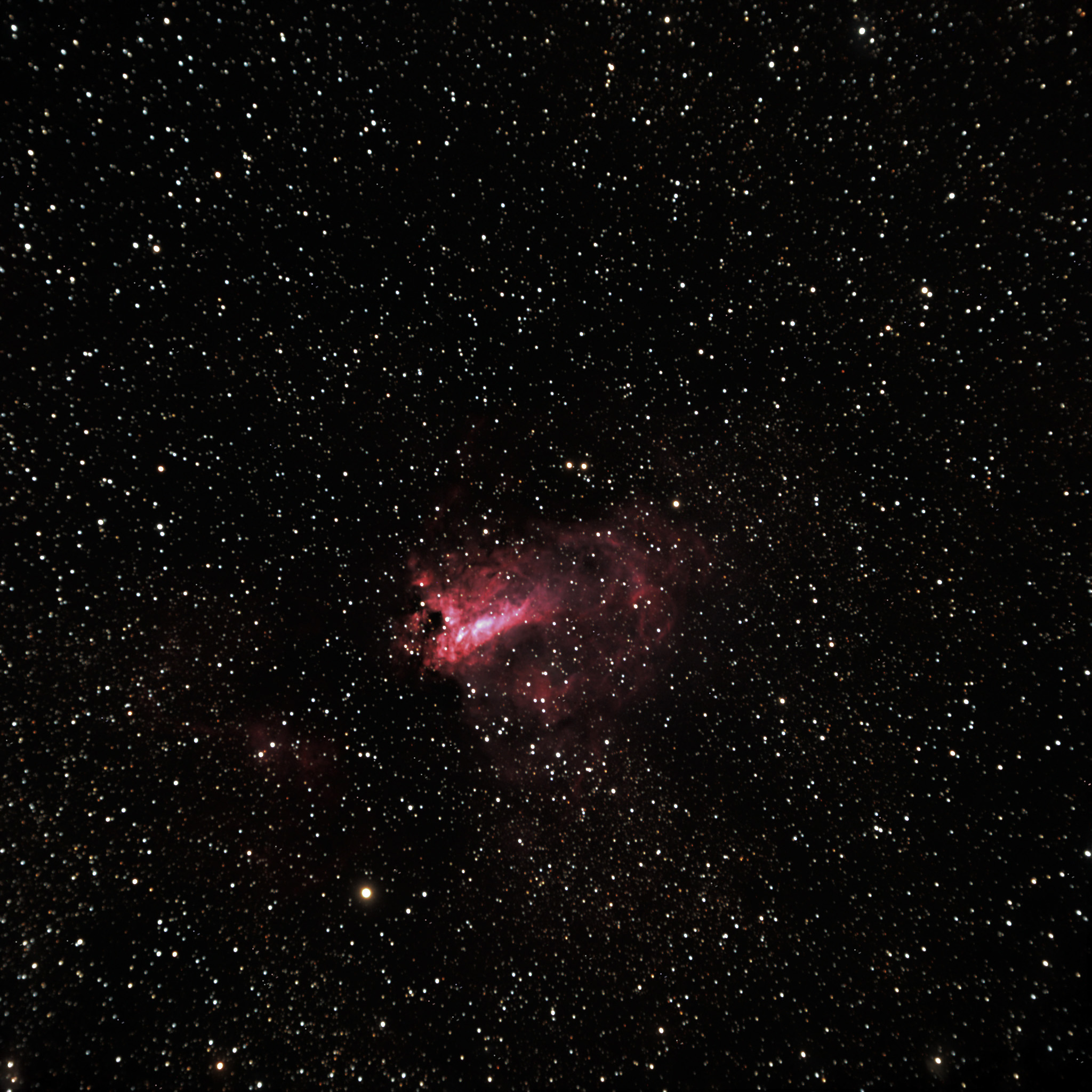
Mojo's blog banner

Tag: astrophotography

  • Working with a broken astronomy camera

    Last year, I had some really bad luck with astrophotography.

    I replaced my old laptop (Dell, Windows XP) and installed a new suite of tools to replace the somewhat ancient and unsupported camera software. At one point during my first “shakeout” evening (October 2014), the new software started spinning my telescope around the declination axis. It made at least two full loops (720°), wrapping the cables around the mount and stressing the camera case.

    Afterward, the shutter was not working, or making noise. In my attempts to solve that problem in the dark, I dislodged a small optical window.

    Back at home, I disassembled the camera, and found that I could move the optical window back into position, but it wasn’t held there firmly. Everything else seemed fine though. The shutter worked well, and the electronics all worked.

    All of the equipment has been put away since then, over a year.

    The time was coming to get back into the game. I knew I’d have several hours of work to update the software suite, not to mention Windows 10. The most delicate update was for the firmware in the keypad of my Mach1GTO telescope mount. I spent an hour and a half on that one update, following all of the procedures carefully. The rest took another few hours: TheSkyX, CCDStack, SbigControl, PEMPro, Skytools3, MaxIm DL6, ASCOM drivers, all the manuals. I hooked up all the cabling, the USB-to-serial adapter for the mount, and the camera itself. All of the software components worked — I could control the mount and the camera and take pictures.

    I also had to consider the condition of my camera. Had I damaged it beyond use? Beyond repair? I called SBIG technical support and described what had happened.

    The support rep, Tim, was audibly chagrined. “Oh nooo! How did that happen? Are you sure?” I learned that the optical window is supposed to be firmly sealed, maintaining a bone dry chamber that keeps out dust, and prevents condensation and frost from forming on the sensor chip. (During a session, the chip is cooled to well below freezing to reduce the amount of thermal noise in the images.)

    Next I exchanged some email with Bill in Santa Barbara who repairs SBIG cameras. He said I should send in the camera at my convenience. In the shop, he’ll affix the window, dry the camera severely in a chamber, and seal it all back up. He also suggested that I could probably use it this weekend, but with the seal broken it would “likely frost up, but then that usually dissipates after a while.”

    With expectations of little or no success, Jane and I headed off to Amboy Crater on Saturday (April 2). The forecast was for ideal conditions. I’d never seen a Clear Sky Chart that black; little or no wind, severe clear skies, near perfect seeing, a low temperature forecast of 56°F. My plan was to experiment with all of the unfamiliar software and learn how to do this again.

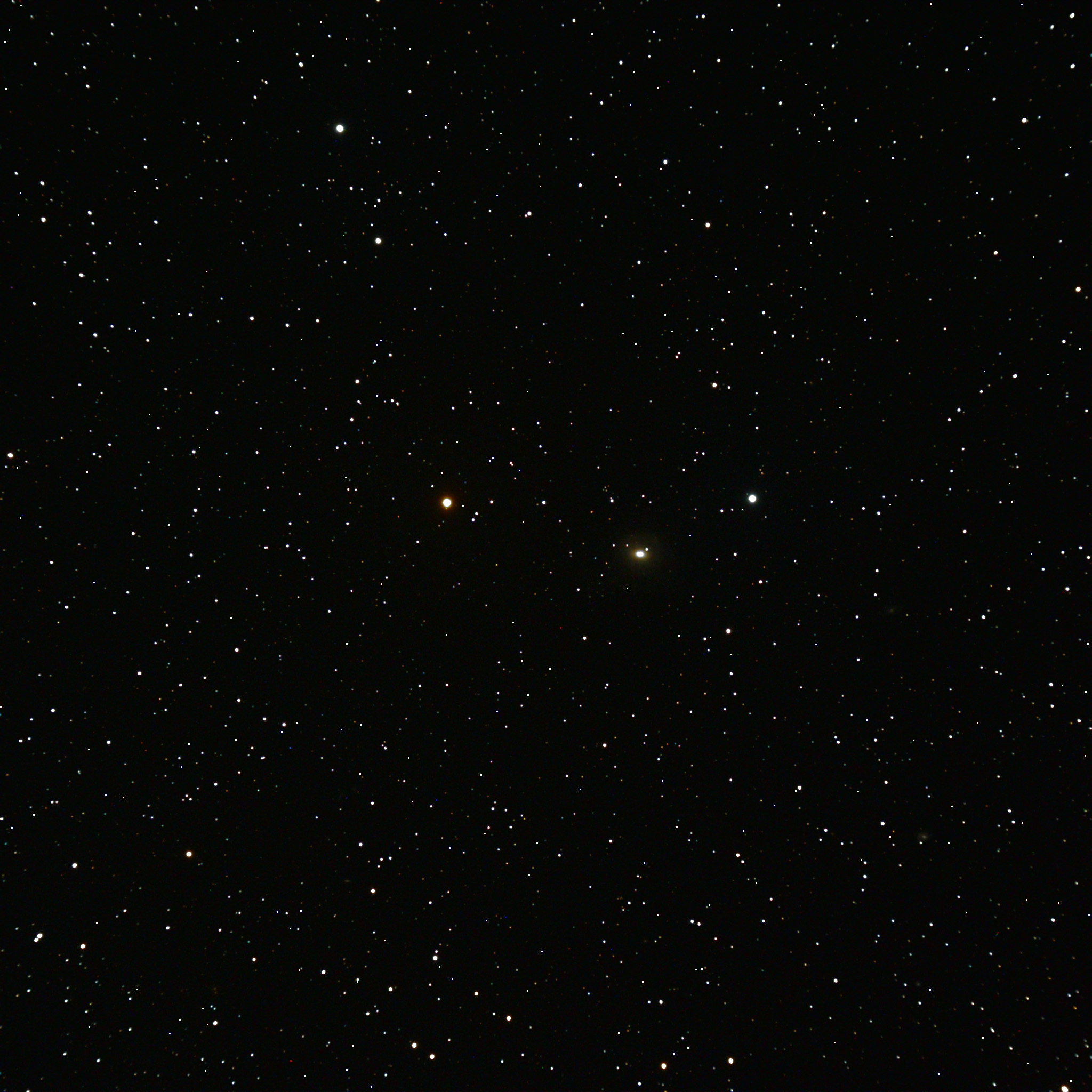
    With the mount polar aligned and all hooked up, I went to an old favorite as a test photo: the “Leo Trio,” M65, M66, and NGC 3628. At the site, the raw data looked really promising. Back home the next day, it was obvious that the image was marred by frost or condensation or both.
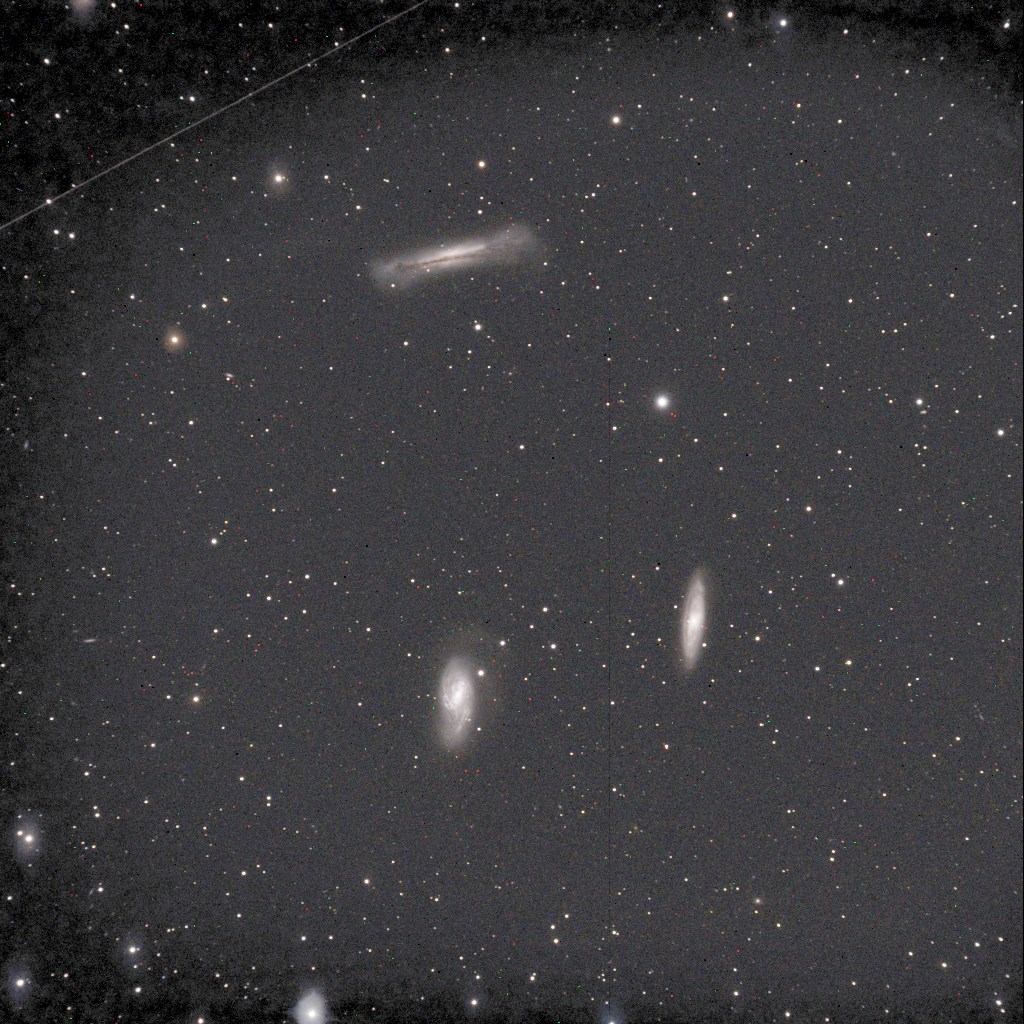
    M65, M66, NGC 3628
    The “Leo Trio,” NGC 3628 at the top, M65 and M66 below. Also a likely satellite streak in the upper left, and haze from frost or condensation on the imaging sensor. (Click for full resolution.)

    Afterward, I spent 90 minutes or so learning to use PEMPro, and ended up with a polar alignment within one arcminute of the pole. It’s an excellent program, and I’ll be much quicker at it on the next go-around.

    Meanwhile, there was some excitement among my fellow observers who were seeing the famous and very southerly Omega Centauri globular cluster. This object never rises more than a few degrees above the southern horizon. It’s known for being the largest globular cluster in our sky — probably the largest of all the globulars in the Milky Way’s halo. I couldn’t resist giving it a try.
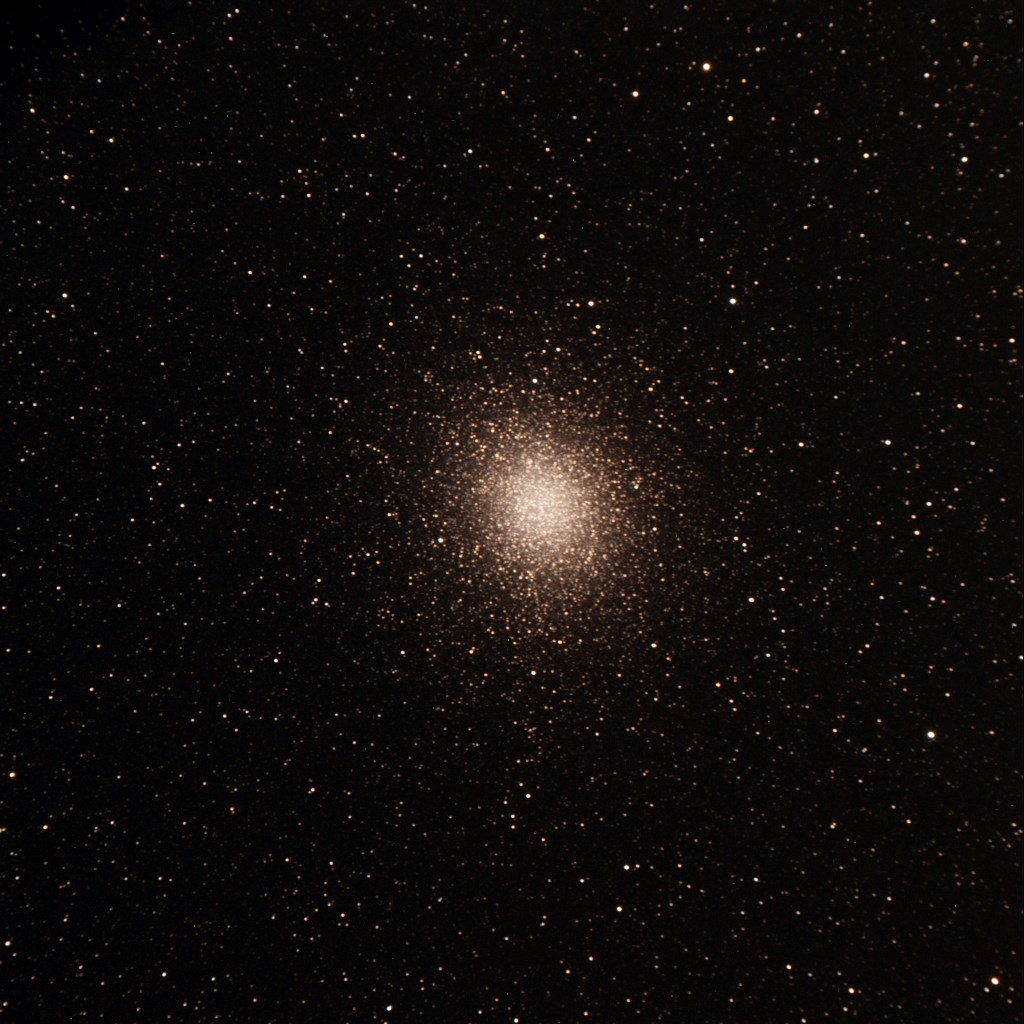
    Omega Centauri
    Omega Centauri, 15 minute exposure (one exposure, not stacked). Astro-Physics Traveler 105mm f/6 refractor. SBIG ST-4000XCM one-shot color camera. (Click to embiggen.)

    With that in the bag, I had to get Centaurus A, the famous “Hamburger” galaxy, just barely north of Omega Centaurus.
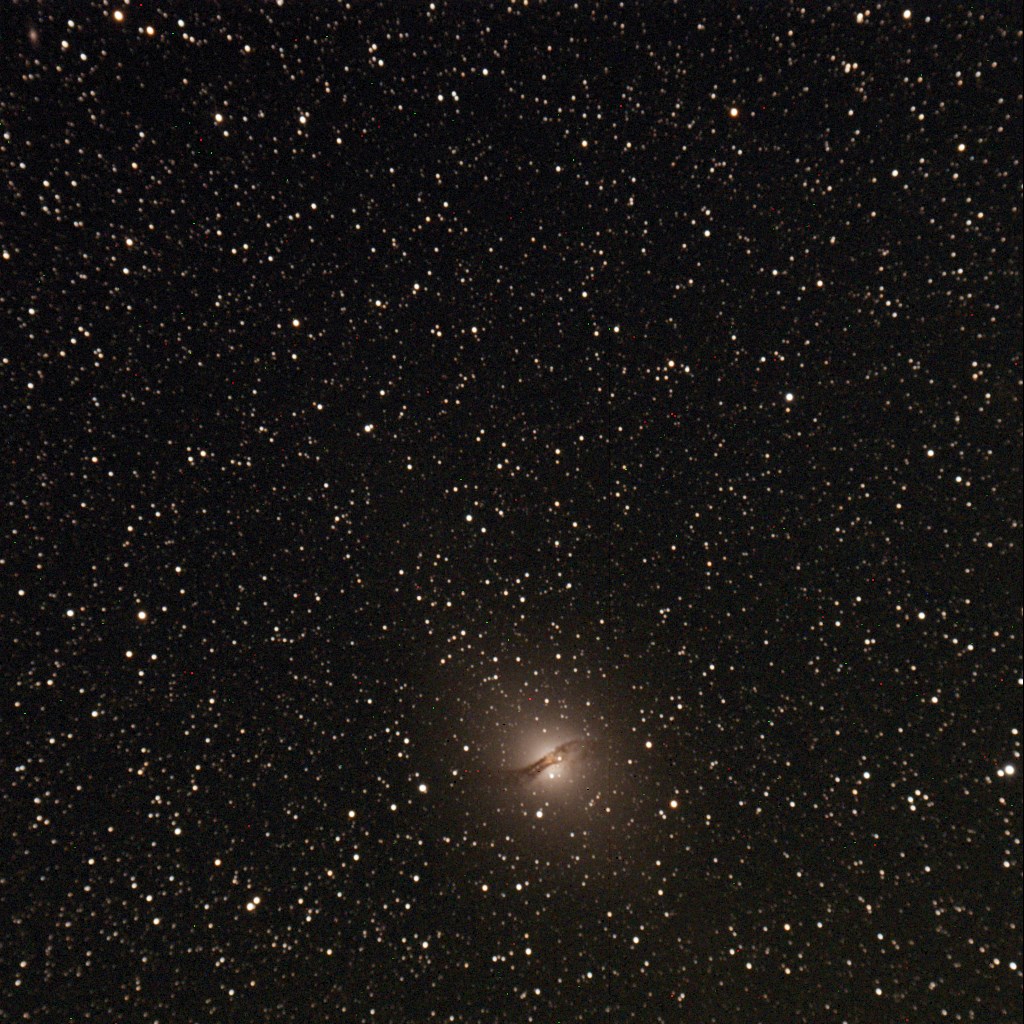
    Centaurus A
    Centaurus A, active galaxy. (Click to biggify.)

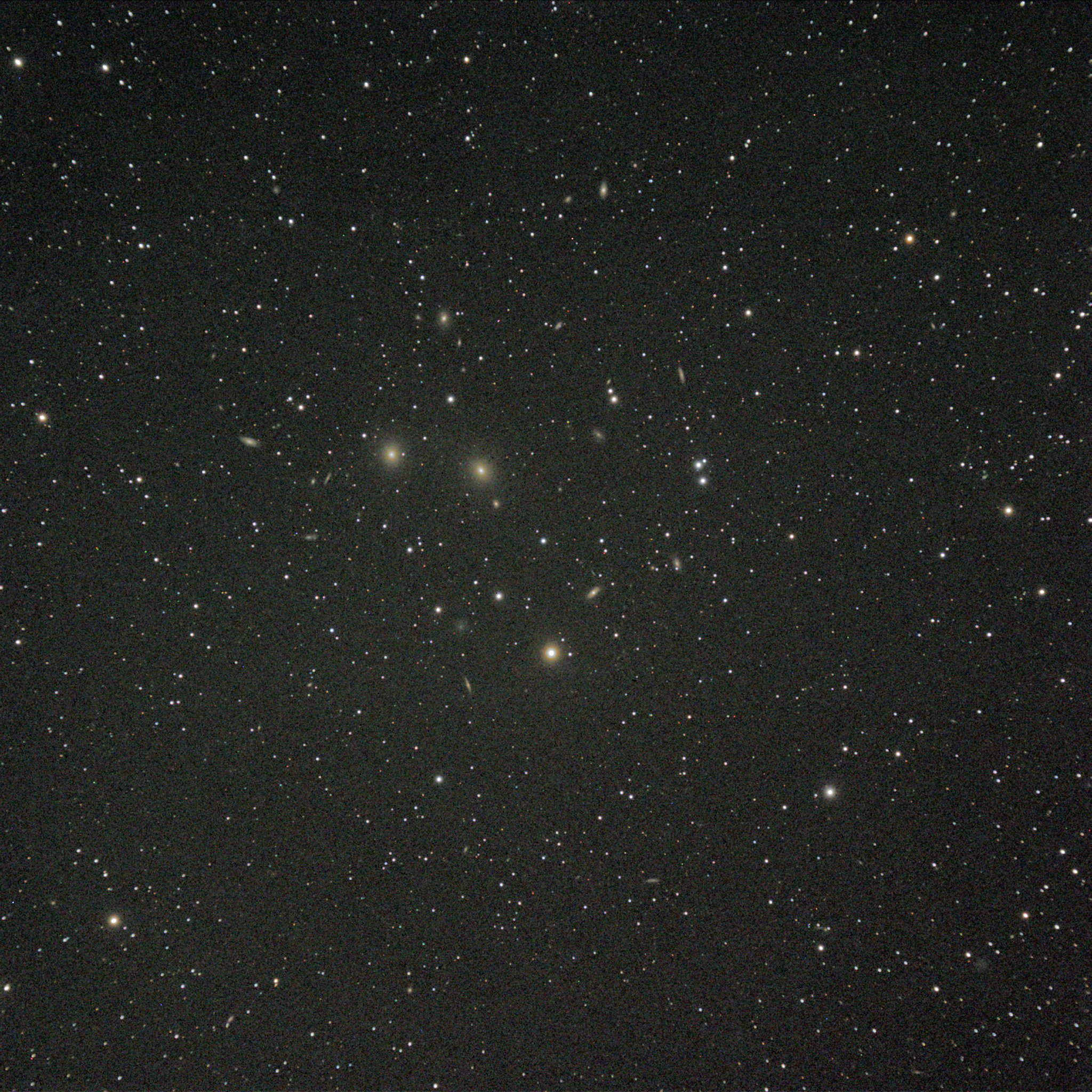
    Then before crawling into the van for a nap, I shot a random field in the Virgo galaxy cluster, around M87.
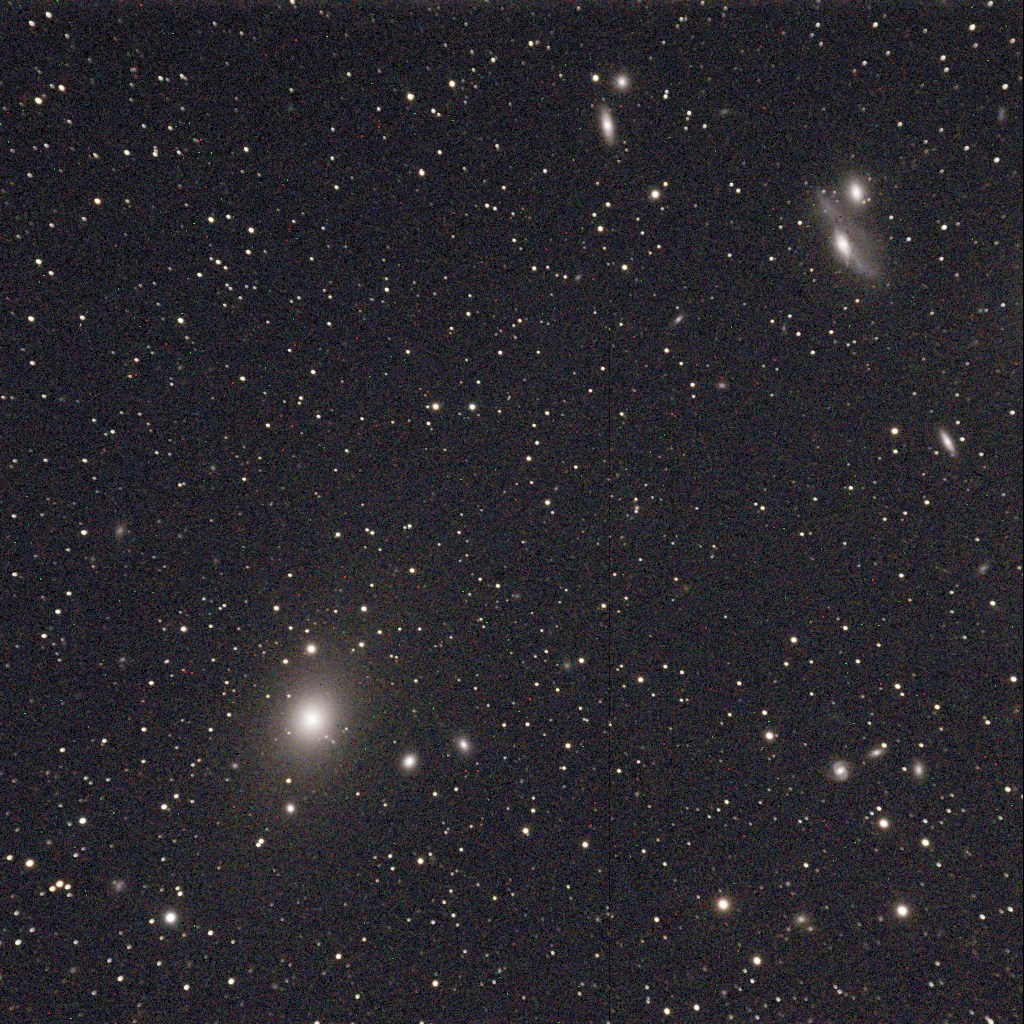
    M87 and Virgo cluster galaxies. (Click to embiggenate.)
    M87 and several nearby galaxies from the Virgo cluster

    After a nap, I did something I haven’t yet been able to do successfully in astrophotography: I shot some flat frames.

    A “flat” is created by evenly illuminating the sensor to pick up imperfections in the optical train. It’s used to correct things like vignetting and dust spots, and produce a calibrated image.

    With the new software for capture, SbigControl, and data reduction, CCDStack, making flats turned out to be quick and easy. I used my iPad with a grey image on the screen as a light source. I pointed the telescope to the zenith, and rested the iPad on top of the dew shield.

    Here is my master flat, made by combining several raw images:
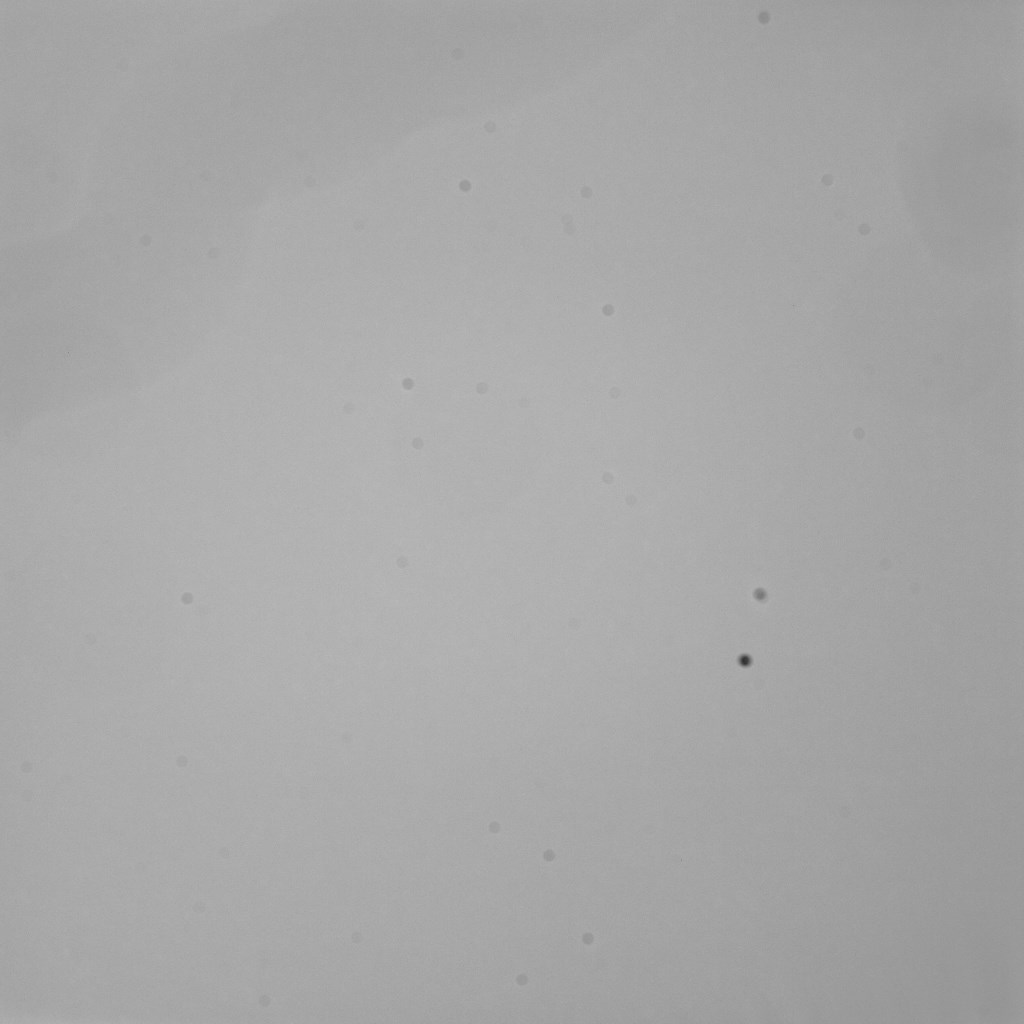
    Flat image with dust specks and vignetting.
    Master “flat” image taken in the morning after the previous shots, and used to calibrate the images. Notice all the dust specks! (Click for … god, why?)

    Oh gracious, that seems like a lot of dust to me! I’m sure I (un)sealed my fate by opening the dry chamber of the camera, allowing a few specks to settle on the sensor cover glass.

    All-in-all it was one of my most satisfying astrophotography expeditions. I’m really looking forward to getting the camera back from SBIG. I’m not expecting anything magic — it’s not going to take better pictures than these. But I do expect fewer images marred by frost haze. I imagine I’ll be able to shoot earlier in the evening and have the images be usable. With the modern software in place, I might be able to try some more ambitious projects.
  • Galaxy season

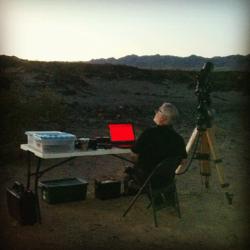
    Mojo at Amboy Crater
    Jane snapped Mojo waiting for darkness at the Amboy Crater visitor area.

    Observing report, April 21, 2012, Amboy, CA

    We’ve had a string of bad luck with new moon weekends for the past six months, so when this new moon Saturday showed nearly perfect conditions, Jane and I were quick to pack the van and get out to Amboy Crater.

    My only agenda for the session was to relearn my rusty imaging skills, and perhaps bag some Spring galaxies from Virgo and Ursa Major. Jane had plans to mostly eschew optical equipment and spend the morning counting meteors from the Lyrid meteor shower. (She’ll have a report on that elsewhere.)

    Conditions all night were as delightful as advertised. There was no wind, not a sign of a cloud. The temperature dropped quickly from 98°F on arrival to 62°F close to sunrise, calling for a light jacket. Humidity stayed well below 20% all night. We were prepared for the heat with lots of ice and Propel sports drinks.

    We were the only ones taking advantage of the smooth blacktop and hospitable visitor station at Amboy Crater. The great conditions kept both of us going without a nap all night. It made for a struggle returning home on little sleep, but we both managed to grab naps during the day.

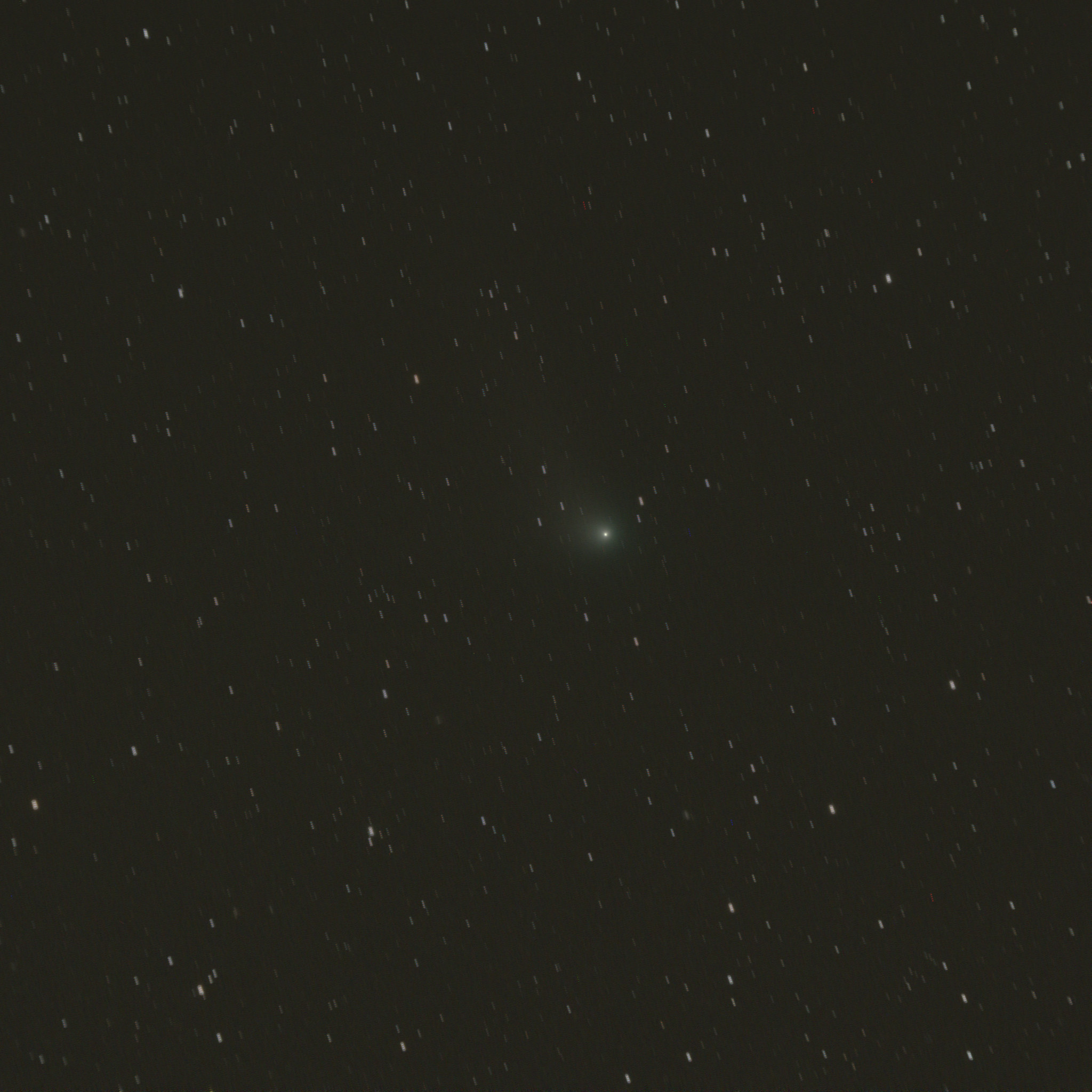
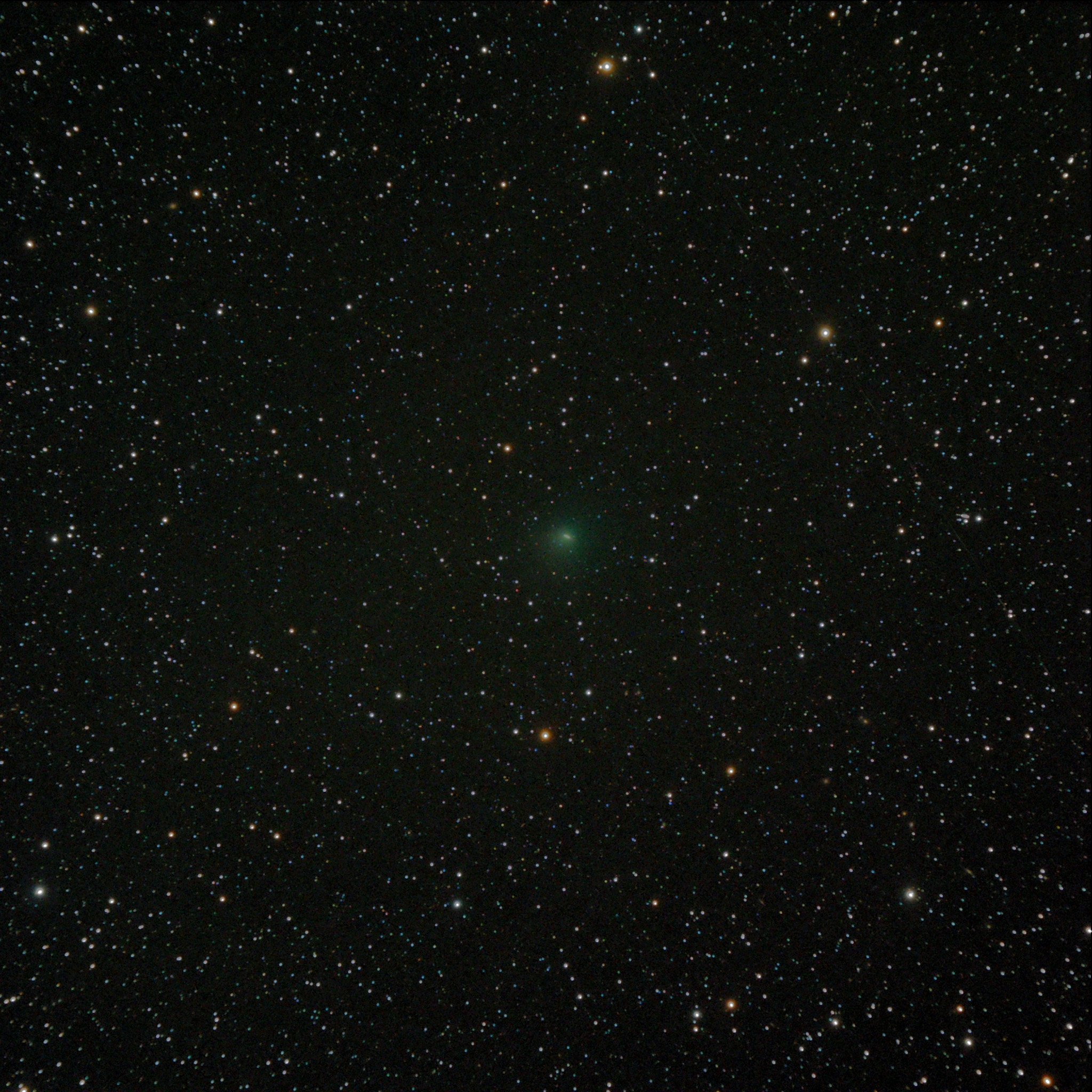
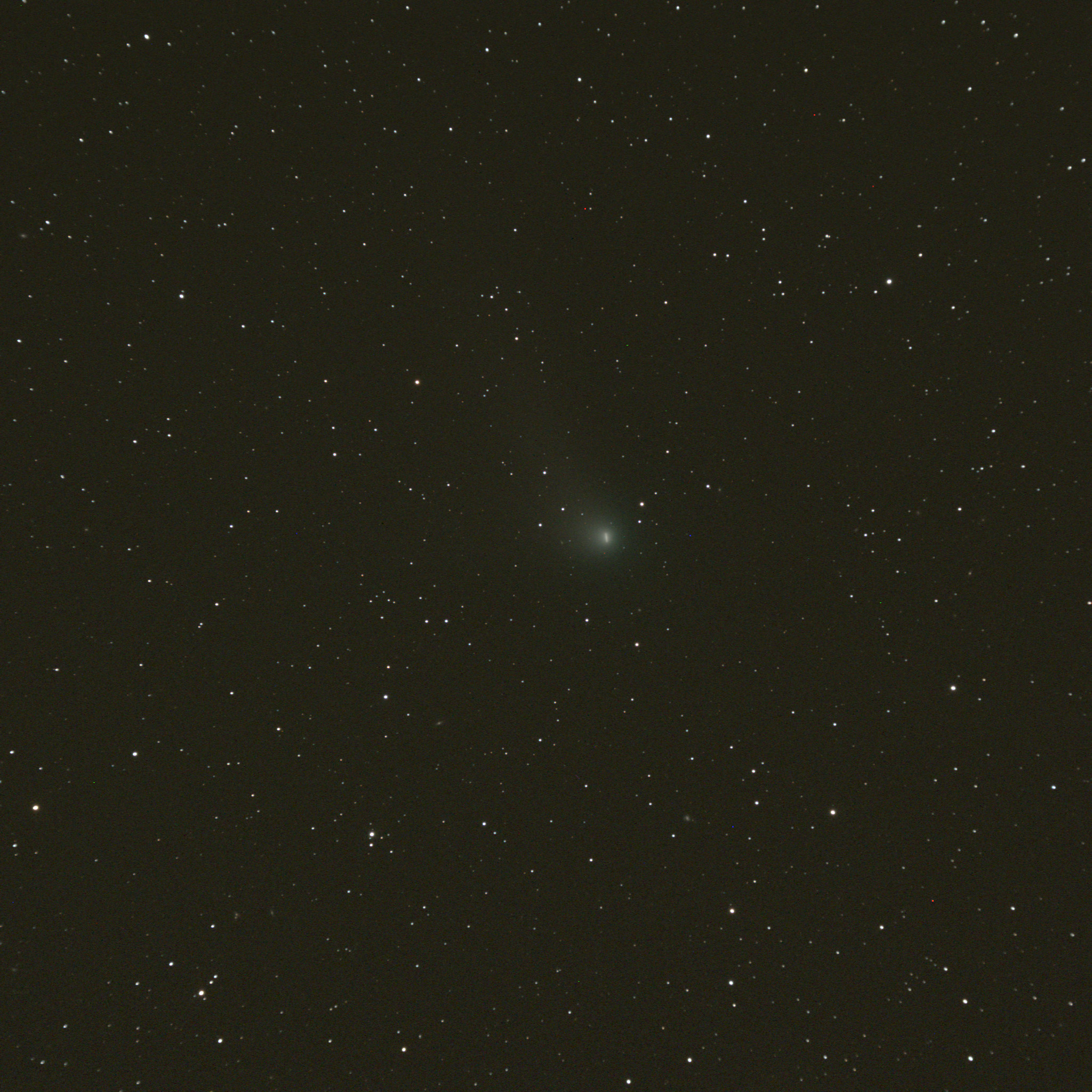
    I imaged comet C2009/P1 Garradd to start the evening. I took four 5-minute exposures, allowing me to make two versions of the image.

    The first version stacks the images so the stars all match. The motion of the comet against the background stars blurs the head of the comet in the line of its travel.

    Comet Garradd moves against fixed stars
    Comet Garradd moves against fixed stars

    The second image aligns each exposure on the head of the comet, so the perspective moves with the comet over 20 minutes, making a trail of stars in the background.

    Comet Garradd fixed against a moving background
    Comet Garradd fixed against a moving background

    The rest of the evening focused on distant galaxies. For this session I added a barlow lens ahead of the camera to get a slightly narrower field of view.

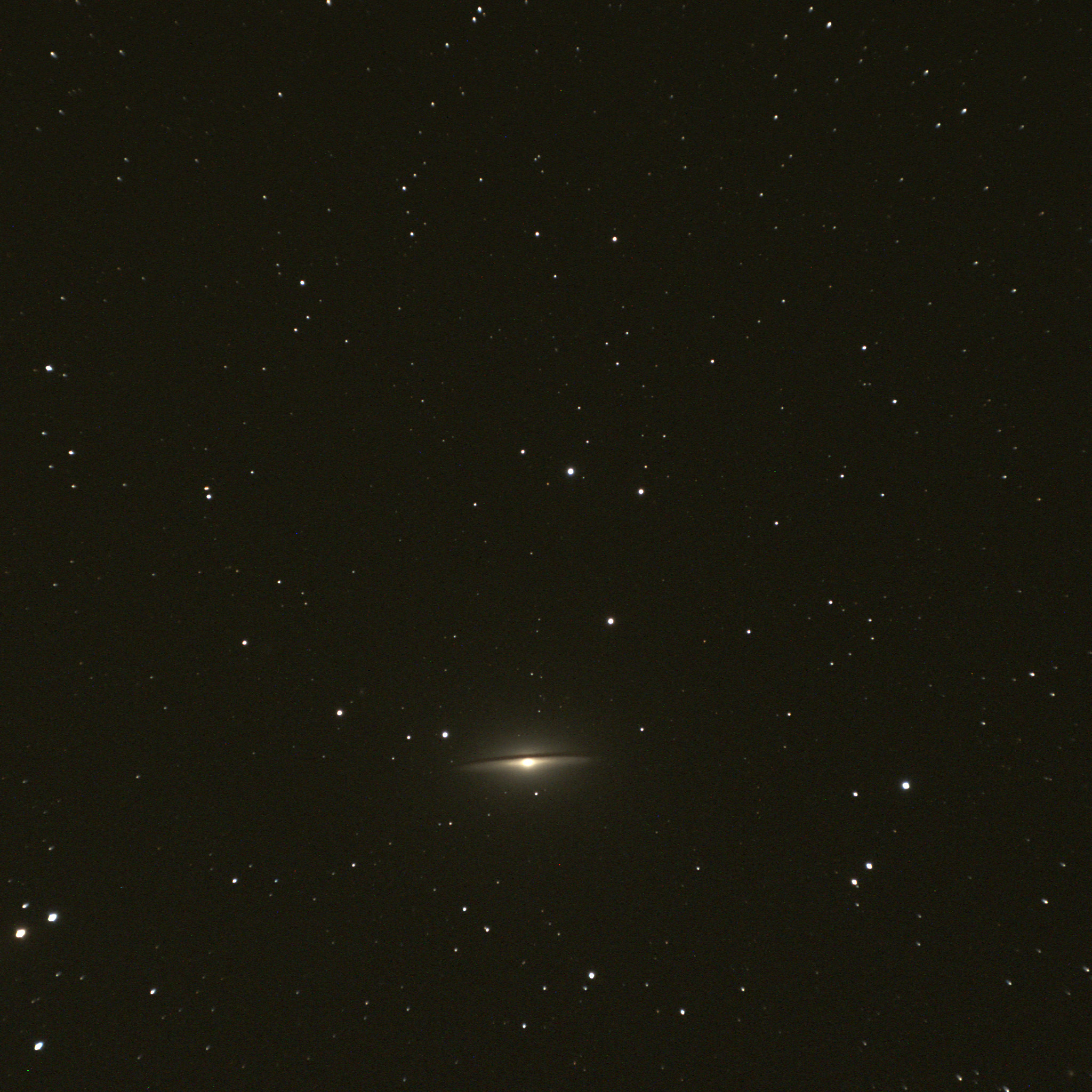
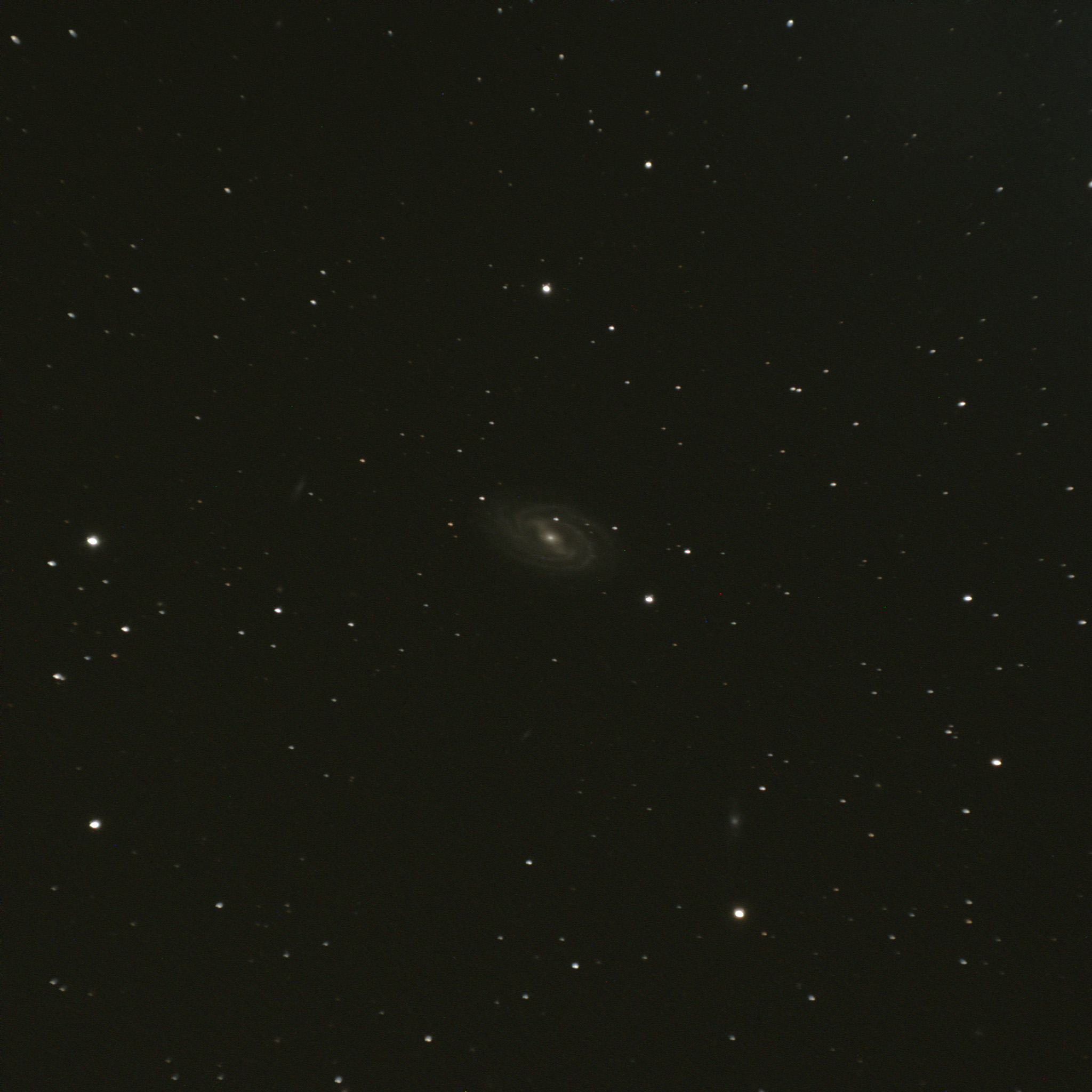
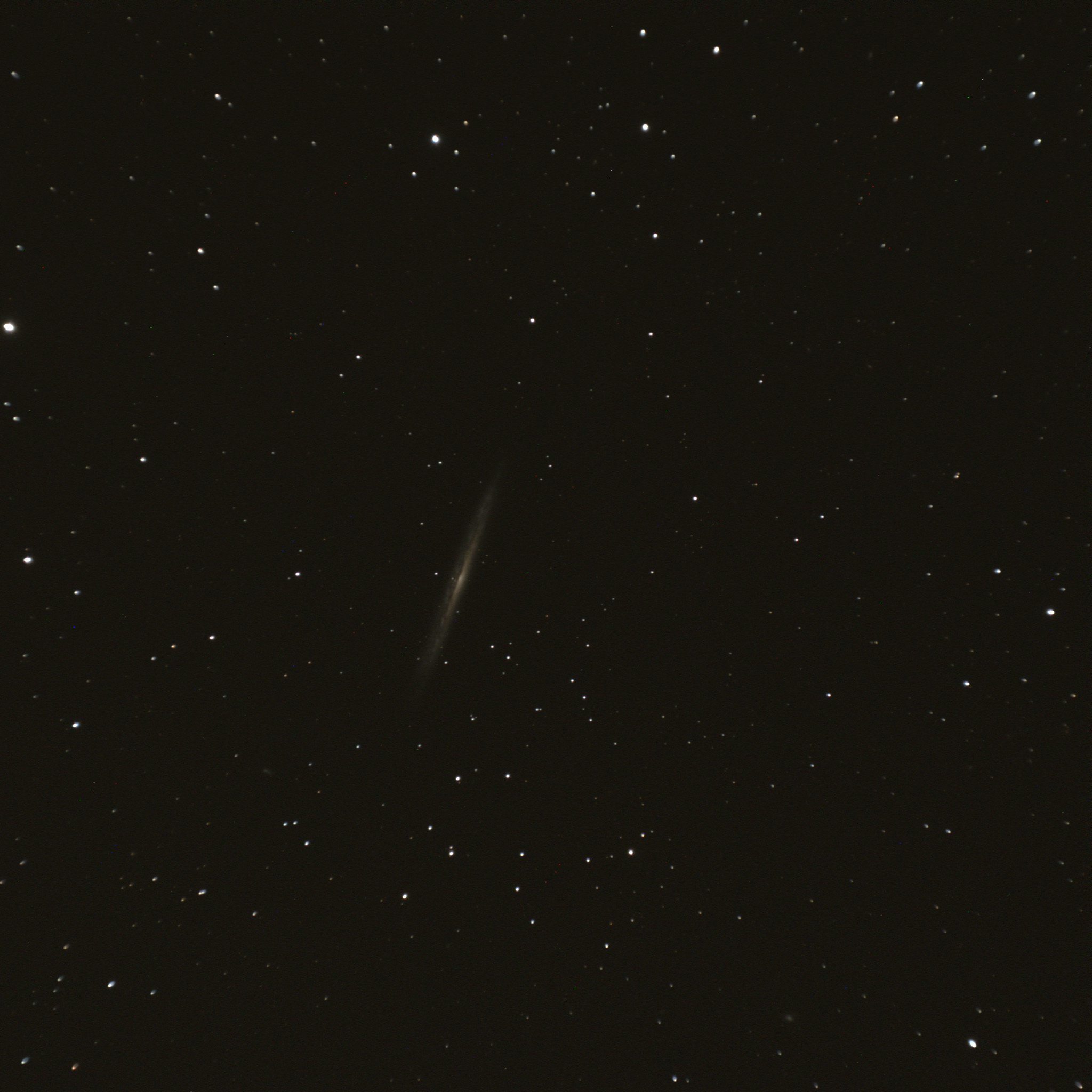
    Each of the 400×400 thumbnails below links to the full-size image, which is 2048 x 2048 pixels.

    M104
    M104 the Sombrero galaxy in Virgo
    M109
    M109 in Ursa Major, a faint barred spiral. Note a few distant spirals in the full-size image.
    NGC5907
    NGC5907, an edge-on spiral galaxy in Draco
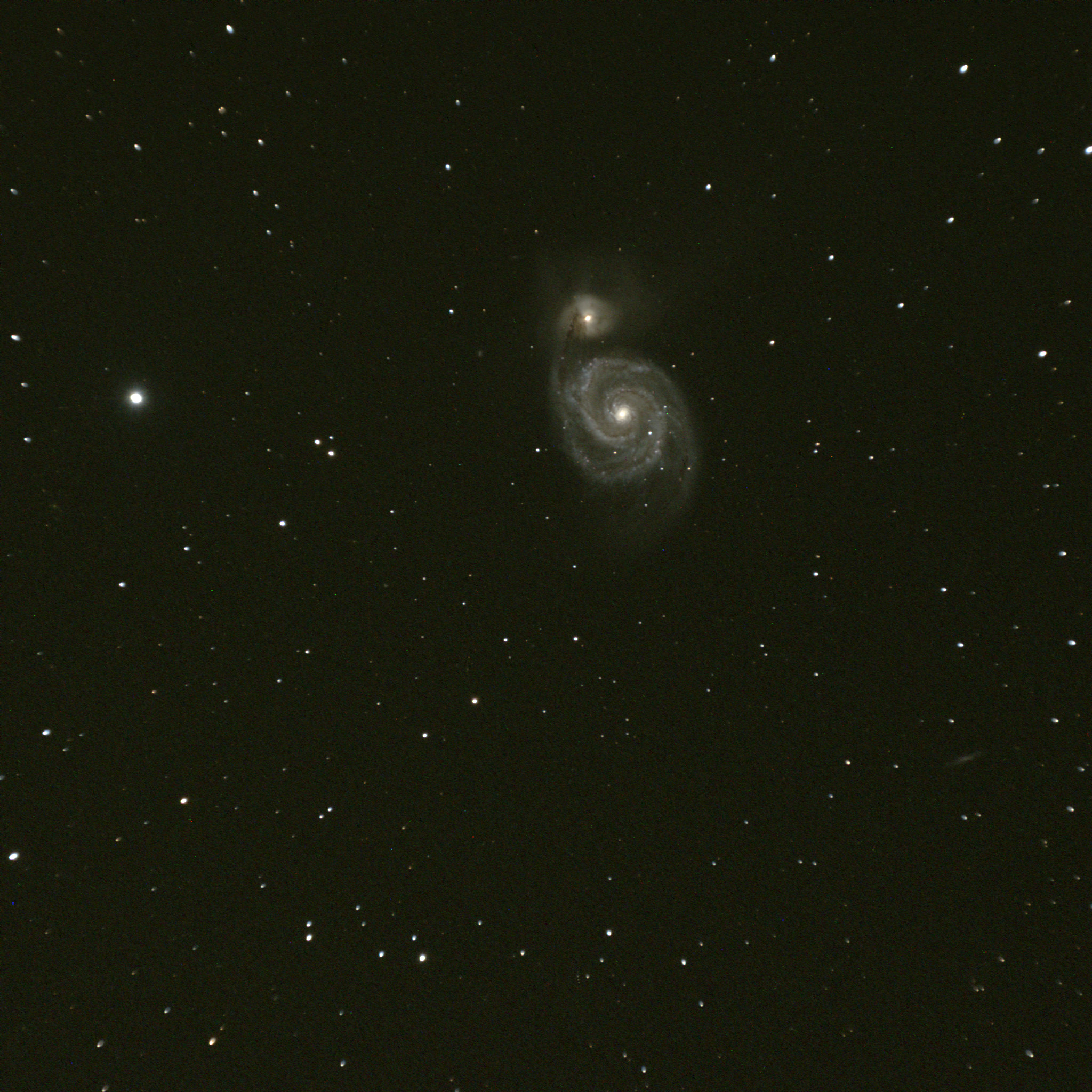
    M51
    M51 the Whirlpool galaxy pair in Ursa Major, one of the most photographed and observed objects in the sky.
  • Observing at Amboy Crater

    Observing report, October 22, 2011

    Full photo album with site pictures here.

    Amboy Crater National Natural Landmark
    It's very easy to miss this sign from National Trails Highway, the delightful old U.S. Highway 66.

    This month is blessed with two very good dark sky observing weekends, and we opted to take the first one at a spot we’ve been thinking about for a couple of years now.

    Amboy Crater National Natural Landmark is a volcano crater in California south of I-40, near the town of Amboy, CA. We first visited the site in the spring of 2010. The hike to the crater was fabulous, and the wildflowers were stunning.

    Our regular site at Chuckwalla Bench is also a Bureau of Land Management (BLM) site, but unlike Chuckwalla Bench, Amboy Crater features a paved road, pit toilets, parking spots, and picnic tables. Here’s a Google Maps link to the landmark and its facilities.

    The downside is that the drive is about 25 miles longer than the trip to Chuckwalla Bench. It makes for about three-and-a-half hours driving each way.

    Astronomically, Amboy Crater is one of the darkest locations in the state, with frequently clear skies and sometimes overly hot conditions.

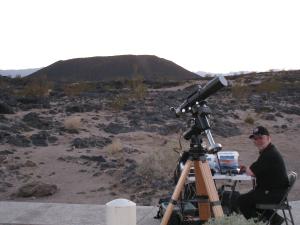
    Mojo with Amboy Crater
    Mojo set up for astrophotography with Amboy Crater in the background.

    This past Saturday evening had a nearly perfect forecast. We arrived on a hot dry afternoon, and enjoyed shirt-sleeve or light jacket conditions all evening with a crystal clear sky. We were joined by one other astrophotographer (Robin), and two seasoned visual observers (Cliff and Steve).

    My astrophotography is extremely casual. Living in the midst of Los Angeles county, I have no desire, nor is there much reason to, have a permanent observatory of any kind. We’ve both become adept at hauling our portable observatory to locations that offer good dark skies.

    Actually we have quite an advantage over astronomers in the eastern half of the U.S. The California deserts offer excellent astronomy, and are within a few hours drive of home.

    My telescope is an Astro-Physics Traveler, 105mm aperture (about 4 inches) with a short f/6 focal length. The mount is an Astro-Physics Mach-One GTO “go to” mount, and my camera is an SBIG ST-4000XCM, the perfect camera for my style of casual astrophotography. It’s a “one-shot color” camera, meaning I can shoot and process color images in a relatively short time, with extra processing to extract the data from the Bayer matrix. It wouldn’t be the best sensor for doing astrometrics or narrow-band imaging with specialty filters, but it’s great for playing around and taking pretty pictures (or trying to!).

    I had shot M31, the Great Galaxy in Andromeda, before, probably with my Canon 20D DSLR, but I wanted to take advantage of my wide field and gather an hour or so of data and see what I could get.

    I enjoyed watching twilight fade and set up with a very good polar alignment. By now I’ve managed to learn the quirks of Software Bisque’s CCDSoft, and was able to calibrate the autoguiding with great success.

    After returning home, I discovered that my first 15-minute exposure was not useable! The brighter stars in the image were fogged, probably by condensation on the CCD sensor glass. I have this mental image of bringing a telescope full of relatively moist L.A. basin air out to the desert, cooling the chip down to -5° C, and having every drop of moisture in that air condense on the chip.

    After the first exposure, the combination of the imager fan and the dessicant plug mounted next to the chip managed to pull out all that moisture and leave me with a dry and clear chip. The dry desert air kept me clear for the rest of the evening.

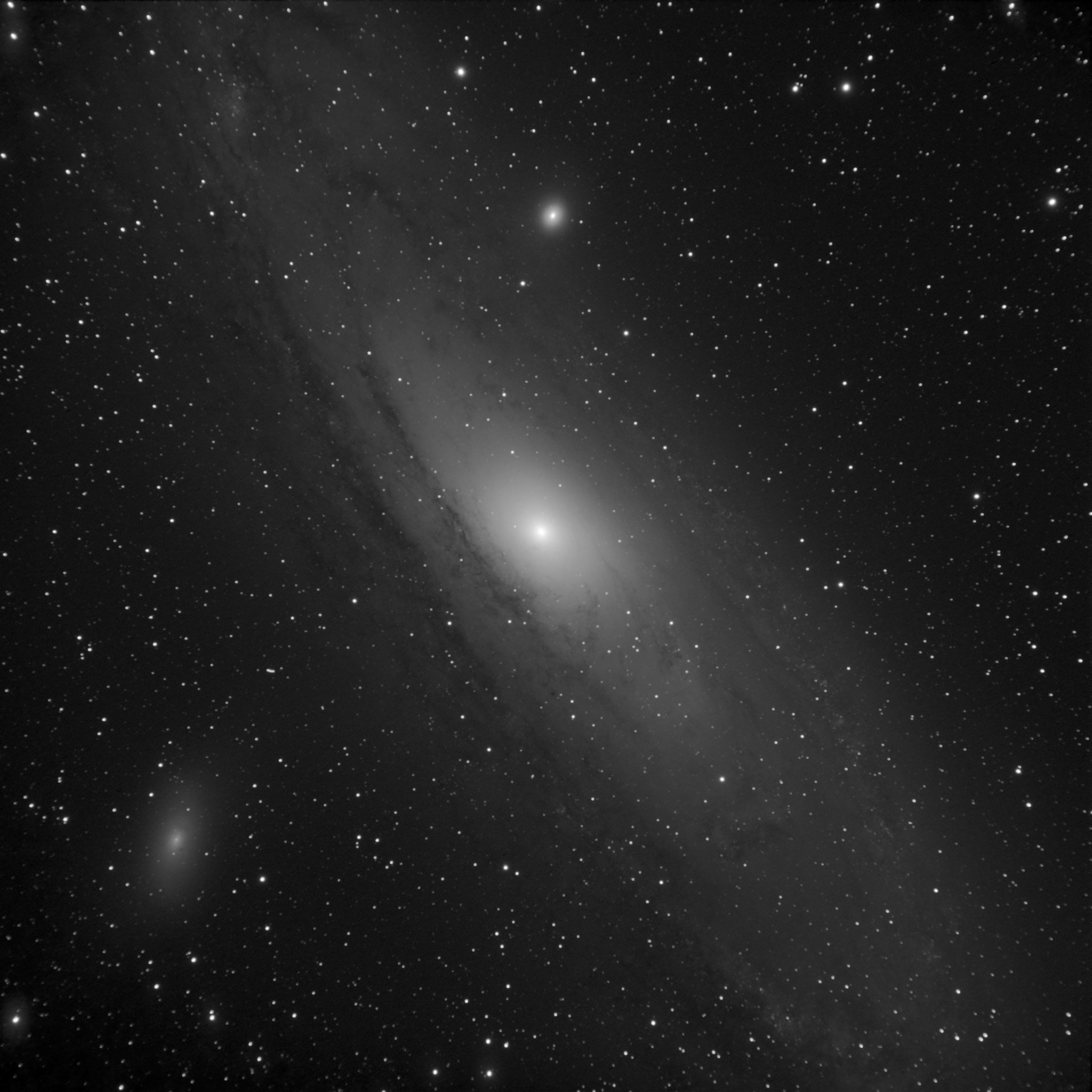
    Here is a luminance-only (monochrome) rendition of my M31 the Great Galaxy in Andromeda

    M31 the Andromeda Galaxy
    The Great Galaxy in Andromeda, M31, with M32 and M110 nearby. 3×15 minute exposures, luminance only. (Click for full 2048×2048 resolution).)

    Now after going to all the trouble of having a one-shot color camera, why am I presenting a monochrome rendition of M31?

    I have a processing problem with the color version that I haven’t resolved yet. This galaxy has an enormous dynamic range, and this monochrome image is compressed down from a 16-bit master luminance image.

    I’m only able to process the color information with 8-bit dynamic range. And my processing skill isn’t yet strong enough to preserve the color data when compressing it down to computer range. Here is the color version of this image. Note that the galaxy core is completely clipped to white in the color data, and I’m left with an ugly yellow ring around the core.

    It’s an interesting problem, and I’m sure that I can find a way to do some “high dynamic range” (HDR) techniques to recover that color data near the core.

    At that point, Jane called me over to see an interesting emission nebula she was observing visually in her 17.5-inch dob. The nebulosity was just detectable visually, and I really wanted an image to compare. Fun object, full of Milky Way stars, the nebula, and even some dark nebulosity in the upper right.

    NGC7380
    NGC7380 emission nebula and cluster, 3×15 minute exposures

    Jane hunted down comet C/2010 G2 (Hill), a magnitude 10 interloper. It was a very difficult visual observation, but she nailed it, and I saw it as well.

    C/2010 G2 (Hill)
    10th magnitude comet C/2010 G2 (Hill)

    Meanwhile Jane was also tracking down interesting galaxy groups, and had fun searching the fairly distant Pegasus 1 galaxy cluster in her 17.5-inch. I couldn’t resist imaging this as well.

    My own misfires only left me with one usable 15-minute exposure of this fascinating galaxy group. Even with just one 15-minute exposure and lots of noise, it’s fun to see how many galaxies you can find in the full-resolution image. The two brightest members are magnitude 12.

    Here we go from a relatively nearby solar system object, comet Hill, to a 200-million light-year distant galaxy cluster!

    Pegasus 1 galaxy cluster
    The Pegasus 1 galaxy cluster, one 15-minute exposure. Click for the full-resolution version, and see how many galaxies you can find in the somewhat noisy image.

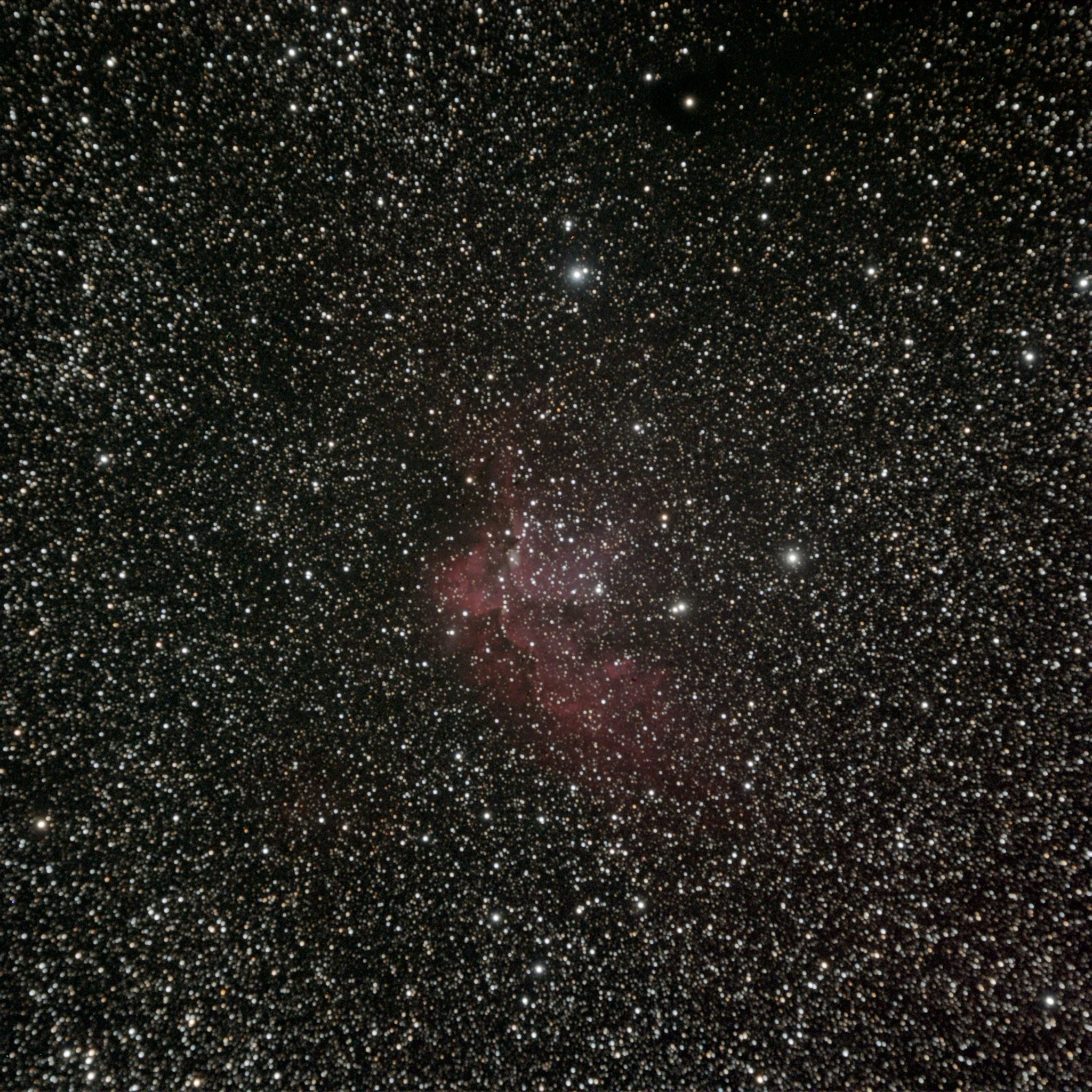
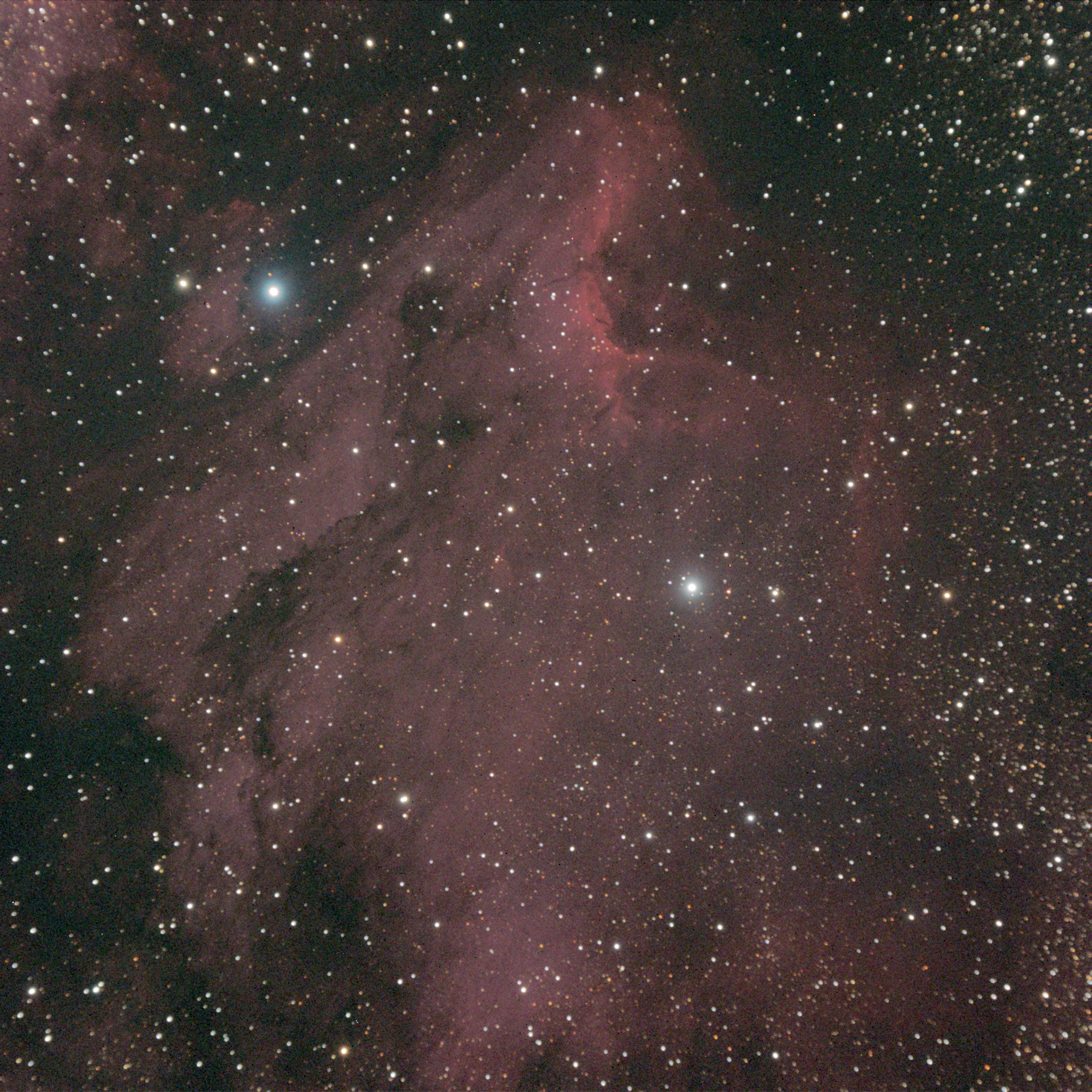
    Now I was just playing around. As it turns out, the Pelican Nebula was well placed, and The Sky 6 told me it would just fit in my field of view. This emission nebula is most famous for being “that thing next to the North America Nebula.”

    The Pelican Nebula
    The Pelican Nebula, one 15-minute exposure

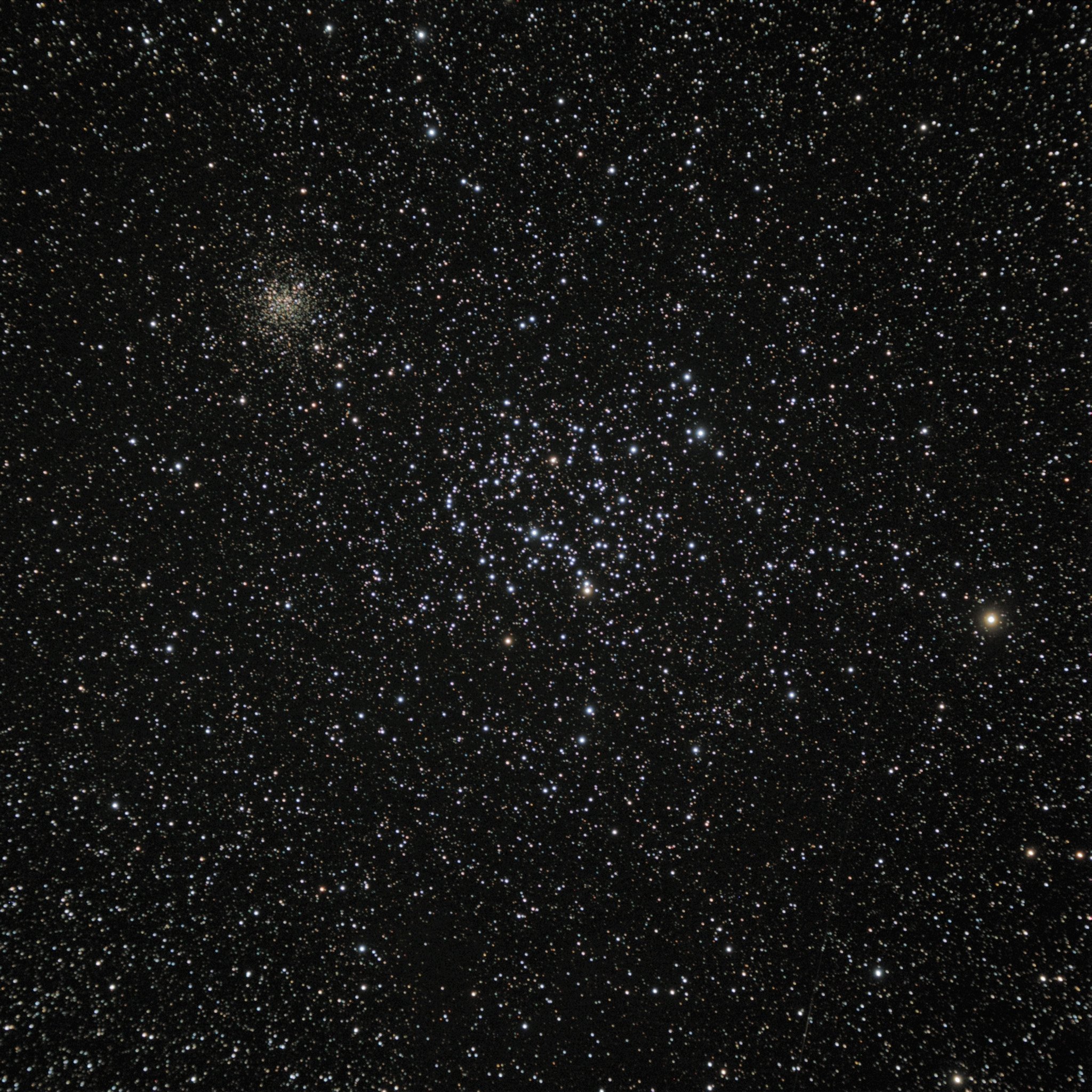
    One of my favorite visual targets is the enormous nearby open cluster M35 in Gemini in the winter Milky Way. Part of its appeal as a visual target is seeing the ten-times more distant open cluster NGC2158 which is about the same actual size as M35. The image didn’t disappoint.

    M35 with NGC2158
    Open cluster M35 in Gemini with distant sister cluster NGC2158. 2×15-minute exposures.

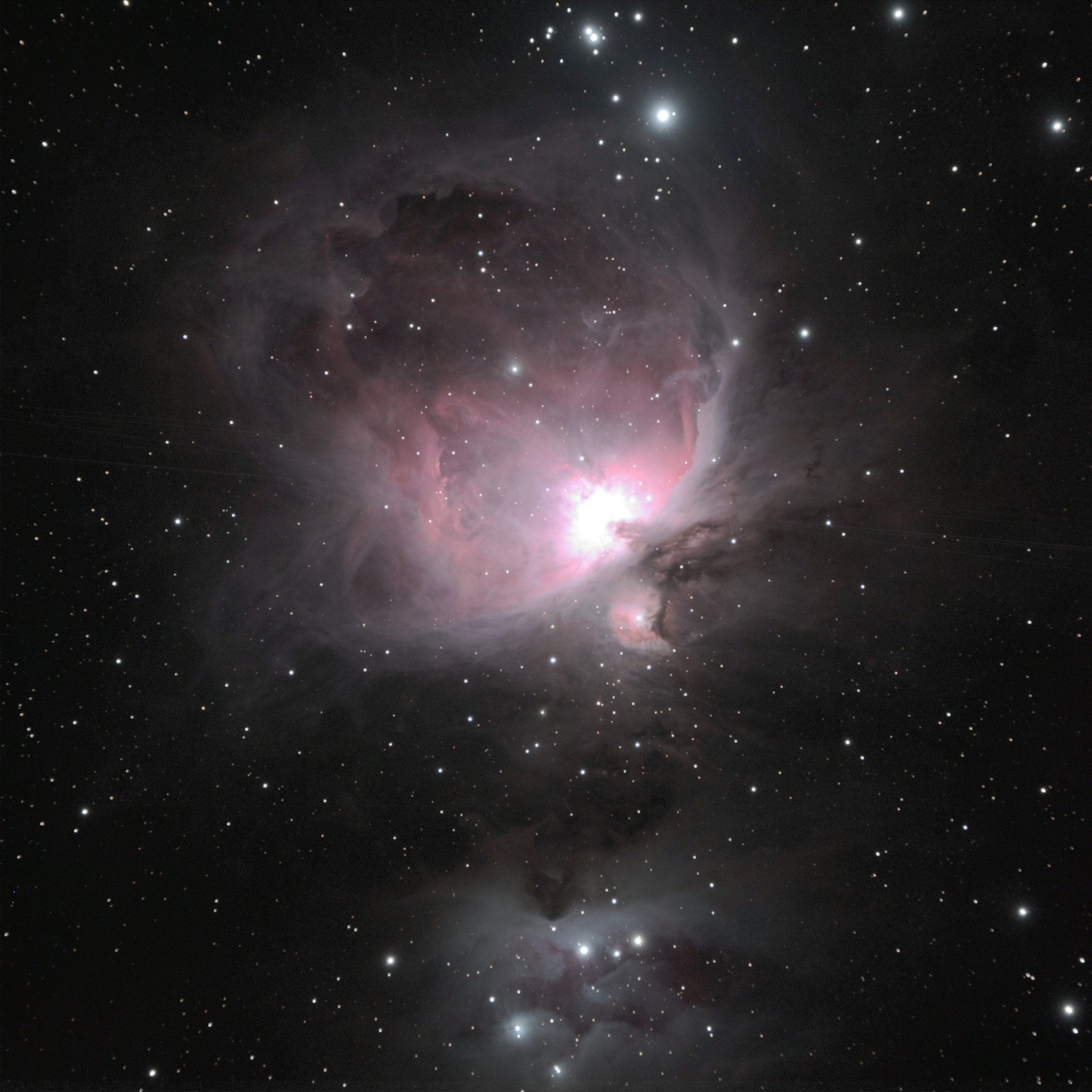
    Finally, even though it’s almost cliché, I had to see what I could do with M42 the great Orion Nebula. It actually turned out to be a delightfully pleasing image. Sure the trapezium area is blown out to white, and maybe I can work out a way to recover that, but it sure is a fun picture. B^)

    M42 the great Orion Nebula
    M42 the great Orion Nebula, 2×15-minute exposures


  • January observing, a Monoceros evening

    Click here for the full photo album with lots more pictures.

    Mt. San Jacinto
    The snow-capped peaks were beautiful from the Foothill Freeway

    It had been several months since our schedule, the weather, and the moon phase all cooperated to give us a chance to get out to our favorite astronomy spot. Jane and I, joined by Dave Hasenauer, ventured out to the Colorado Desert with promises of a chilly evening but mostly clear skies. The snow-capped peaks of San Jacinto and Gorgonio mountains were calling to us from almost our first moment on the road.

    Twilight on Chuckwalla Bench
    Twilight on Chuckwalla Bench

    During our twilight setup, some fellows from Arcadia stopped to check out the equipment. Dave was all set up and ready to show Jupiter if we could find it. While hunting in the twilight glow, we all exclaimed as a flock of probably 100 geese were approaching from the west. The geese turned out to be our guide to Jupiter! They flew right in front of the planet, and gave our eyes a convenient focus target. We all enjoyed the view through Dave’s big dobsonian.

    Jane had plans to attack the faint periodic comet 103P/Hartley, famous for its huge outburst of a year ago. Jane and Dave both claim to have found the glow of the incredibly diffuse comet. I tried for an image of it myself, but was convinced I didn’t have anything. This is my shot, with the comet buried deep in the winter Milky Way in Monoceros.

    Milky Way stars with a faint comet
    Can you find the comet?

    Can you find the comet? Here’s a full-resolution crop of the center of that field. Look right in the middle, and try to ignore that my focus wasn’t especially good for this picture!

    Comet 103P/Hartley
    Look for the faint cotton ball in the center.

    I was delighted that most of my hard-won imaging skills hadn’t been completely lost during the time away from it. I didn’t get a perfect focus for my first couple of shots of the evening, the comet Hartley photo above being one.

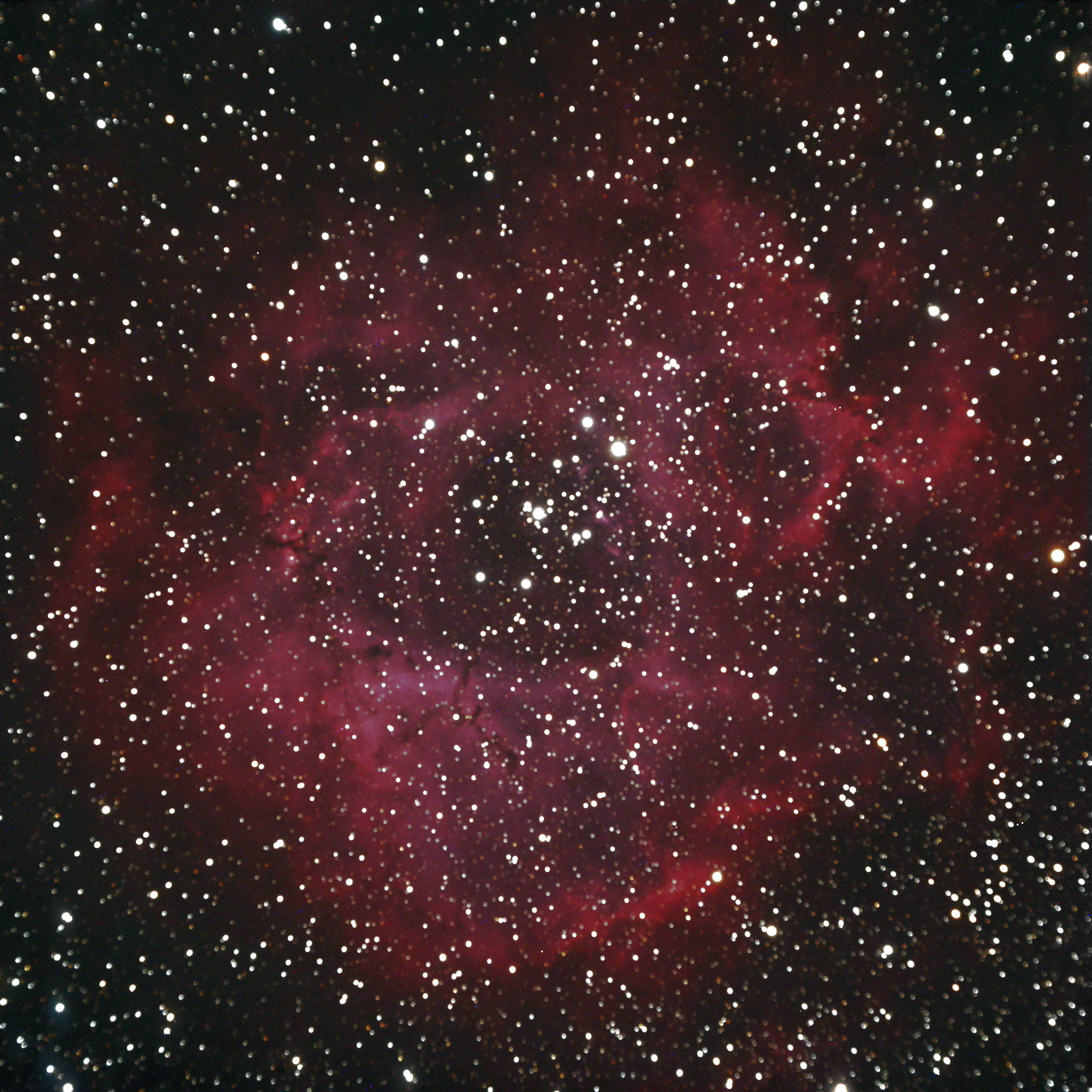
    Even with a less-than-perfect focus, this one of the Rosette Nebula in Monoceros turned out pretty well. This is only 30 minutes of exposure, and it’s pretty clear this object would benefit from a couple hours of exposure time.

    Rosette nebula
    The Rosette Nebula, click for the full frame

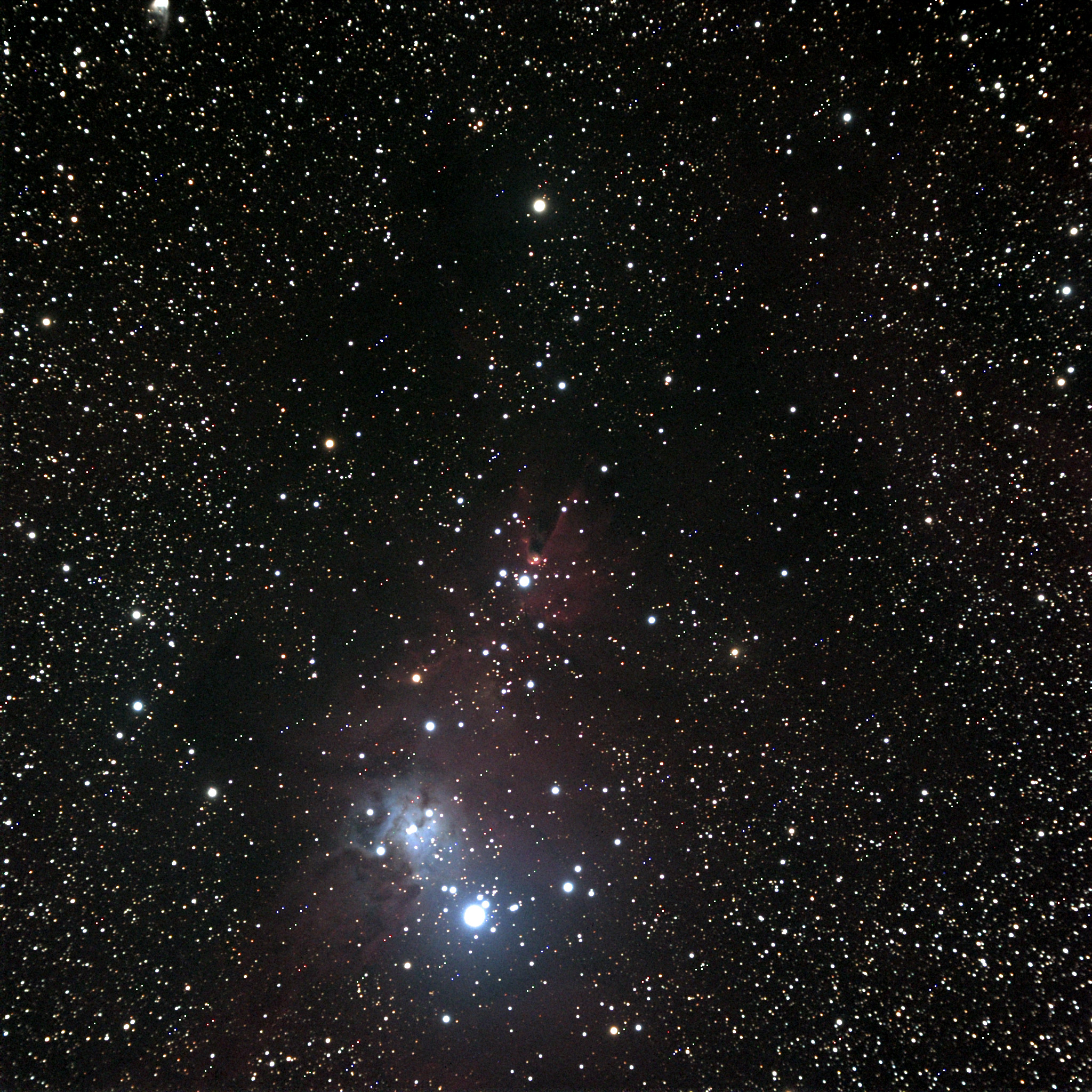
    The Cone nebula is another one that could benefit from a lot more exposure time, but at least by now I’d corrected the focus. I love this beautiful field, with a vast mix of Milky Way stars, emission, reflection, and dark nebulae. The “cone” that gives the nebula its name is near the center of the image. This is also two 15-minute exposures stacked.

    Cone nebula
    The Cone nebula in Monoceros, click for the full resolution image.

    A bright supernova was discovered just a couple weeks ago in small distant galaxy NGC 2655 in Camelopardalis, very high in the northern sky. Jane and Dave both enjoyed hunting it down, and the nova is bright and easy, itself as bright or brighter than the rest of the galaxy. Of course I had to get an image, here’s my crop of the field with the supernova marked.

    NGC2655 and supernova
    Supernova in NGC 2655, click to see the whole wide field image.

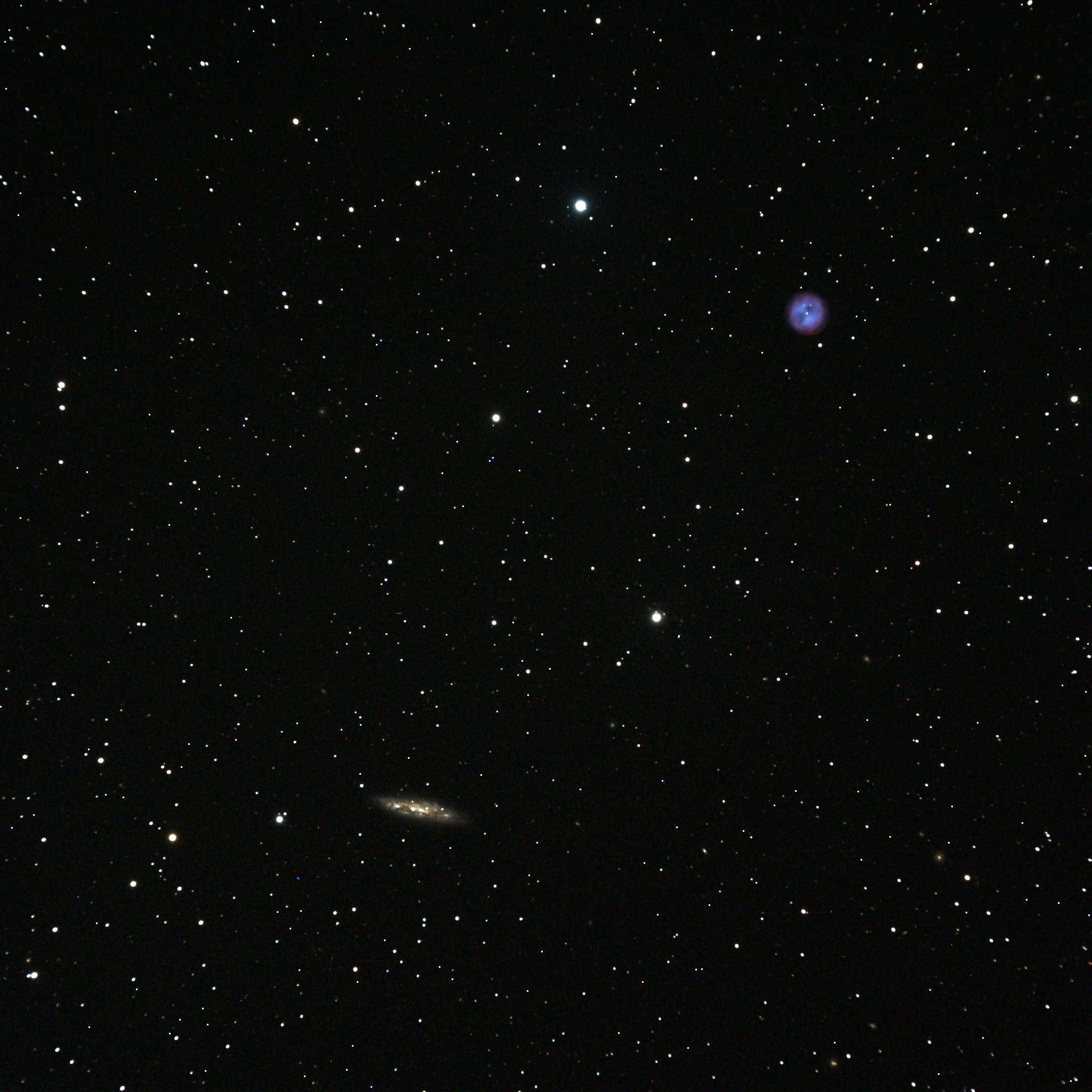
    Finally Jane suggested this great pairing, “The Owl and the Cigar,” she called it, M97 the Owl Nebula paired with galaxy M108 in Ursa Major. I only got one 15-minute exposure of this field, as the clouds were starting to move in, but I loved the colors in the Owl nebula, and the detail in M108. It’s fun to contemplate the difference in their distances, with the Owl being the gasping exhalation of a single star in our galaxy, and M108 being billions of stars in a very distant galaxy.

    M97 and M108
    The Owl and the Cigar, M97 (top) and M108, click for full resolution

    The first half of the night was interrupted several times by loud flights of two or three helicopters passing nearby. We speculate that they may have been in service to the border patrol, using infrared or intensified imaging. Our little site must have been interesting to see from their vantage point.

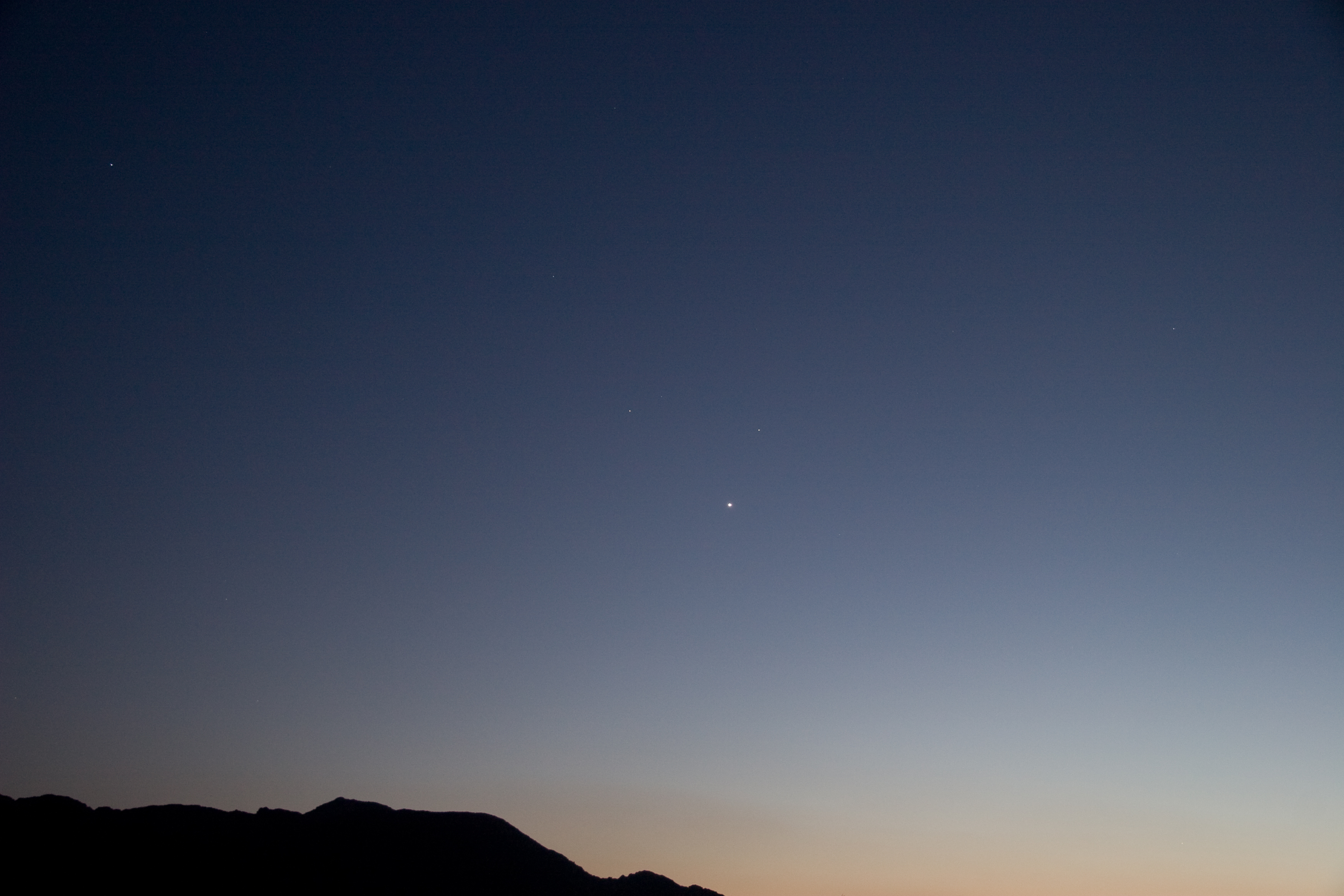
    Pre-dawn Chuckwalla Mountain with the moon and Venus
    Pre-dawn Chuckwalla Mountain with the moon and Venus

    By the time the sky show was interrupted by clouds, we all were tired and cold and felt like we’d had a full evening. Amazingly it was only 11:00 p.m.! We all tucked ourselves into warm sleeping bags to catch a few hours of sleep. Meanwhile the sky cleared again for spectacular pre-dawn show of the moon and Venus. We all got up to enjoy the old crescent moon, Saturn, and watch for Mercury to rise over Chuckwalla mountain.

    With the local star finally clearing the horizon, we packed and headed off to breakfast at Chiriaco Summit. By the time Jane and I arrived back home in Monrovia, it was raining!

    P.S.: In the photo album linked here, I included some detail photos of my astrophotography equipment, with captions, for the benefit of some friends who’ve wondered how these things happen.

  • Sky full of planets and lightning

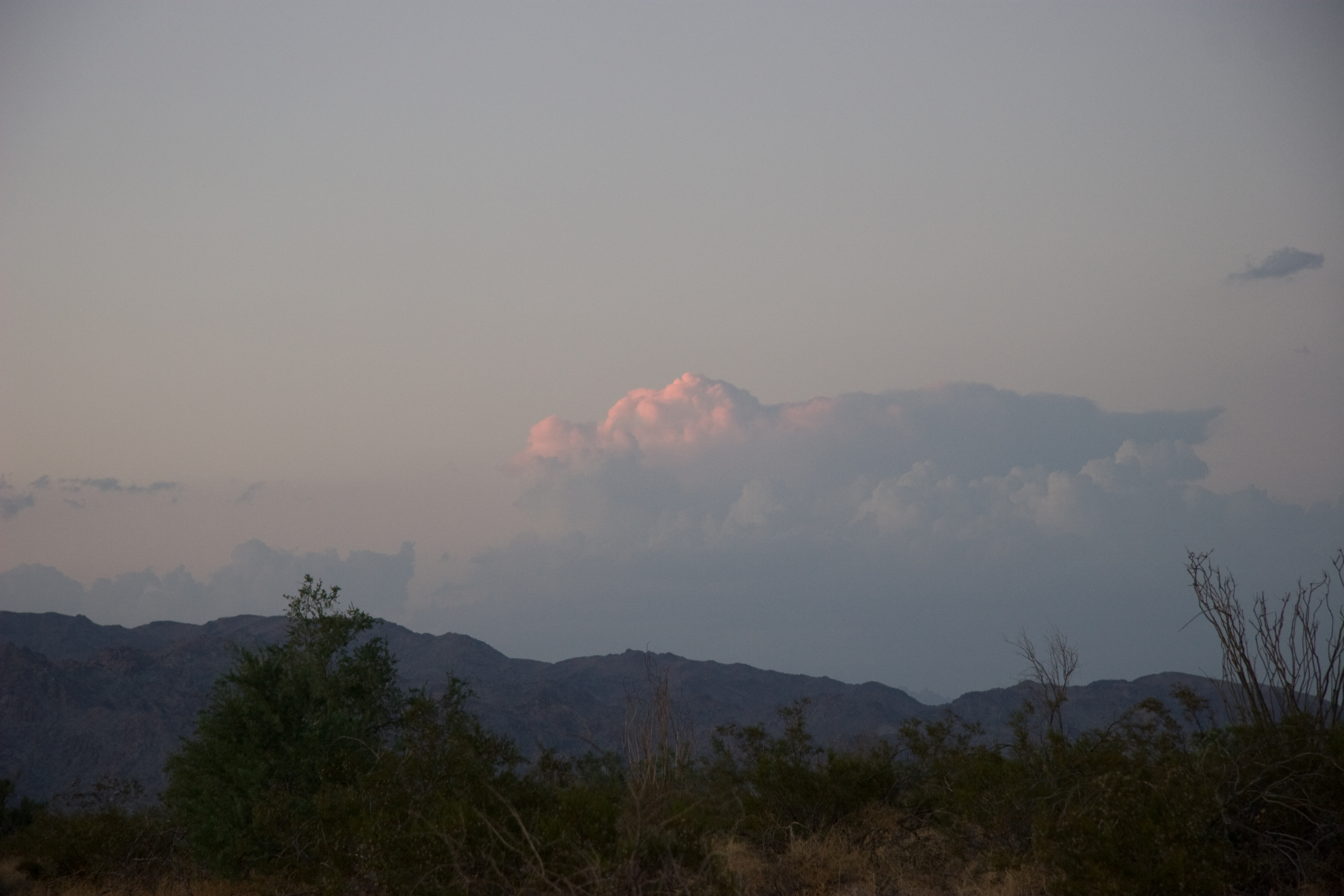
    Distant cumulus clouds catch sunset rays
    These cumulus clouds were nearly stationary all evening, making quite the light show with an electrical storm

    Observing report, August 7, 2010

    Chuckwalla, CA

    We hadn’t expected to be able to observe during this part of the summer from Chuckwalla Bench in the High Colorado desert south of Joshua Tree, but this August night’s forecast at Desert Center looked very inviting. The forecast high there was 101°F with a low of 74°F. I believe our actual location is at a higher altitude; it always seems at least a couple of degrees cooler.

    It was forecast to be breezy though, and that can make it uncomfortable to observe as well as blow telescopes and tripods around. We did have some periods when the wind was a nuisance, but for the most part it was pleasant t-shirt and shorts weather all night long.

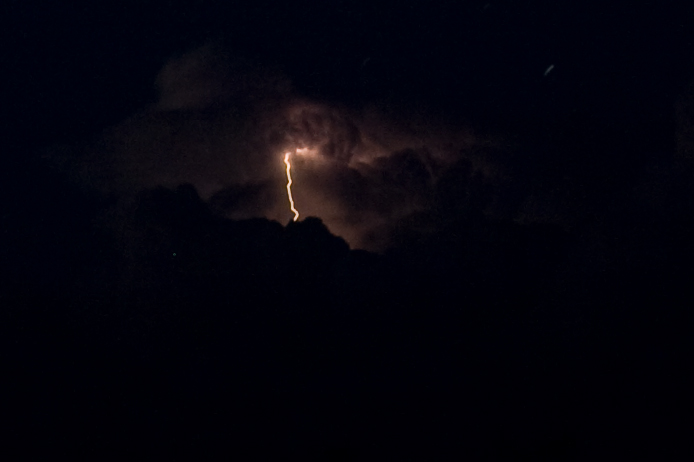
    Lightning in the desert
    I caught this great lightning bolt from the distant electrical storm, with the camera on a small tripod and the bulb left open for a while.

    We had crystal clear transparent skies overhead all night, with a great sugary Cygnus Milky Way transiting high overhead mid-evening, but there was an interesting weather phenomenon happening some number of miles north-northeast of us.

    As the sun was setting, we had this great view of some towering cumulus clouds catching the sunset glow to the northeast. Over dinner I thought I saw a lightning flash in the clouds. As it turned out, throughout the evening all the way to 2:00 a.m. we were entertained by a sometimes massive electrical storm that seemed to be nearly stationary. I caught this one good lightning strike off in the distance. The full-res version is a crop from the center of a very large picture.

    It was also to be a fun evening to see a planet grouping in the west, following the sun to the horizon. I caught this great shot of bright Venus, with Saturn to the upper right, and Mars to the left. To the far left is the bright star Spica. Click to see the great full-resolution picture. In binoculars, Mercury was also visible, but deep in the red sunset glow well out of the field of this picture. In a few days the crescent moon will join the trio for another good picture.

    Venus, Mars, Saturn
    Bright Venus grouped with Mars (left above) and Saturn. Click for the full 4MB experience.

    I did take a couple of interesting piggyback Milky Way pictures. My focus wasn’t perfect, and the white balance doesn’t seem quite right. They are mostly untouched except for some slight darkening of the blacks. They are both five-minute exposures on my stock Canon 20D. I think if this camera were modified to remove the deep red filter, the red hydrogen-alpha glow of the North America nebula would show more.

    Cygnus Milky Way
    Cygnus Milky Way, north with bright Deneb to the lower left from center.

    And here is a late-night shot of Cassiopeia.

    Cassiopeia
    Cassiopeia reclines in the summer Milky Way. The "double cluster" is visible near bottom center.

    And of course I did some exposures through the Astro-Physics Traveler as well. Here is the Swan Nebula, M17, four ten-minute exposures, ST-4000XCM one-shot color camera. Click on each for the full-resolution image.

    M17
    M17 also known as the Swan Nebula or Omega Nebula.

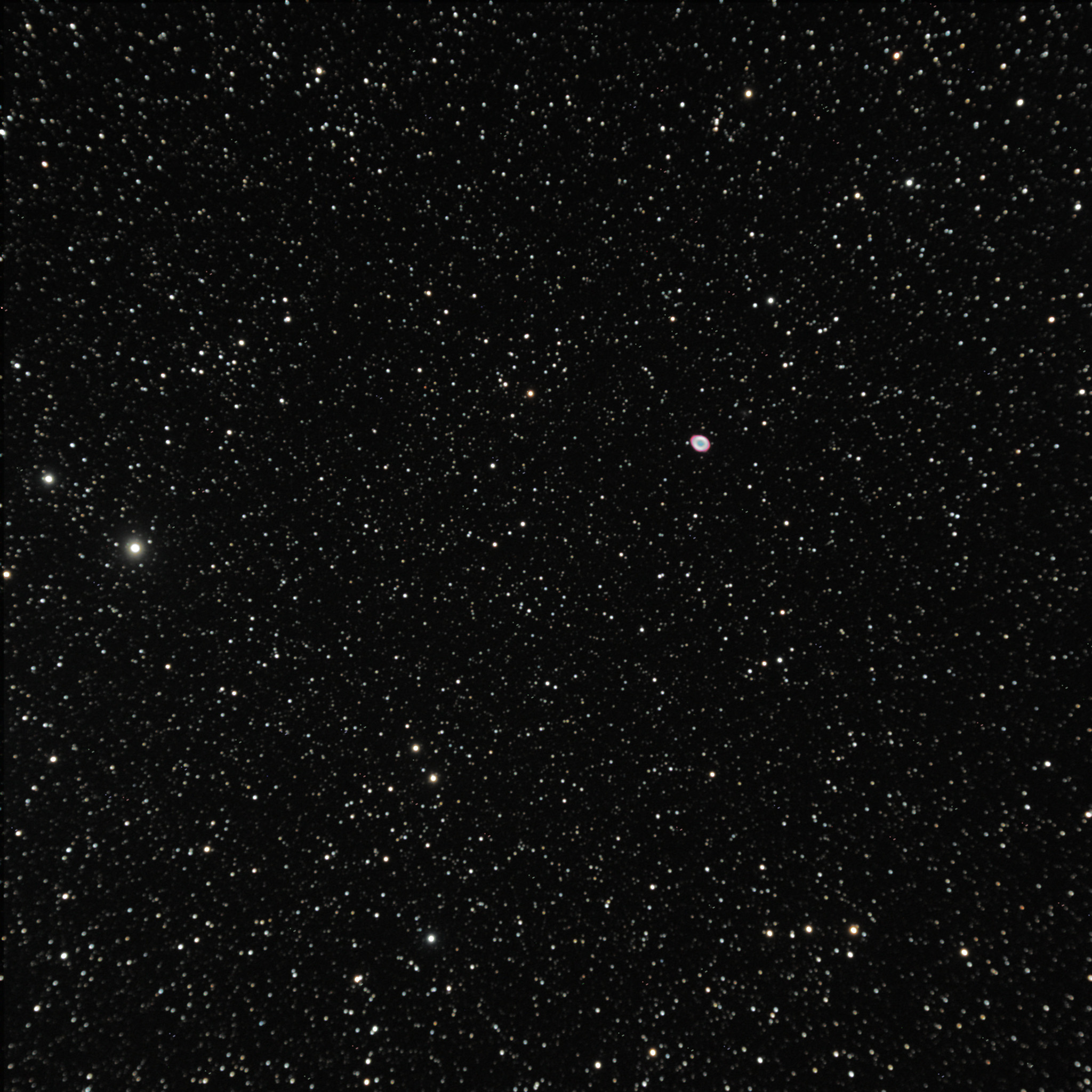
    I knew that the Ring Nebula, M57, would be an almost silly target for a telescope with this wide field of view. It would appear as a tiny donut swimming in a field of Milky Way stars, just as it often does visually in a telescope. Of course that made it irresistable. Here is the full field:

    M57
    There's the Ring Nebula, M57, just right of center.

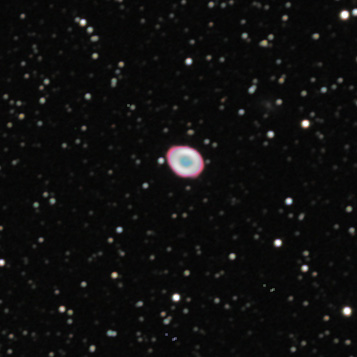
    And now as you can see in a crop at full resolution, it’s not a bad image at all. This is three ten-minute sub-exposures (30 minutes total).

    M57
    Full-resolution crop from the wide field above, M57 the Ring Nebula.

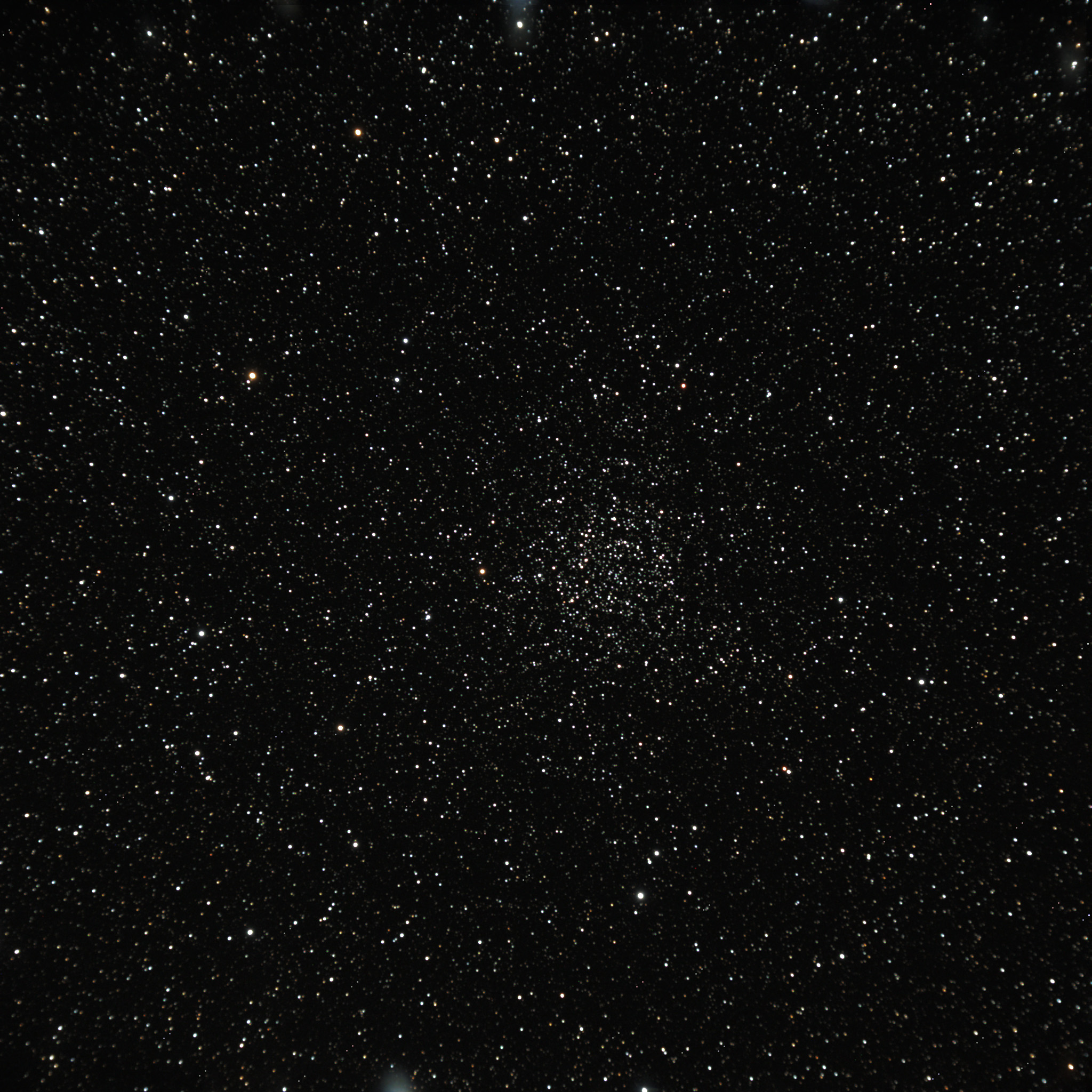
    Finally I wanted to get one of Jane’s (and my) favorite Cassiopeia star clusters, one discovered by Caroline Herschel, and known as the Magnificent Cluster, NGC7789. This scaled down version is not terribly impressive, but the full-res image is a treat to swim around in.

    NGC7789
    The Magnificent Cluster, NGC7789, in Cassiopeia

    On a techy note, for the first time I started to have some issues with haze forming on the chip. Given the presence of those nearby cumulus, I guess I can’t always count on the desert air to be completely water-free. 🙂

    Besides the great deep sky and planets, of course we also had lots of meteors from the forward edge of the Perseid meteor shower. Jane did some great counts, and I enjoyed some bright meteors while the shutters were open.

    ‘Til next time …

  • Pinwheels, Horseheads, and Flaming Stars

    Photo from Feb. 2009 of the Astro-Physics Traveler getting ready for a night of imaging at Chuckwalla Bench
    Photo from Feb. 2009 of the Astro-Physics Traveler getting ready for a night of imaging at Chuckwalla Bench

    Jane and I were by ourselves for the dark sky weekend of November 14, 2009. We set up at our usual spot at Chuckwalla Bench. Unlike the past two months, this night featured a cold air mass that required bundling up well. It also implied that the seeing from our desert location might not be perfect.

    Jane brought her 12.5-inch Litebox dobsonian, and I opted for the 4-inch Traveler refractor (seen in my heading photo).

    The night turned out to be beautiful. The seeing was good, and we were able to enjoy a few early Leonid and Taurid meteors as well. My goal was to try getting more exposure minutes on some classic targets, and try to get some piggyback constellation photos as well.

    M33 and Triangulum region

    Triangulum, Aries, and Andromeda, piggyback naked-eye resolution
    Triangulum, Aries, and Andromeda, piggyback naked-eye resolution

    The famous Pinwheel Galaxy, M33, was a difficult object for me when I started out in astronomy with a classic 8-inch Celestron SCT. The face-on spiral is enormous in the sky, covering almost as much area as the nearby Great Andromeda Galaxy. But its surface brightness is low, so with a little magnification it’s possible to look right through the galaxy without seeing it. I later learned that it sometimes shows up better in binoculars than a telescope.

    If you click on the naked-eye resolution photo nearby, you can find M33 as a faint smudge just to the left of center. M31 the Andromeda Galaxy bright core is in the upper left.

    The three bright stars of Triangulum are in the lower third, just left of center. The bright stars of Aries are also in the lower third, to the right of center. (Might be fun to use Flickr’s photo tagging feature to highlight the features.

    M33 the Pinwheel Galaxy
    M33 the Pinwheel Galaxy

    Again “click to embiggen” as Phil Plait would say. This image is a stack of four 15-minute exposures with the AP Traveler and the SBIG ST-4000XCM one-shot color CCD camera. I love seeing the famous red star-birth regions sprinkled through the arms of this nearby galaxy.

    In terms of technique, I used a Bahtinov focusing mask for the first time. It saved a lot of time in finding and maintaining focus. Autoguiding worked perfectly. It felt really good to have confidence to take long sub-exposures and stack them in Photoshop. This was my first true one-hour image, and the first I’m proud to have seen at full resolution.

    Auriga and IC 405

    Piggyback view of Auriga, naked-eye resolution
    Piggyback view of Auriga, naked-eye resolution

    Auriga was one of the first constellations I identified and recognized on my own as a new astronomer, so I’m always delighted to see it again.

    In the piggyback shot, the bright Auriga stars form a squashed pentagon slightly left of center. The right-most star doubles as part of Taurus. North is to the left, and the brightest star there is Capella. In the full-resolution image you can see the Milky Way open clusters M36, M37, M38, and I think that’s M35 in Gemini in the lower right.

    Jane was enjoying touring through targets in this part of the sky, and spent some time attempting to see visually the difficult target IC 405, the Flaming Star Nebula. (Her companion post on the subject is coming soon.) I was intrigued as well, and took 30-minutes of exposure time on IC 405. It’s not visible in the piggyback view, but is found in Auriga near the upper center of the picture.

    IC 405 the Flaming Star Nebula
    IC 405 the Flaming Star Nebula

    I wasn’t familiar with this target, and the 30-minutes of data here shows only the brightest areas of this faint nebula. Longer exposures and a Hydrogen-alpha filter will show the nebulosity extending out to the left and curling up like a huge comma. This was a really fun target, and I’m looking forward to Jane’s discussion of it.

    Orion, the Flame and the Horseshoe

    Orion, piggyback naked-eye resolution
    Orion, piggyback naked-eye resolution

    Finally I wanted to see if my little 4-inch refractor could possibly do justice to one of the most popular astrophotography targets. Here in my naked-eye resolution piggyback photo is the Orion constellation, with its famous bright star-birth nebula near the dead center of the photo.

    The target I had in mind wasn’t the Orion nebula itself, but two very different nebulae near the left-most belt star Alnitak (Zeta Orionis). Just to the left of Alnitak is a bright yellowish nebula called the Flame. In a telescope it shows a lot of detail, looking almost like tire tracks. The full-resolution picture of the constellation has just a hint of the flame. If you already know it’s there, you might be able to see it.

    For my piggyback photos I used my Canon 20D digital SLR camera, mounted on top of the AP Traveler. I shot 5-minute exposures, and tried to subtract a 5-minute dark frame, which doesn’t seem to make much difference.  The camera does leave behind a reddish glow which I’ve removed in Photoshop.

    Just below Alnitak is the Horsehead nebula, also known as Barnard 33. Seeing the Horsehead visually is a fun and difficult project, requiring really good transparency and a fairly large telescope. Jane observed it visually in her 12.5-inch.

    The Flame and the Horsehead in Orion
    The Flame and the Horsehead in Orion

    I never dreamed the image would turn out this nicely. The big white bright blob just above center is Alnitak. In the lower right is Sigma Orionis, one of my favorite multiple star systems. Of course the bright Flame is just left of Alnitak, and dark nebula B33 is just below center.

    Just as with M33, this image is made up of four 15-minute exposures. The telescope is a 105mm f/6 Astro-Physics Traveler, with an SBIG ST-4000XCM one-shot color CCD camera. The mount is the AP Mach-1 GTO on wooden tripod, and I did autoguiding and image capture with Software Bisque’s CCDSoft. I used SBIG’s CCDOps software to process the Bayer-matrix one-shot color pixels out to luminence and RGB components, combined the L and RGB components in Photoshop, then stacked the four color images for the final photo.

  • Finally autoguiding

    Full photo album of setting up and astrophotos here at the Whiteoaks Photo Album.

    Update: Here’s Jane’s version of the same evening. 🙂

    It was another perfect new moon Saturday for a trip to our favorite spot in the Colorado Desert out I-10.

    Yes this is a very full Grand Caravan!
    Yes this is a very full Grand Caravan!

    Jane and I happily took out all the seats of the old Grand Caravan and filled it with telescopes and gear. We brought her 17.5-inch Litebox dob, and our AP180EDT f/9 refractor.

    Jane has been indulging my dabbling in astrophotography lately. I’ve been delighted that Jane is using some of my astrophotos for the What’s Up podcast, lucky that she wants imperfect images that are closer to what one might actually see in an amateur telescope.

    This 180mm f/9 refractor should be an outstanding astrograph; it’s certainly an amazing visual astronomy instrument. I dabbled with it a little last year in Anza Borrego, knowing I needed to learn a lot of operating technique to get some good results. I solved a few mechanical problems then, and ran into autoguiding calibration later. Those lessons served me well, even though it’s almost a year later.

    Early in the evening was Jupiter time, and we all spent some time soaking up the gorgeous views through a binoviewer in steady seeing. 300x on Jupiter showed lots of detail in the bands, including a nice red barge in the North Equatorial Belt, and nice little disks and color on the moons.

    I’m going to take a few paragraphs to talk shop, gadgets, problems, and solutions.

    Setting up the AP180, all ready to take flats, except theres no known focus position!
    Setting up the AP180, all ready to take flats, except there's no known focus position!

    My camera is an SBIG ST-4000XCM single-shot color CCD camera which perfectly suits my recreational needs. The big AP180 is mounted on an older 900QMD mount, a simple but stable platform without GOTO electronics or servos.

    The 900QMD mount comes with digital encoders on the R.A. and Dec axes, but having spent several years using this telescope for primarily lunar and planetary observing, those encoders went unused for the life of the mount.

    The R.A. axis encoder is removable so you can use a polar alignment scope, and the encoder shaft has a slip fit into a metal sleeve when it’s in place. Last year I discovered that this mechanical connection slips very easily, rendering the encoder useless.

    The trick I settled on, which worked again tonight, was to cut a little piece of rubber band and push it into the fitting to serve as a tightener.

    Jane aligns the Telrad on her 17.5-inch Litebox
    Jane aligns the Telrad on her 17.5-inch Litebox

    To use the digital encoders for pointing, I acquired a BBox from JMI, connected that to a USB-Serial adapter, and used Software Bisque’s TheSky 6 to serve as my controller. I’ve learned by experience (at Fremont Peak observatory) that the alignment doesn’t need to be 100% perfect. I’ve learned the trick of syncing the software and encoders to a bright star near my target, then doing an accurate short slew to my actual target.

    (One problem I haven’t quite solved yet is play in the polar scope. I haven’t figured out how to tighten the polar scope in position, in the correct orientation, so it doesn’t wiggle.)

    So with a not-quite-perfect polar alignment, autoguiding becomes my essential partner. CCDSoft can be tricky software to work with when calibrating the autoguiding. The error messages and manual don’t really help solve problems like “Illegal motion in X-axis, error 352.” I thought I might even be dealing with a problem in the mount mechanics. In retrospect, I think I also hadn’t learned the correct switch settings on the QMD controller. (“Guide” and “.5” works much better than the 16x slew mode for visual!)

    On perusing the Software Bisque support forum last week, I was able to learn that their autoguiding calibration depends entirely on there being only one bright star in a large region of the guide imager. While I could see the guide motions working perfectly and orthogonal, the software doesn’t do matching of the star field, only looking for the one significant guide star.

    Having discovered that, I was finally able to successfully calibrate the autoguider. And with one successful calibration (remembering to set the current declination), I could autoguide on different targets successfully for a long time.

    (The Software Bisque manuals hint that there’s a way to link to TheSky so CCDSoft knows the declination of its target, but I haven’t figured that out yet.)

    M74 two 15-minute exposures, SBIG ST-4000XCM, 180mm f/9, October 17, 2009
    M74 two 15-minute exposures, SBIG ST-4000XCM, 180mm f/9, October 17, 2009

    Pisces was high overhead, and I love M74, so I decided as a first target to revisit that favorite. I settled on 15-minute exposures. The first one came out “double vision” when the autoguider momentarily lost track during the exposure, but that was the only time that happened during the evening.

    NGC7541 in Pisces, 15 minutes
    NGC7541 in Pisces, 15 minutes

    A visit to the Night Sky Observers Guide suggested NGC7541 as a Pisces “showpiece,” and I love galaxy groups. This one was gorgeous in Jane’s 17.5-inch, too.

    NGC7640, 15-minute exposure
    NGC7640, 15-minute exposure

    Jane showed me NGC7640 in her 17-inch, a really lovely look, and I thought it would be a great target. We’re starting to enjoy comparing visual and imaging views.

    NGC253, 2x15minute exposures
    NGC253, 2x15minute exposures

    I admit I get impatient when I’m imaging, and want to collect more targets rather than more exposures on the same target. As a result, I have a little more noise in my images, but I’m having fun anyway. That said, I couldn’t resist spending some time on NGC253, the Silver Coin galaxy. I had a tantalizing glimpse of this target last year at Anza Borrego when I hadn’t yet learned how to make the autoguiding work. This time I got two lovely 15-minute exposures. Well worth it.

    Pre-dawn crepuscular rays at Chuckwalla Bench
    Pre-dawn crepuscular rays at Chuckwalla Bench

    After a few hours sleep, we were greeted with lovely pre-dawn crepuscular rays, Venus, and Saturn making its return after solar conjunction. Not to worry, the telescope was capped, and about to come down into its box, anyway. (You can see the box ready to be loaded with telescope.) Jane paused to take this lovely picture.

  • A perfect night in the desert

    Observing report, dark sky weekend, September, 2009, Chuckwalla Bench

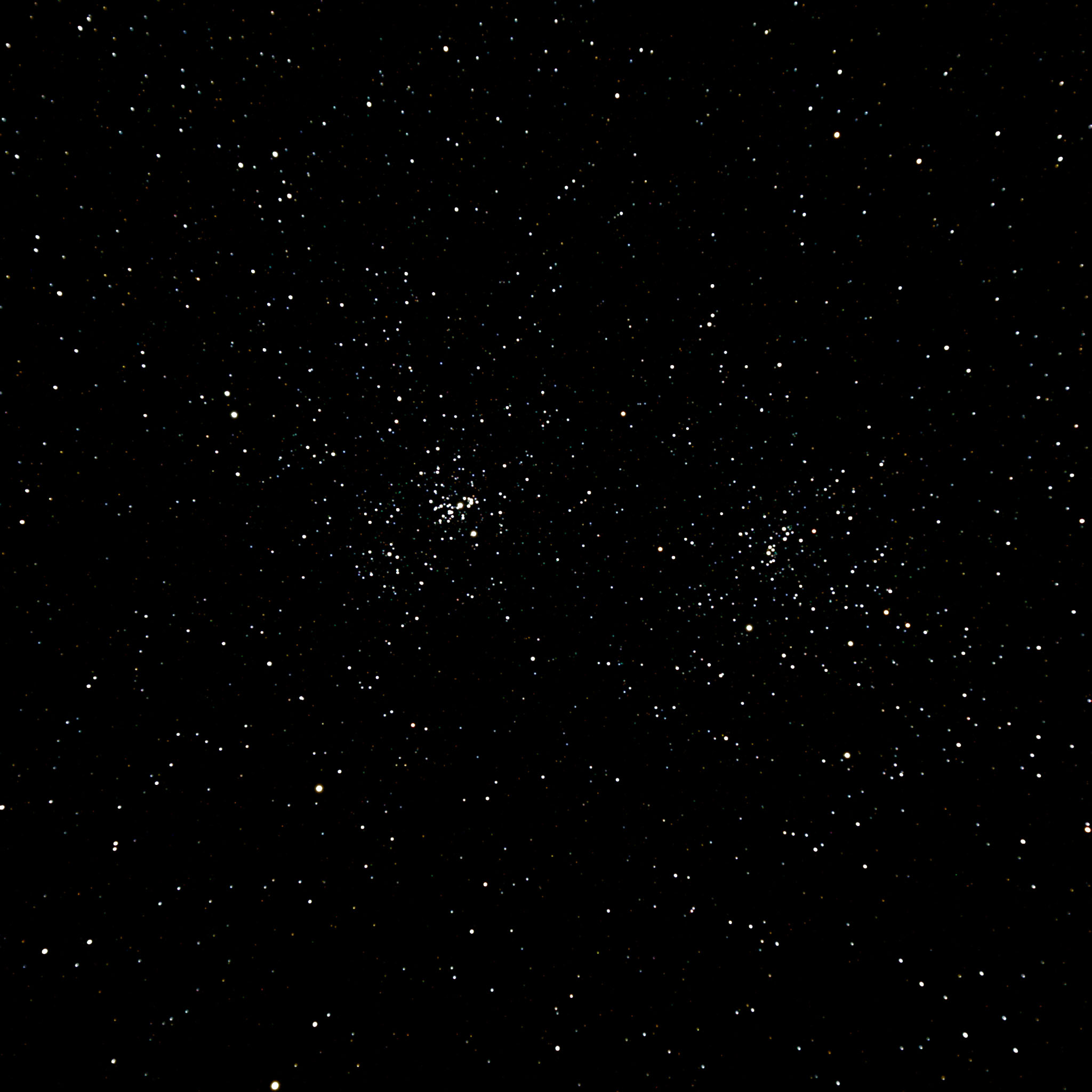
    The Double Cluster between Cassiopeia and Perseus
    The "Double Cluster" between Cassiopeia and Perseus

    The Clear Sky Chart forecast for Desert Center, CA, was dark blue all night for our favorite observing site. The NOAA forecast called for a high of 99 and low of 77. Often a night like this can have uncomfortably hot weather. Chuckwalla Bench is a little higher than Desert Center, so I was hopeful that the night wouldn’t be miserable with heat. It turned out to be lovely shirt-sleeve weather all night.

    Several of us were feeling dark-sky-deprived, so Jane and I were really looking forward to some quiet time with friends in our favorite desert location.

    I took the Astro-Physics Traveler (pictured at the top of my blog in a photo taken at Chuckwalla Bench) to attempt a little low-power astrophotography.

    As I mentioned, I was really rusty with the equipment and procedures, and am a beginner at astrophotography anyway, with a total of about four sessions under my belt. We were all out of practice; I think everyone on the trip left something at home or had some minor trouble.

    After warming up with the Double Cluster as a good focusing target, my main goal of the evening was to make my first real asteroid trail or animation. With Juno very much in mind from Jane’s What’s Up podcast, I decided it would be my second target.

    Animation of four Juno images taken over 50 minutes
    Animation of four Juno images taken over 50 minutes

    Jane and Gary were hunting down Juno visually while I was imaging it. We had a great time using a combination of images and TheSky 6 to make a positive identification of Juno. I collected four ten-minute exposures, and made my first asteroid animation above.

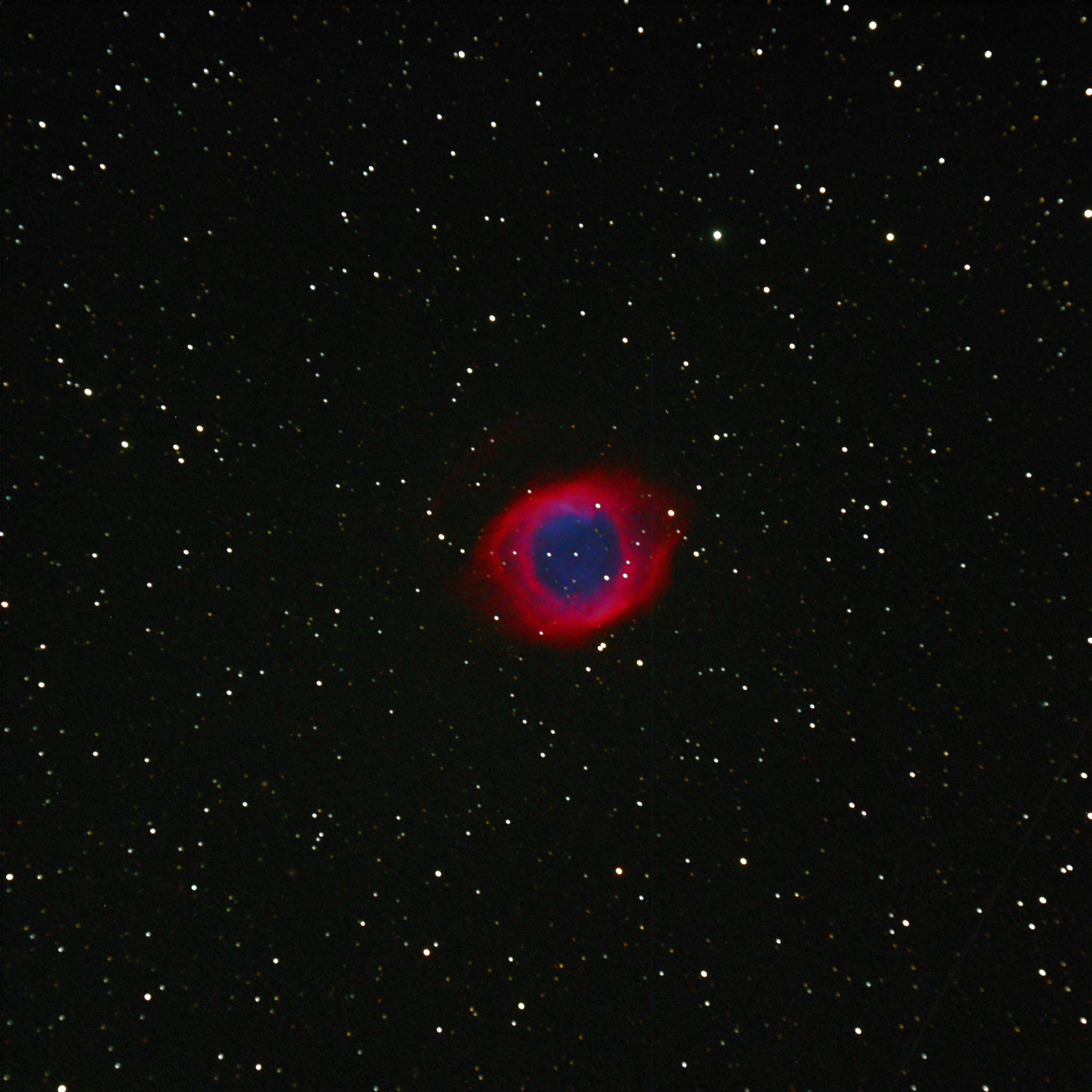
    The Helix planetary nebula, crop from full-frame image.
    The Helix planetary nebula, crop from full-frame image.

    The Helix Nebula NGC 7293 is an irresistible target for a good wide-field telescope and a color camera. I combined three ten-minute exposures. The image above is a crop — click to see the full field image.

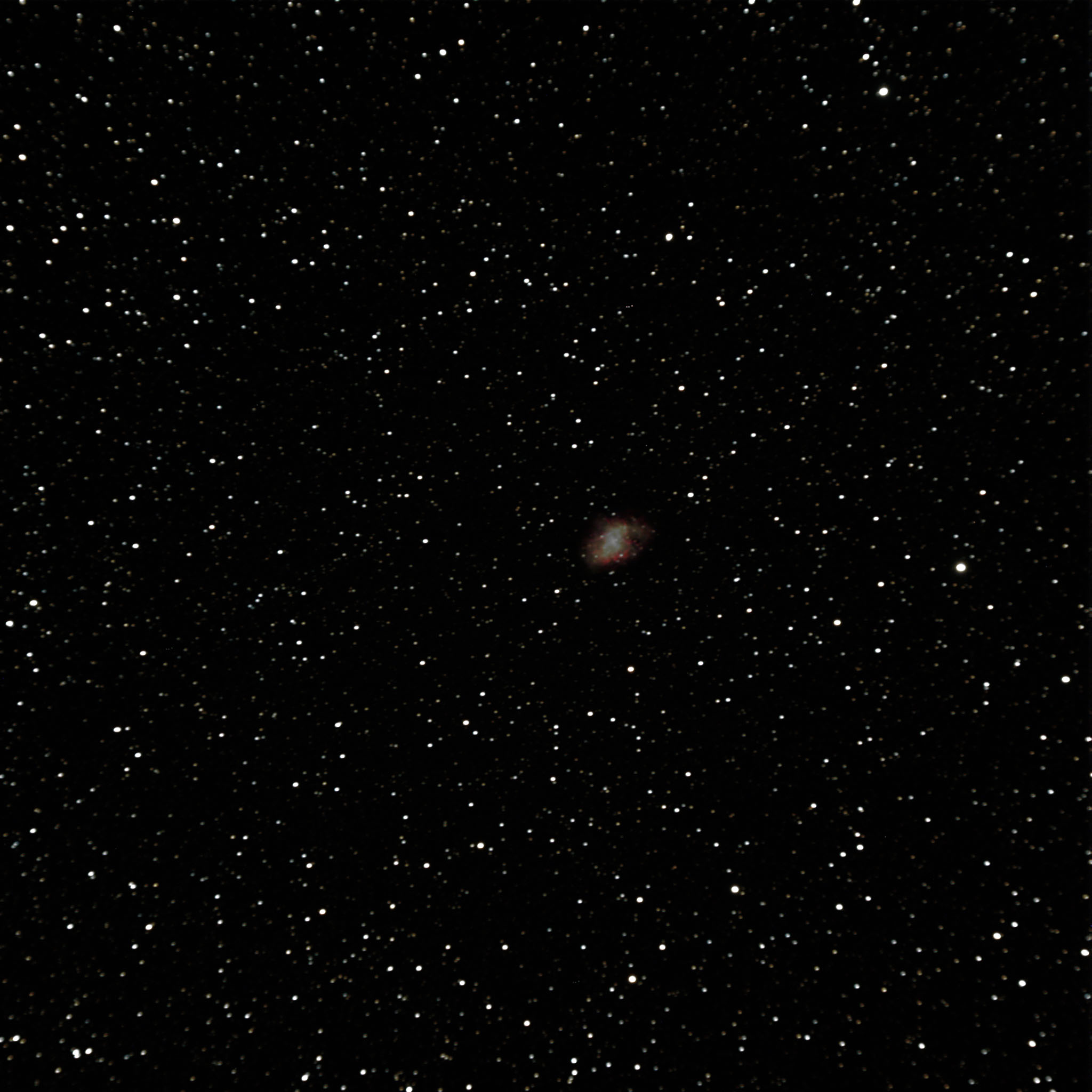
    Crop of M1, The Crab Nebula, click for the full frame.
    Crop of M1, "The Crab Nebula," click for the full frame.

    My Crab Nebula is a combination of three ten-minute exposures. It’s not a great image, but still a treat to see the kind of detail that we don’t get to see visually. The full-frame image (click to see) shows this small target.

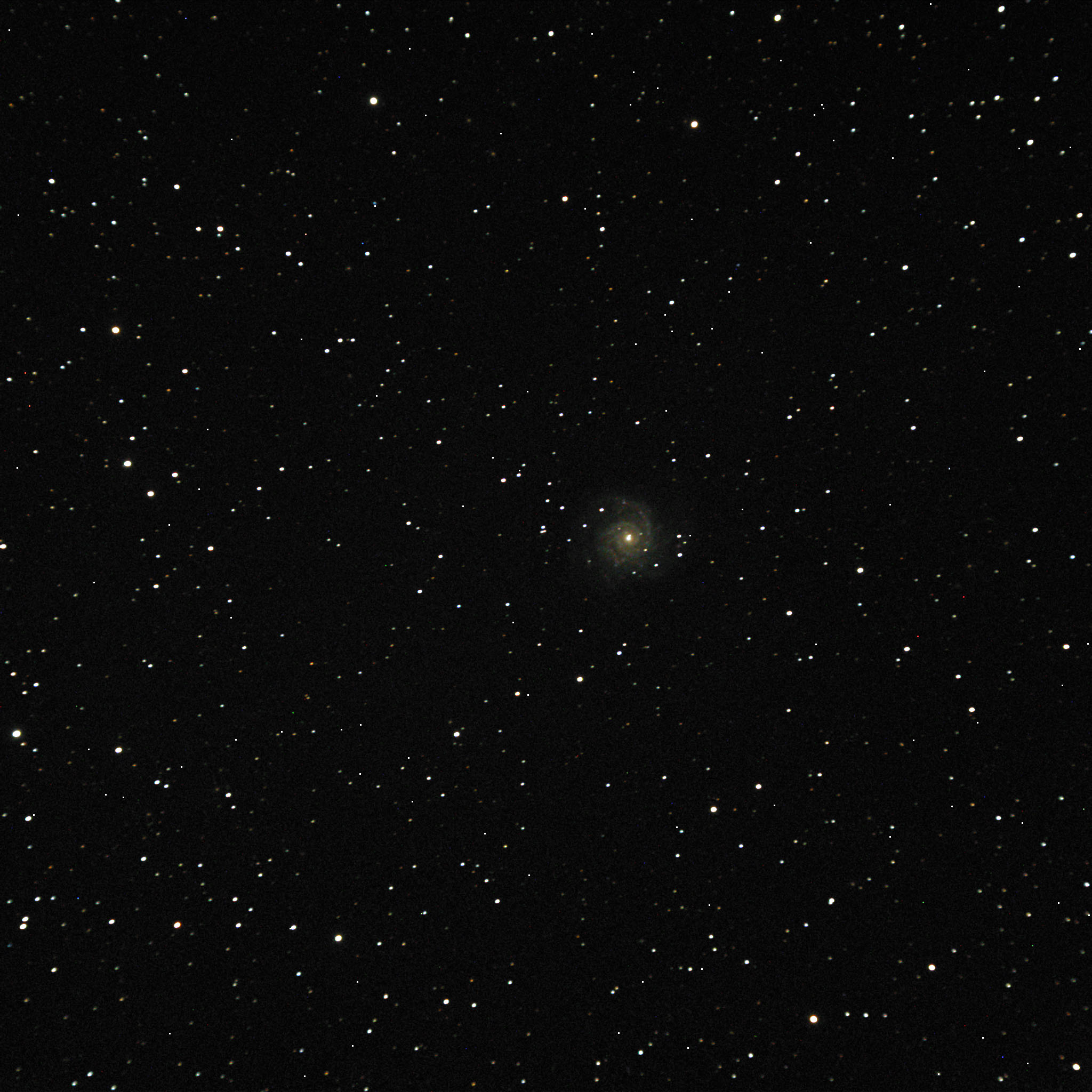
    A crop from my M74 image, click for the full frame.
    A crop from my M74 image, click for the full frame.

    I love galaxies, and M74 is a favorite — for being small, hard to find visually, and a difficult “first target” of the Messier Marathons we do in March. I couldn’t resist trying to get an image of this little gem.

    I know I need to put more exposure minutes into my images, especially of my favorite faint targets. My backgrounds are still very noisy; my focusing isn’t perfect. Since I don’t get to do this very often, I get impatient and want to grab several targets over an evening. Practice, practice!

    Gary Spiers snapped pictures as we set up in the desert. Click the image for a link to his photo album from the night.
    Gary Spiers snapped pictures as we set up in the desert. Click the image for a link to his photo album from the night.

    A night in the desert has to be followed by a great breakfast. After catching a couple hours of sleep, we all packed up the site in a gorgeous desert dawn and headed ten miles west to Chiriaco Summit, home of a great diner and the General Patton Memorial museum. Tanks and eggs, four stars! (Ratings and generals.)