Mojo's blog banner

Tag: M16

  • Hot, dry astronomy

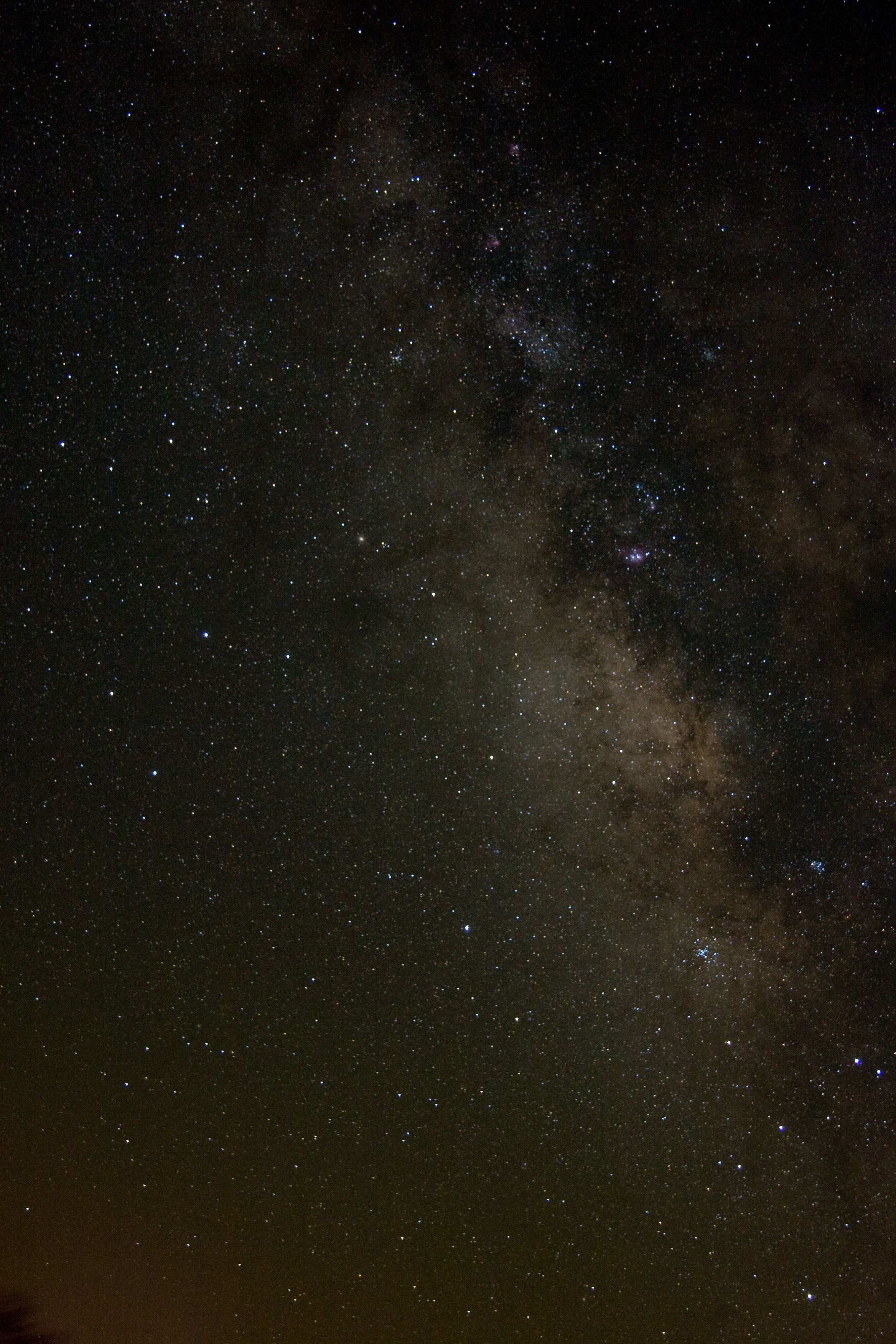
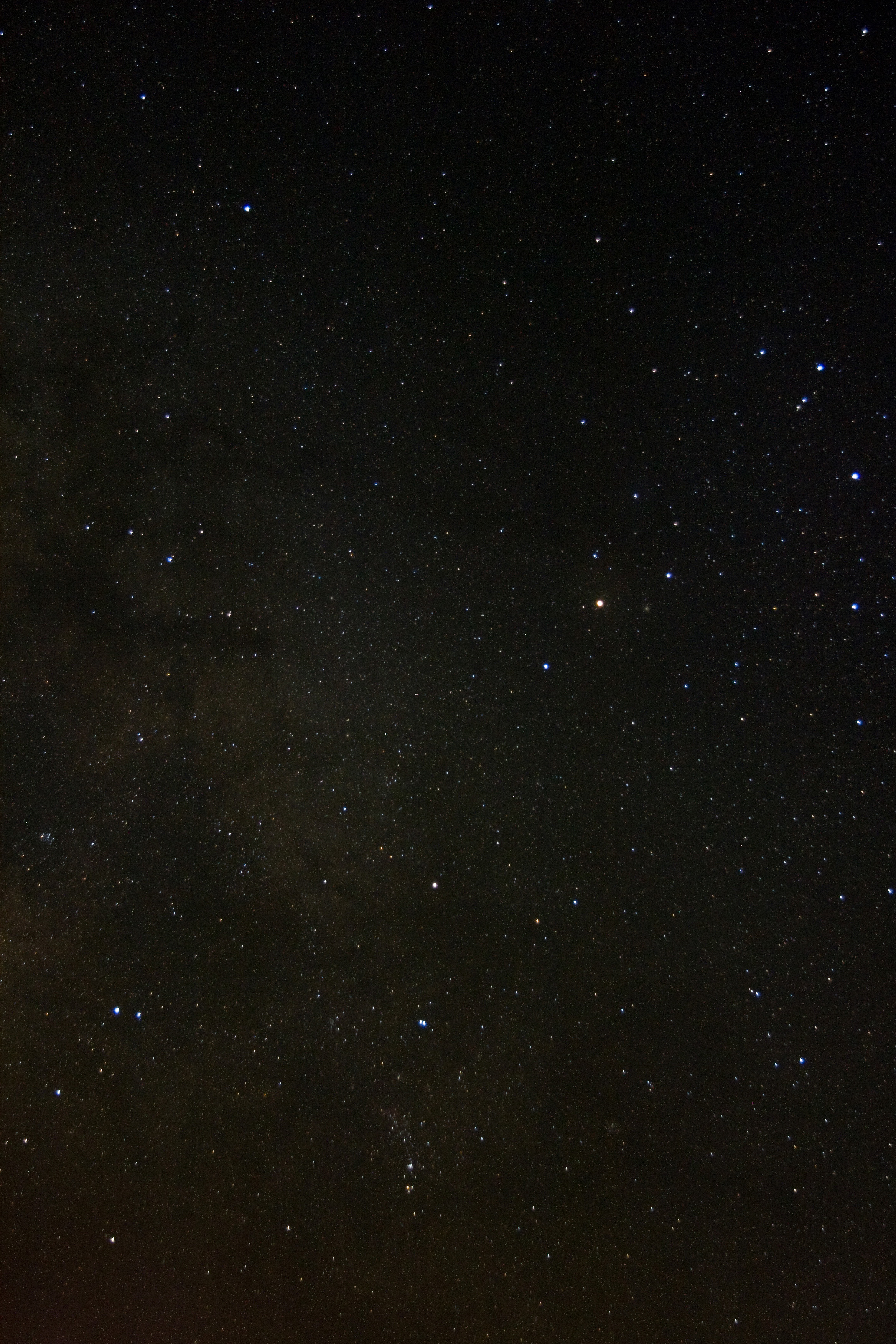
    Constellation Scorpius
    My piggy back shot of Scorpius taken in the early evening. Note the Pipe Nebula near the center left, a dark dusty pipe in silhouette against the Milky Way. Click for the full-resolution image.

    Observing report for June 16, 2012, Amboy, CA

    The forecast for Amboy had a high temperature of 104°F and a low of 72°F. Winds would be light to calm, and the sky would be severely clear and steady all night! Sunset at 7:58 p.m. and sunrise at 5:30 a.m.

    My European and metric system friends might enjoy converting those temperatures into Celsius for a jaw-dropping chuckle.

    Amboy Crater National Natural Landmark is on BLM (Bureau of Land Management) land near the tiny railroad town of Amboy, on National Trails Highway — a right-of-way that used to be marked as U.S. highway 66. Amboy, California, has also been noted as the inspiration for the town of Radiator Springs from the Disney-Pixar movies Cars and Cars 2.

    We’ve written much about Amboy Crater in the past. It has become our new favorite observing location, featuring a paved parking area, picnic tables, and pit toilets. There’s a lovely one-mile trail that leads into the volcano crater known as Amboy Crater, which juts up from a large black-rocked lava field.
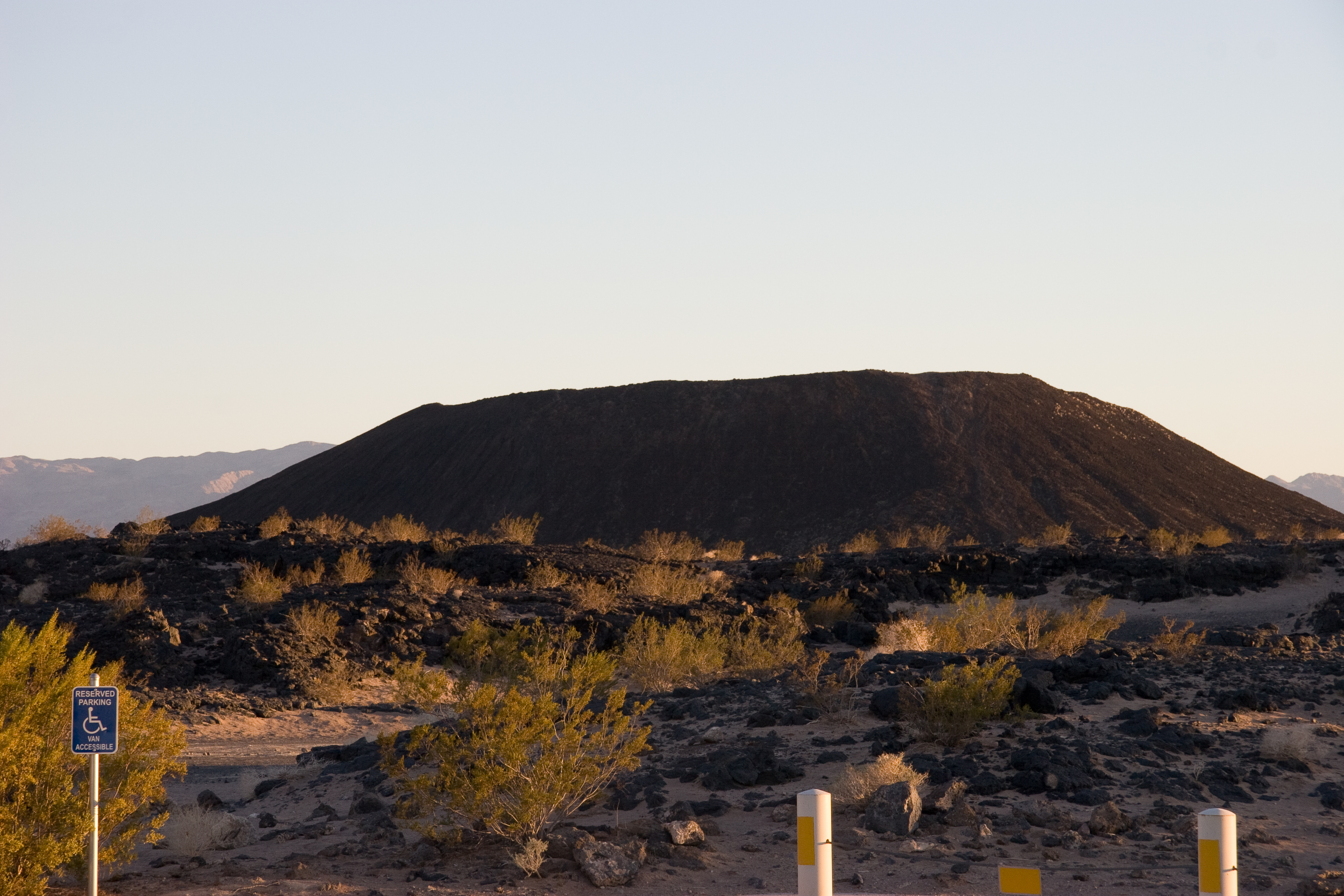
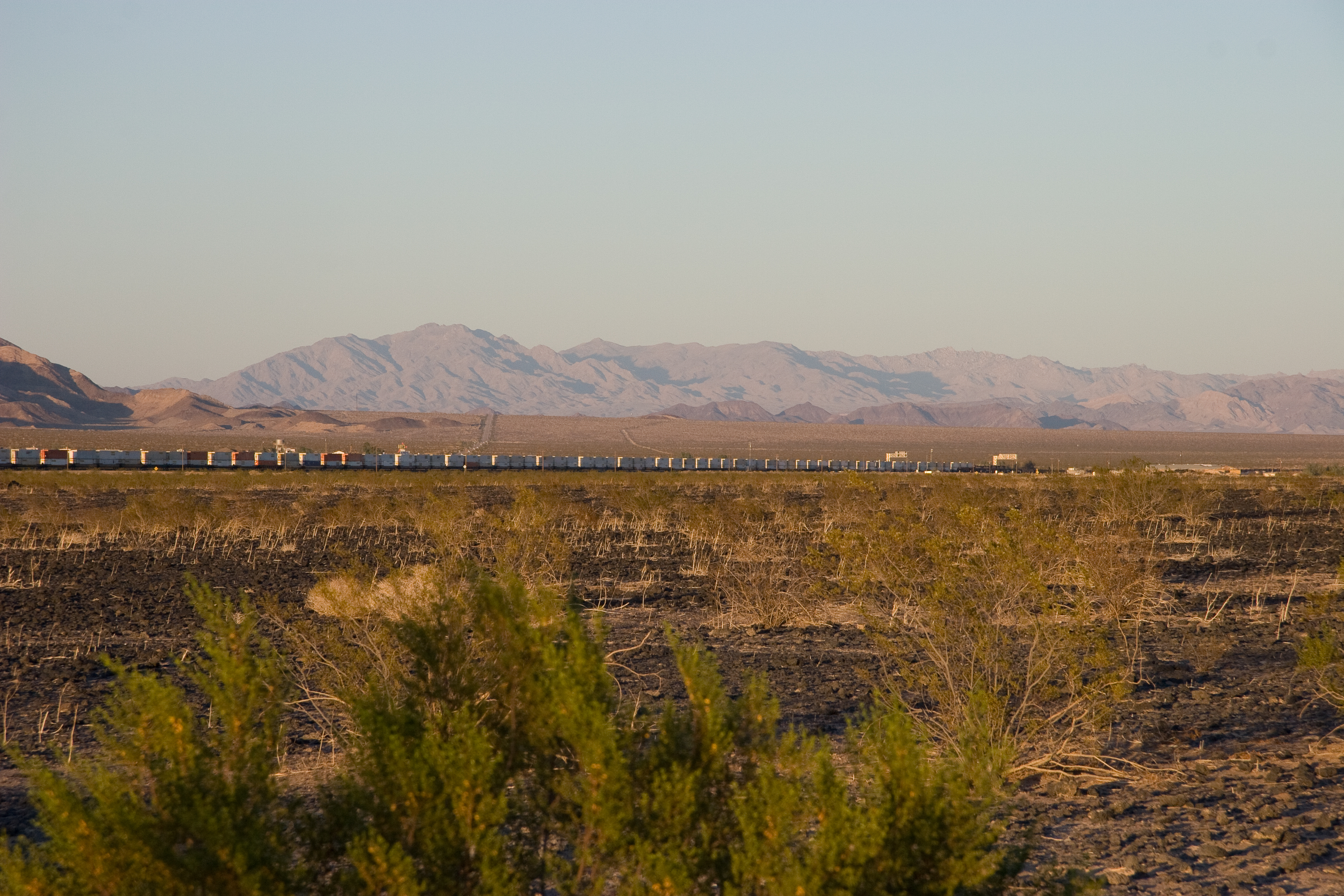
    Amboy Crater
    Amboy Crater National Natural Landmark
    Train near Amboy
    One of the many long trains passing through Amboy, CA, that keep us company rumbling through the night

    When we arrived at the location, it was probably about 95°F. Our full dispenser of ice water and chilled Gatorades came in very handy! With sunset the temperature quickly dropped, and an hour after it was very pleasant short-sleeved observing under a perfect sky.

    We napped for a couple of hours at 2:30 or so, and woke to this stunning array of morning planets rising in the east.
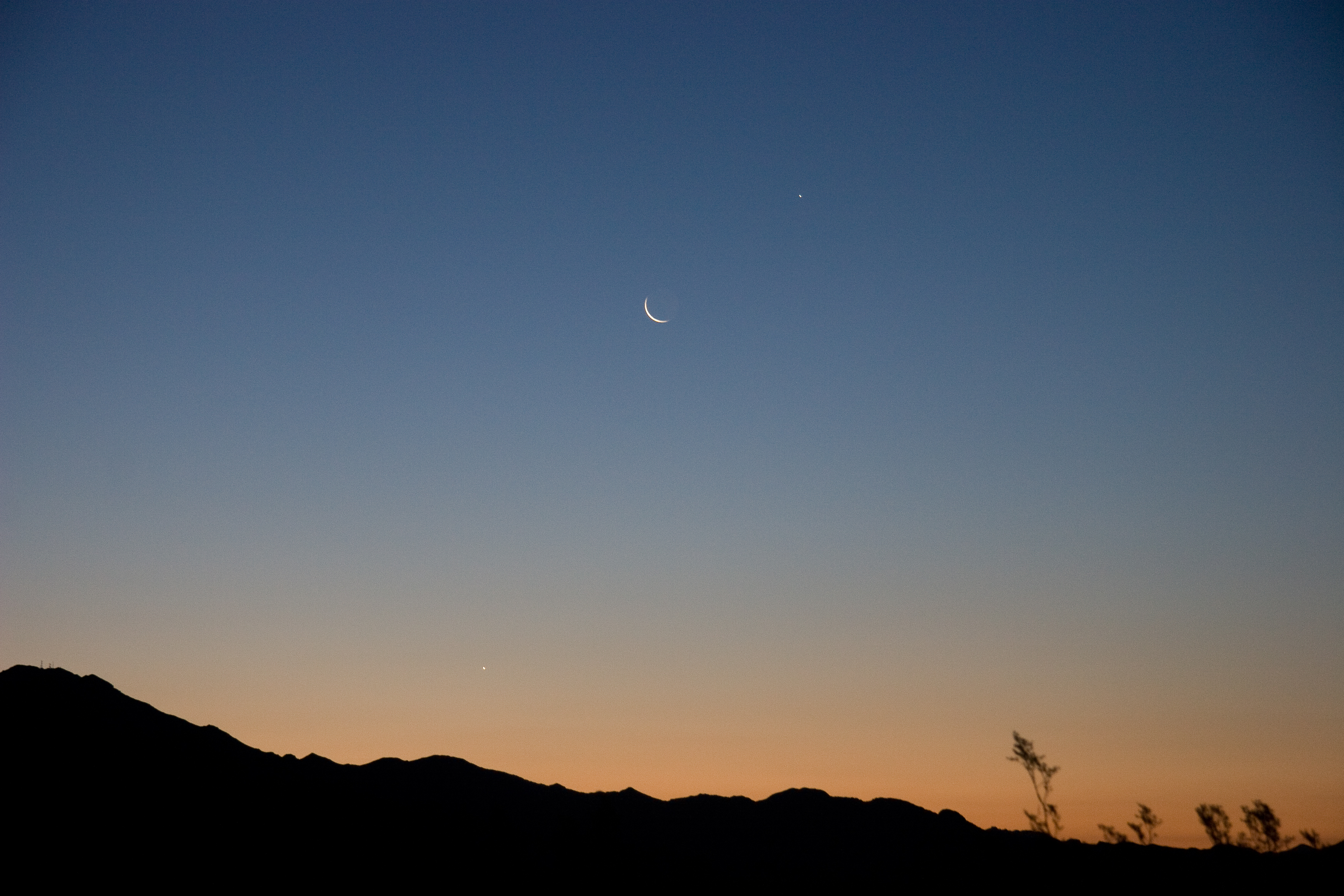
    Jupiter, Moon, Venus
    Jupiter, the Moon, and Venus, lined up in the eastern pre-dawn sky Sunday morning. By all means click for the full-res image, and notice the prominent earthshine on the very old moon.

    I was looking forward to capturing some summer-sky Milky Way favorites this evening. I stumbled onto a nearly perfect polar alignment. It was one of those nights when I had no battles to fight, no problems to solve, I could just collect photons.

    I spent my few summer hours on three targets I hadn’t imaged, all rising in the very dark eastern sky.

    Click each of these for the full-resolution 2048×2048 image. They turned out particularly well!
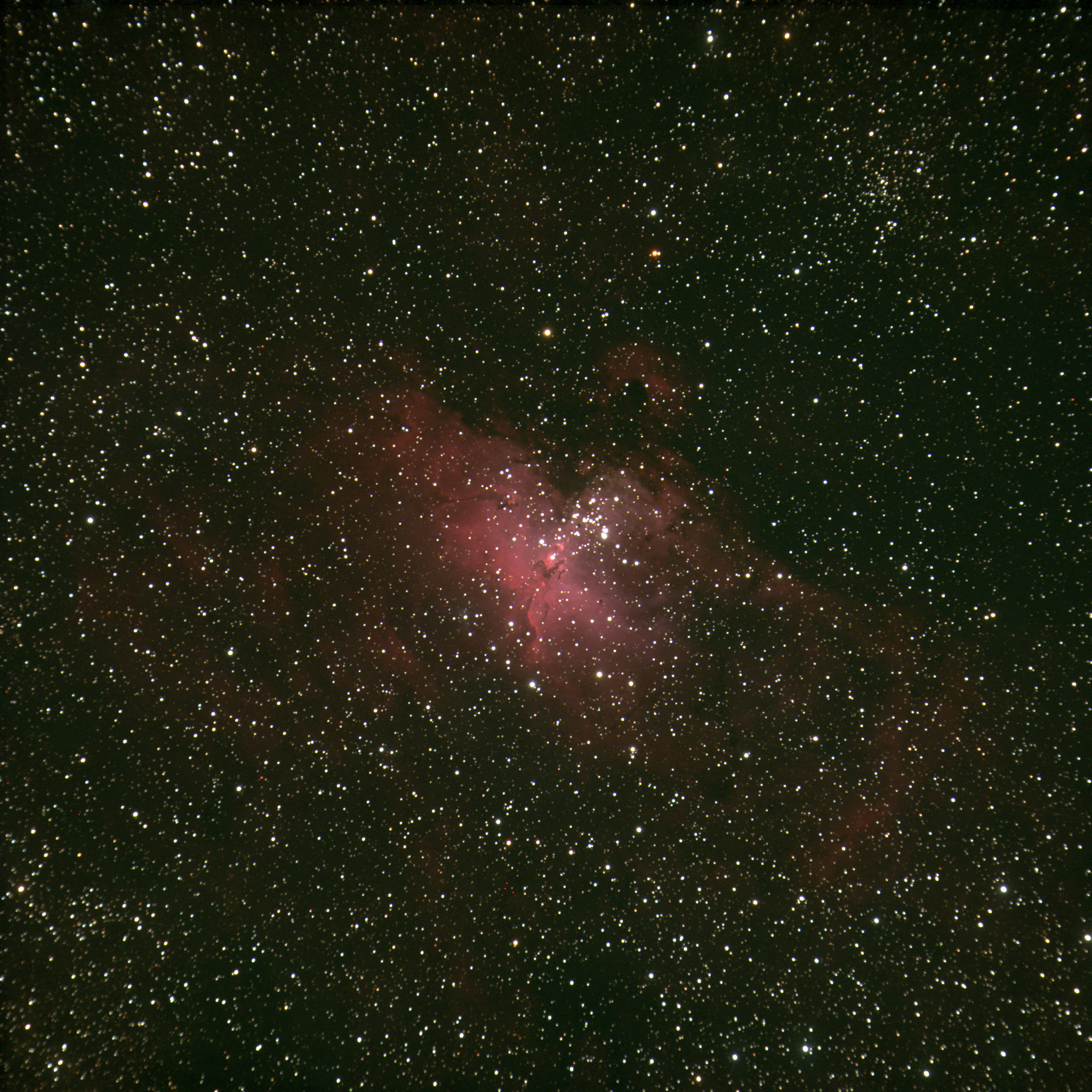
    M16 the  Eagle
    M16, the Eagle Nebula and cluster

    I had previously shot M16, with one 15-minute exposure, and had an airplane fly through the shot. I didn’t want to photoshop the airplane away, and decided to collect more data for this stack. This one is three 15-minute exposures.
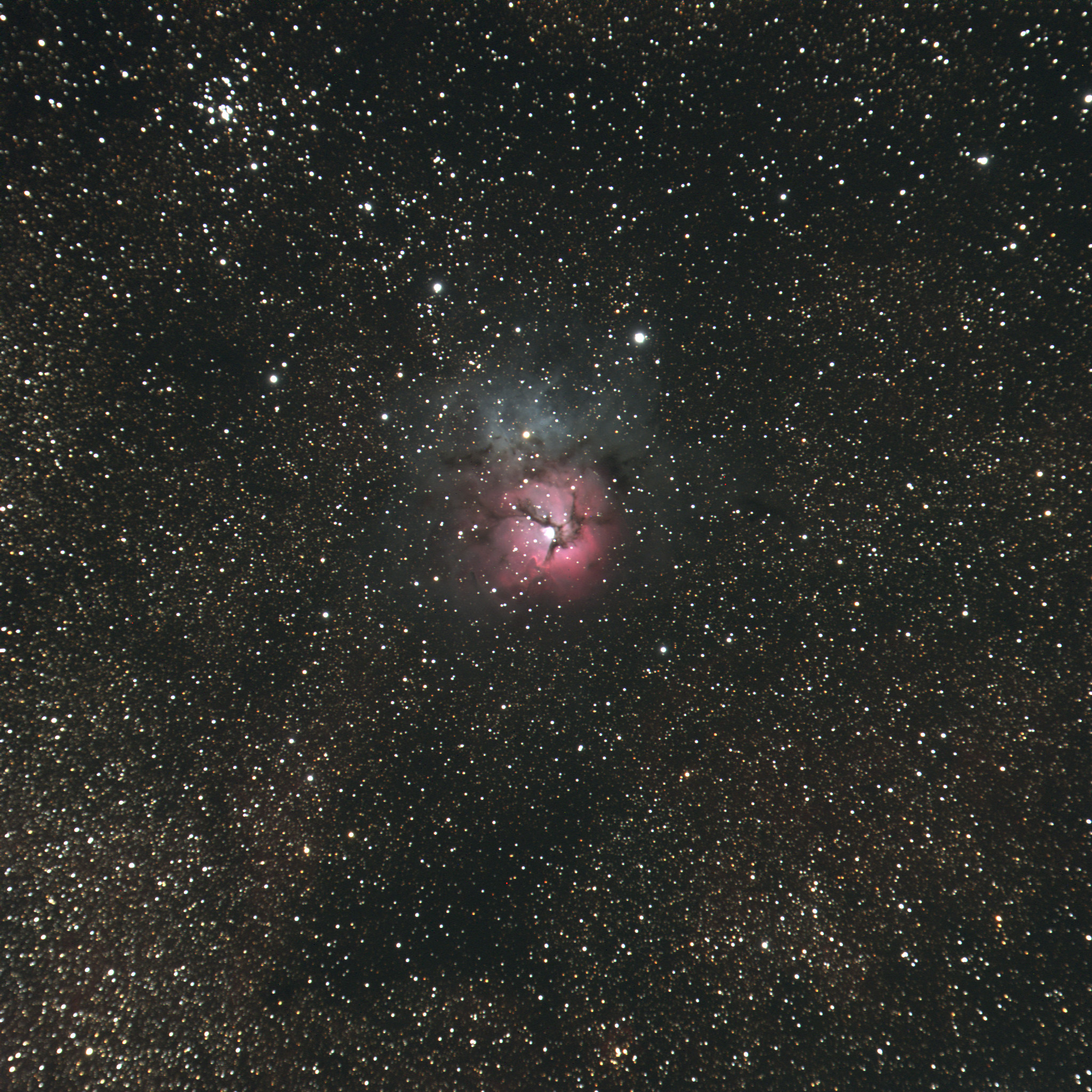
    M20 the Trifid
    M20 the Trifid Nebula, with M21, an open cluster, in the upper left corner.

    My Trifid is also three 15-minute exposures. I love seeing the lanes of dark Milky Way dust making inky lakes and tendrils among the stars surrounding the nebula.
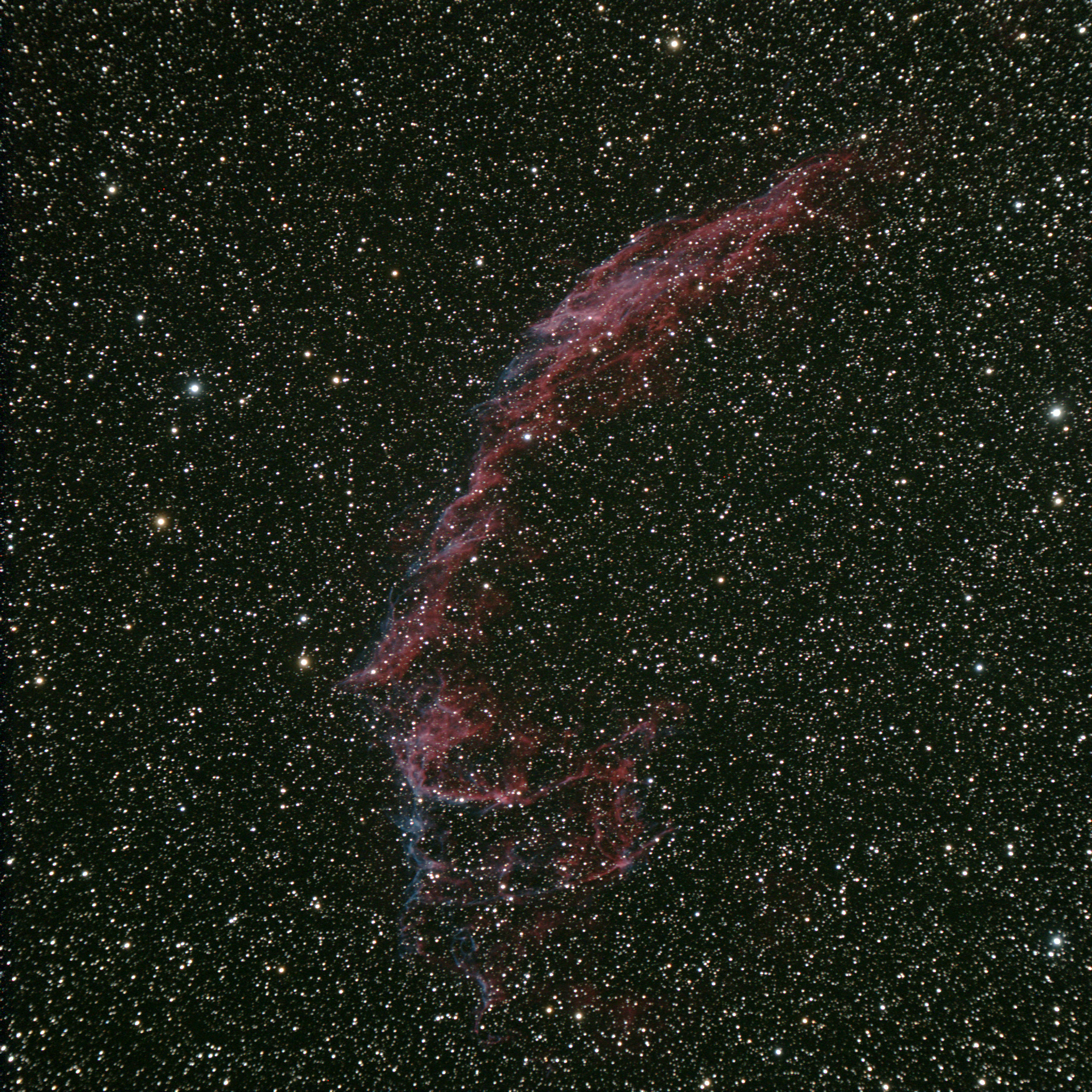
    Veil Nebula
    The eastern side of the Veil Nebula, this half is cataloged as NGC6992.

    My small refractor is the perfect telescope to capture this half of the Veil Nebula, the eastern half, NGC6992. I hadn’t expected the mix of red and blue tendrils in this supernova remnant bow shock. This is four 15-minute exposures, stacked in Photoshop.

    Equipment and software list:

    • Astro-Physics Traveler 105mm objective, f/6
    • Astro-Physics Mach-1 GTO mount on wooden tripod
    • SBIG ST-4000XCM one-shot-color CCD imager
    • CCDSoft, CCDOps, Photoshop CS3
    • Skytools 3, The Sky 6

    The Scorpius constellation image was taken piggyback on the Traveler with my Canon 20D DSLR camera, one three-minute exposure.
  • Observing report, dark desert June skies

    Old Town Sidewalk Astronomers
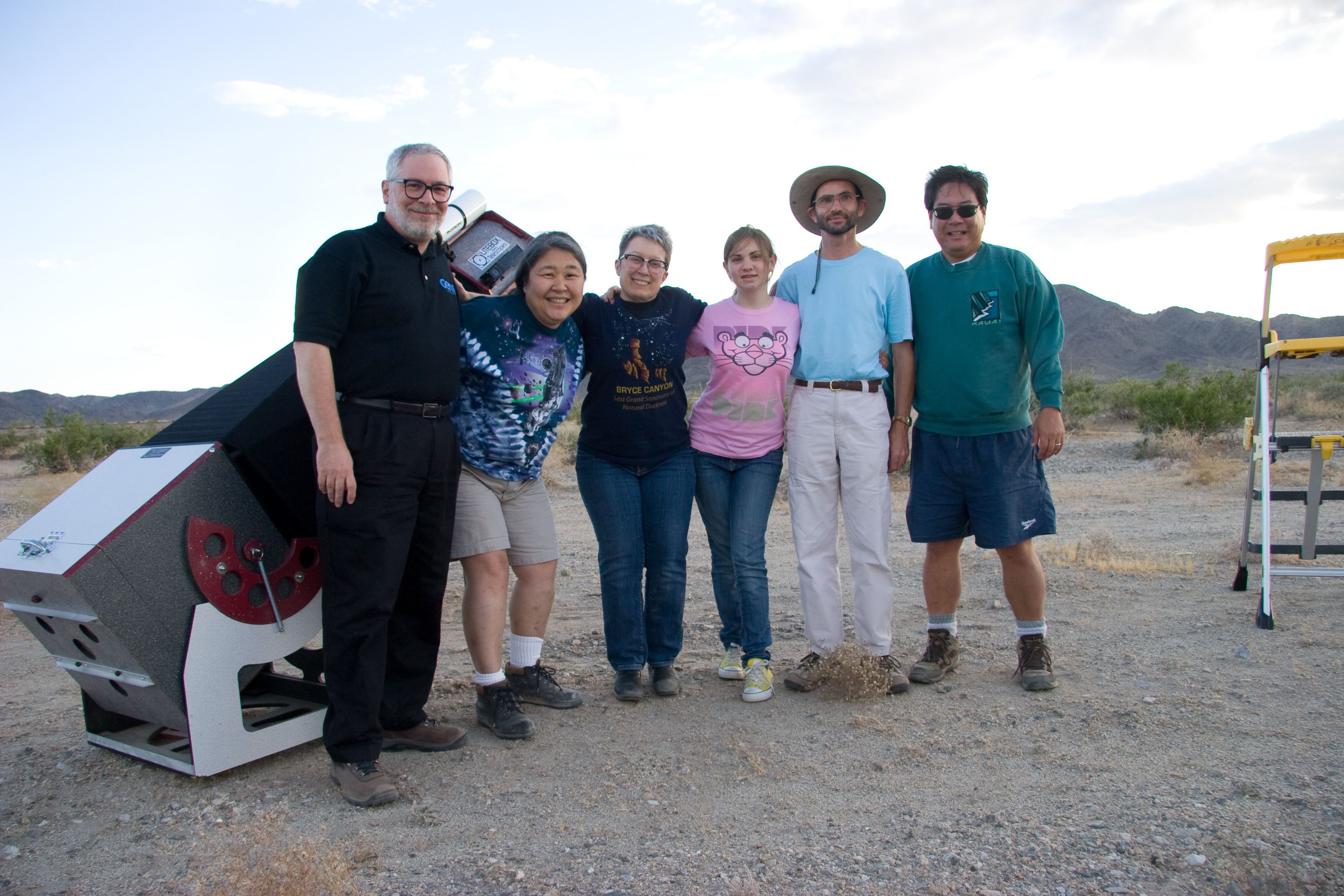
    Mojo, Caroline, Jane, Catherine, Gary, and Todd

    Update: Jane wound up using most of my astrophotos below in her July NASA What’s Up podcast. Check it out!

    The forecast was for a very temperate desert evening, so six of the Old Town Sidewalk Astronomers headed off to the Colorado Desert to play outside all night. Seeing was forecast poor, but actual conditions seemed much better.

    Jane packed her 17.5-inch dob, and I loaded the Astro-Physics Traveler 102mm f/6 refractor to do some astrophotography. The highlight of the evening promised to be comet McNaught 2009R1, but it wouldn’t be available until the pre-dawn hours. That left me with late spring galaxies and summer Milky Way targets. (Jane also had a great target which she’ll be writing about!)

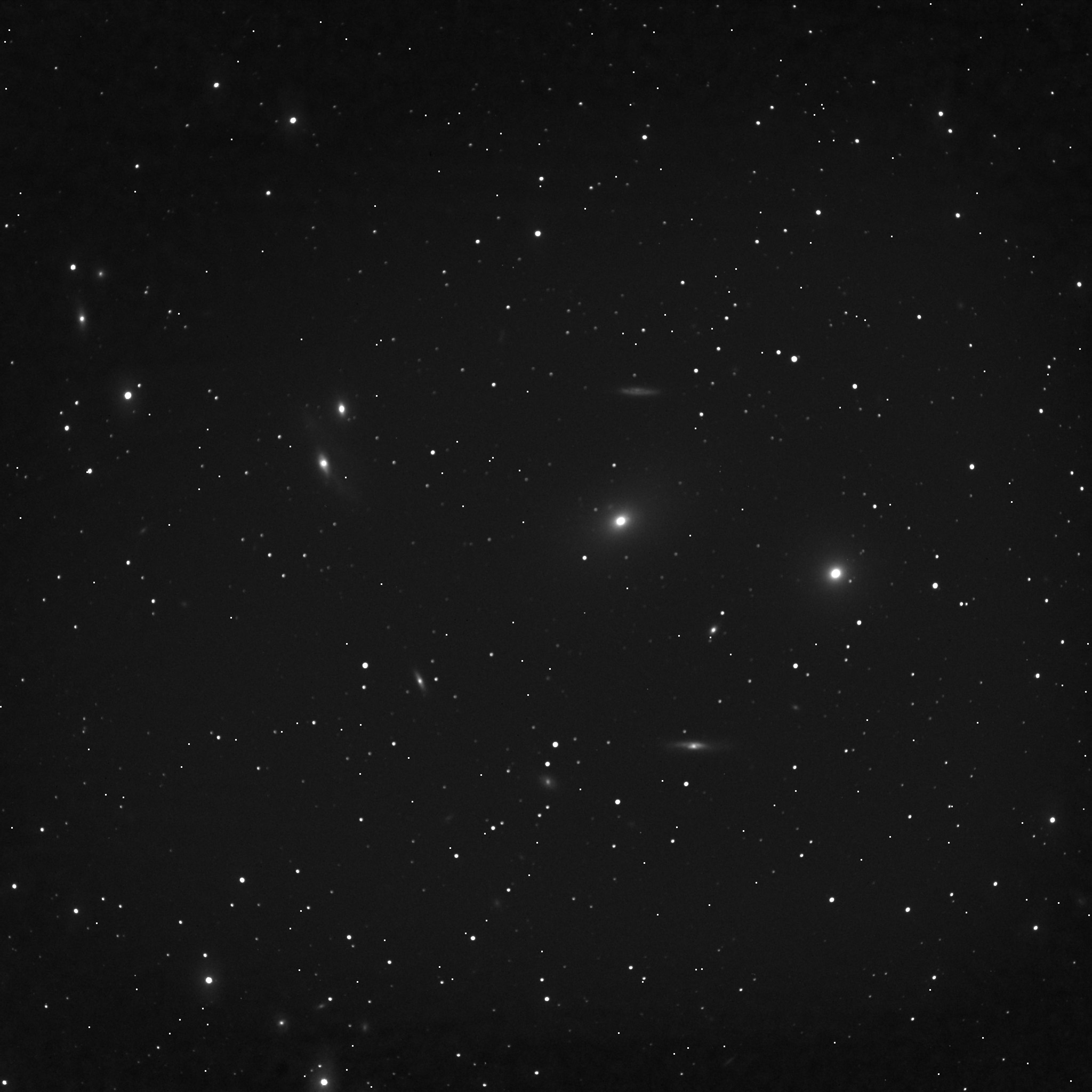
    I tried the M84-M86 region of Virgo last month with the AP180, but the field of view was too narrow. I knew it’d be a good warm-up for tonight. The grey scale version looks better to me than the color rendition.

    M84-M86 region in Virgo, "the Nine Gals"

    Jane and I both love piggyback pictures, taken at “naked eye” scale. This is one of “the teapot” and the Sagittarius Milky Way. The full-size image isn’t bad, but it looks better scaled back a bit. Click for the really big version. It’s fun looking through all the dark nebulae and bright clusters.

    Sagittarius Milky Way
    Looking towards the center of our galaxy.

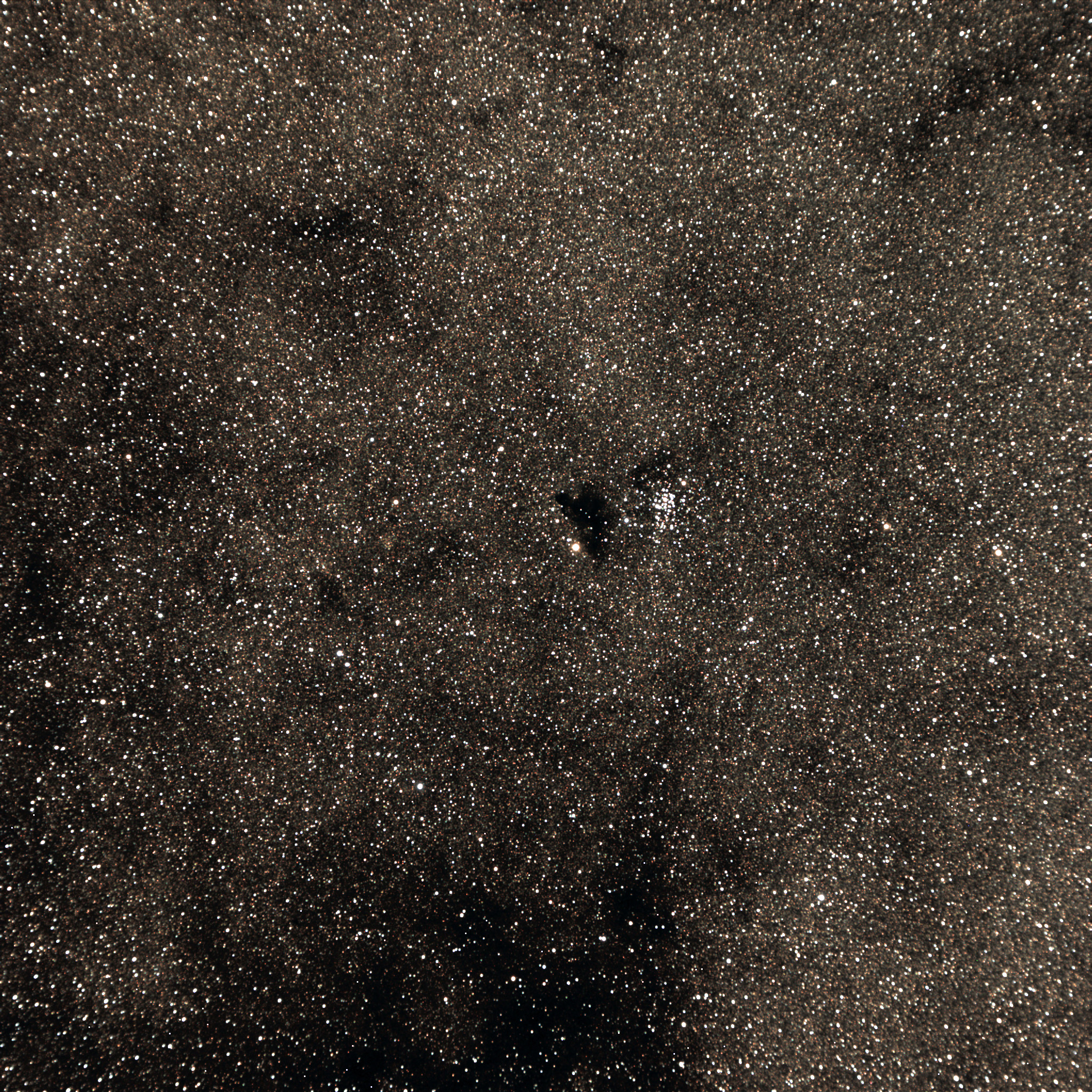
    Deep in the Milky Way just above the spout of the teapot is Barnard’s famous “Ink Spot” dark nebula, B86.

    Barnard 86 "The Ink Spot"

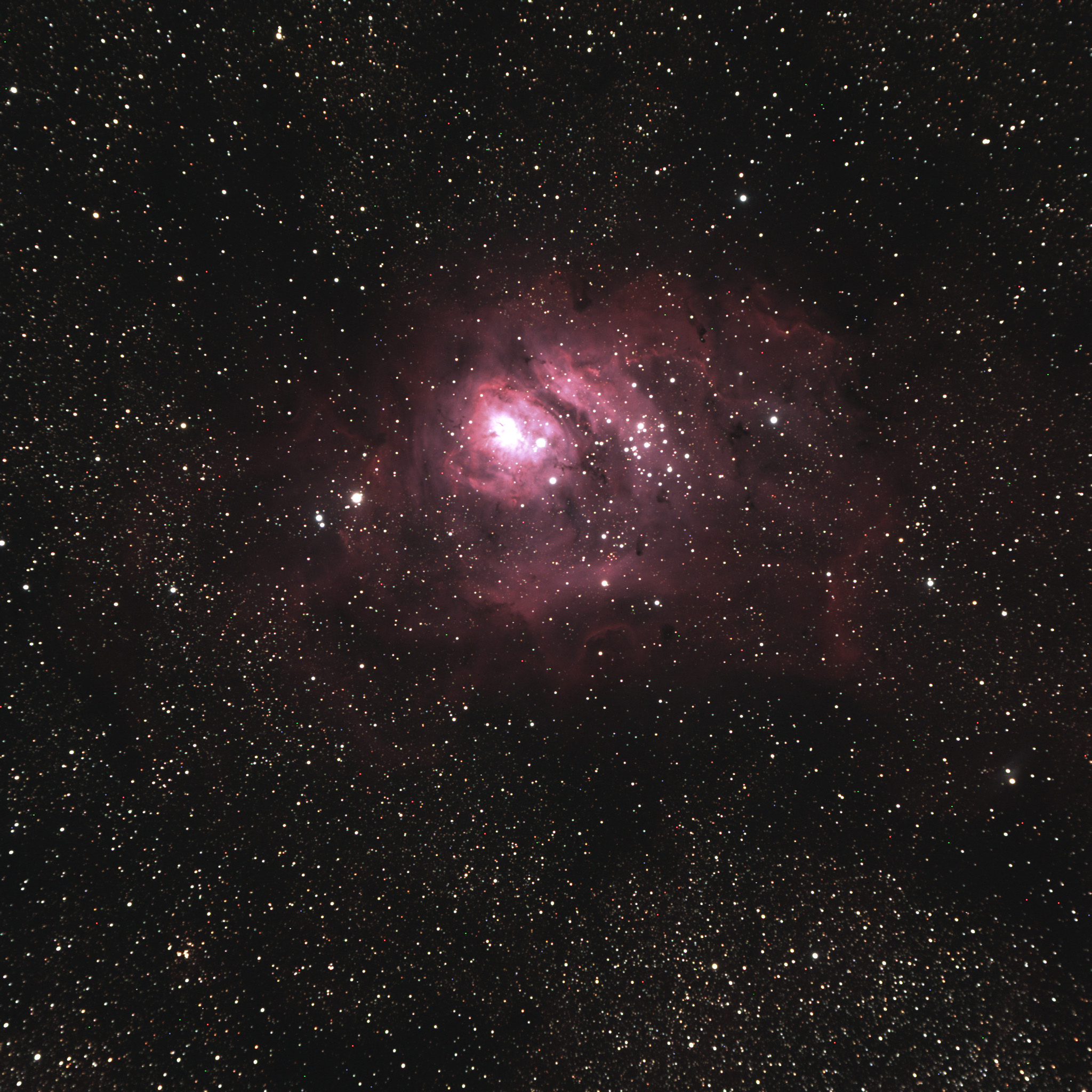
    I started out trying to fit M8 “The Lagoon Nebula” in the same field as the nearby Trifid Nebula, but they wouldn’t quite fit. So I did 15 minutes just on M8, and love the result.

    M8 The Lagoon Nebula
    M8 The Lagoon Nebula and cluster

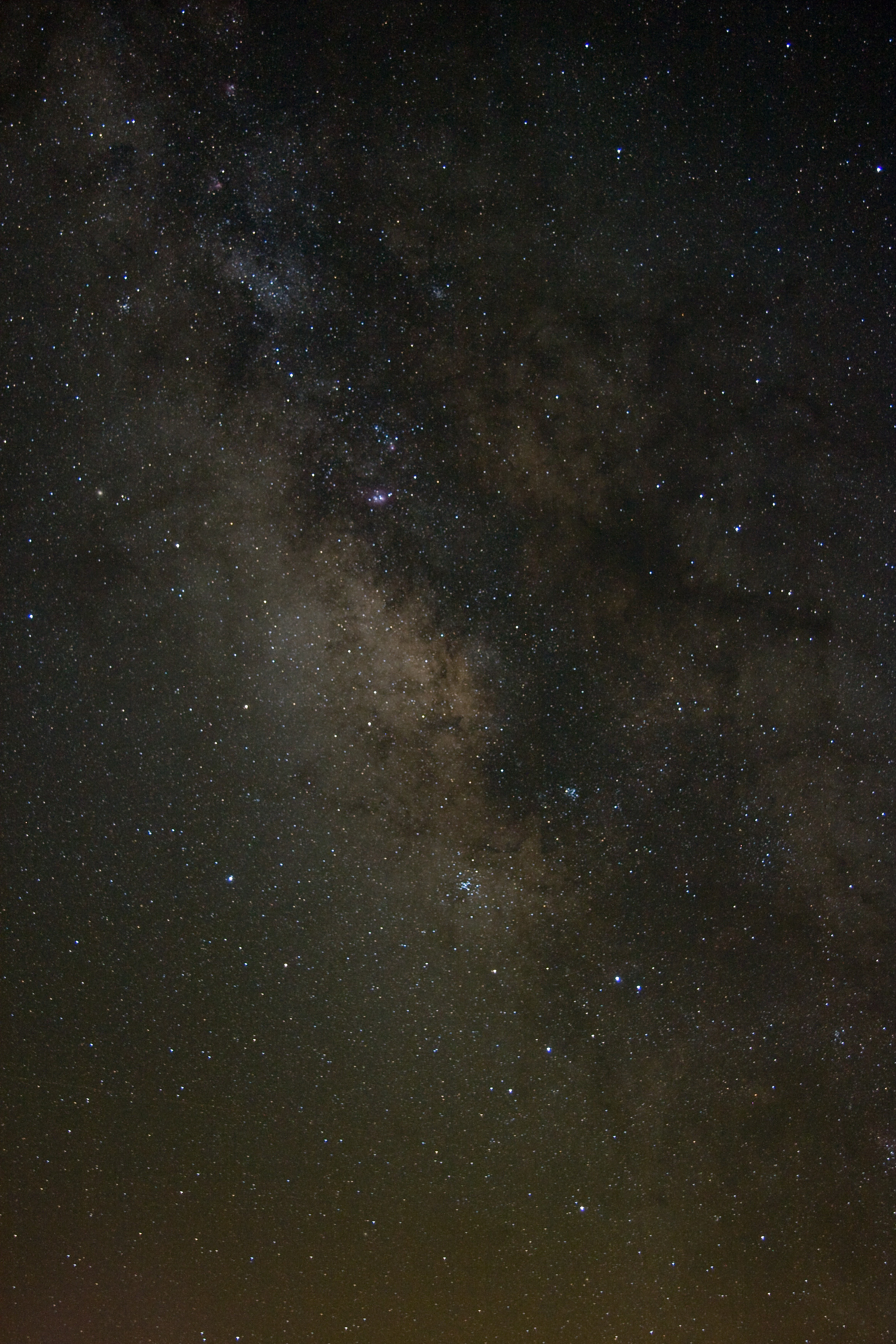
    I love hunting for the Pipe Nebula, a huge dark nebula best seen in binoculars. Seeing the Pipe is a portent of great transparency and dark skies. The detail photo here is centered on the Pipe, taken piggyback with the 20D. Click for the full field, see if you can find the Pipe there.

    Pipe Nebula detail
    Do you see the pipe outlined here? Click for the full field.

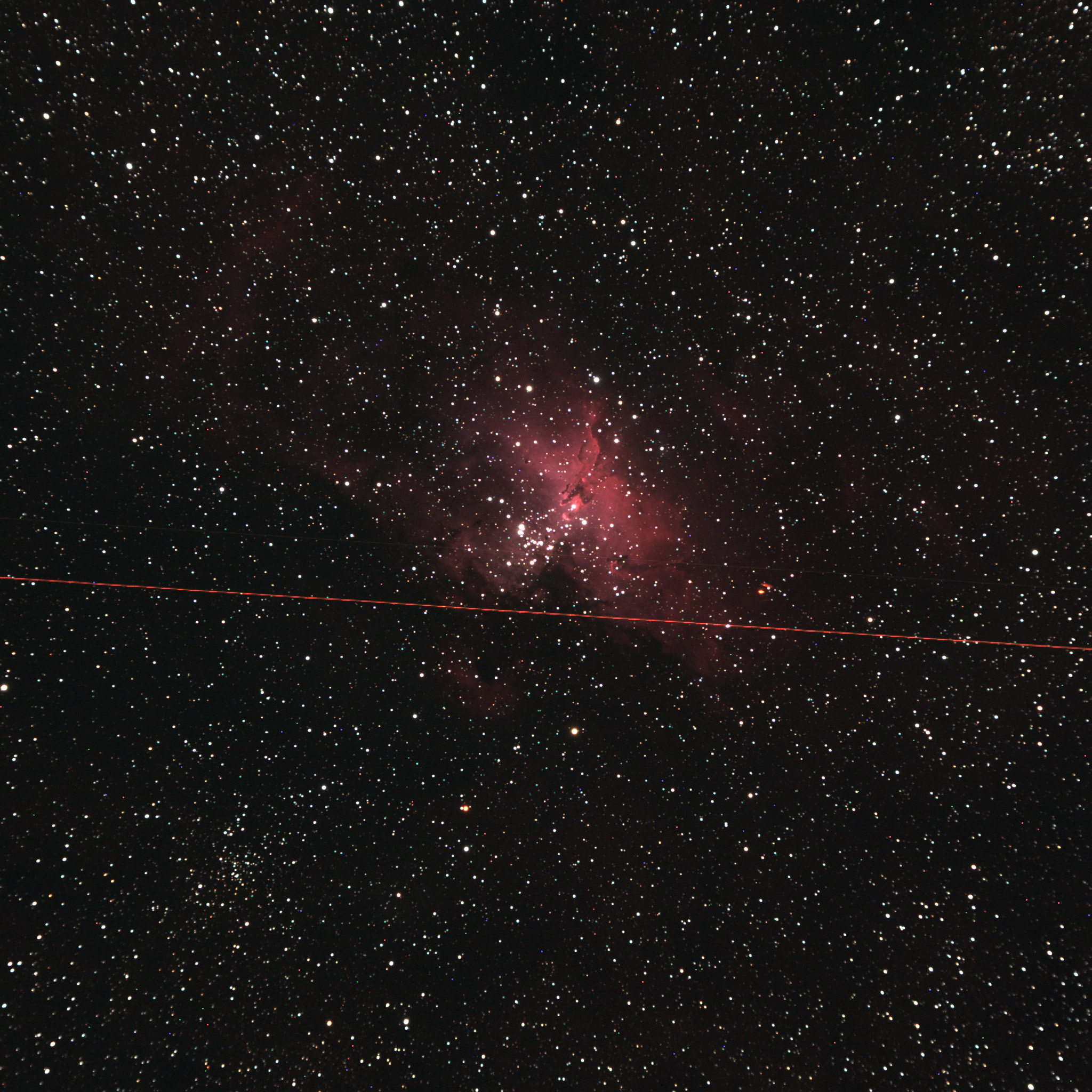
    Ever since I started doing astrophotography, I’ve been waiting for the opportunity to shoot M16 The Eagle Nebula. This nebula is famous for its Hubble Space Telescope image showing the embedded dark nebulae as stellar nurseries, the “Pillars of Creation.”

    I only did one fifteen minute exposure. By then it was getting quite late, and I need to catch a couple hours of sleep before getting up to catch comet McNaught. Naturally that means I had an airplane fly through the image! Should I wipe it out with Photoshop? Naaaah.

    M16 The Eagle Nebula
    M16 The Eagle Nebula and cluster. Plus United flight 2037. (Just kidding!)

    Jane and I napped for a couple of hours, with alarms set to catch comet McNaught in the early hours

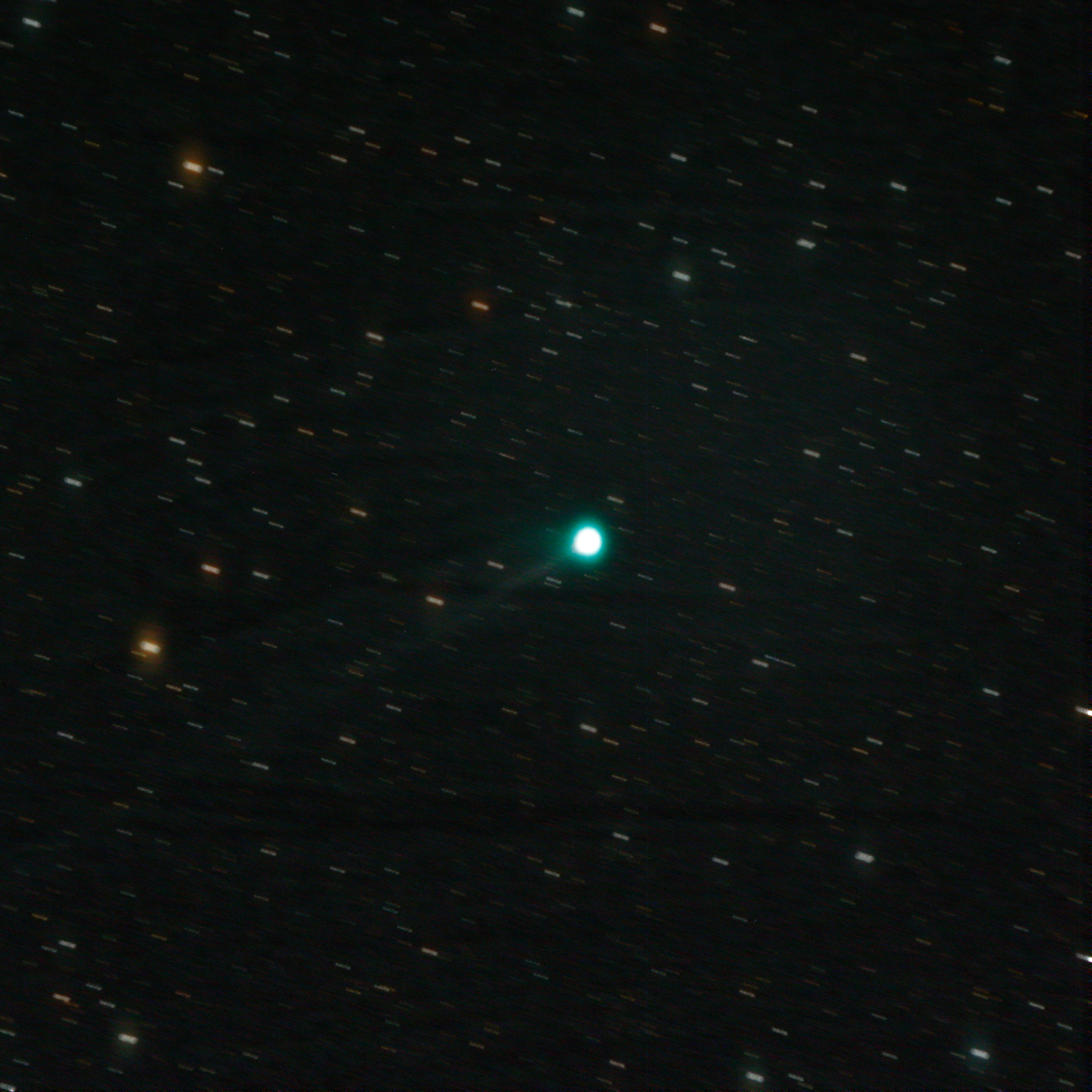
    This image of McNaught is made from ten one-minute exposures. They’re stacked with the comet centered, so the background stars are streaked. It looks out of focus, but it’s actually just the motion of the comet you see.

    Comet 2009R1 McNaught
    Comet 2009R1 McNaught, ten one-minute exposures stacked and centered on the comet.

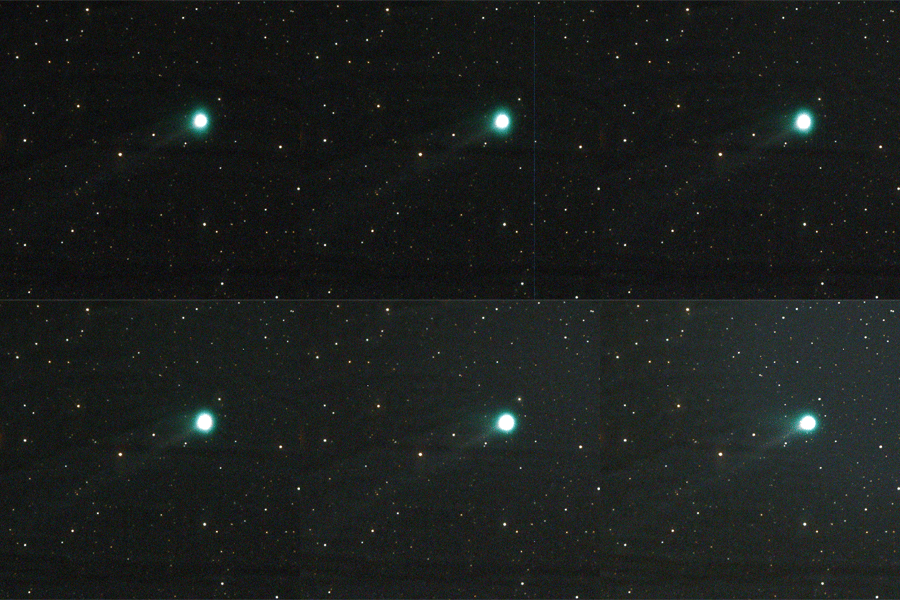
    I also took my ten comet pictures and made a little animation that shows the motion of the comet against the background stars over the course of 15 minutes or so.

    McNaught animation
    Comet McNaught moves against background stars over fifteen minutes. The sky is also brightening with dawn towards the end.

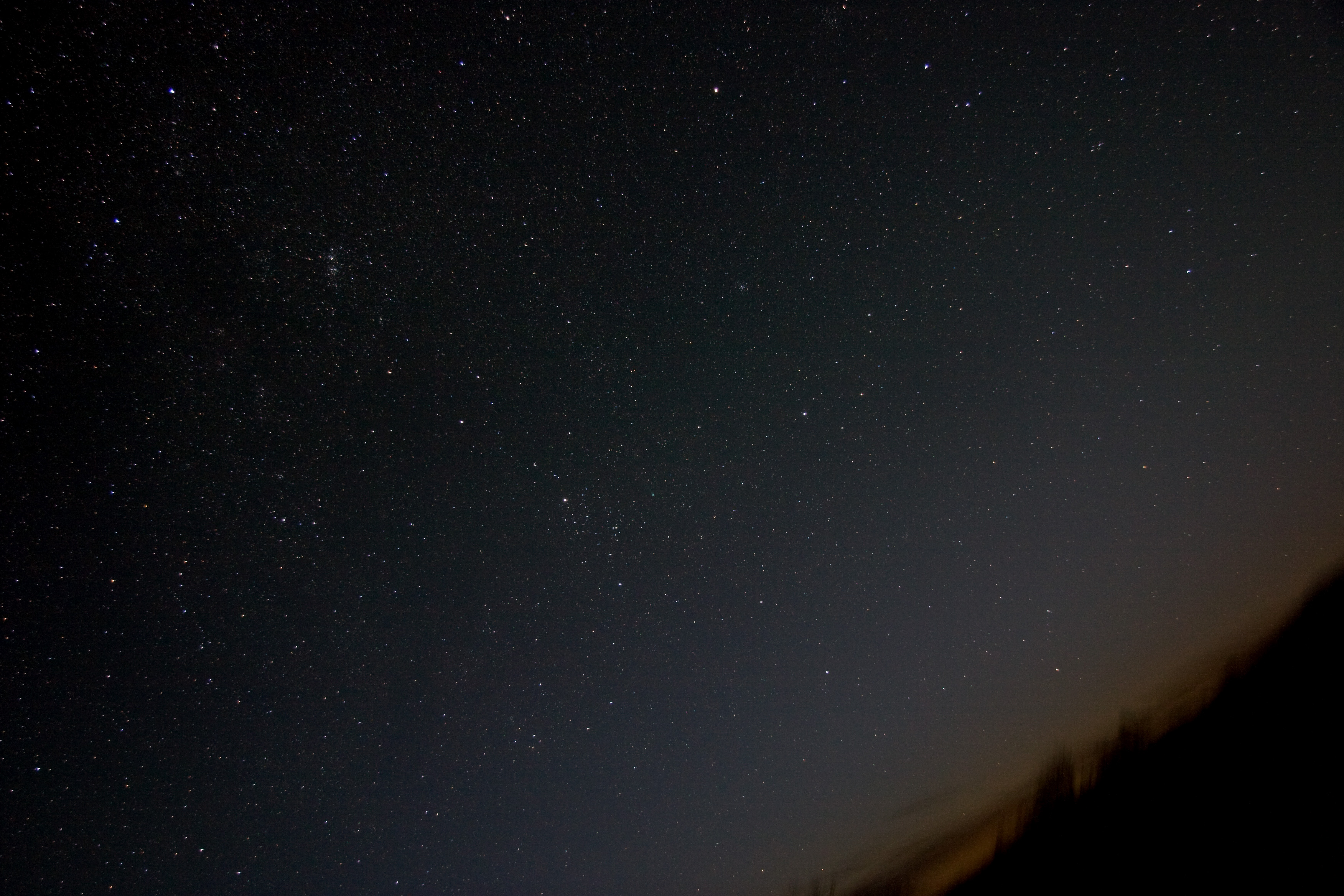
    I was also taking piggyback images of the sky where McNaught was lurking. Can you find the little green dot near the center?

    Perseus and field
    This is the "naked eye" view of the sky where Comet McNaught can be found. The horizon is tilted as an artifact of the way the mount holds the telescope and camera mounted piggyback. Click for the full scale version.

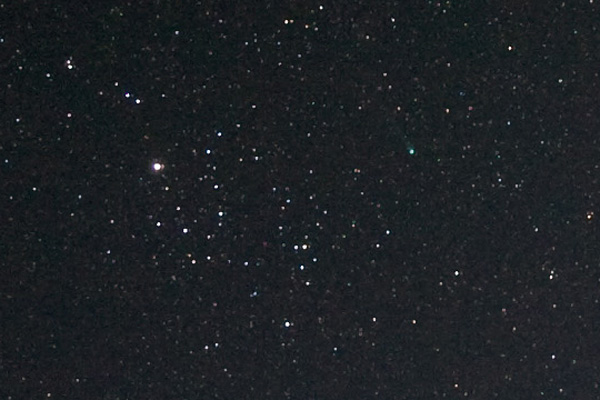
    Here’s a little close up of the beautiful binocular cluster Collinder 39 in Perseus with the green dot of McNaught just to the right. The color was evident in binoculars even.

    McNaught with Collinder 39
    This is somewhat the view in a pair of binoculars of large open cluster Collinder 39. See the green dot of comet McNaught slightly up and right of center.

    What a fabulous night of astronomy! Shirt sleeves or light jacket all evening.

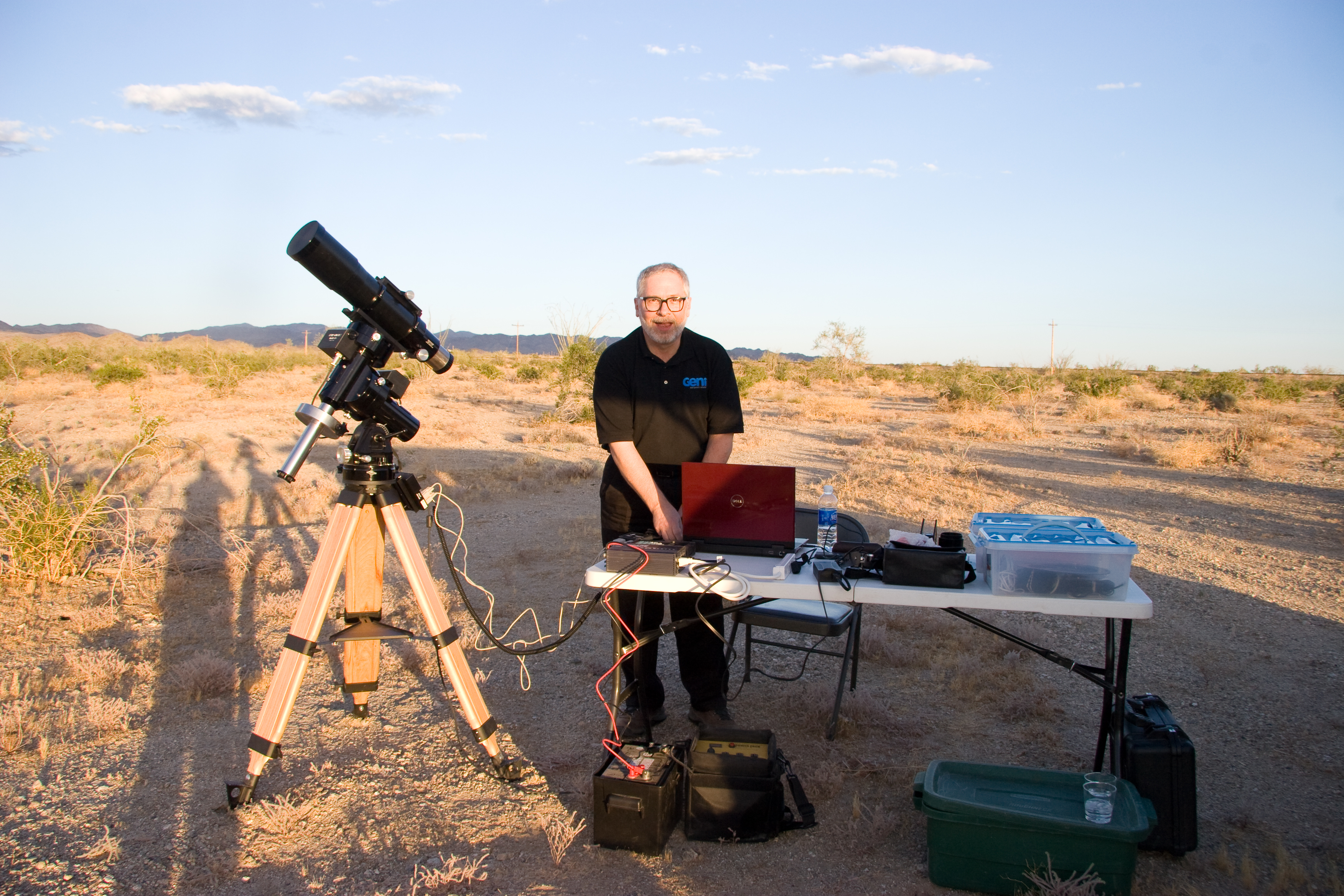
    Mojo setting up for astrophotography
    Mojo setting up his "desert office" for some astrophotography

    Equipment notes: The telescope shots were taken with an SBIG ST-4000XCM one-shot color CCD camera, at prime focus of an Astro-Physics Traveler 105mm f/6 refractor. The mount is an AP Mach 1 GTO on a wooden tripod. The piggyback photos were taken with an unmodified Canon 20D digital SLR camera.

    Update: Be sure to see Jane’s A Ten Planet Night report from the same evening!