Mojo's blog banner

Tag: M51

  • Many firsts at GMARS

    Many firsts at GMARS

    Observing report, February 23, 2020

    This would be my first night observing from a powered telescope pad at GMARS, Riverside Astronomical Society’s Goat Mountain Astronomical Research Station, in Landers, CA. It was a beautifully clear but cold February Sunday evening. It was also the first real observing night for a new mount, plus a new and unfamiliar collection of astrophotography tools.

    In preparation for the night, I’d spent hours setting up and practicing with the hardware and software at home. I felt like I’d accomplished everything I could with the hardware and power distribution. Everything was working well.

    My astrophotography computer was another matter. While Jane and I enjoyed traveling for our first year of retirement, my familiar inexpensive Asus laptop hadn’t been turned on for about a year. With any Windows PC, that leads to an immediate trip through “update hell.” Not only did I need hours of download and update time, the internal battery was completely toast.

    Getting the battery replaced turned out to be painless, and during the downtime I was able to research the more modern tools imagers were using to navigate and capture data. I was ready to move past the old days of ST-4 guiding, into the world of ASCOM and PHD2.

    The new mount is an Astro-Physics AP1100 GTO. It was acquired to support our mammoth AP180EDT refractor, replacing a somewhat aging and clumsy AP900 mount. I had only used the big refractor once to capture decent images over ten years ago, and had been unsuccessful since that time.

    The AP1100 GTO is truly decades advanced from the old mount. It feels elegant and precise, even with the massive telescope on top. I added power and data distribution from Kendrick, and I was able to reduce the number of cables from computer to telescope to one USB 3.0 cable.

    There was a clear night coming, leaving me with the mild anxieties of an unfamiliar site, on a “school night,” carrying a telescope that needs two people to mount into its rings and unload into its case.
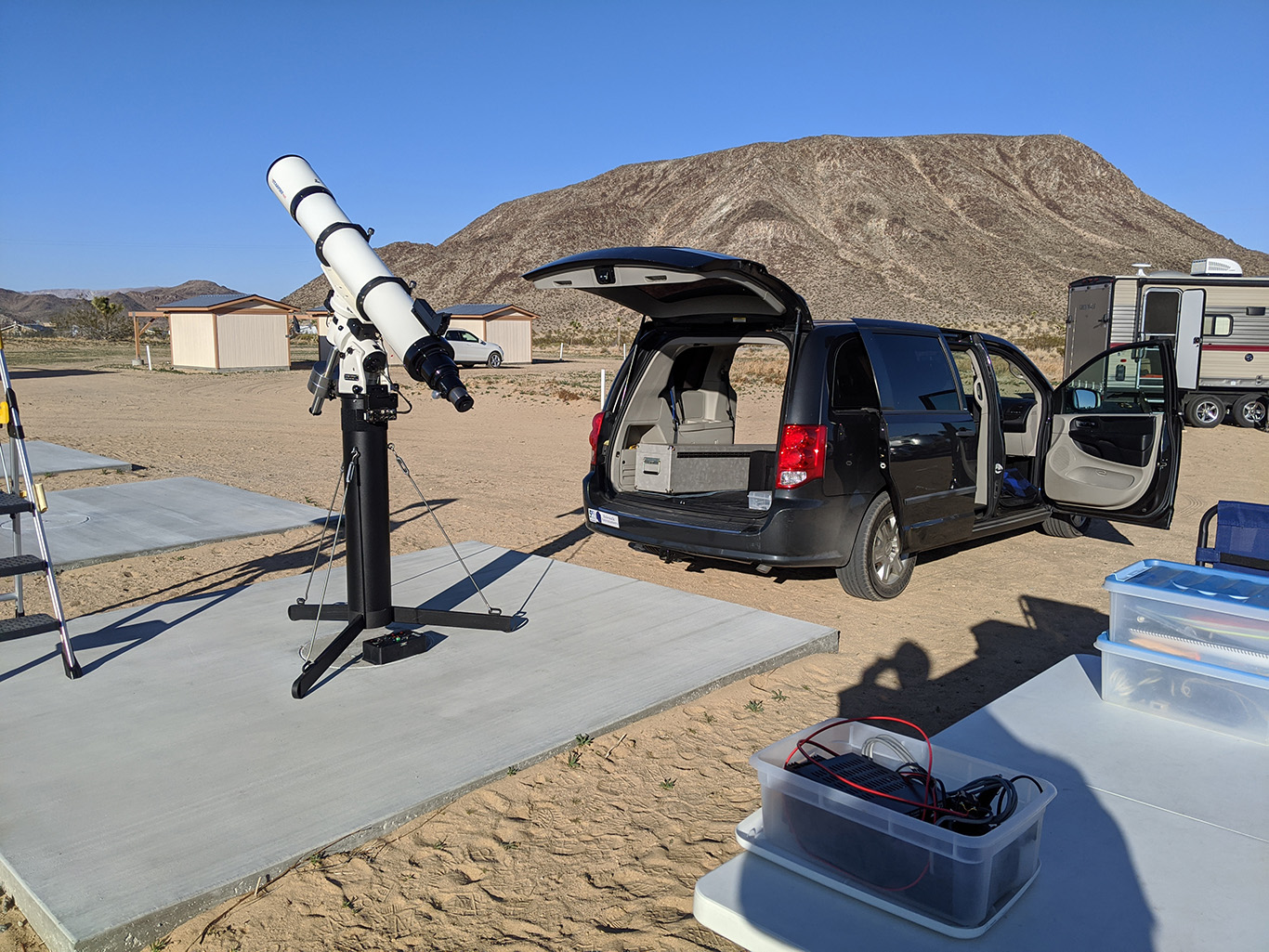
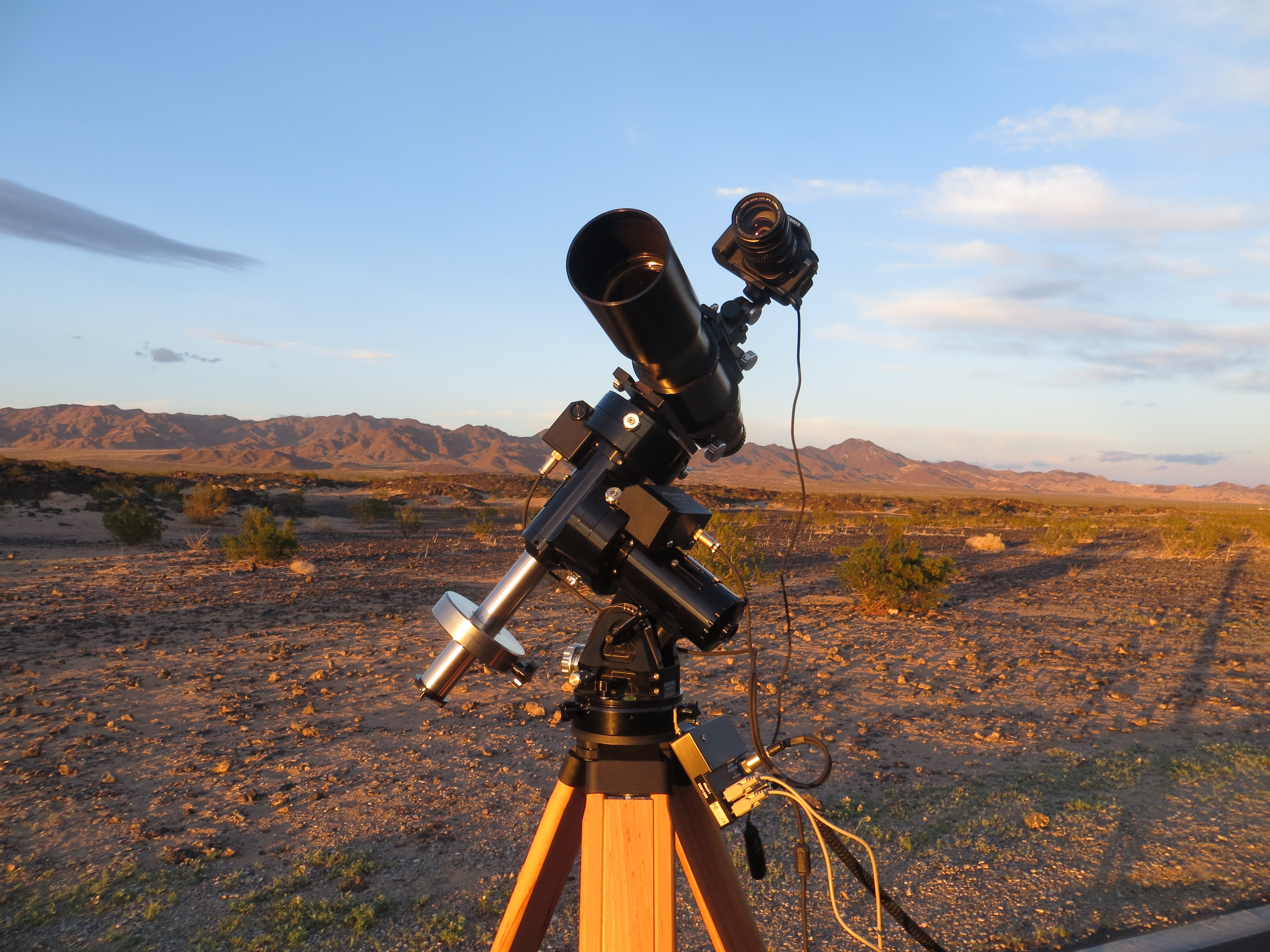
    AP180 telescope and mount.
    The AP180 EDT on its new AP1100GTO mount and portable pier.

    I arrived mid-afternoon and parked at my newly assigned pad, discovering plenty of friendly company — even some old friends from our in-town Sidewalk Astronomy group, Kay and Ken Hoevel. They were happy to help lift the telescope tube, and even insisted on feeding me marvelous grilled steak kebabs in the gorgeous evening twilight.

    I made lots of other new friends, discovering shared interests that seem common among astronomers — things like airplanes and ham radio.

    Kay told me one of her discoveries about GMARS: No matter what it is you left at home, there’s usually someone there who has one to lend you. In my case, it was a red flashlight, and a replacement 3V lithium battery. She managed to find spares of both in her kit.

    I spent a wonderful time under a clear dark sky. I had a comfortable observing chair and binoculars to enjoy the winter Milky Way while the camera was capturing ancient photons. The chatter of nearby observers was familiar and comforting.

    The new mount and old camera were both working like a dream. I was able to bounce around the late-winter early-spring sky, shooting 30 minutes of data on several old favorites for practice. I wrapped up about 1:00 a.m. by taking some flats to calibrate the data. I was ready to get out of the old. I couldn’t sleep though; I spent another few hours in my warm van doing some data reduction and stacking, relearning all my rusty skills.

    The night was beautifully clear, but the seeing matched the forecast of fairly poor. That would be evident in the large stars and soft detail in the images. I’m still delighted with the results, and excited about the prospects.

    Here are the targets for the evening:

    My first selection was a bit ambitious. With the f/6 Traveler it’s difficult to get enough pixels on small planetary nebulae to render much detail. I wanted to see how the f/9 180 would do. I chose the Eskimo, NGC 2392, in Gemini. The full field still dwarfs the little planetary, but look how much detail is visible in a full-resolution crop.
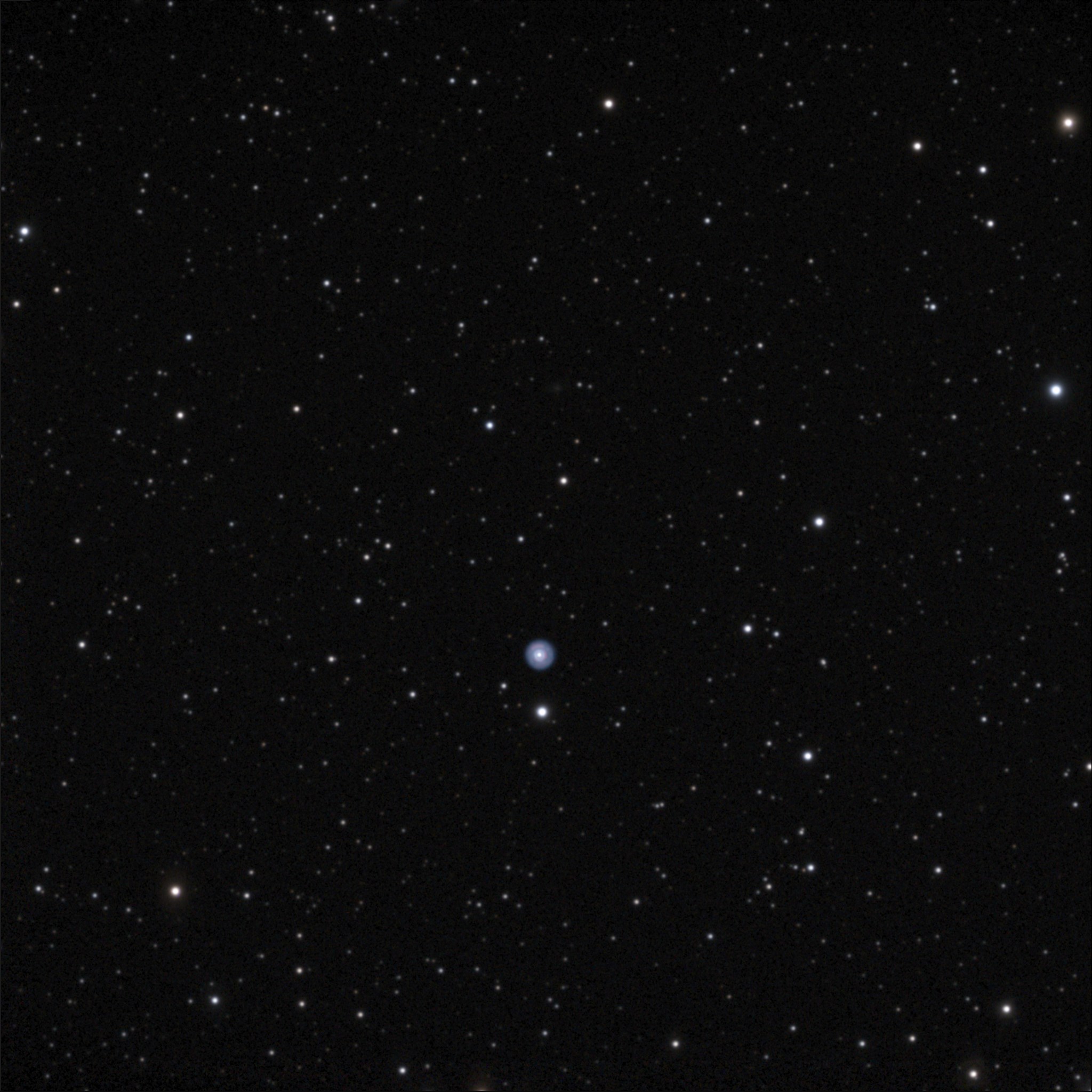
    NGC2392
    The Eskimo, NGC2392, planetary nebula in Gemini

    Here’s the cropped center of the image.
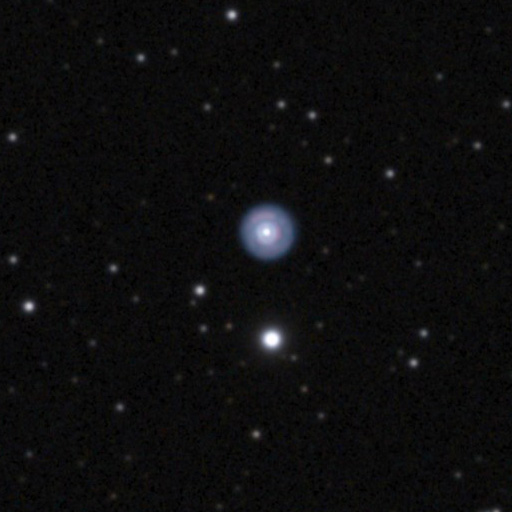
    NGC 2392
    Center full-resolution crop from the full-field NGC 2392 above, showing the interesting detail in the Eskimo.

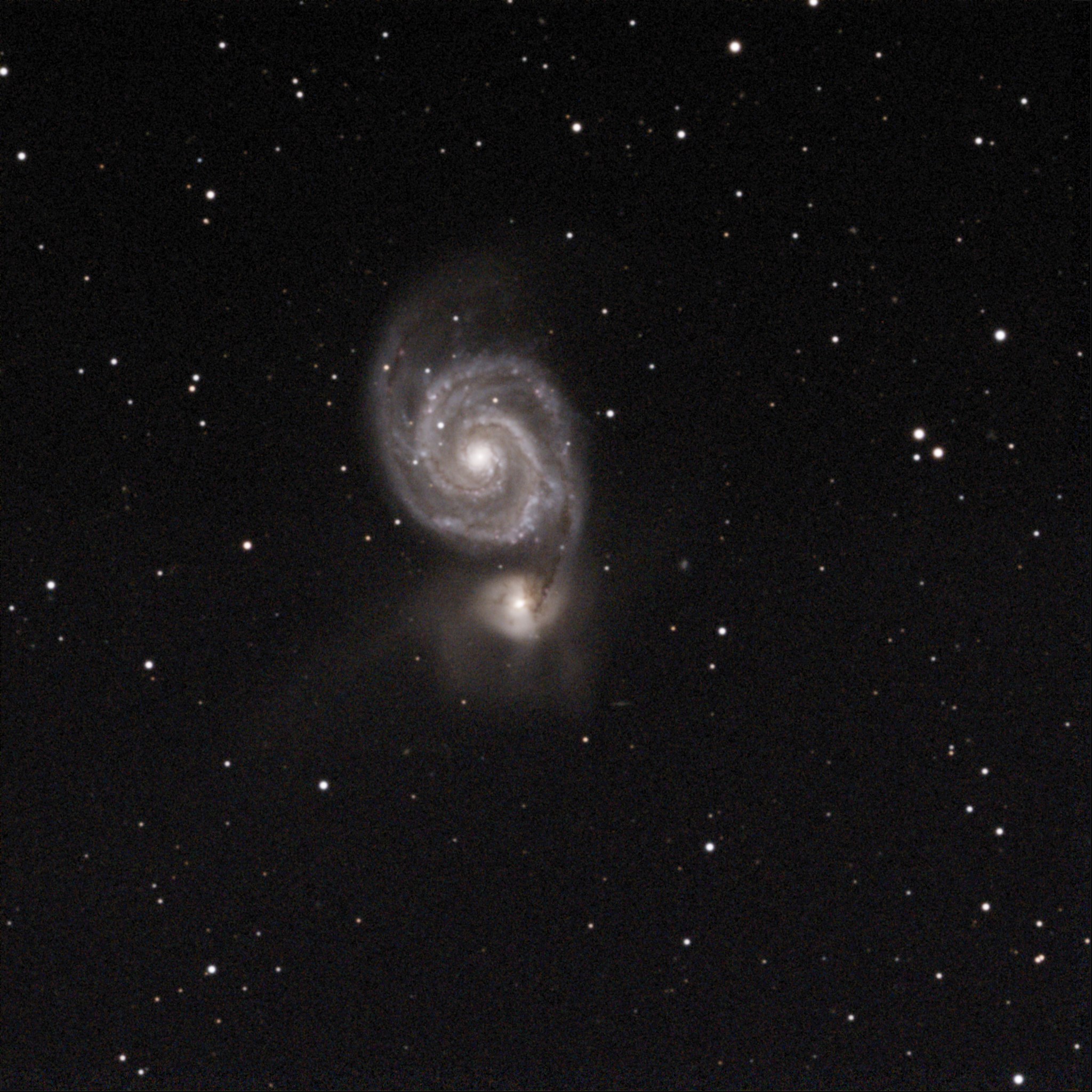
    Ursa Major was in prime position, so I thought I’d grab several favorites from there, starting with M51 the Whirlpool.
    M 51
    M51 the Whirlpool Galaxy in Ursa Major.

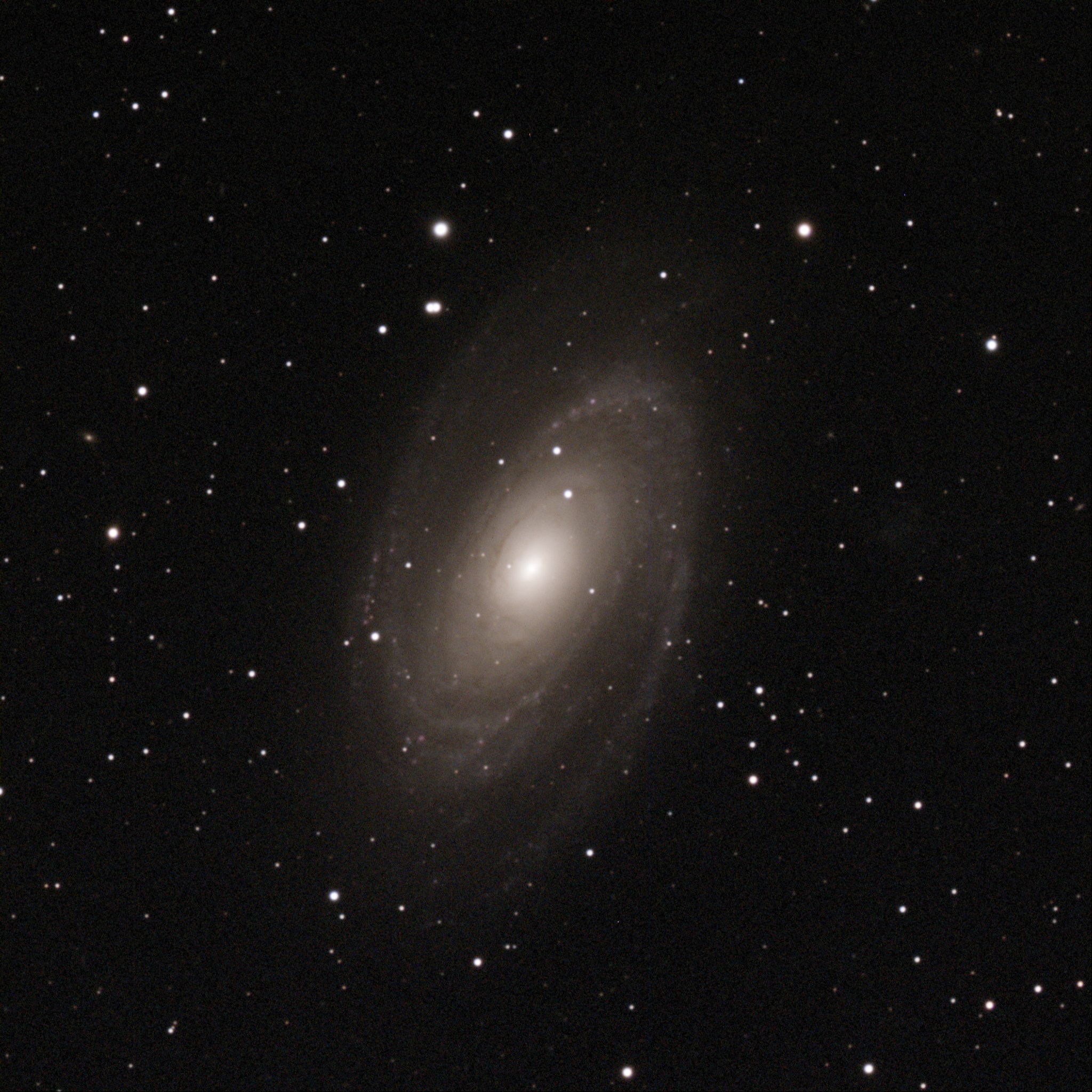
    In the big long-focus telescope, M81 and M82 won’t fit in a single field, so I had to capture them separately. Well worth doing. Here’s M81:
    M81
    M81 spiral galaxy in Ursa Major

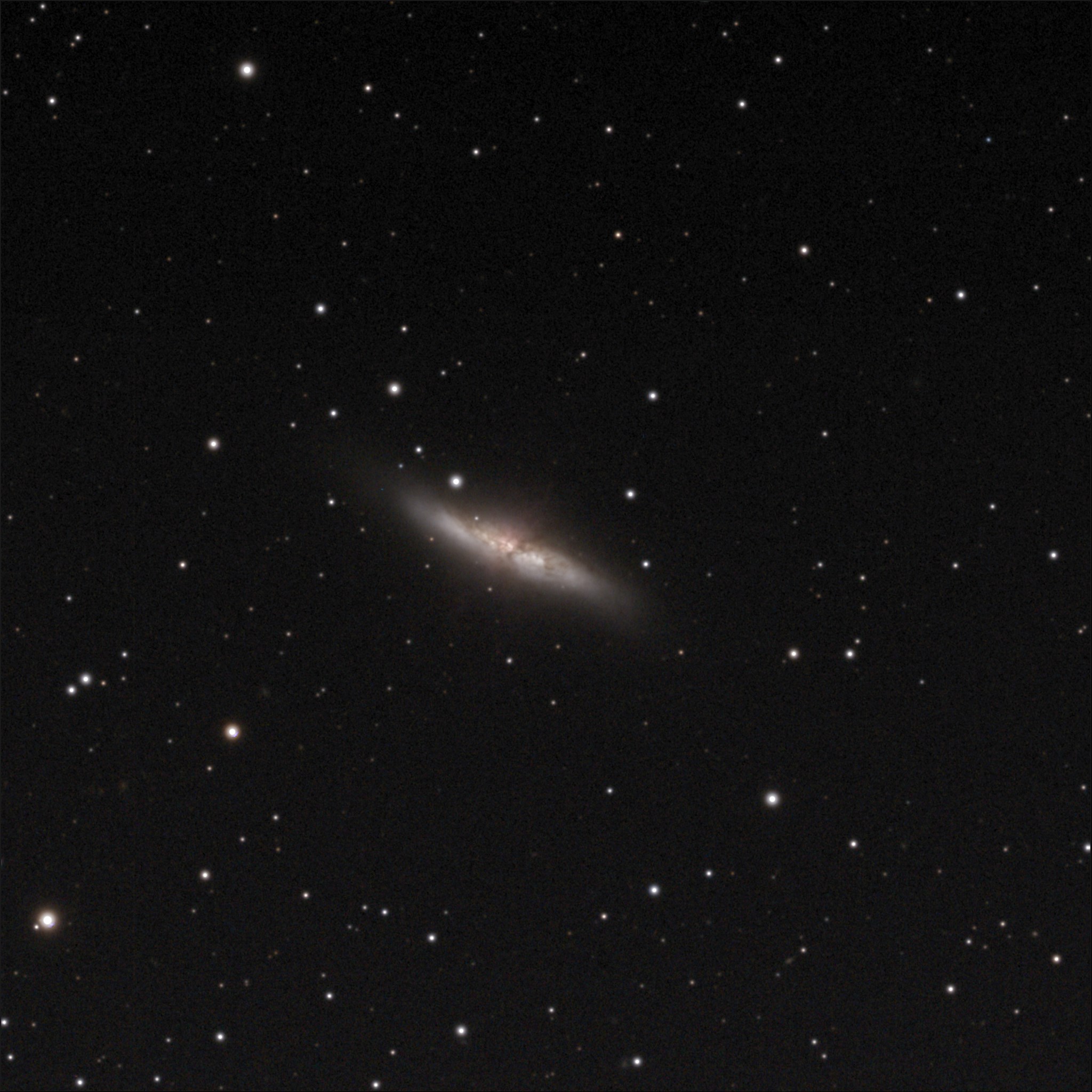
    M82 also reveals lots of detail in the tangled center of this irregular galaxy:
    M82
    M82 irregular galaxy in Ursa Major

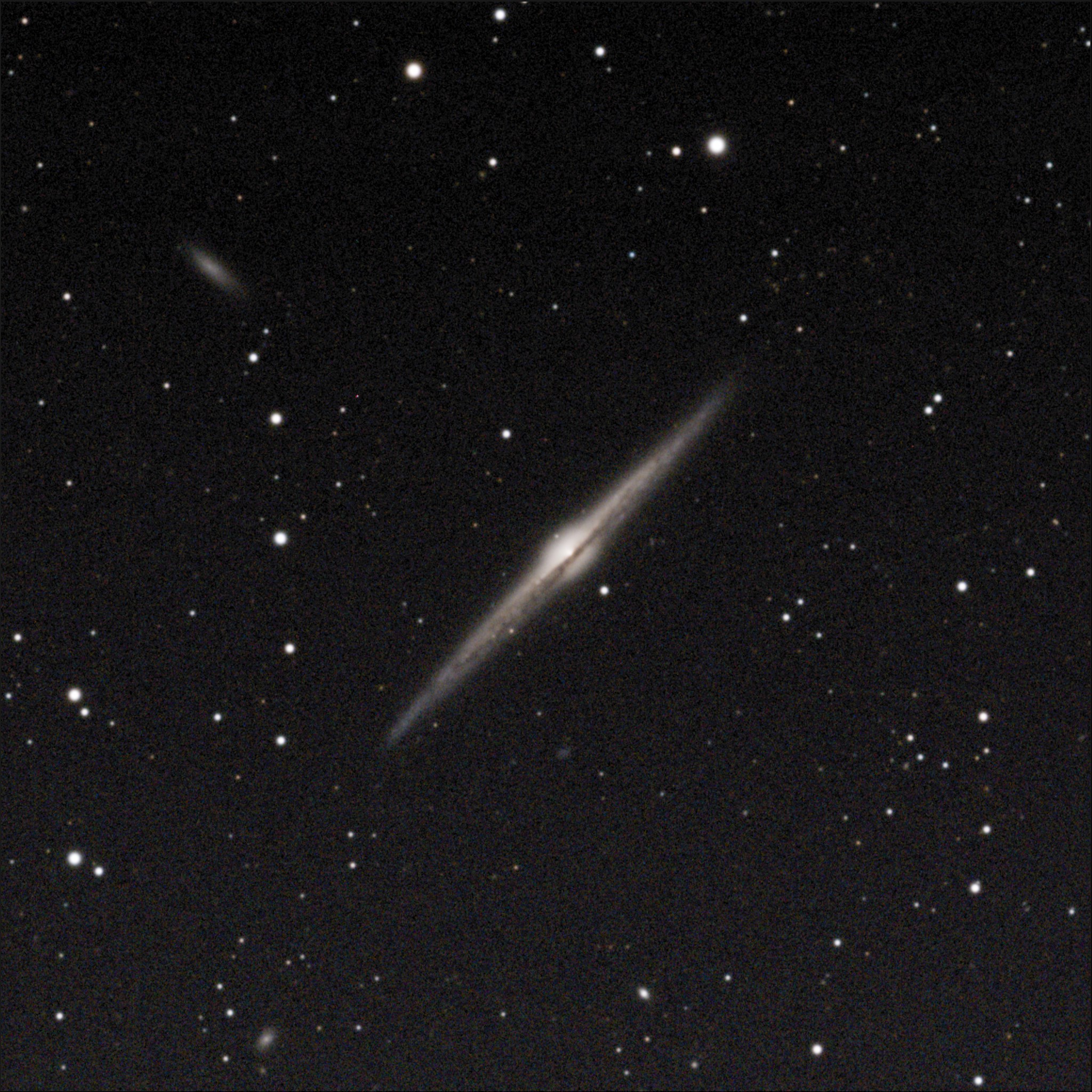
    Seeing Coma Berenices rise in the dark eastern sky, I knew i had to grab the edge-on spiral NGC 4565:
    NGC 4565
    NGC 4565 in Coma Berenices

    Clicking on any of the images above should give you the full 2048×2048 image.
  • Finally some observing weather

    See Jane’s observing report from the same evening — some great binocular observing with Kemble’s Cascade.

    IMG_0890
    The 20D mounted piggyback on the Traveler and Mach One GTO mount, hoping to catch comet PANSTARRS on its first opportunity.

    Several months ago, David Green of the Santa Clarita Valley Photographers Association invited me to give a talk on astrophotography in March.

    I thought, “No problem! We’ll have several dark sky weekends between now and then for me to get some photos and screen captures, and I’ll have a fine talk.”

    Famous last words! I must have jinxed the weather. But my luck turned just in time to get out with Jane on March 9 for some dark sky observing and astrophotography at Amboy Crater.

    This trip would be the last remote observing session for our not-so-trusty Dodge Grand Caravan. It had been plagued with electrical troubles for the past several months, and on this trip it started behaving erratically on the climb up the Cajon pass on I-15. We opted to brave the possibility of being stranded, and carried on to Amboy Crater. Luckily everyone survived the trip!

    IMG_6204
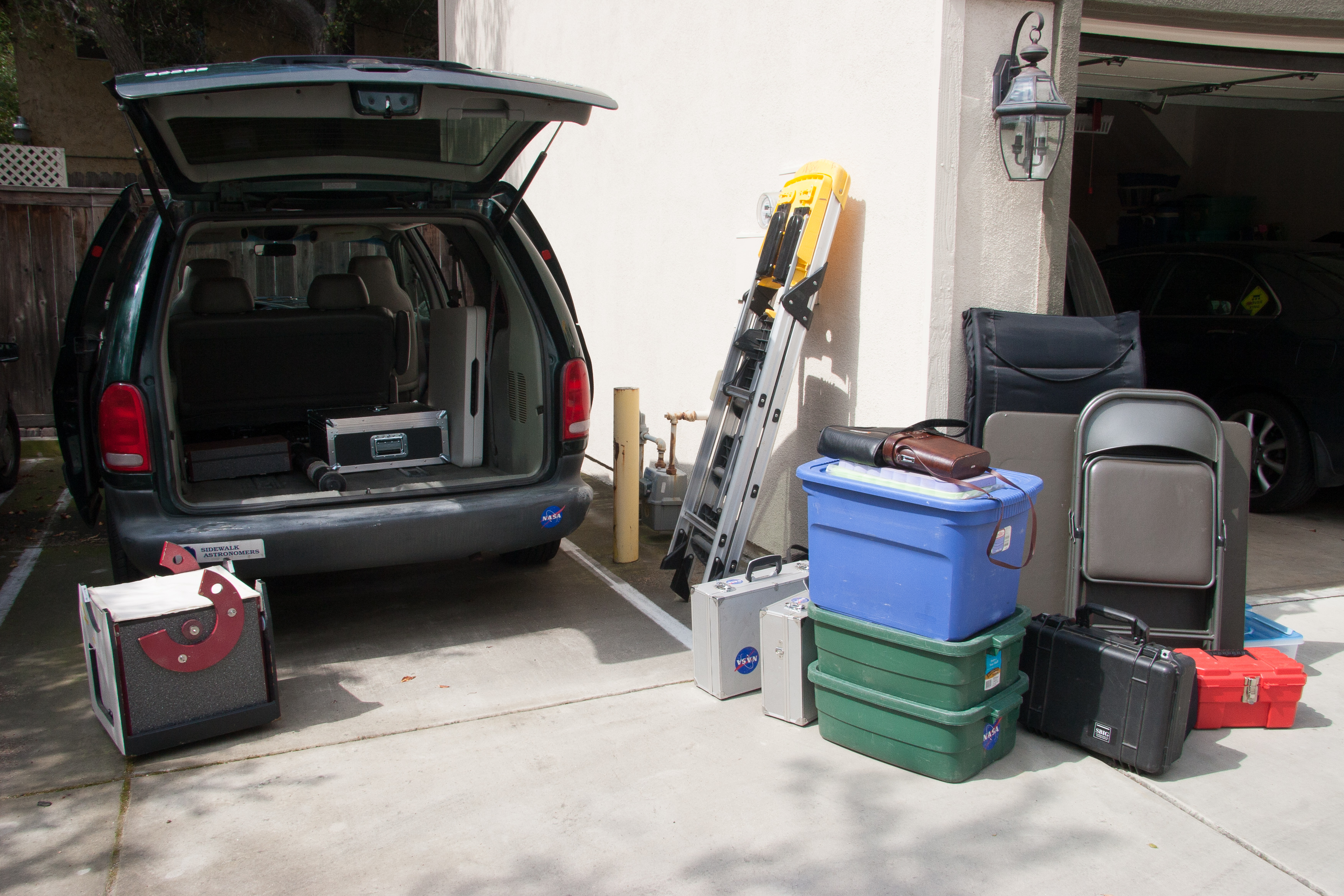
    Getting everything staged to load into the van.
    IMG_6207
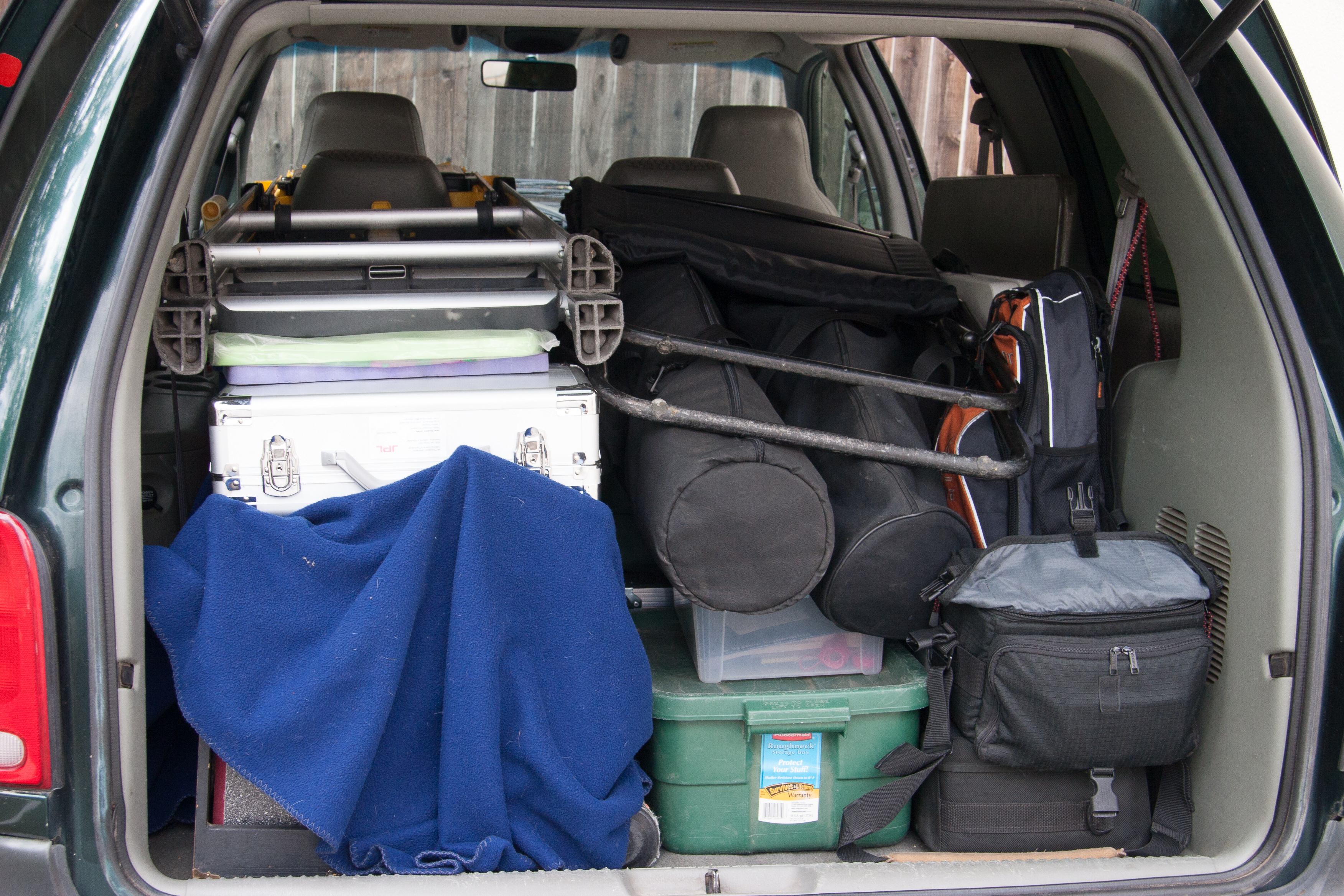
    Astro-pack


    Our first hope was for a shot of comet PANSTARRS in its first opportunity on the northern portion of its pass through the system.

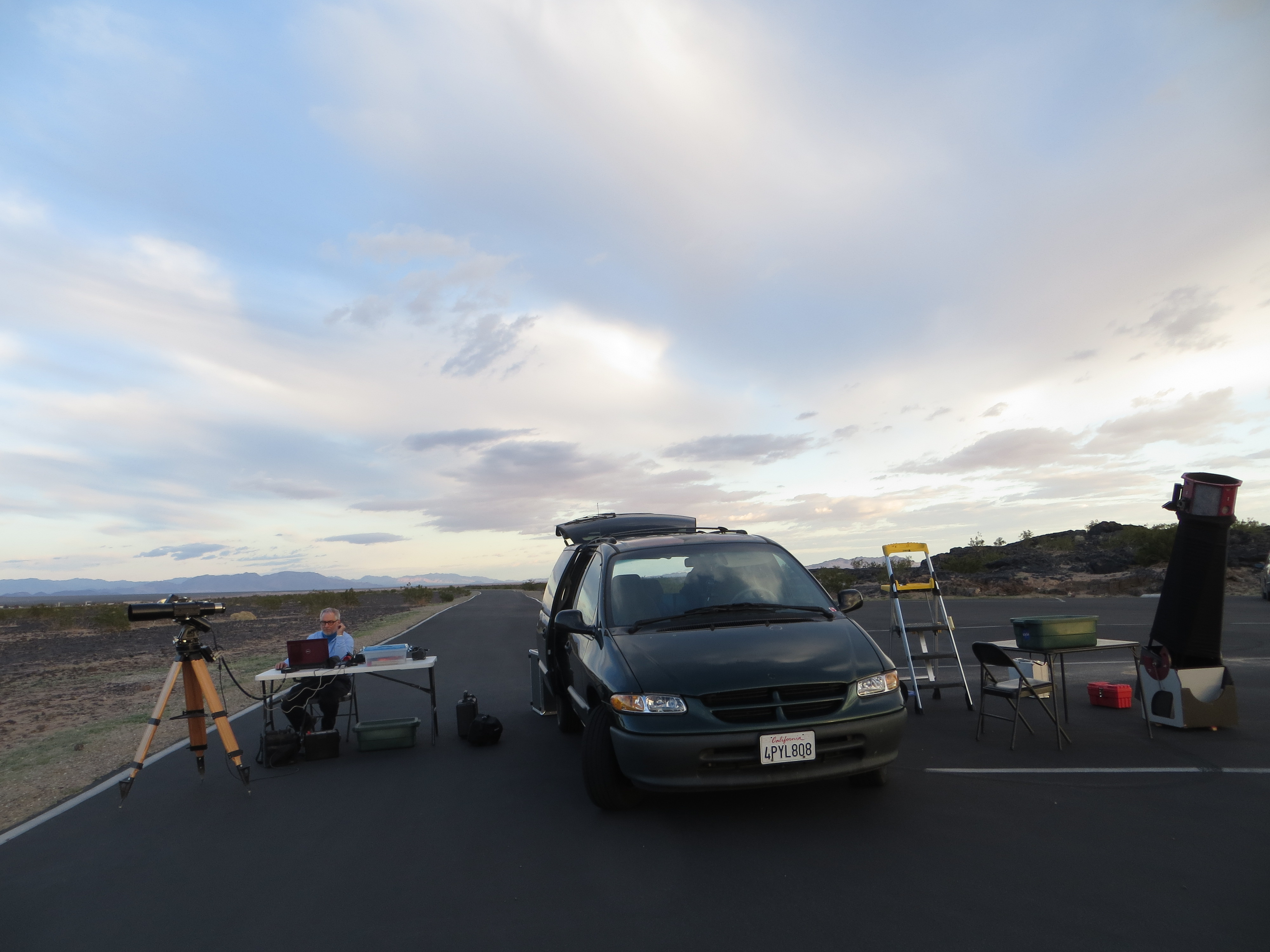
    Those clouds you see in the set-up pictures hung around the western horizon just enough to keep the comet out of view.

    IMG_0875
    Astrophotography on the left, visual astronomy on the right. Those clouds kept PANSTARRS hidden, but cleared nicely later in the evening.

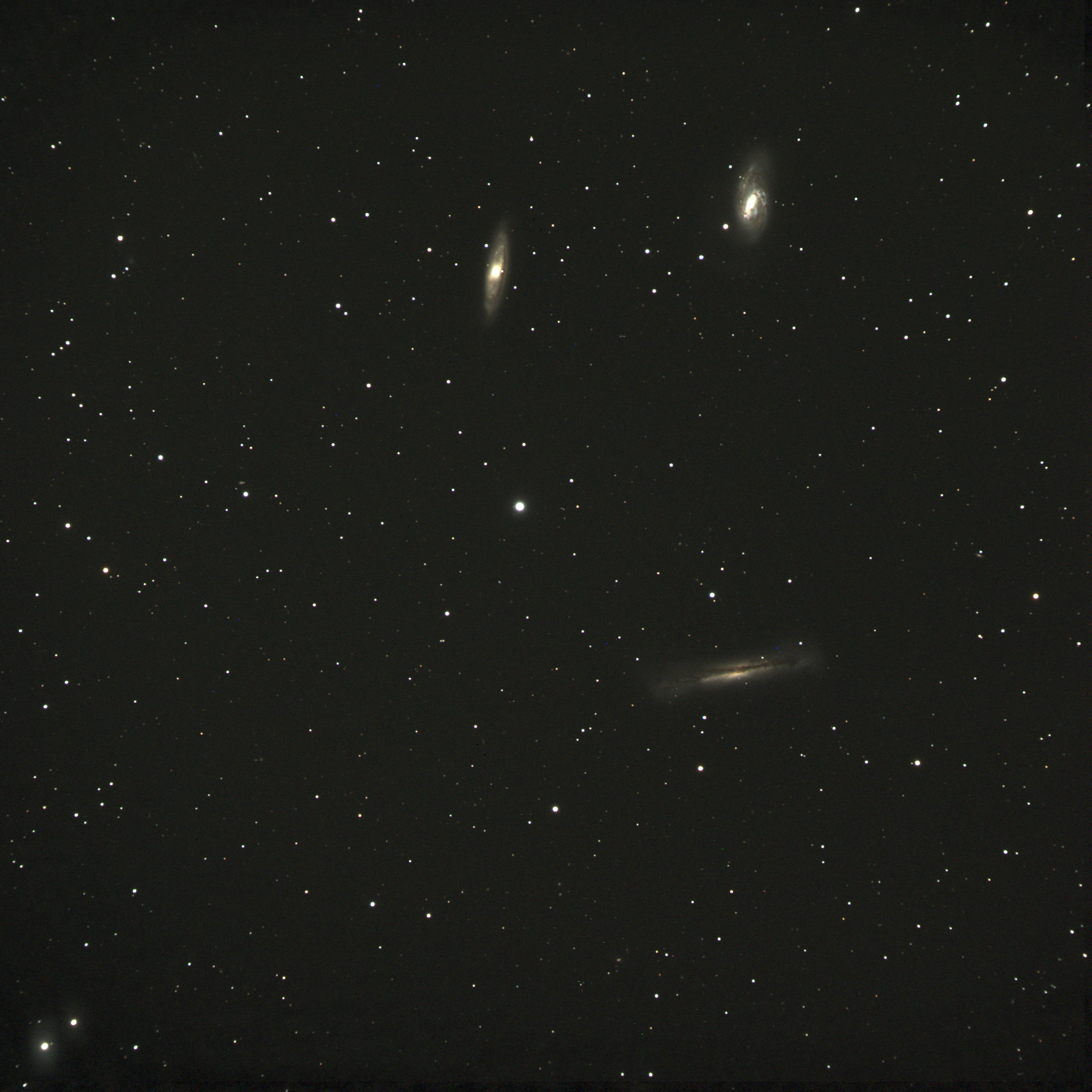
    My first target was going to be an easy favorite visual target, but one of which I didn’t have a good astrophoto. M64, M65, and NGC3628 are three galaxies in Leo that form a striking group. There are other galaxy groups in Leo, but I believe this one is the set known as the Leo Trio.

    Three galaxies in Leo
    The Leo Trio, M65, M66, and NGC3628. 45 minute exposure (3×15 min.) SBIG ST-4000XCM, Astro-Physics Traveler, 105mm f/6

    I went for a couple of other interesting easy targets that should be fun. The Whirlpool and NGC5907 “Splinter” are best with longer focal length telescopes, for a narrower field, but I enjoy these wide field shots too.

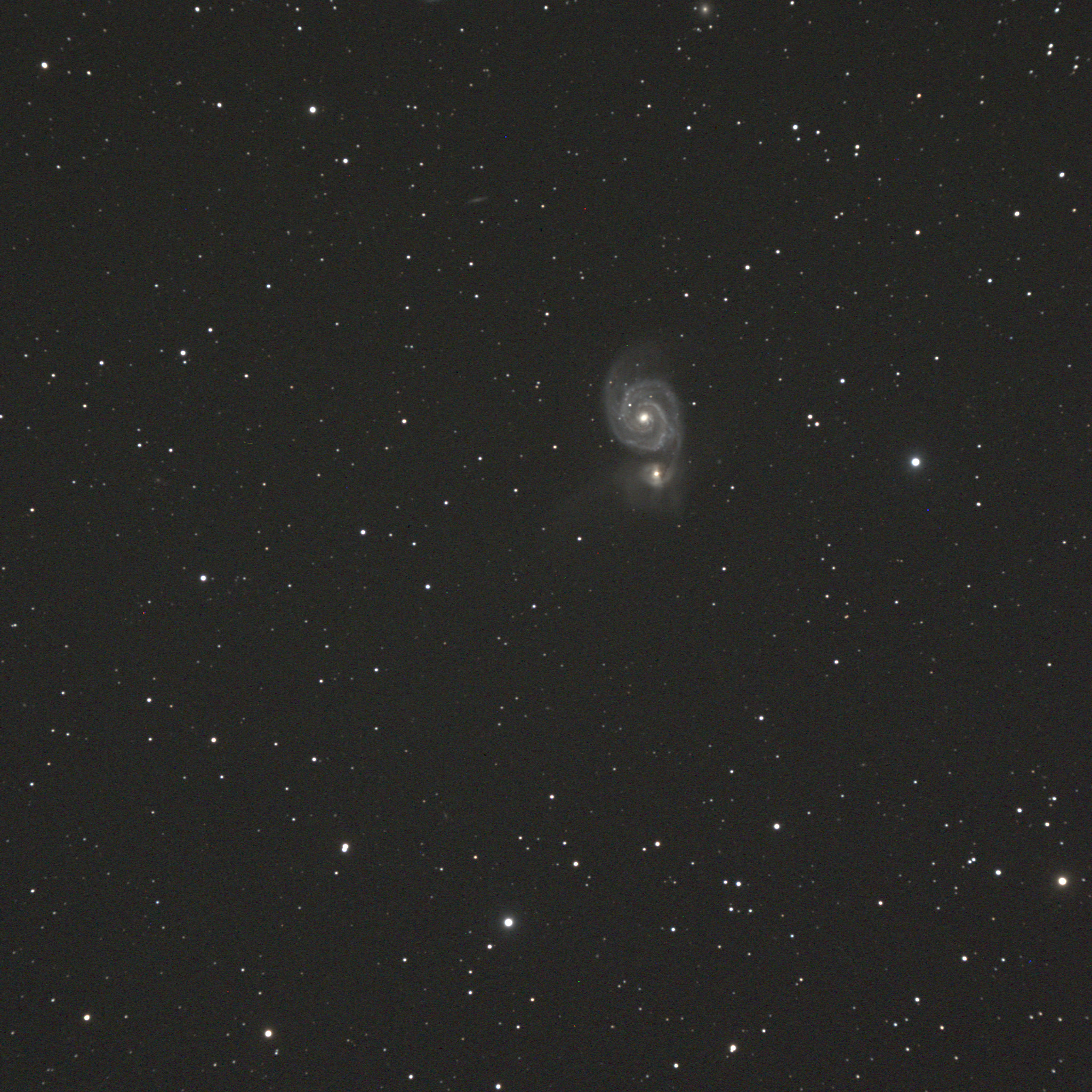
    The Whirlpool galaxy
    M51 the Whirlpool Galaxy in Ursa Major, Astro-Physic Traveler 105mm f/6, SBIG ST-4000XCM camera

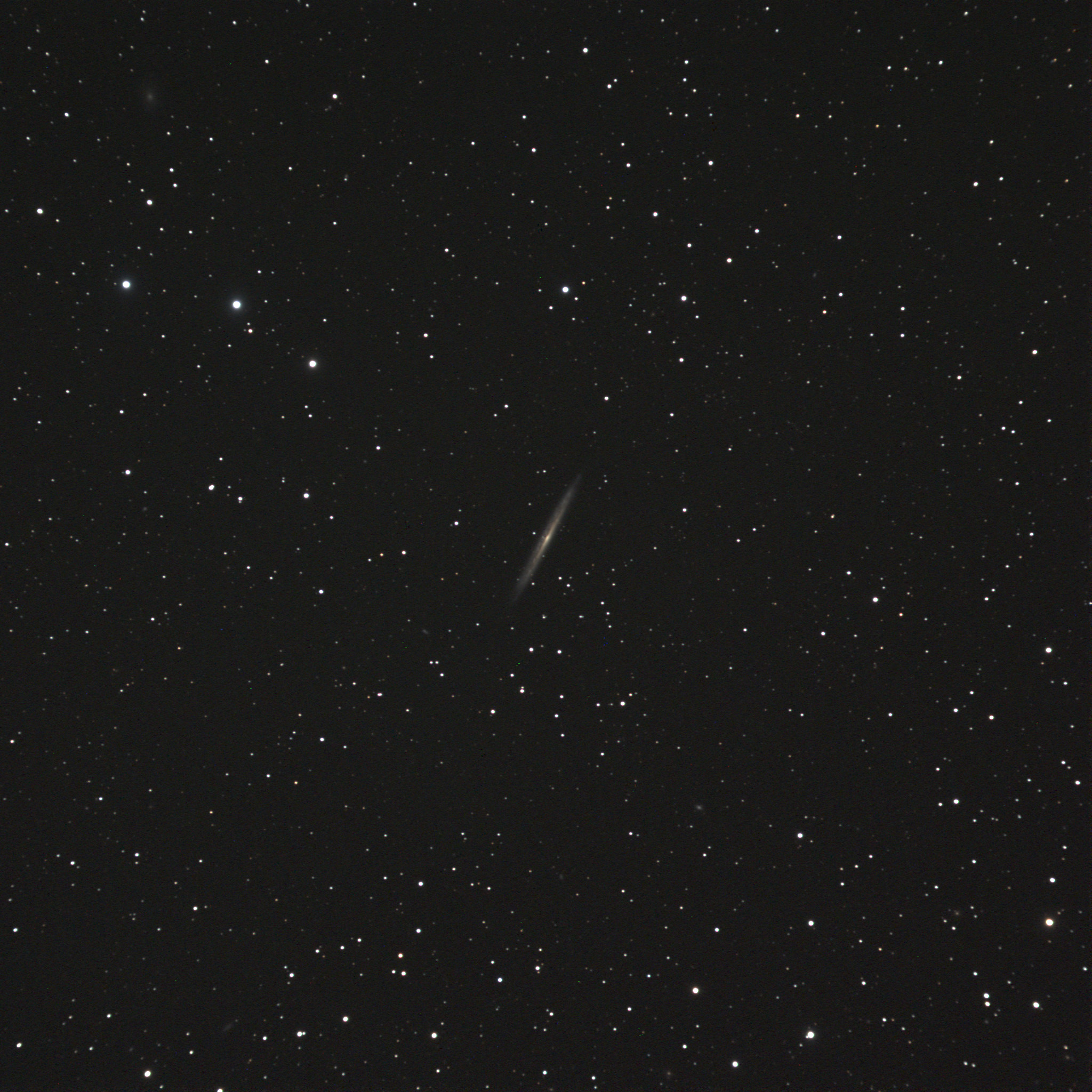
    The “Splinter” in Draco is a lovely edge-on spiral.

    NGC5907
    “The Splinter” galaxy NGC5907, edge-on spiral in Draco. Astro-Physics Traveler 105mm f/6, SBIG ST-4000XCM

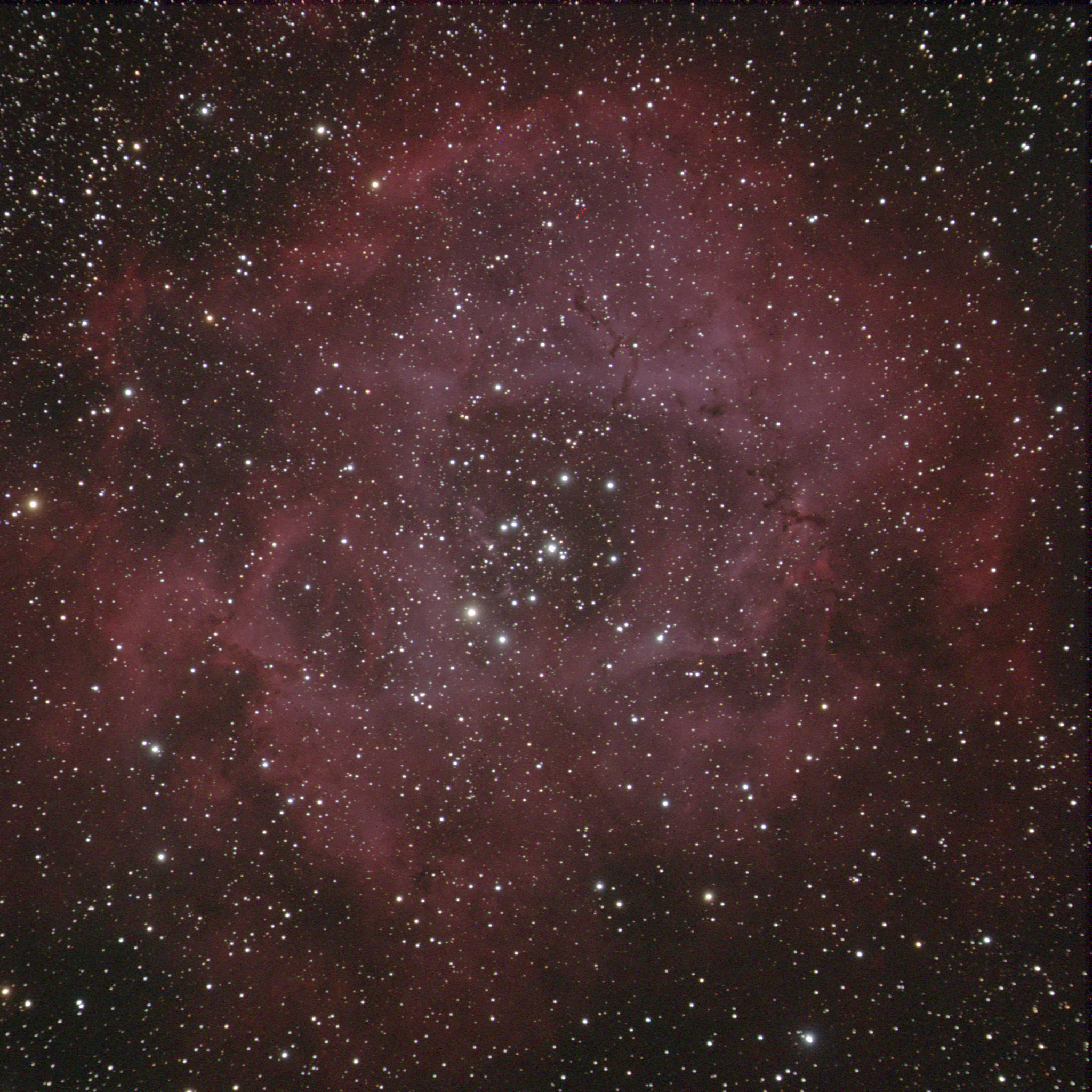
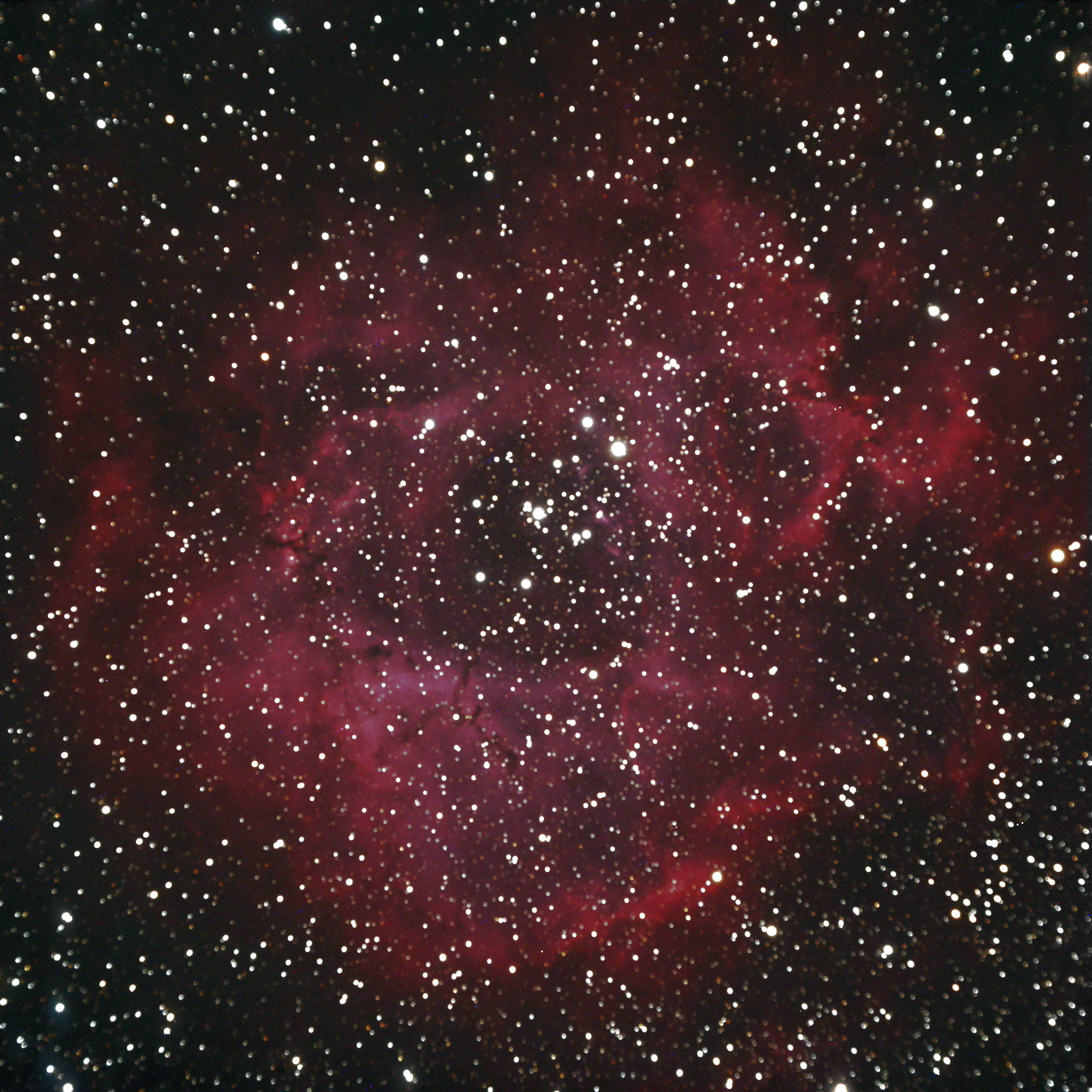
    Finally I went for a redo of a classic winter-sky object, one for which my Traveler with its wide field-of-view should be ideal, the Rosette nebula in the winter Milky Way.

    Here is my earlier shot of the Rosette, and the full size image of it here. On that night my focus wasn’t especially good. Since then my skill with focusing and processing has improved quite a bit, such that now I’m proud to show you my new Rosette image.

    Rosette
    The Rosette nebula region in Monoceros, 45 minutes exposure (3×15 minutes) Astro-Physics Traveler 105mm f/6, SBIG ST-4000XCM

    So I certainly had enough to make a fair astrophotography presentation for a camera club. My talk was the following Tuesday evening at Santa Clarita Camera, for the Santa Clarita Valley Photographers Association.

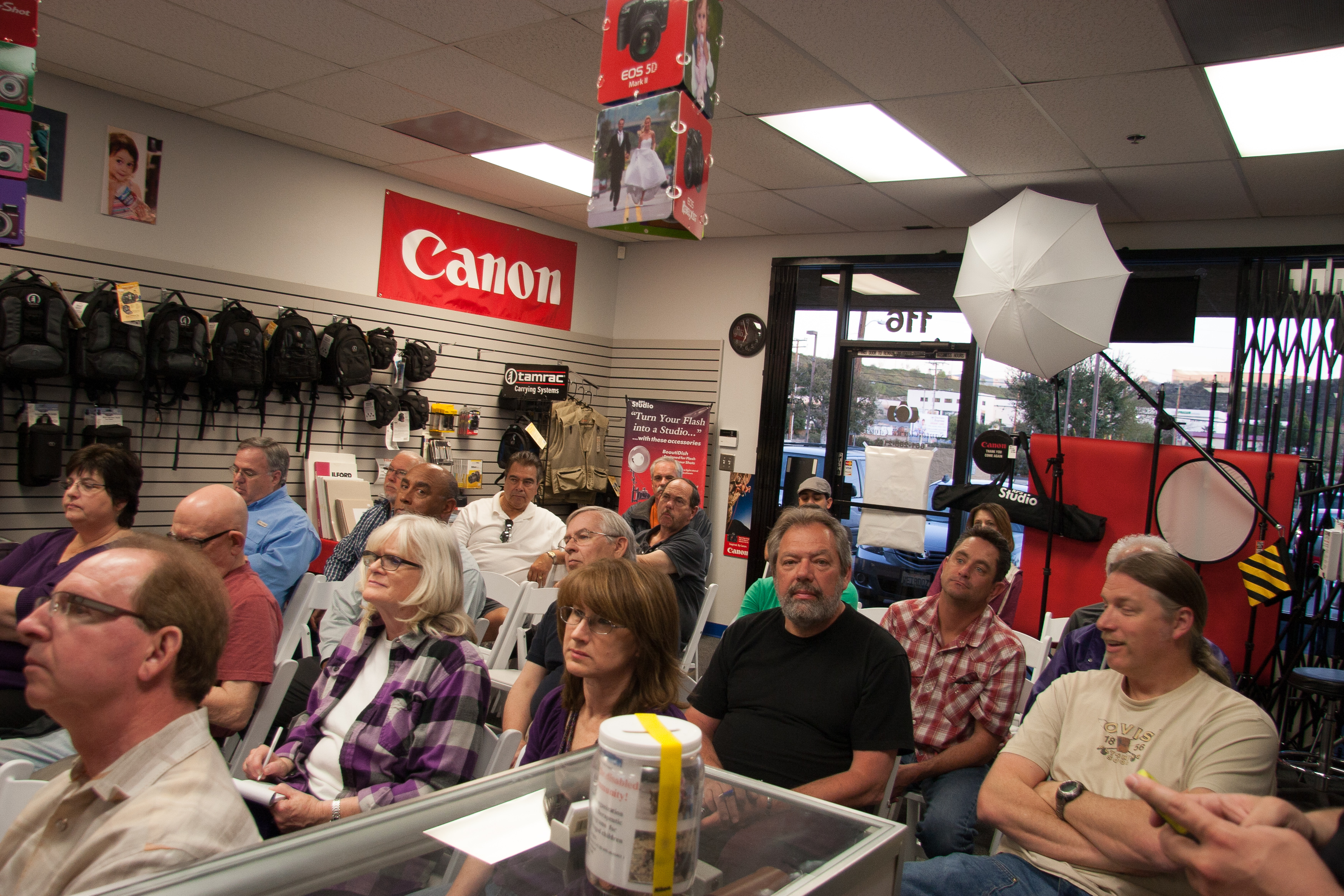
    Camera Club
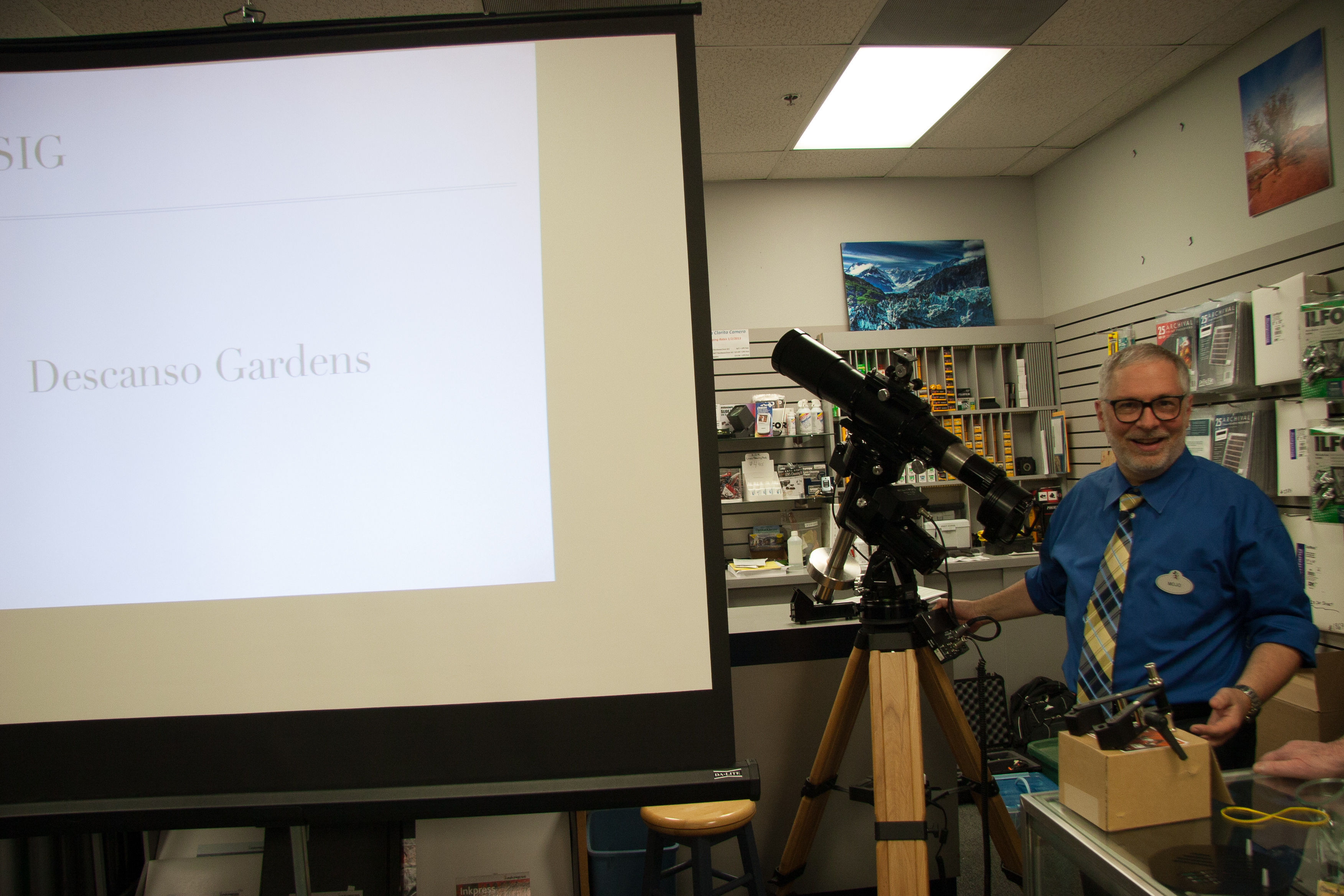
    I had about 30 camera club members for my presentation on deep-sky astrophotography.
    Mojo with astrophotography gear
    I brought my A-P Traveler, mount, tripod, and camera for show-and-tell along with the talk. Not the usual gear found at a typical camera store.
  • Galaxy season

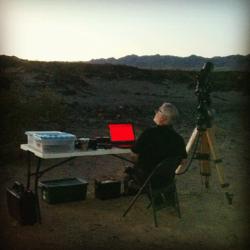
    Mojo at Amboy Crater
    Jane snapped Mojo waiting for darkness at the Amboy Crater visitor area.

    Observing report, April 21, 2012, Amboy, CA

    We’ve had a string of bad luck with new moon weekends for the past six months, so when this new moon Saturday showed nearly perfect conditions, Jane and I were quick to pack the van and get out to Amboy Crater.

    My only agenda for the session was to relearn my rusty imaging skills, and perhaps bag some Spring galaxies from Virgo and Ursa Major. Jane had plans to mostly eschew optical equipment and spend the morning counting meteors from the Lyrid meteor shower. (She’ll have a report on that elsewhere.)

    Conditions all night were as delightful as advertised. There was no wind, not a sign of a cloud. The temperature dropped quickly from 98°F on arrival to 62°F close to sunrise, calling for a light jacket. Humidity stayed well below 20% all night. We were prepared for the heat with lots of ice and Propel sports drinks.

    We were the only ones taking advantage of the smooth blacktop and hospitable visitor station at Amboy Crater. The great conditions kept both of us going without a nap all night. It made for a struggle returning home on little sleep, but we both managed to grab naps during the day.

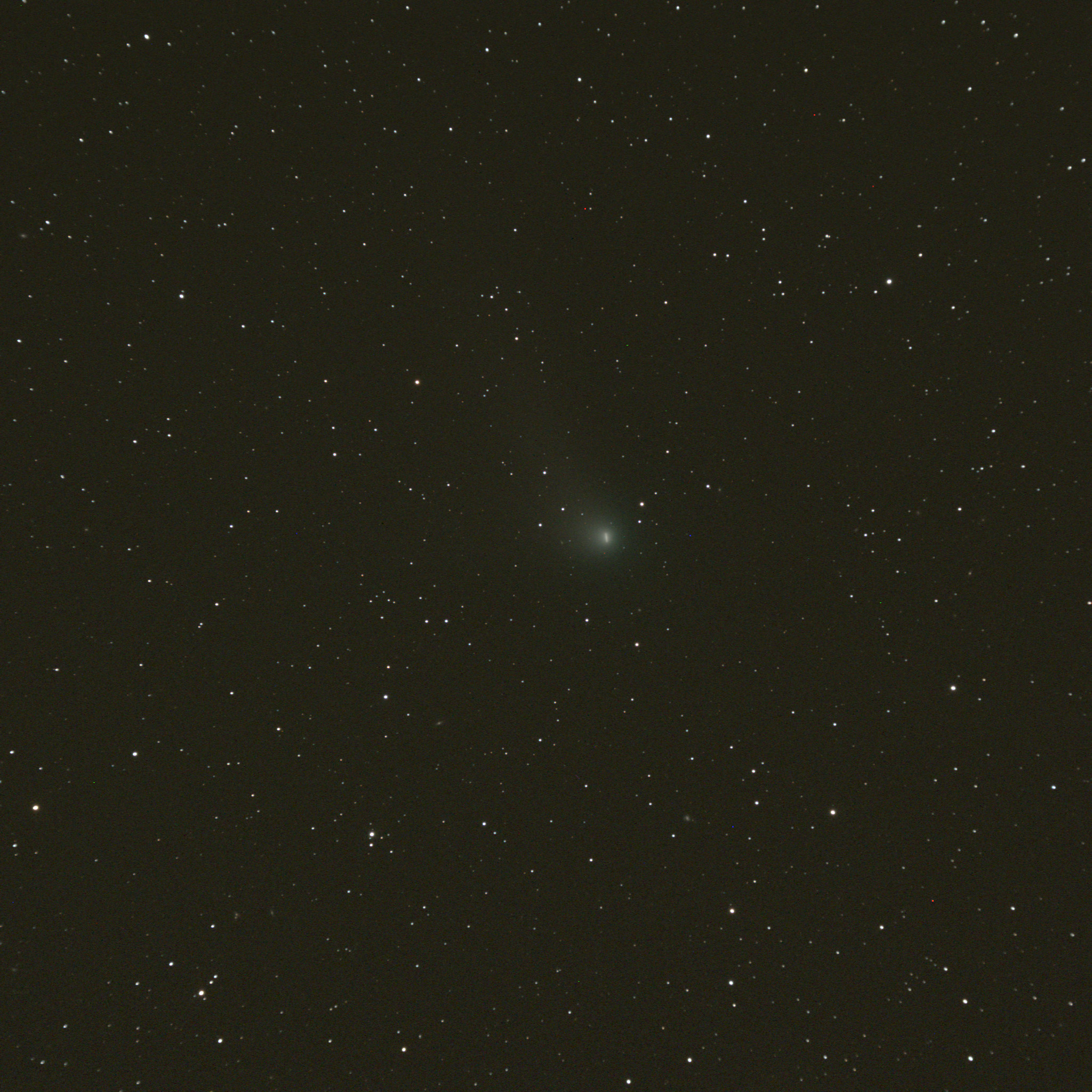
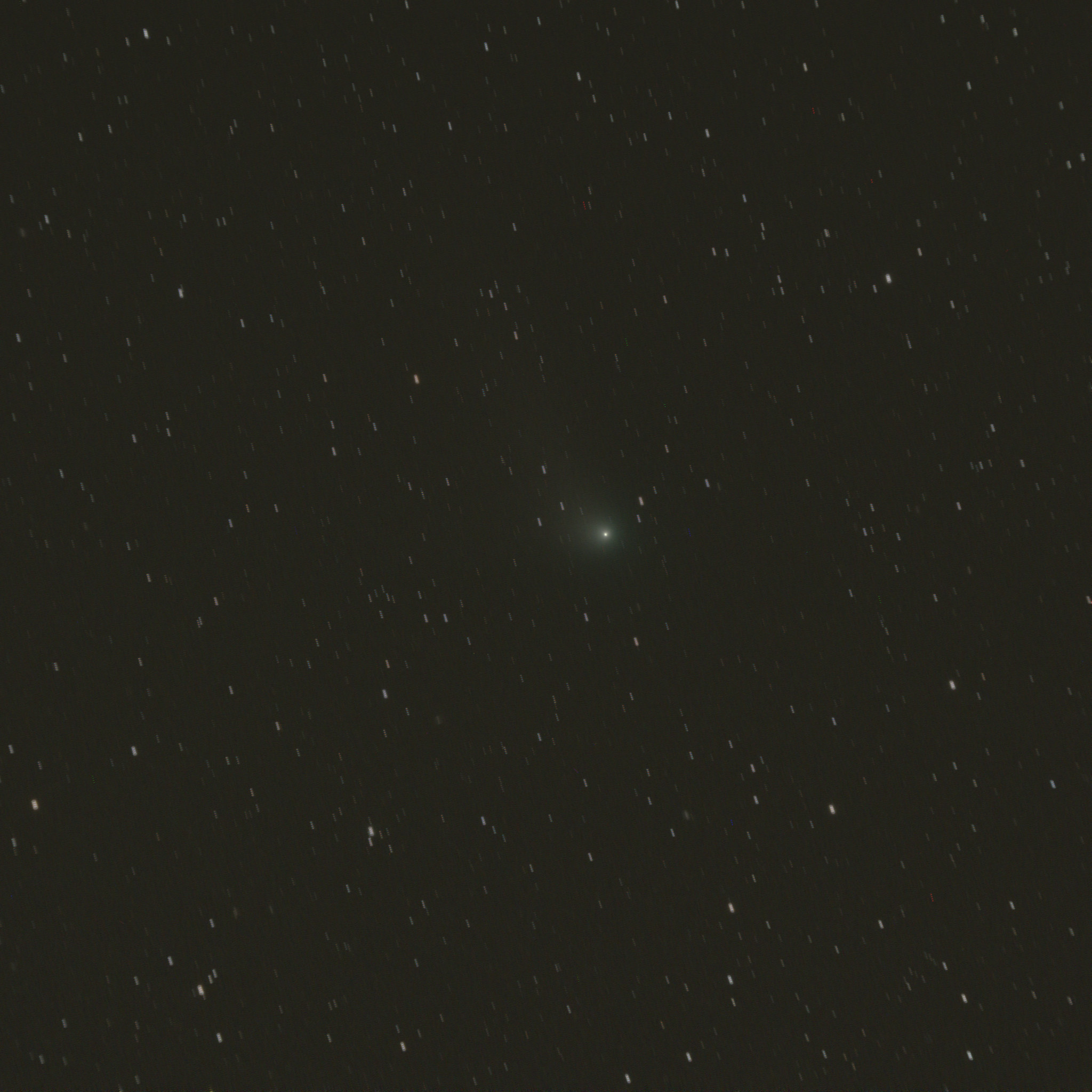
    I imaged comet C2009/P1 Garradd to start the evening. I took four 5-minute exposures, allowing me to make two versions of the image.

    The first version stacks the images so the stars all match. The motion of the comet against the background stars blurs the head of the comet in the line of its travel.

    Comet Garradd moves against fixed stars
    Comet Garradd moves against fixed stars

    The second image aligns each exposure on the head of the comet, so the perspective moves with the comet over 20 minutes, making a trail of stars in the background.

    Comet Garradd fixed against a moving background
    Comet Garradd fixed against a moving background

    The rest of the evening focused on distant galaxies. For this session I added a barlow lens ahead of the camera to get a slightly narrower field of view.

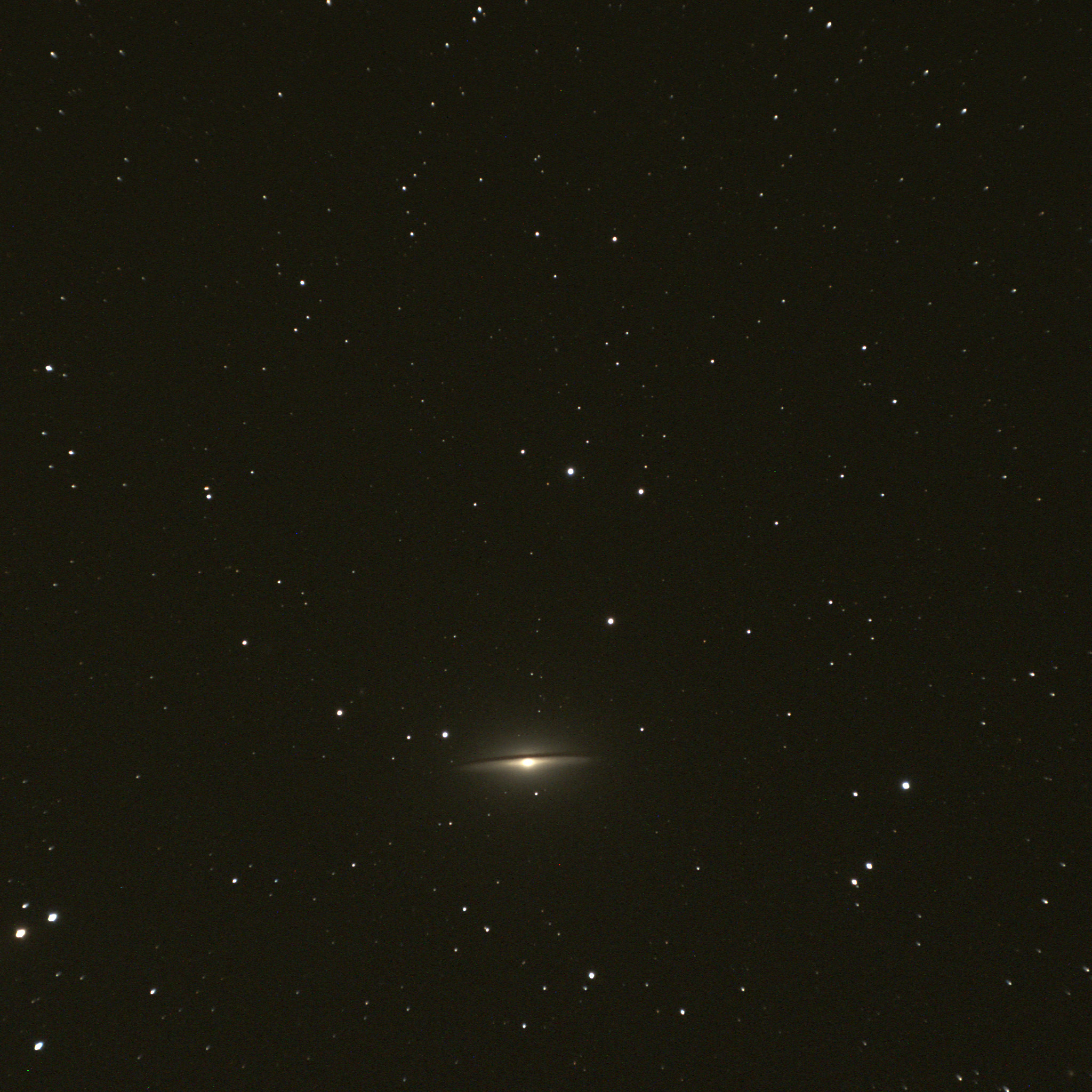
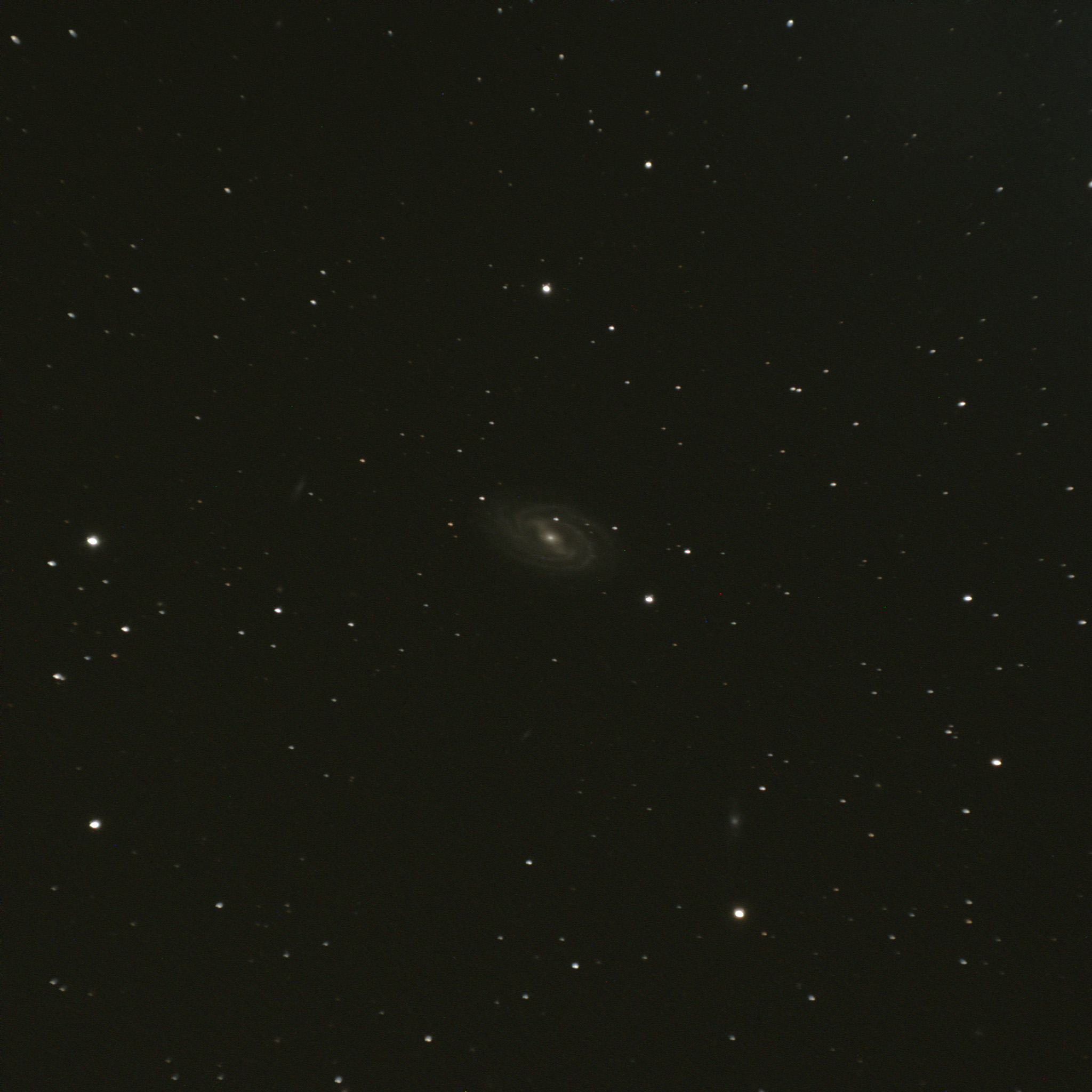
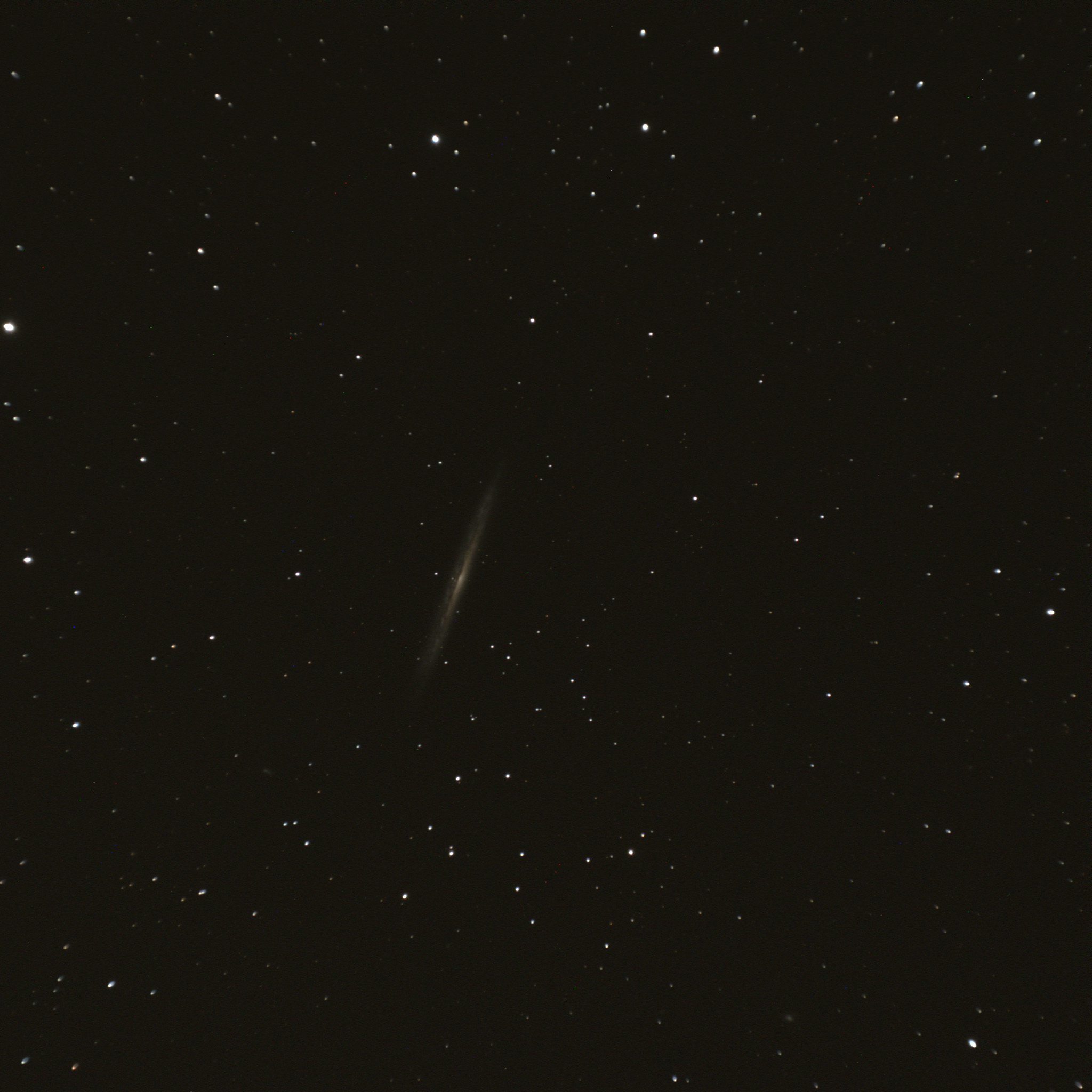
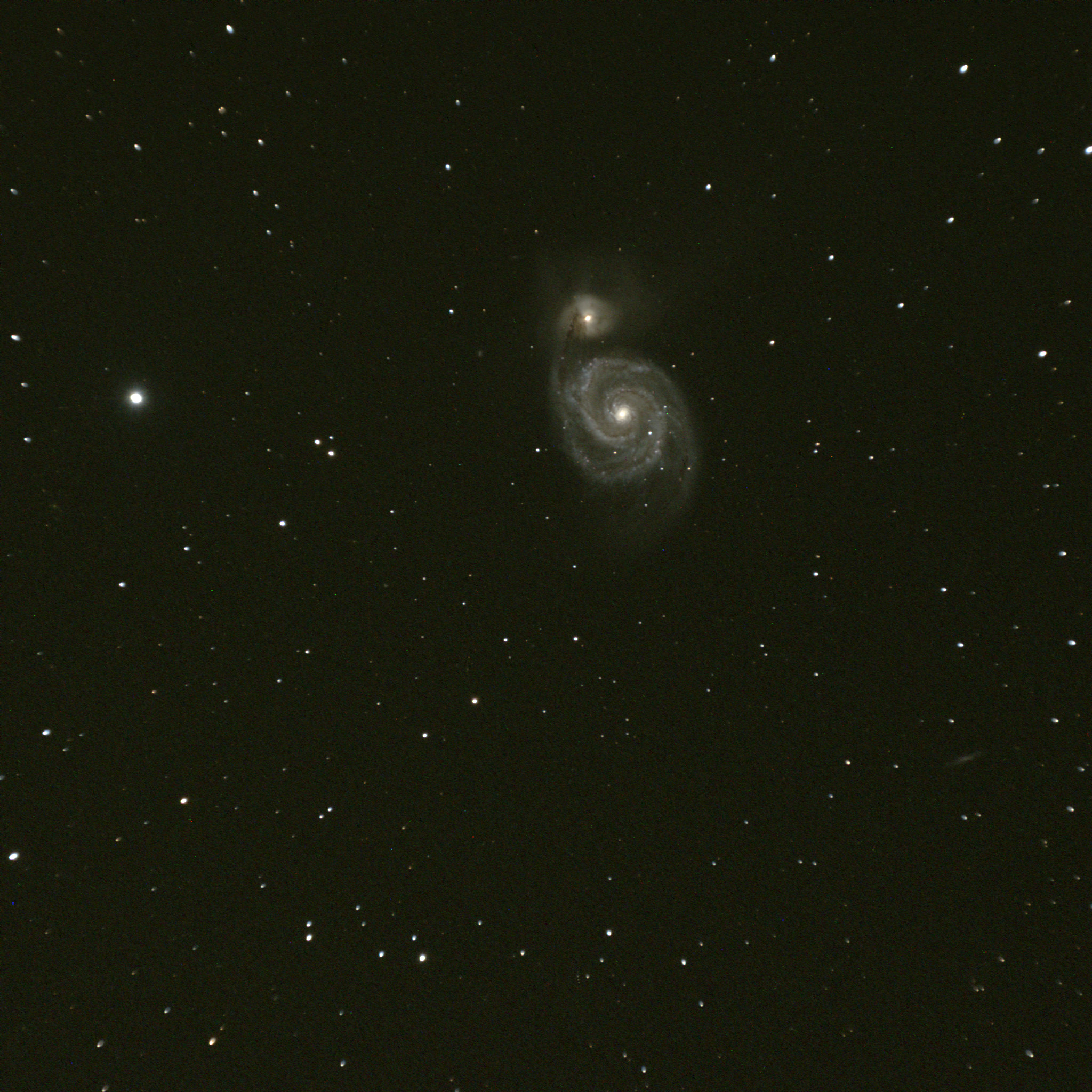
    Each of the 400×400 thumbnails below links to the full-size image, which is 2048 x 2048 pixels.

    M104
    M104 the Sombrero galaxy in Virgo
    M109
    M109 in Ursa Major, a faint barred spiral. Note a few distant spirals in the full-size image.
    NGC5907
    NGC5907, an edge-on spiral galaxy in Draco
    M51
    M51 the Whirlpool galaxy pair in Ursa Major, one of the most photographed and observed objects in the sky.