
Observing report, August 7, 2010
Chuckwalla, CA
We hadn’t expected to be able to observe during this part of the summer from Chuckwalla Bench in the High Colorado desert south of Joshua Tree, but this August night’s forecast at Desert Center looked very inviting. The forecast high there was 101°F with a low of 74°F. I believe our actual location is at a higher altitude; it always seems at least a couple of degrees cooler.
It was forecast to be breezy though, and that can make it uncomfortable to observe as well as blow telescopes and tripods around. We did have some periods when the wind was a nuisance, but for the most part it was pleasant t-shirt and shorts weather all night long.
We had crystal clear transparent skies overhead all night, with a great sugary Cygnus Milky Way transiting high overhead mid-evening, but there was an interesting weather phenomenon happening some number of miles north-northeast of us.
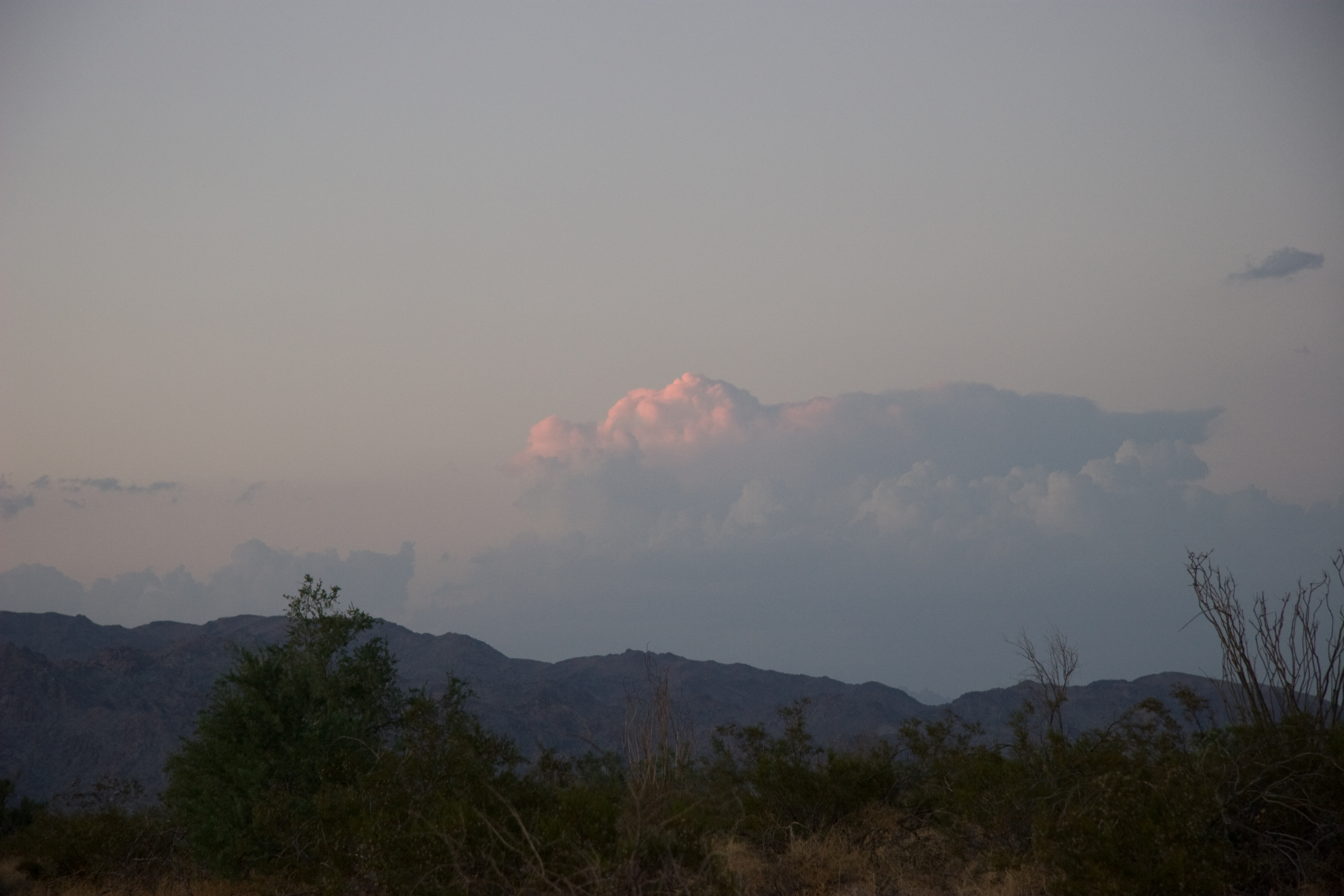
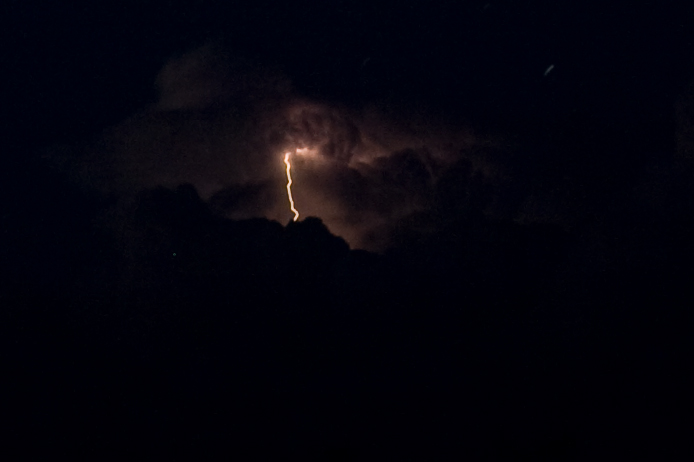
As the sun was setting, we had this great view of some towering cumulus clouds catching the sunset glow to the northeast. Over dinner I thought I saw a lightning flash in the clouds. As it turned out, throughout the evening all the way to 2:00 a.m. we were entertained by a sometimes massive electrical storm that seemed to be nearly stationary. I caught this one good lightning strike off in the distance. The full-res version is a crop from the center of a very large picture.
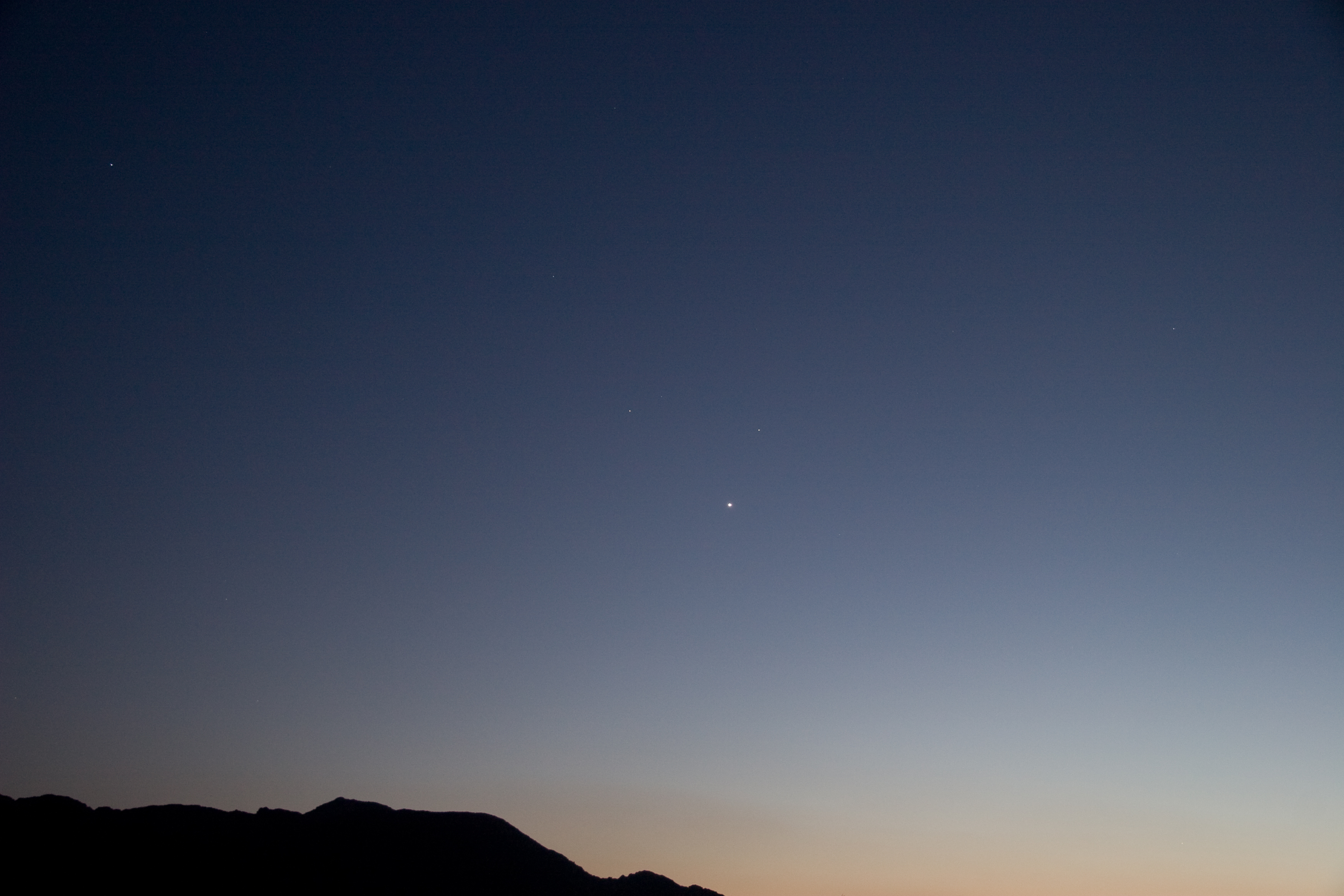
It was also to be a fun evening to see a planet grouping in the west, following the sun to the horizon. I caught this great shot of bright Venus, with Saturn to the upper right, and Mars to the left. To the far left is the bright star Spica. Click to see the great full-resolution picture. In binoculars, Mercury was also visible, but deep in the red sunset glow well out of the field of this picture. In a few days the crescent moon will join the trio for another good picture.
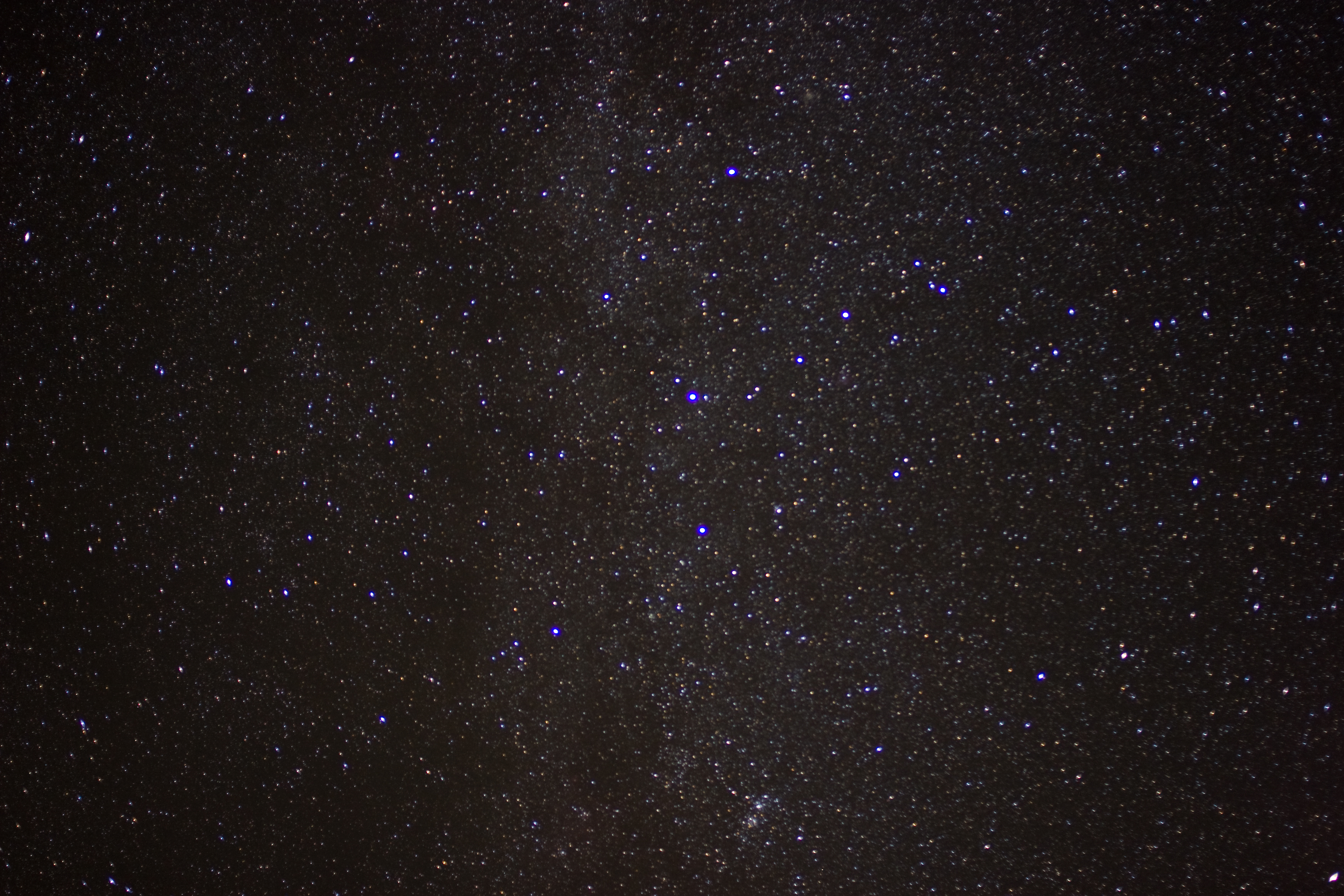
I did take a couple of interesting piggyback Milky Way pictures. My focus wasn’t perfect, and the white balance doesn’t seem quite right. They are mostly untouched except for some slight darkening of the blacks. They are both five-minute exposures on my stock Canon 20D. I think if this camera were modified to remove the deep red filter, the red hydrogen-alpha glow of the North America nebula would show more.
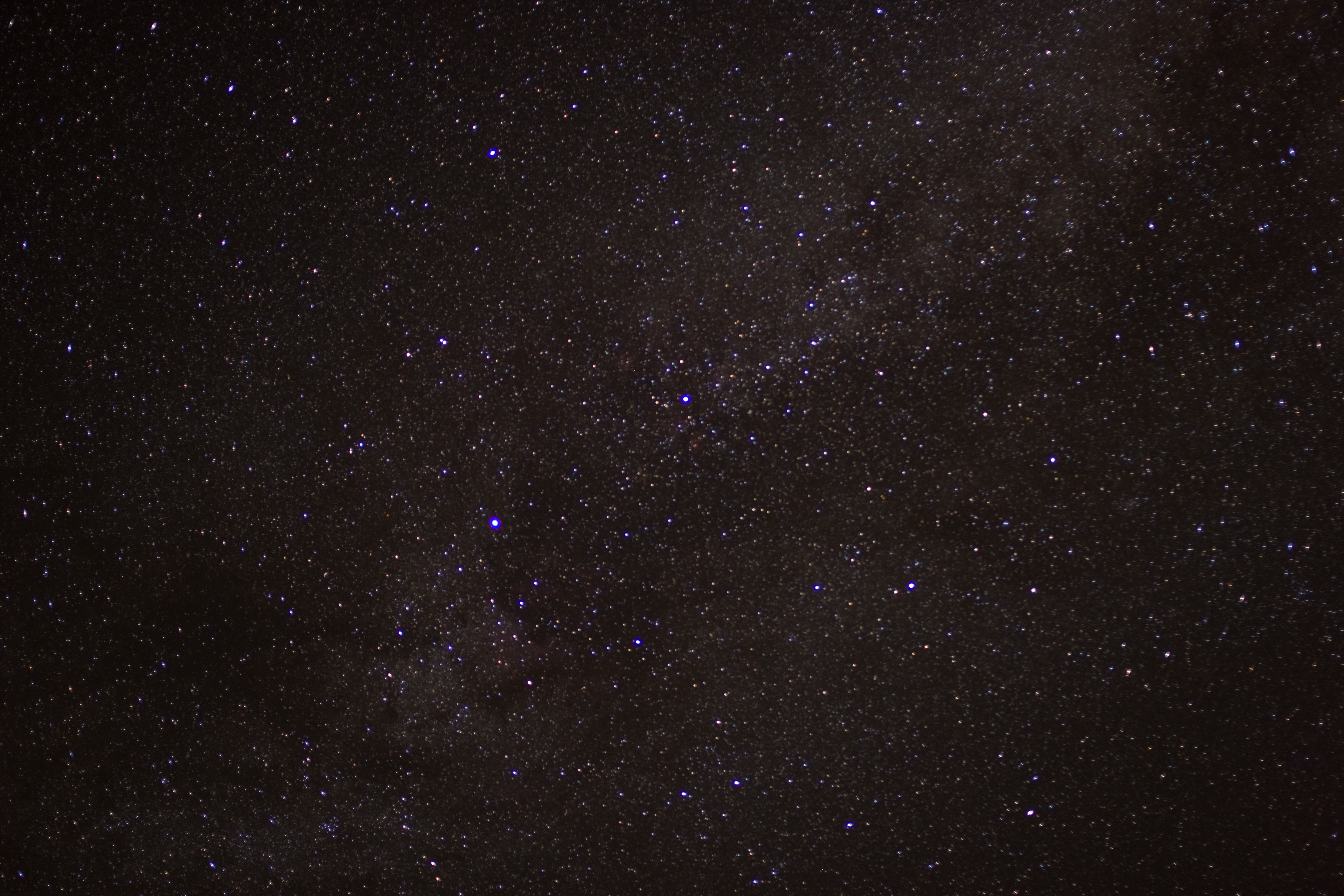
And here is a late-night shot of Cassiopeia.
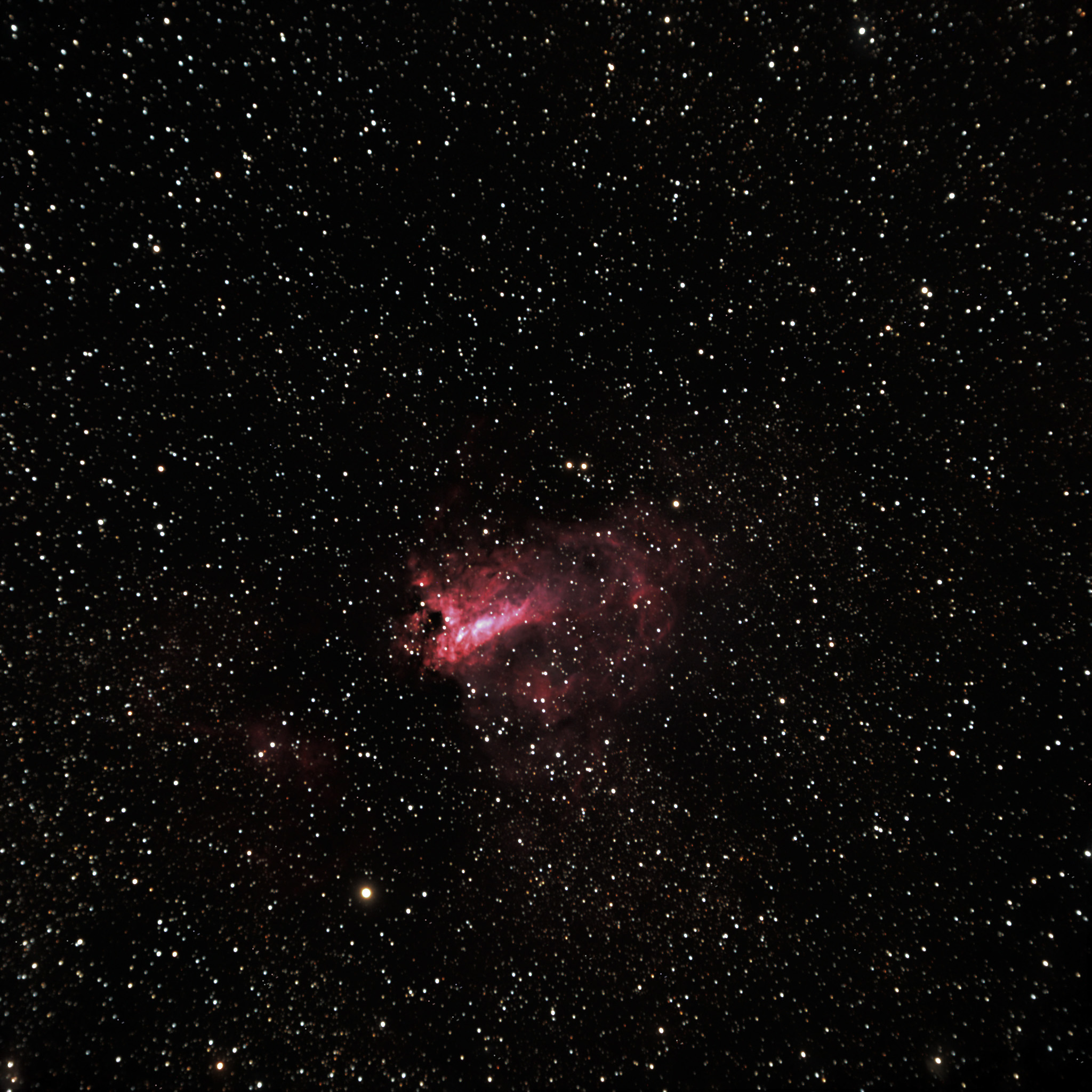
And of course I did some exposures through the Astro-Physics Traveler as well. Here is the Swan Nebula, M17, four ten-minute exposures, ST-4000XCM one-shot color camera. Click on each for the full-resolution image.
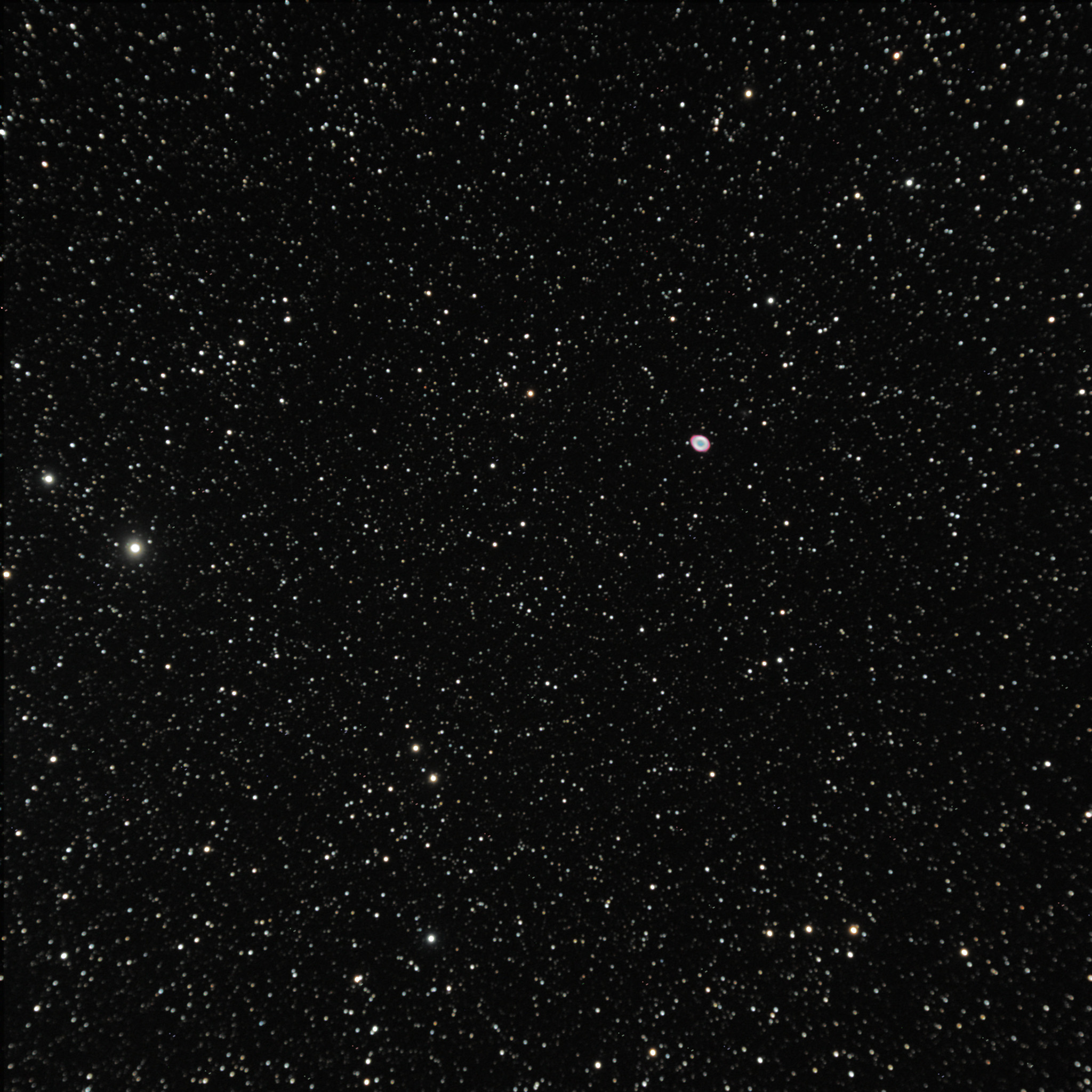
I knew that the Ring Nebula, M57, would be an almost silly target for a telescope with this wide field of view. It would appear as a tiny donut swimming in a field of Milky Way stars, just as it often does visually in a telescope. Of course that made it irresistable. Here is the full field:
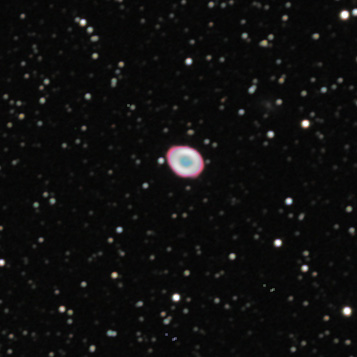
And now as you can see in a crop at full resolution, it’s not a bad image at all. This is three ten-minute sub-exposures (30 minutes total).
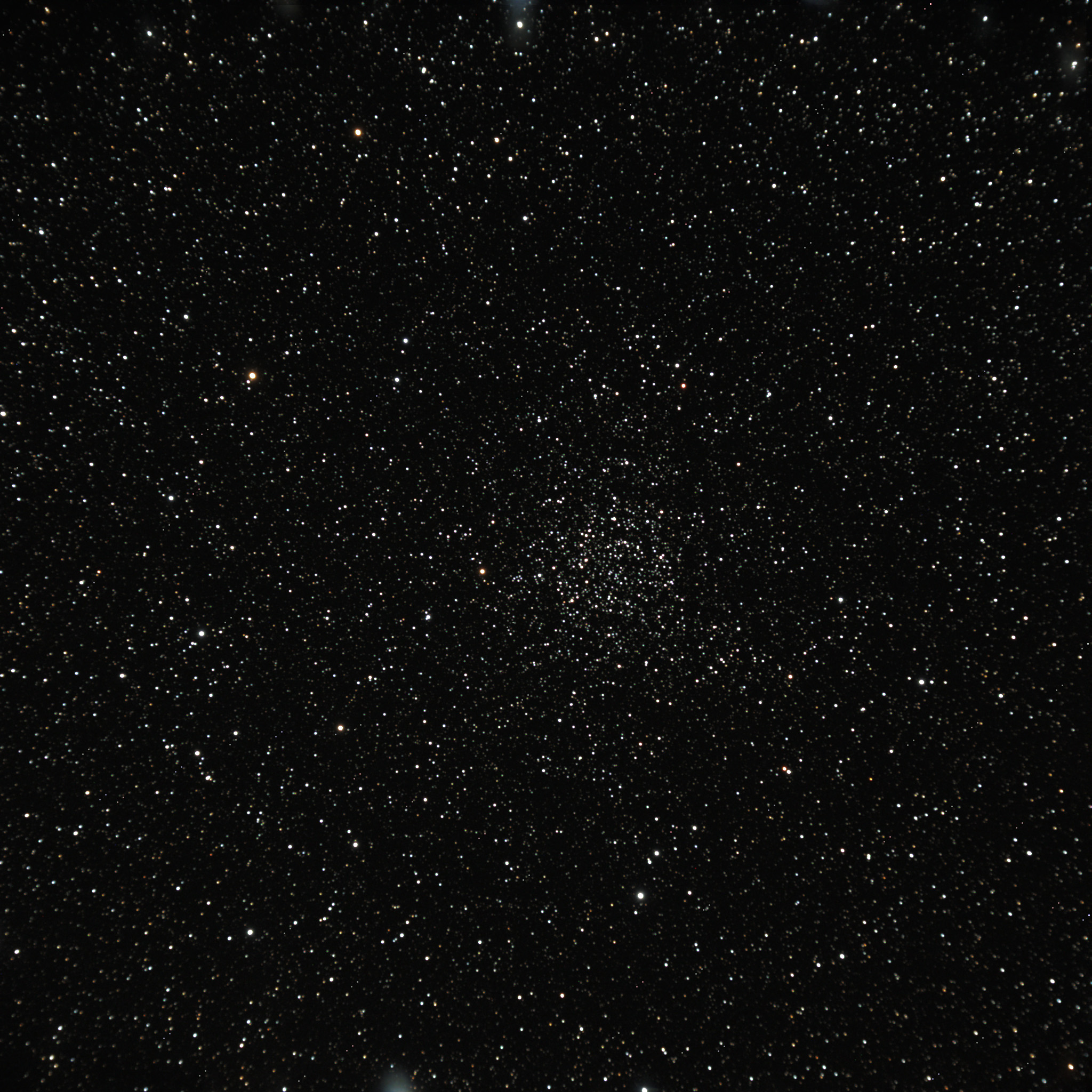
Finally I wanted to get one of Jane’s (and my) favorite Cassiopeia star clusters, one discovered by Caroline Herschel, and known as the Magnificent Cluster, NGC7789. This scaled down version is not terribly impressive, but the full-res image is a treat to swim around in.
On a techy note, for the first time I started to have some issues with haze forming on the chip. Given the presence of those nearby cumulus, I guess I can’t always count on the desert air to be completely water-free. 🙂
Besides the great deep sky and planets, of course we also had lots of meteors from the forward edge of the Perseid meteor shower. Jane did some great counts, and I enjoyed some bright meteors while the shutters were open.
‘Til next time …