Mojo's blog banner

Tag: M65

  • Working with a broken astronomy camera

    Last year, I had some really bad luck with astrophotography.

    I replaced my old laptop (Dell, Windows XP) and installed a new suite of tools to replace the somewhat ancient and unsupported camera software. At one point during my first “shakeout” evening (October 2014), the new software started spinning my telescope around the declination axis. It made at least two full loops (720°), wrapping the cables around the mount and stressing the camera case.

    Afterward, the shutter was not working, or making noise. In my attempts to solve that problem in the dark, I dislodged a small optical window.

    Back at home, I disassembled the camera, and found that I could move the optical window back into position, but it wasn’t held there firmly. Everything else seemed fine though. The shutter worked well, and the electronics all worked.

    All of the equipment has been put away since then, over a year.

    The time was coming to get back into the game. I knew I’d have several hours of work to update the software suite, not to mention Windows 10. The most delicate update was for the firmware in the keypad of my Mach1GTO telescope mount. I spent an hour and a half on that one update, following all of the procedures carefully. The rest took another few hours: TheSkyX, CCDStack, SbigControl, PEMPro, Skytools3, MaxIm DL6, ASCOM drivers, all the manuals. I hooked up all the cabling, the USB-to-serial adapter for the mount, and the camera itself. All of the software components worked — I could control the mount and the camera and take pictures.

    I also had to consider the condition of my camera. Had I damaged it beyond use? Beyond repair? I called SBIG technical support and described what had happened.

    The support rep, Tim, was audibly chagrined. “Oh nooo! How did that happen? Are you sure?” I learned that the optical window is supposed to be firmly sealed, maintaining a bone dry chamber that keeps out dust, and prevents condensation and frost from forming on the sensor chip. (During a session, the chip is cooled to well below freezing to reduce the amount of thermal noise in the images.)

    Next I exchanged some email with Bill in Santa Barbara who repairs SBIG cameras. He said I should send in the camera at my convenience. In the shop, he’ll affix the window, dry the camera severely in a chamber, and seal it all back up. He also suggested that I could probably use it this weekend, but with the seal broken it would “likely frost up, but then that usually dissipates after a while.”

    With expectations of little or no success, Jane and I headed off to Amboy Crater on Saturday (April 2). The forecast was for ideal conditions. I’d never seen a Clear Sky Chart that black; little or no wind, severe clear skies, near perfect seeing, a low temperature forecast of 56°F. My plan was to experiment with all of the unfamiliar software and learn how to do this again.

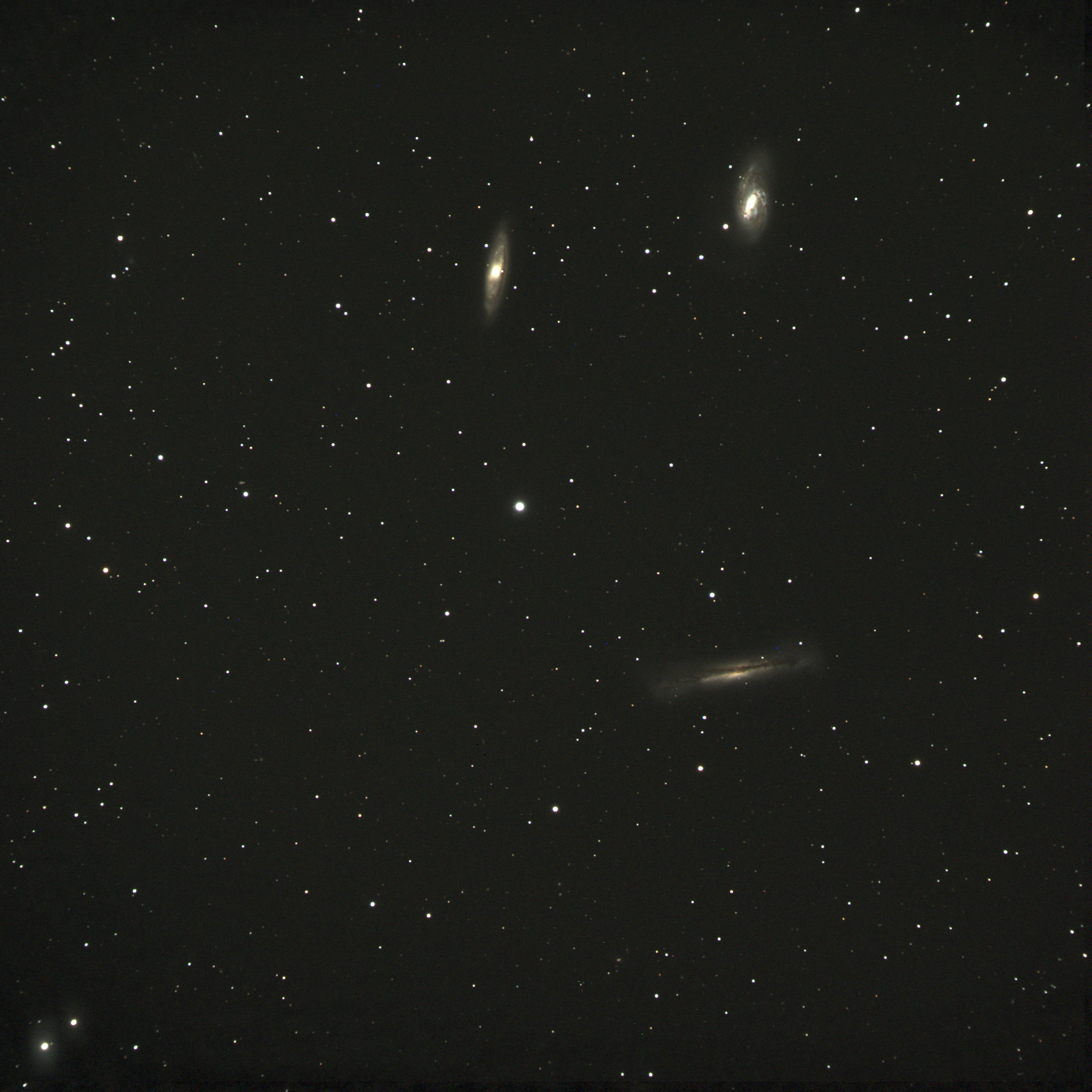
    With the mount polar aligned and all hooked up, I went to an old favorite as a test photo: the “Leo Trio,” M65, M66, and NGC 3628. At the site, the raw data looked really promising. Back home the next day, it was obvious that the image was marred by frost or condensation or both.
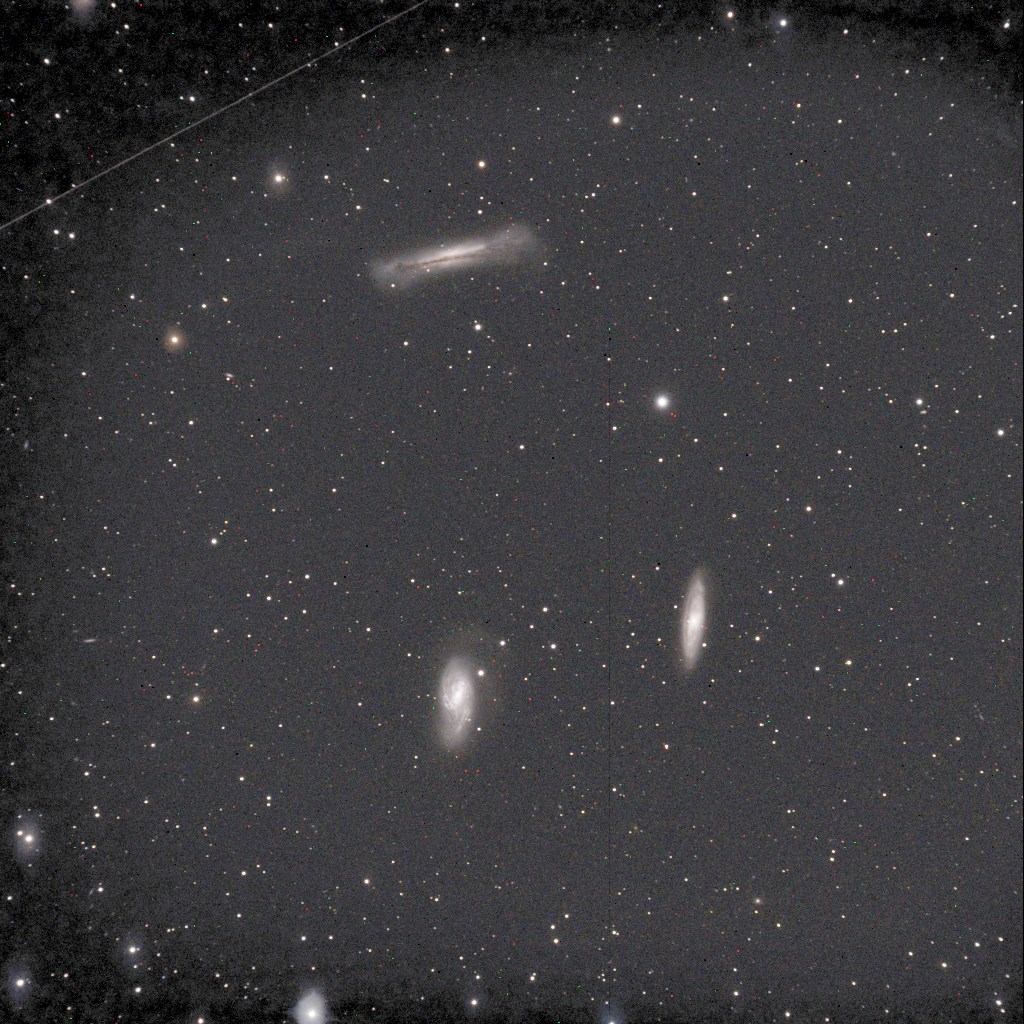
    M65, M66, NGC 3628
    The “Leo Trio,” NGC 3628 at the top, M65 and M66 below. Also a likely satellite streak in the upper left, and haze from frost or condensation on the imaging sensor. (Click for full resolution.)

    Afterward, I spent 90 minutes or so learning to use PEMPro, and ended up with a polar alignment within one arcminute of the pole. It’s an excellent program, and I’ll be much quicker at it on the next go-around.

    Meanwhile, there was some excitement among my fellow observers who were seeing the famous and very southerly Omega Centauri globular cluster. This object never rises more than a few degrees above the southern horizon. It’s known for being the largest globular cluster in our sky — probably the largest of all the globulars in the Milky Way’s halo. I couldn’t resist giving it a try.
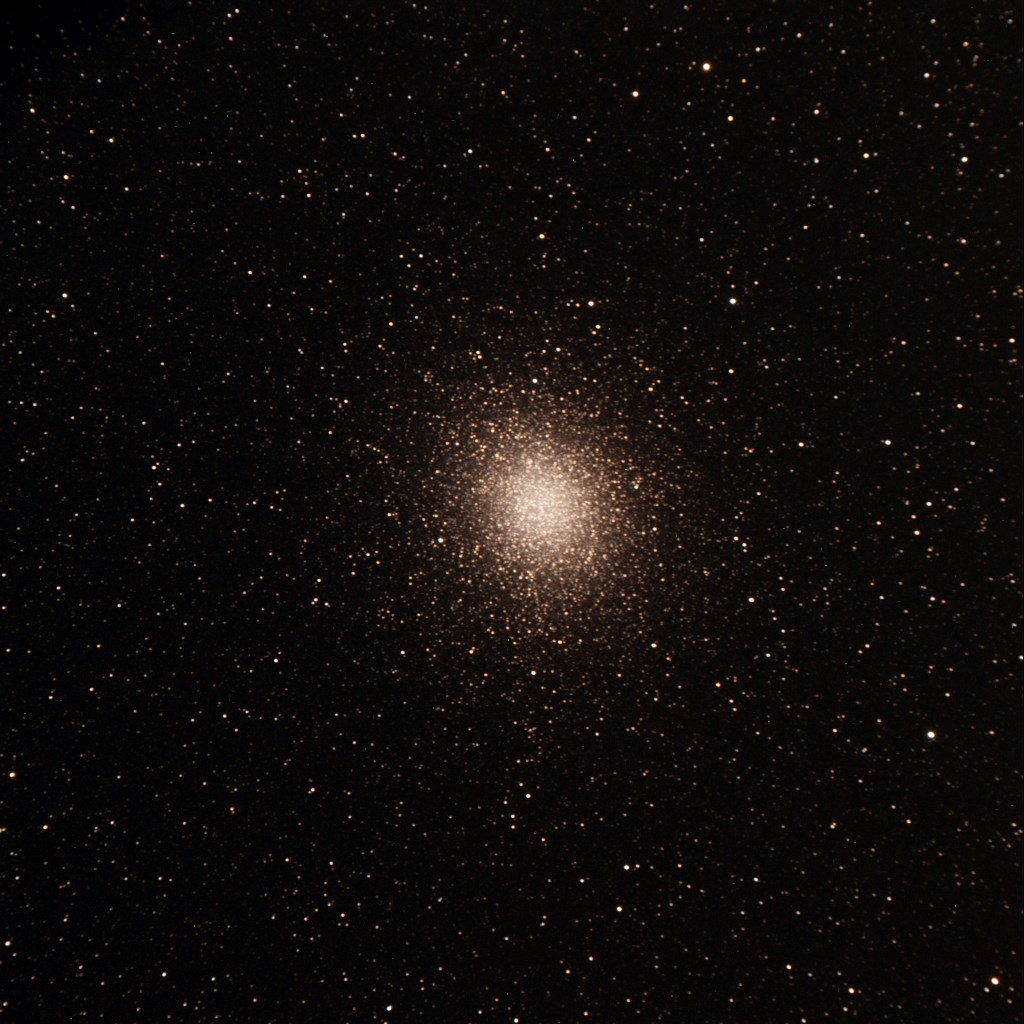
    Omega Centauri
    Omega Centauri, 15 minute exposure (one exposure, not stacked). Astro-Physics Traveler 105mm f/6 refractor. SBIG ST-4000XCM one-shot color camera. (Click to embiggen.)

    With that in the bag, I had to get Centaurus A, the famous “Hamburger” galaxy, just barely north of Omega Centaurus.
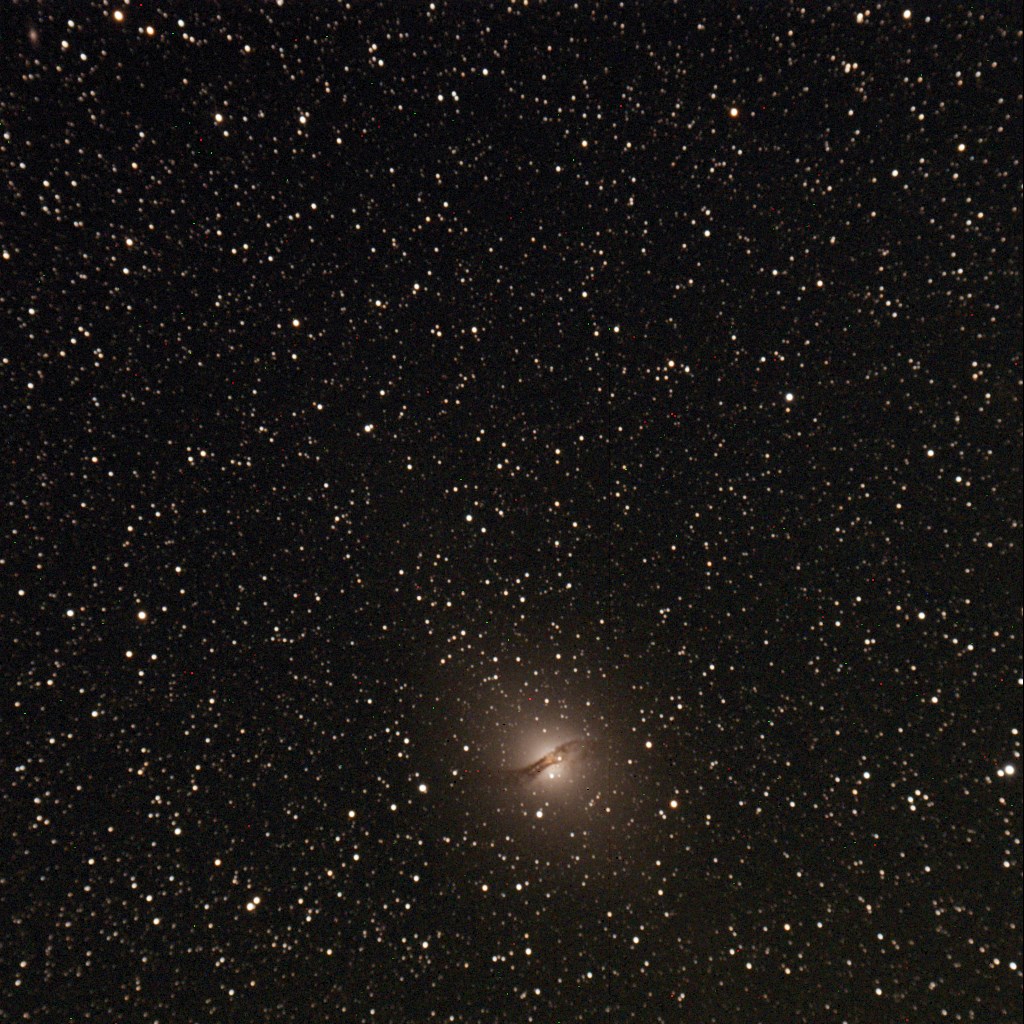
    Centaurus A
    Centaurus A, active galaxy. (Click to biggify.)

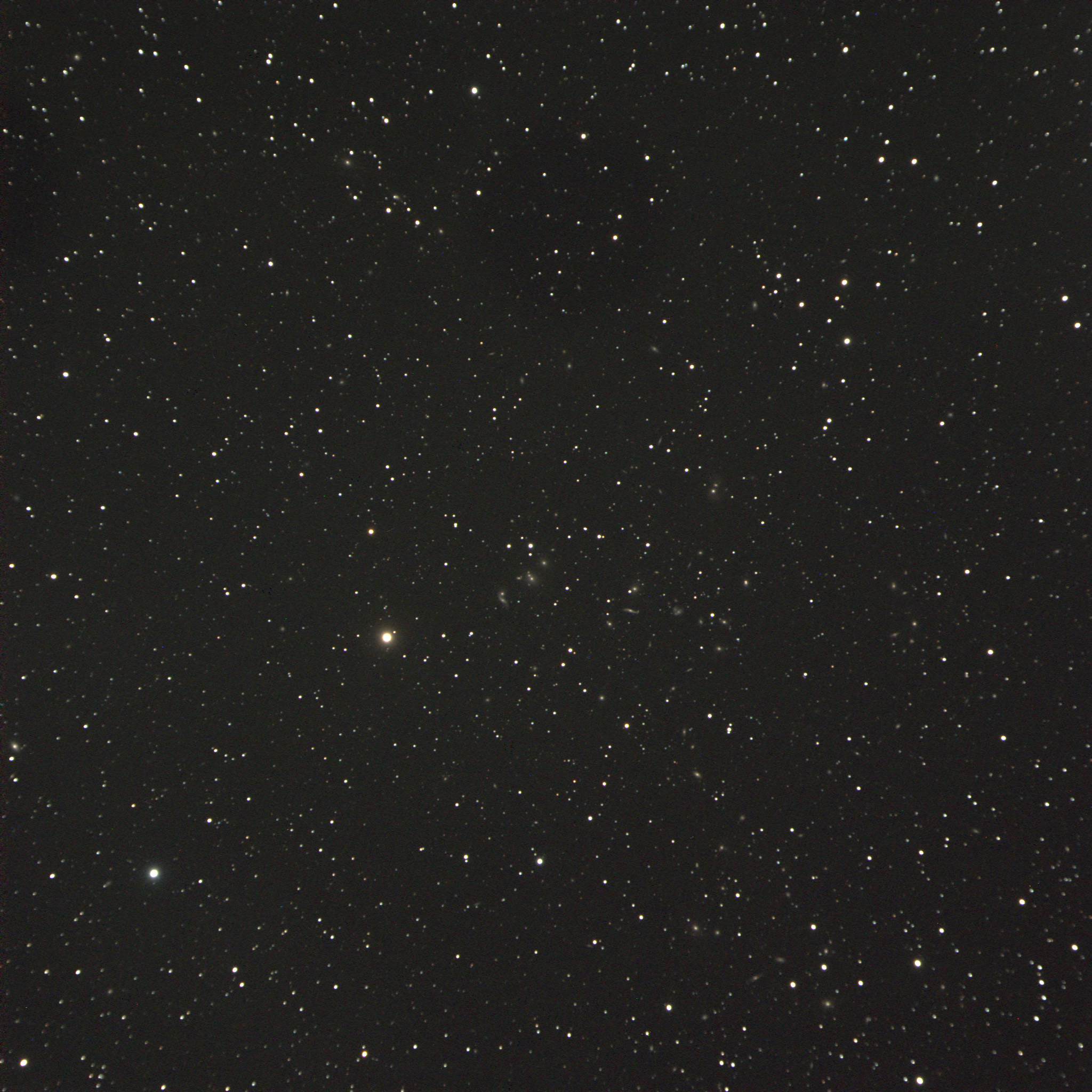
    Then before crawling into the van for a nap, I shot a random field in the Virgo galaxy cluster, around M87.
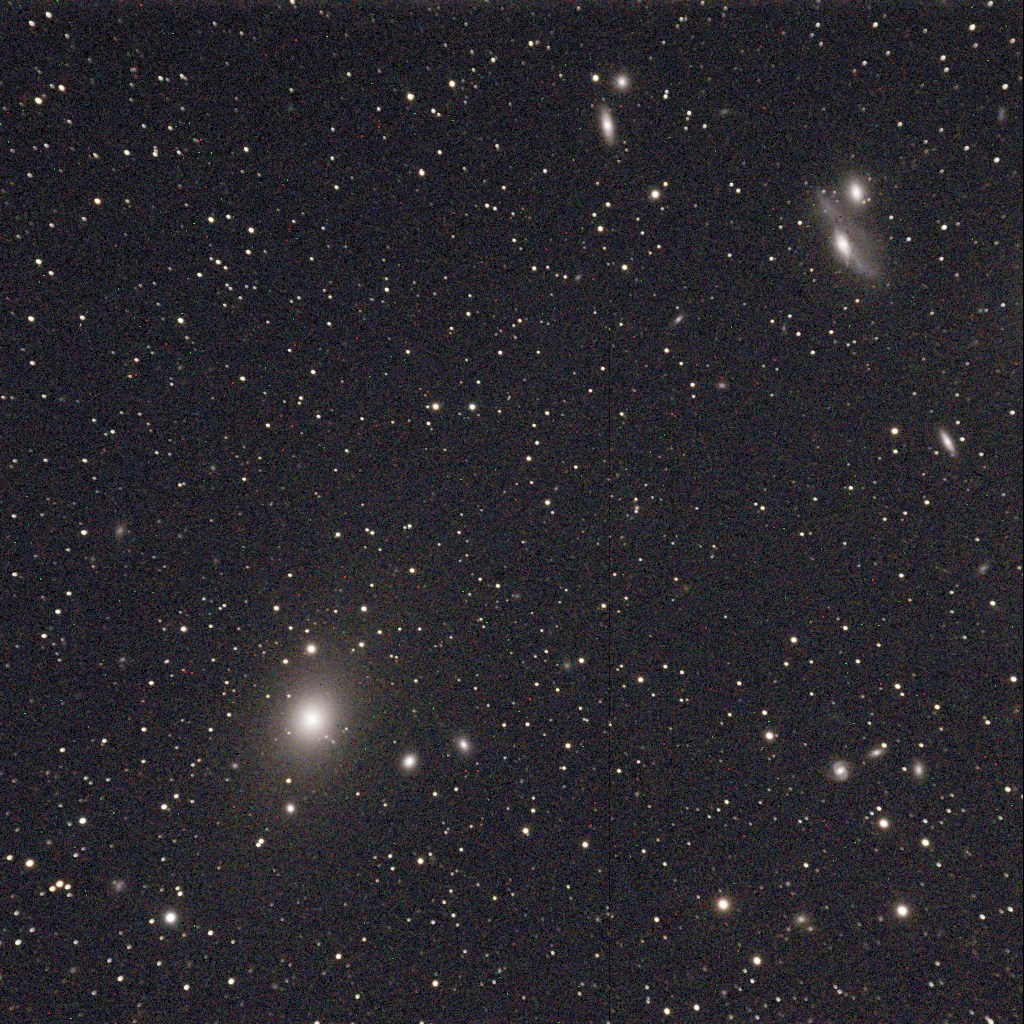
    M87 and Virgo cluster galaxies. (Click to embiggenate.)
    M87 and several nearby galaxies from the Virgo cluster

    After a nap, I did something I haven’t yet been able to do successfully in astrophotography: I shot some flat frames.

    A “flat” is created by evenly illuminating the sensor to pick up imperfections in the optical train. It’s used to correct things like vignetting and dust spots, and produce a calibrated image.

    With the new software for capture, SbigControl, and data reduction, CCDStack, making flats turned out to be quick and easy. I used my iPad with a grey image on the screen as a light source. I pointed the telescope to the zenith, and rested the iPad on top of the dew shield.

    Here is my master flat, made by combining several raw images:
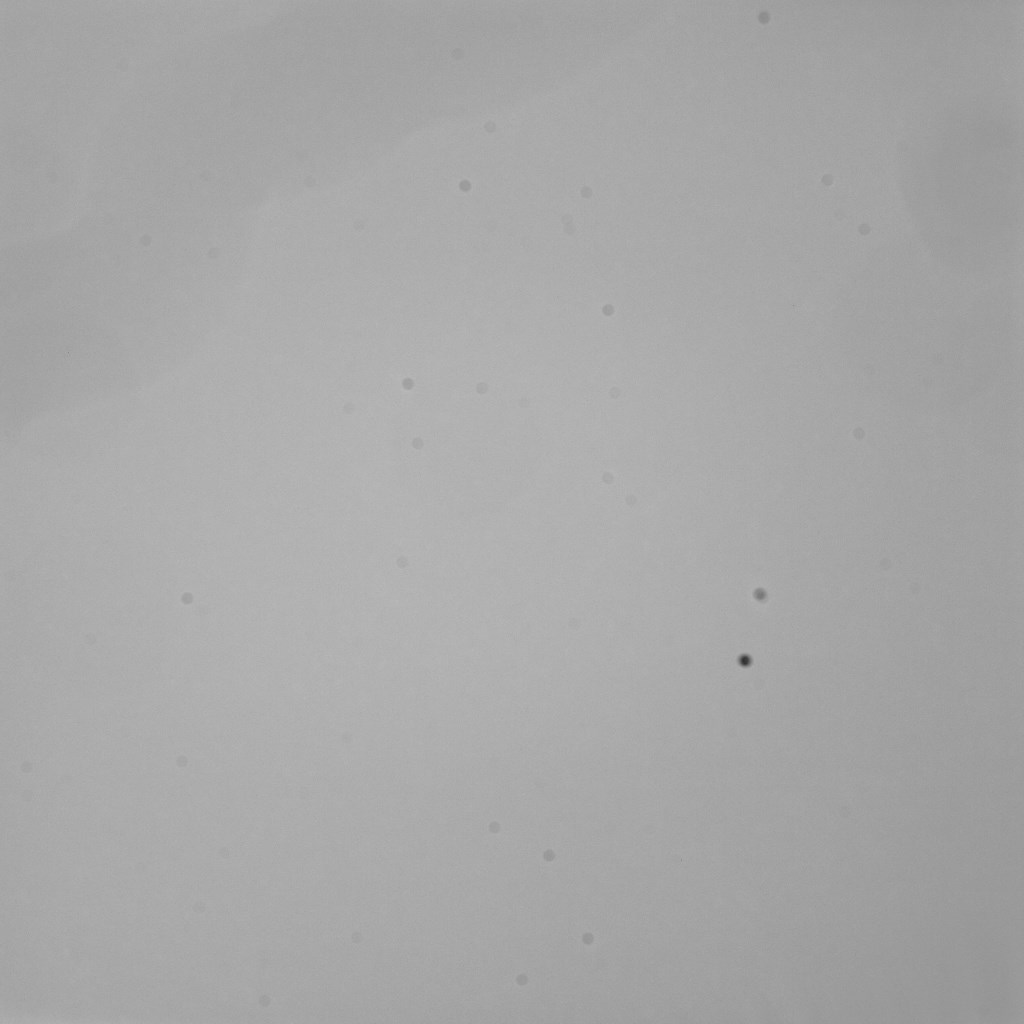
    Flat image with dust specks and vignetting.
    Master “flat” image taken in the morning after the previous shots, and used to calibrate the images. Notice all the dust specks! (Click for … god, why?)

    Oh gracious, that seems like a lot of dust to me! I’m sure I (un)sealed my fate by opening the dry chamber of the camera, allowing a few specks to settle on the sensor cover glass.

    All-in-all it was one of my most satisfying astrophotography expeditions. I’m really looking forward to getting the camera back from SBIG. I’m not expecting anything magic — it’s not going to take better pictures than these. But I do expect fewer images marred by frost haze. I imagine I’ll be able to shoot earlier in the evening and have the images be usable. With the modern software in place, I might be able to try some more ambitious projects.
  • April Observing: Supernova and a Comet

    The weather forecast for our favorite spot, Amboy Crater, called for decent conditions but high winds. (Why do we care about the wind? Here are four reasons I can think of: simple comfort, blowing charts and equipment, maintaining a target in a telescope, and blowing dust.)

    The best forecast in the area was at our old favorite spot in the Colorado Desert south of Joshua Tree National Park, an area of BLM land below Chuckwalla Mountain called Chuckwalla Bench. We had mostly abandoned Chuckwalla Bench because the unmaintained dirt road (Red Cloud Mine Rd.) was getting a bit treacherous. Someone suggested a different road, following a nearby train track, that got us to the same observing spot a lot more reliably.

    Conditions seemed near perfect, with calm to light winds, clear skies, comfortable temperatures, and pretty good seeing. The nighttime temperatures may have dipped a bit below 60 degrees F, but not a lot.

    Jane had our 14.5-inch dob, and reported that visual observing conditions were quite excellent. Her report is fabulous, and I wish I’d tried for those low southern objects! The Chuckwalla Bench location does have a light dome to the south, but nothing ventured …. [Read Jane’s report here.]

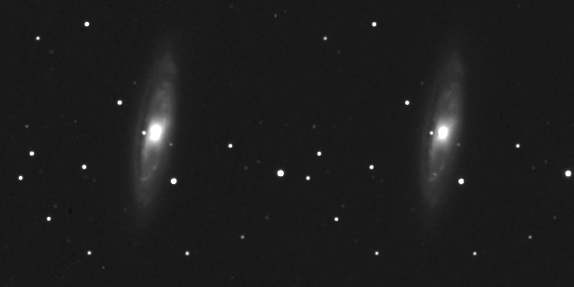
    I started with a galaxy in Leo that I shot last month, M65. Since shooting it last month, a supernova was discovered in the galaxy. I did one 15-minute exposure, and had fun today making a “blink comparitor” animation. Can you see the supernova?

    m65-sn2013am
    Two images of M65, one shot on 3/9/13, one shot on 4/6/13.

    At the end of the post, I’ll mark where it is. 🙂

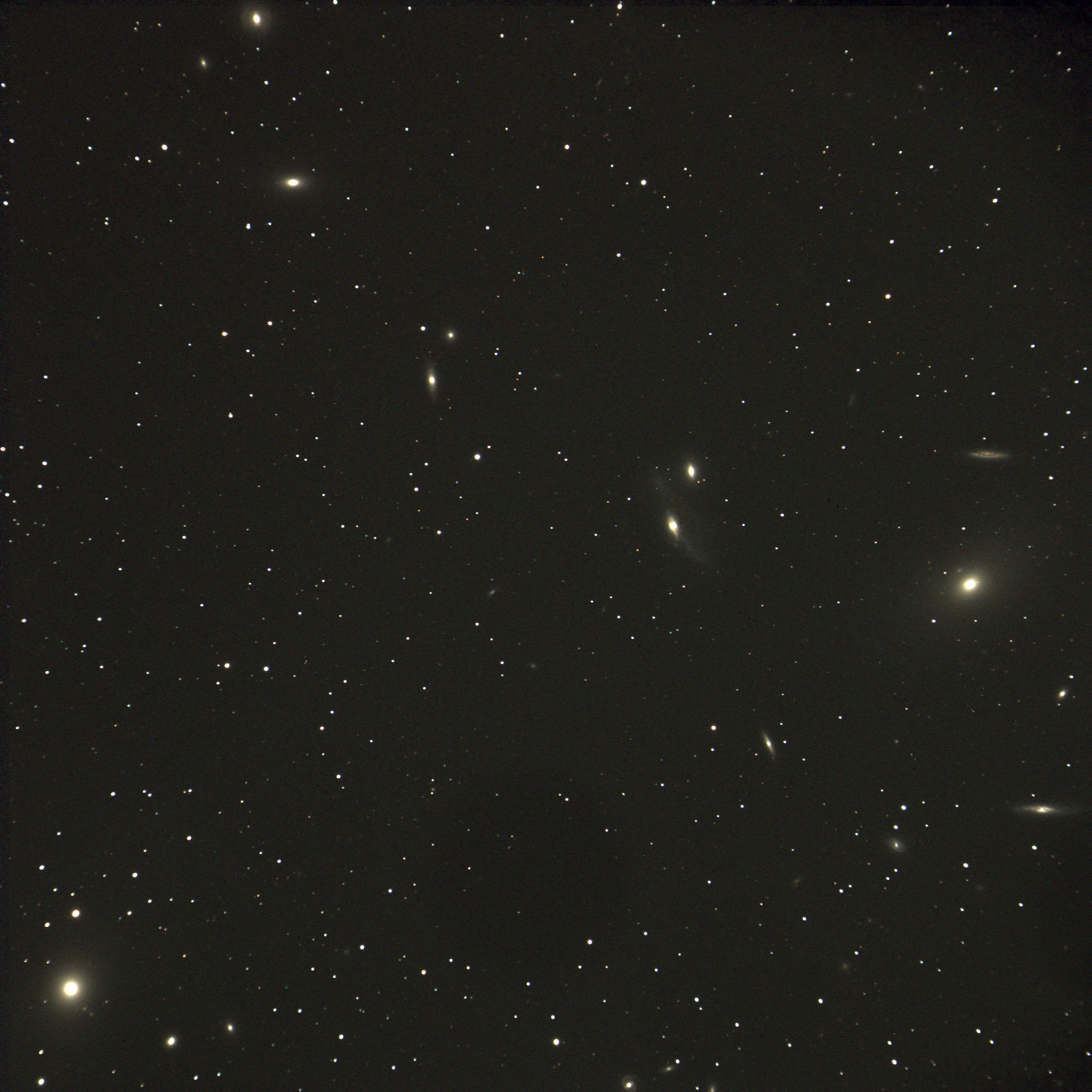
    Being spring, I wanted to collect some galaxies. I started with a string of galaxies in the nearby Virgo cluster, called Markarian’s Chain. The chain extends from the middle-right of the image, to the left and upward. In the lower left corner is giant elliptical galaxy M87.

    markarians-chain
    A portion of Markarian’s Chain in Virgo, with giant M87 in the lower left

    Then I wanted to try for something a little more distant, and did 45 minutes on a remote galaxy cluster with the catalog number of Abell 2151, found in the constellation of Hercules. This is a group of about 200 galaxies some 500 million light years distant.

    Abell 2151
    Galaxy cluster in Hercules known as Abell 2151. This compact view doesn’t show them well, but click on the image for full resolution, and pan around to see if you can find some distant spirals.

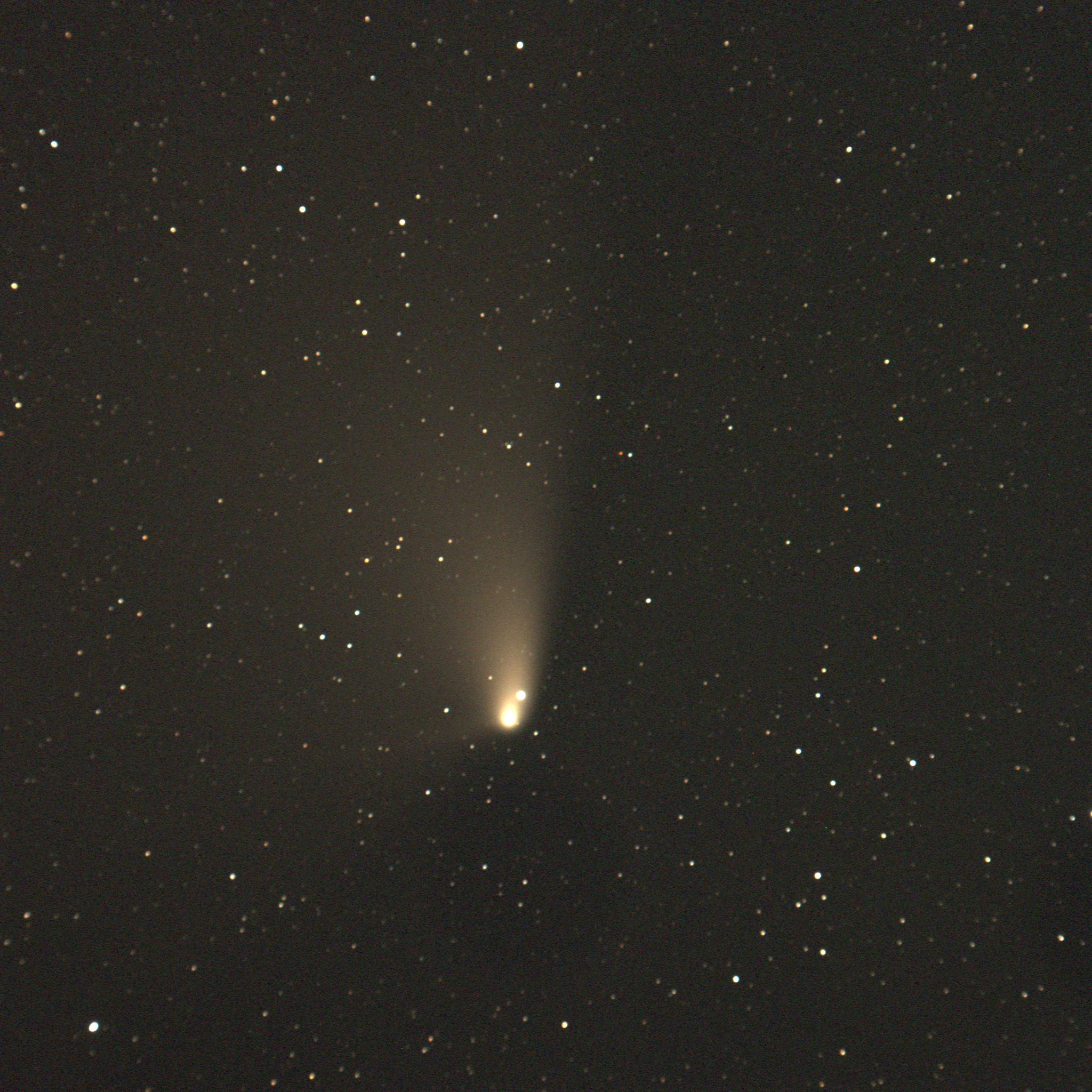
    Finally comet C/2011 L4 (PANSTARRS) has been moving toward the north celestial pole, and right now it’s easier to catch before dawn than after sunset. After napping for a while, we found the comet at about 4:00 a.m. Here’s my first five-minute exposure.

    Comet C/2011 L4 (PANSTARRS)
    Comet C/2011 L4 (PANSTARRS) shot before dawn on 4/7/13, five-minute exposure

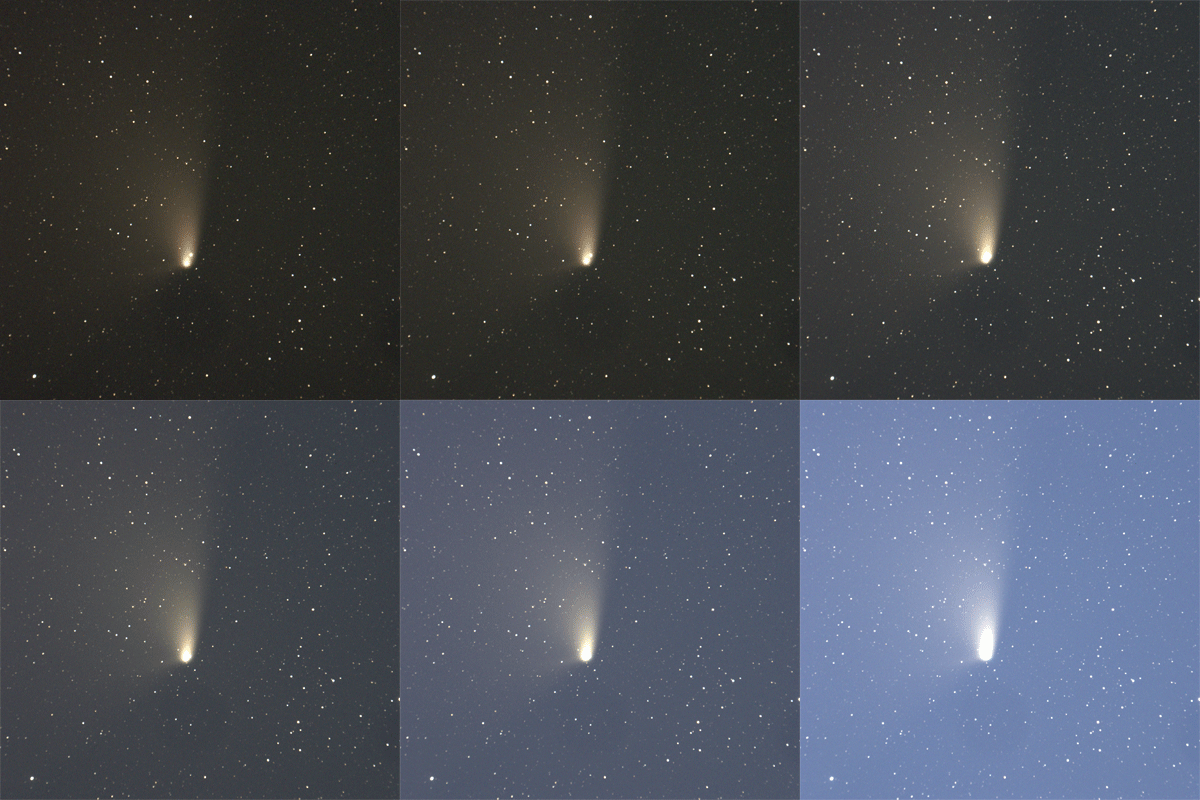
    I did a series of several 5-minute exposures, and stitched them into a GIF animation. If you look carefully, you can see the motion of the comet against the background stars. The other rather obvious feature is the coming dawn light as the sky turns brighter and very blue. 🙂

    Comet PANSTARRS animation
    Comet PANSTARRS moves slightly against the background stars, as dawn arrives at Chuckwalla Bench.

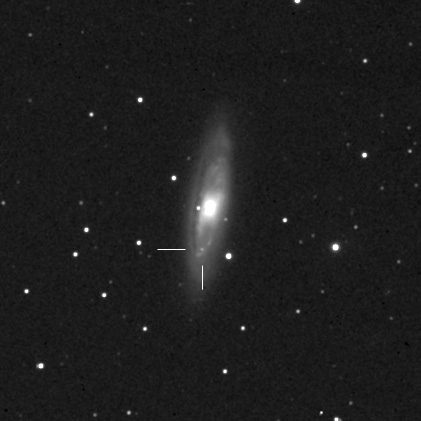
    And finally, if you didn’t find the supernova in my “blink” animation above, it’s marked for you here.

    SN2013am
    M65 with supernova 2013am taken 4/6/13

    If you follow us on Twitter or Facebook, you know that we finally replaced our intrepid green 1998 Dodge Grand Caravan with a new-to-us 2012 Grand Caravan. We purchased it from Carmax with 5,200 miles on the odometer, and this was its first official astronomy outing. Carmax disclosed that the previous owner used it in “fleet” operations.

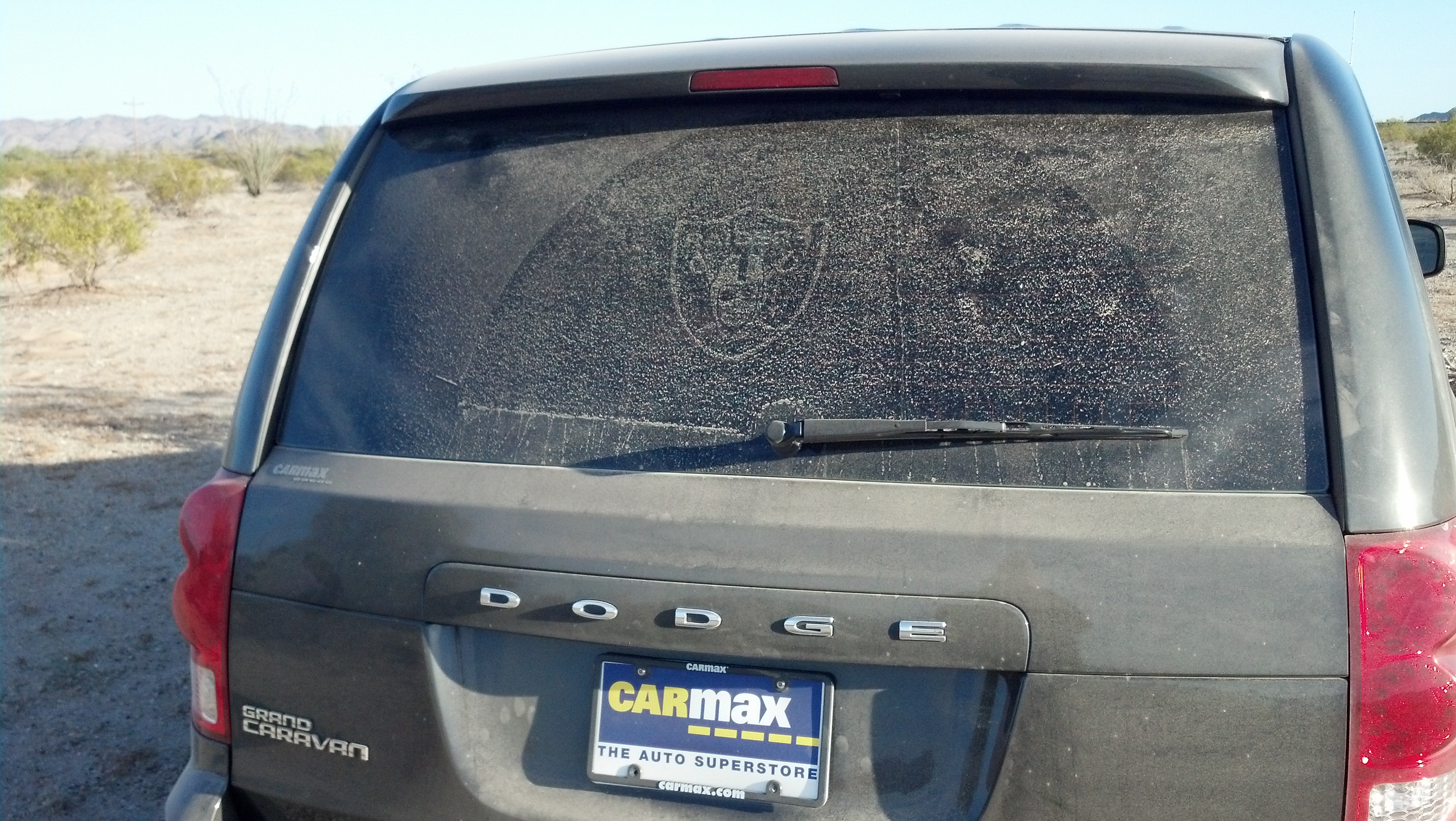
    Of course the van was pristine when we took possession, but the molecular residue of some adhesives may never vanish, though invisible on ordinary glass. After two miles of dusty dirt road in Chuckwalla Bench, I said to Jane, “I know who the van’s first owner was!” This is what I saw on the back window of Earl the Grey Caravan.

    Dust pattern in car window.
    Earl, our grey Caravan, reveals his previous owner in the dust pattern on the rear window.
  • Finally some observing weather

    See Jane’s observing report from the same evening — some great binocular observing with Kemble’s Cascade.

    IMG_0890
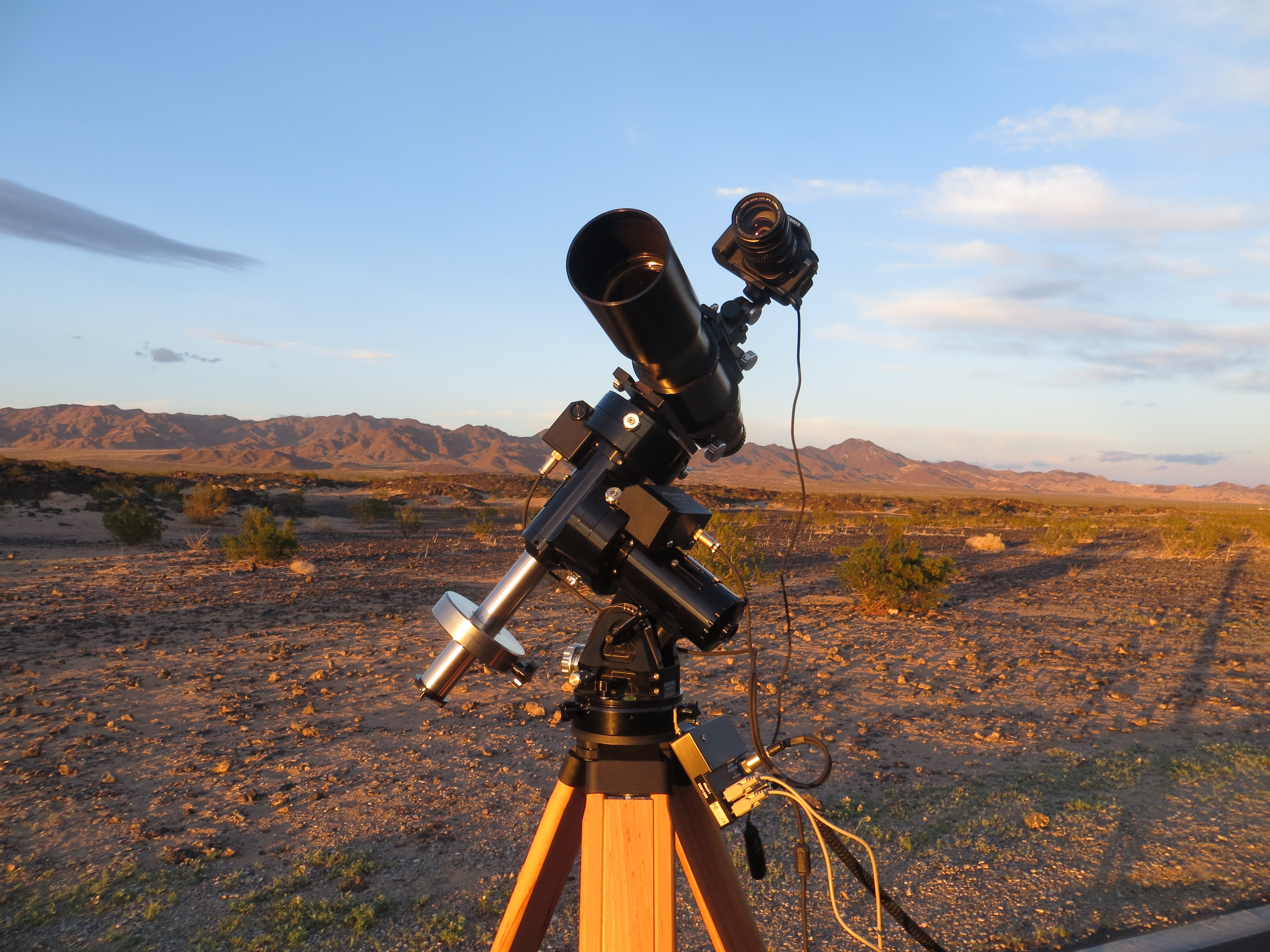
    The 20D mounted piggyback on the Traveler and Mach One GTO mount, hoping to catch comet PANSTARRS on its first opportunity.

    Several months ago, David Green of the Santa Clarita Valley Photographers Association invited me to give a talk on astrophotography in March.

    I thought, “No problem! We’ll have several dark sky weekends between now and then for me to get some photos and screen captures, and I’ll have a fine talk.”

    Famous last words! I must have jinxed the weather. But my luck turned just in time to get out with Jane on March 9 for some dark sky observing and astrophotography at Amboy Crater.

    This trip would be the last remote observing session for our not-so-trusty Dodge Grand Caravan. It had been plagued with electrical troubles for the past several months, and on this trip it started behaving erratically on the climb up the Cajon pass on I-15. We opted to brave the possibility of being stranded, and carried on to Amboy Crater. Luckily everyone survived the trip!

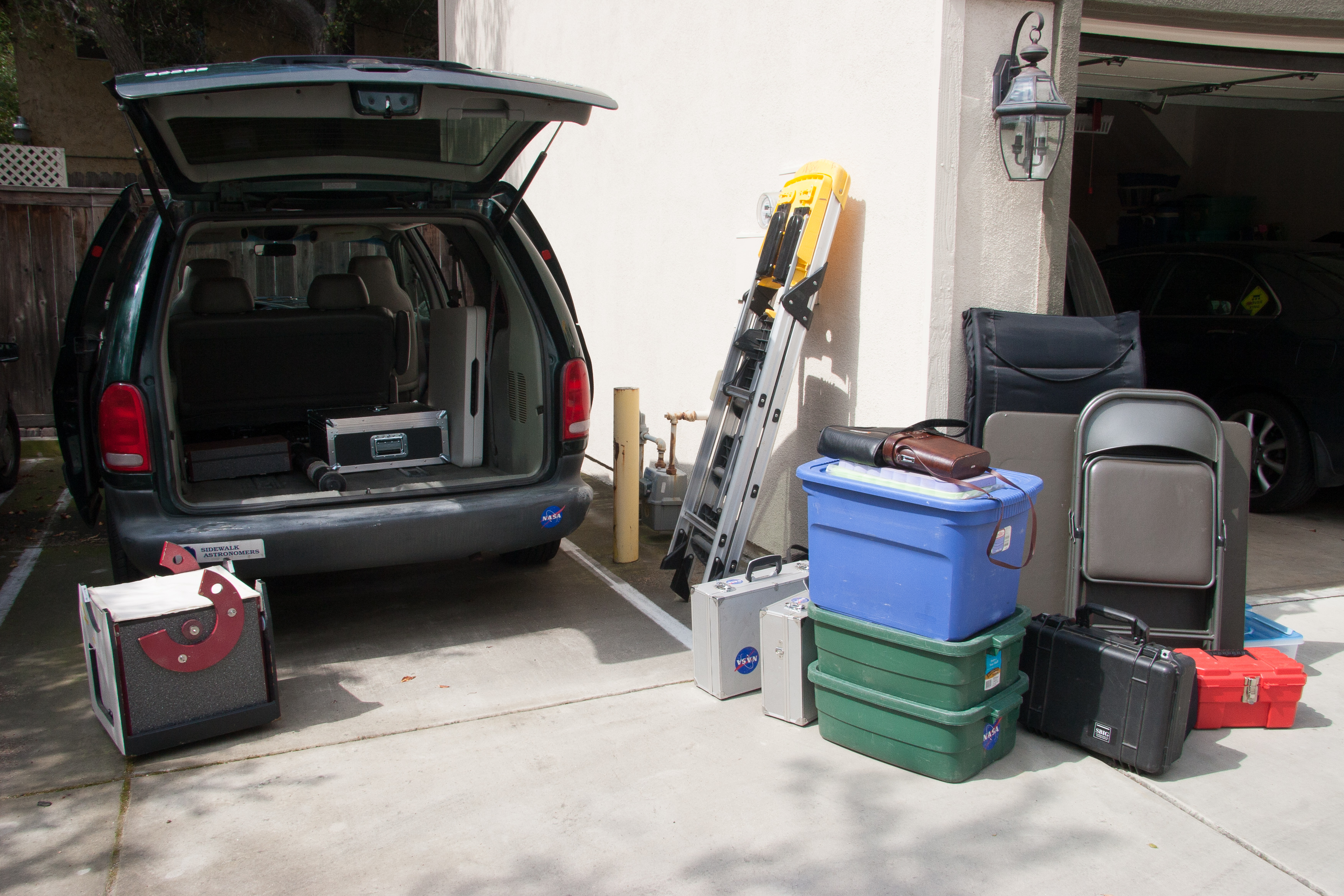
    IMG_6204
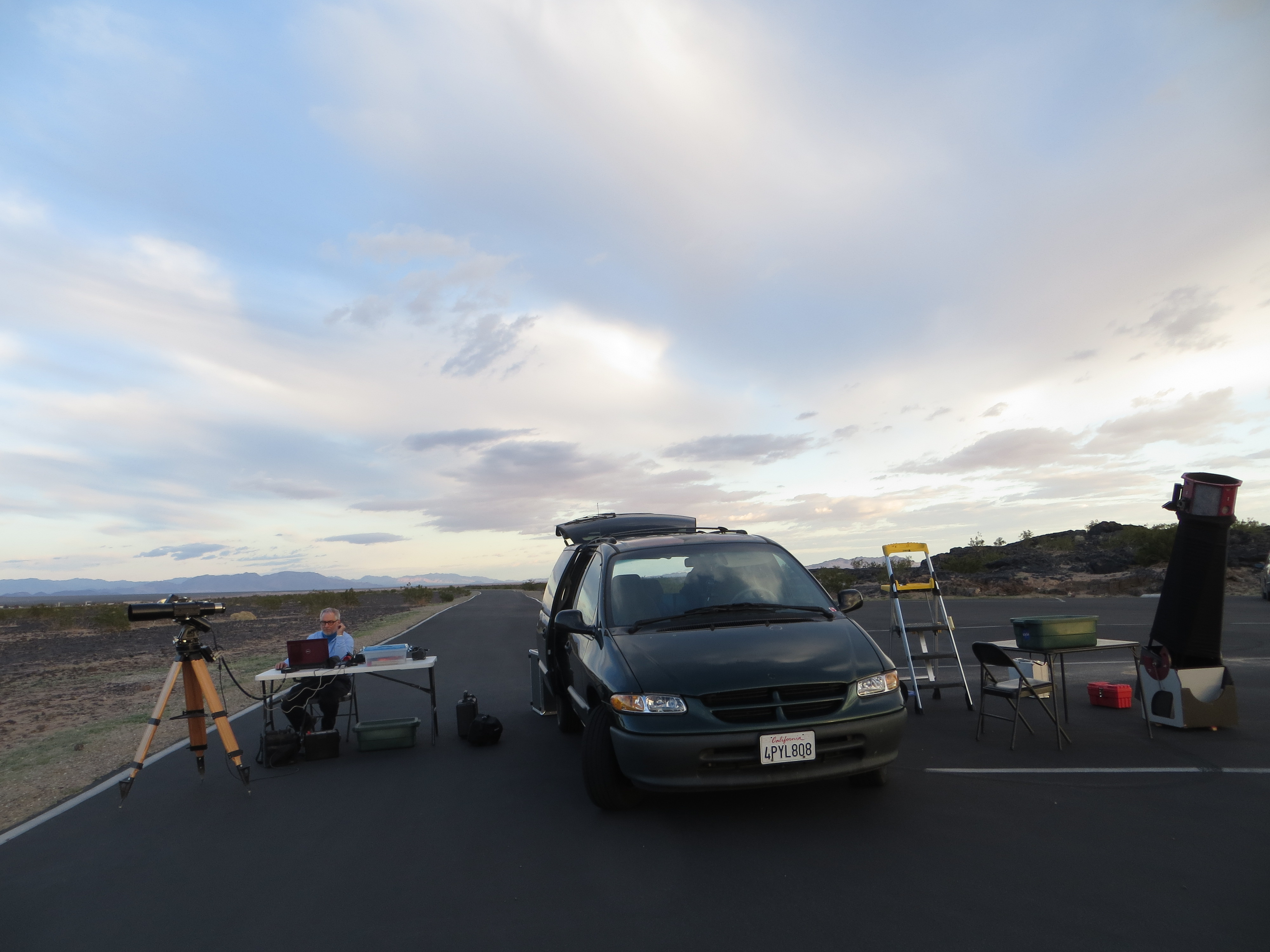
    Getting everything staged to load into the van.
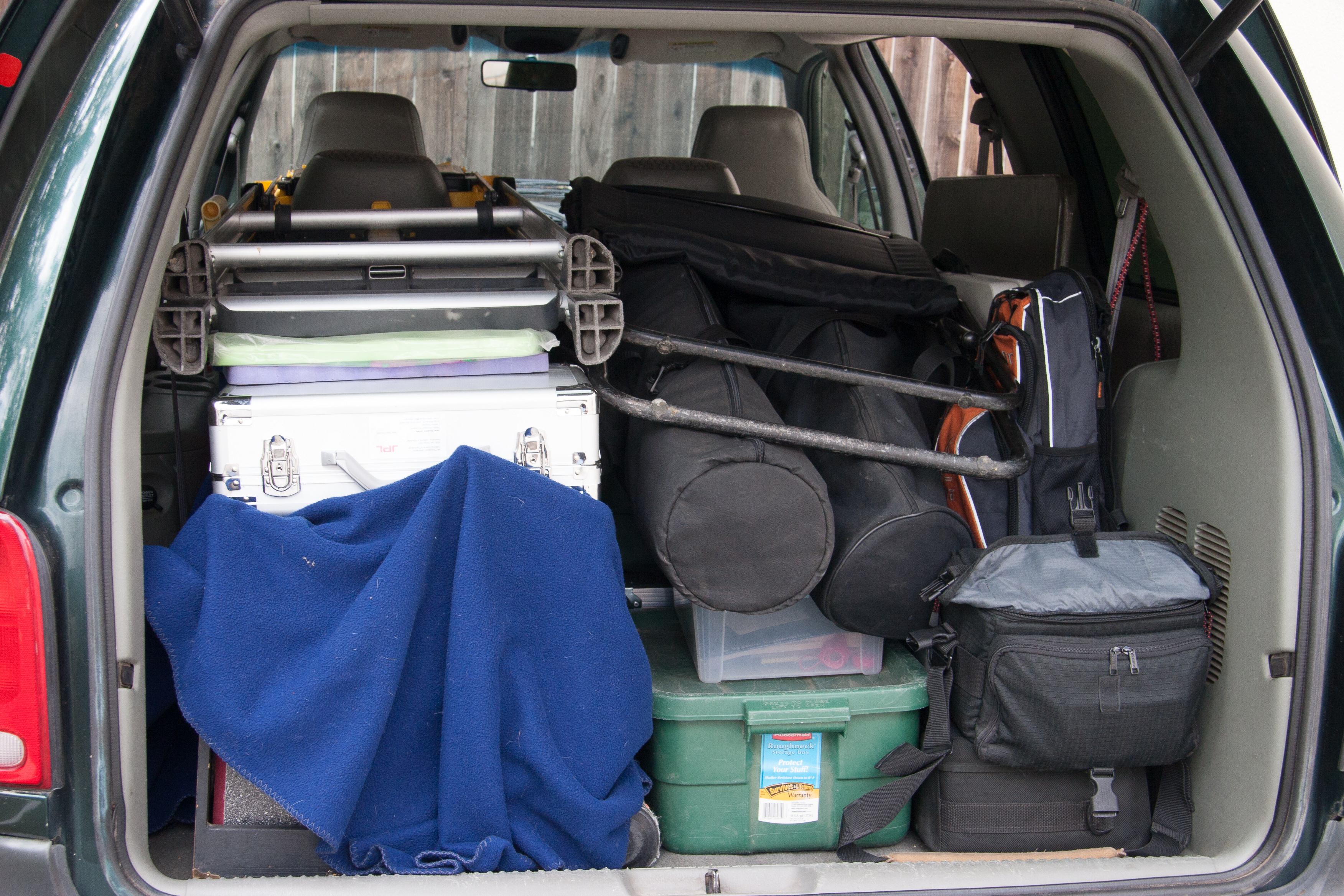
    IMG_6207
    Astro-pack


    Our first hope was for a shot of comet PANSTARRS in its first opportunity on the northern portion of its pass through the system.

    Those clouds you see in the set-up pictures hung around the western horizon just enough to keep the comet out of view.

    IMG_0875
    Astrophotography on the left, visual astronomy on the right. Those clouds kept PANSTARRS hidden, but cleared nicely later in the evening.

    My first target was going to be an easy favorite visual target, but one of which I didn’t have a good astrophoto. M64, M65, and NGC3628 are three galaxies in Leo that form a striking group. There are other galaxy groups in Leo, but I believe this one is the set known as the Leo Trio.

    Three galaxies in Leo
    The Leo Trio, M65, M66, and NGC3628. 45 minute exposure (3×15 min.) SBIG ST-4000XCM, Astro-Physics Traveler, 105mm f/6

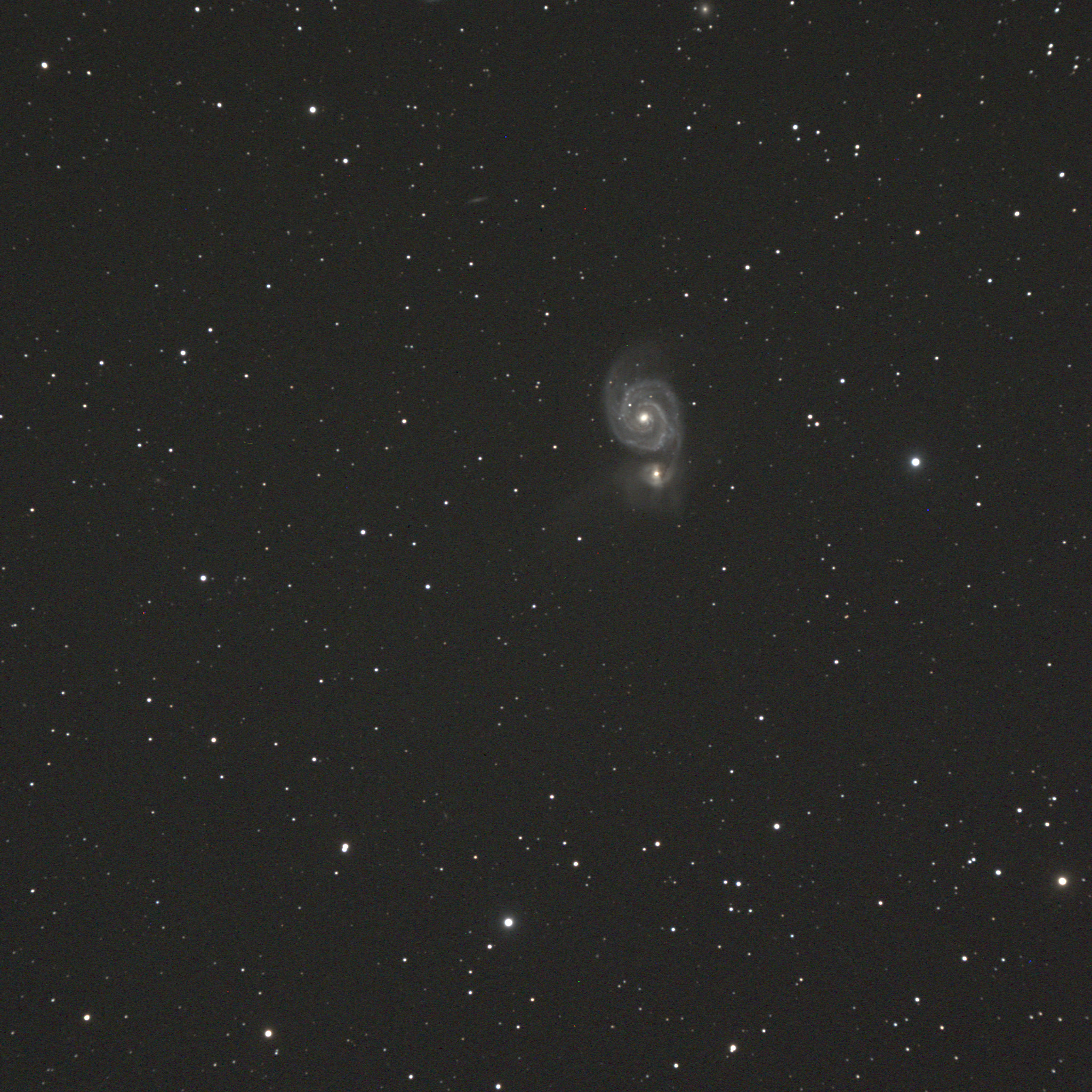
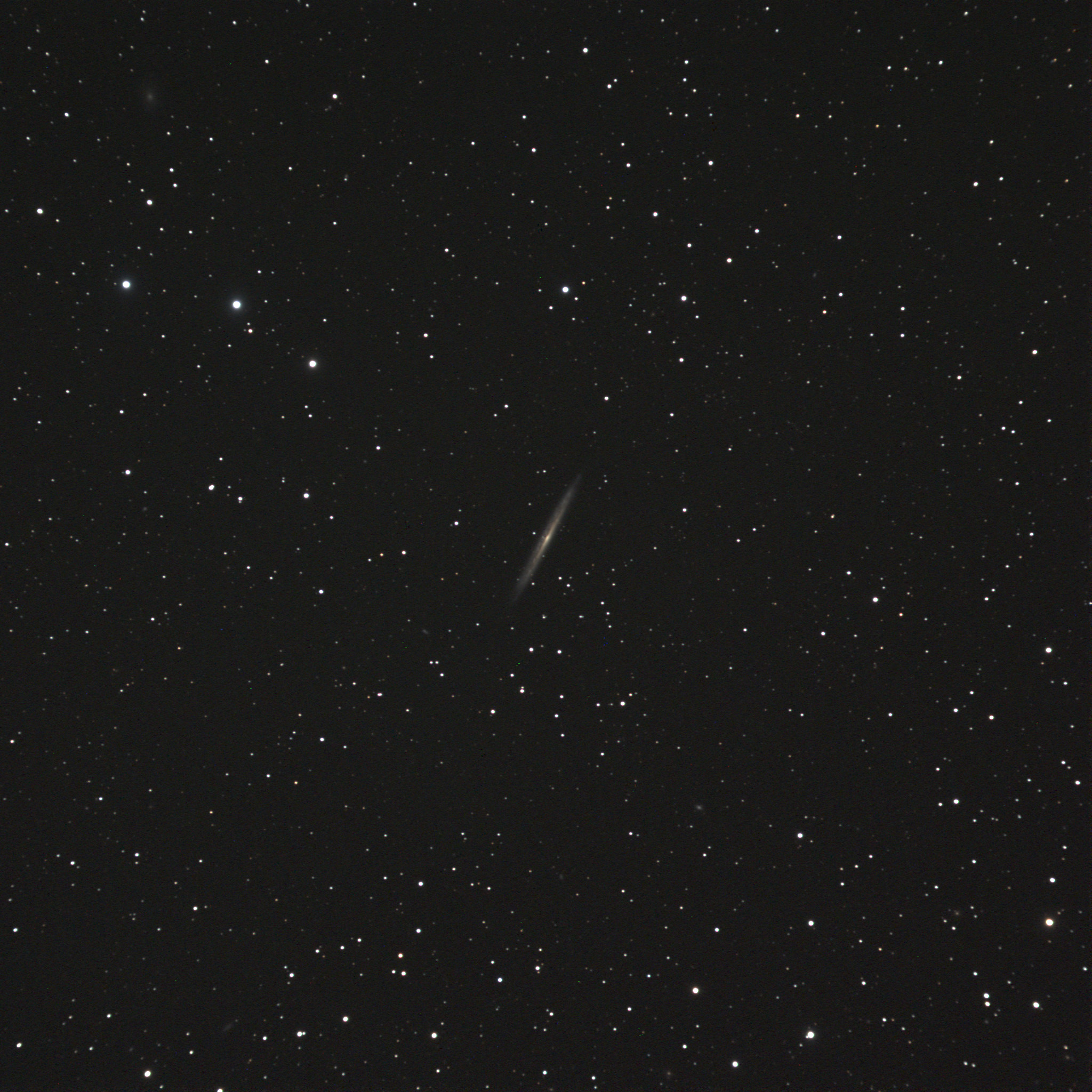
    I went for a couple of other interesting easy targets that should be fun. The Whirlpool and NGC5907 “Splinter” are best with longer focal length telescopes, for a narrower field, but I enjoy these wide field shots too.

    The Whirlpool galaxy
    M51 the Whirlpool Galaxy in Ursa Major, Astro-Physic Traveler 105mm f/6, SBIG ST-4000XCM camera

    The “Splinter” in Draco is a lovely edge-on spiral.

    NGC5907
    “The Splinter” galaxy NGC5907, edge-on spiral in Draco. Astro-Physics Traveler 105mm f/6, SBIG ST-4000XCM

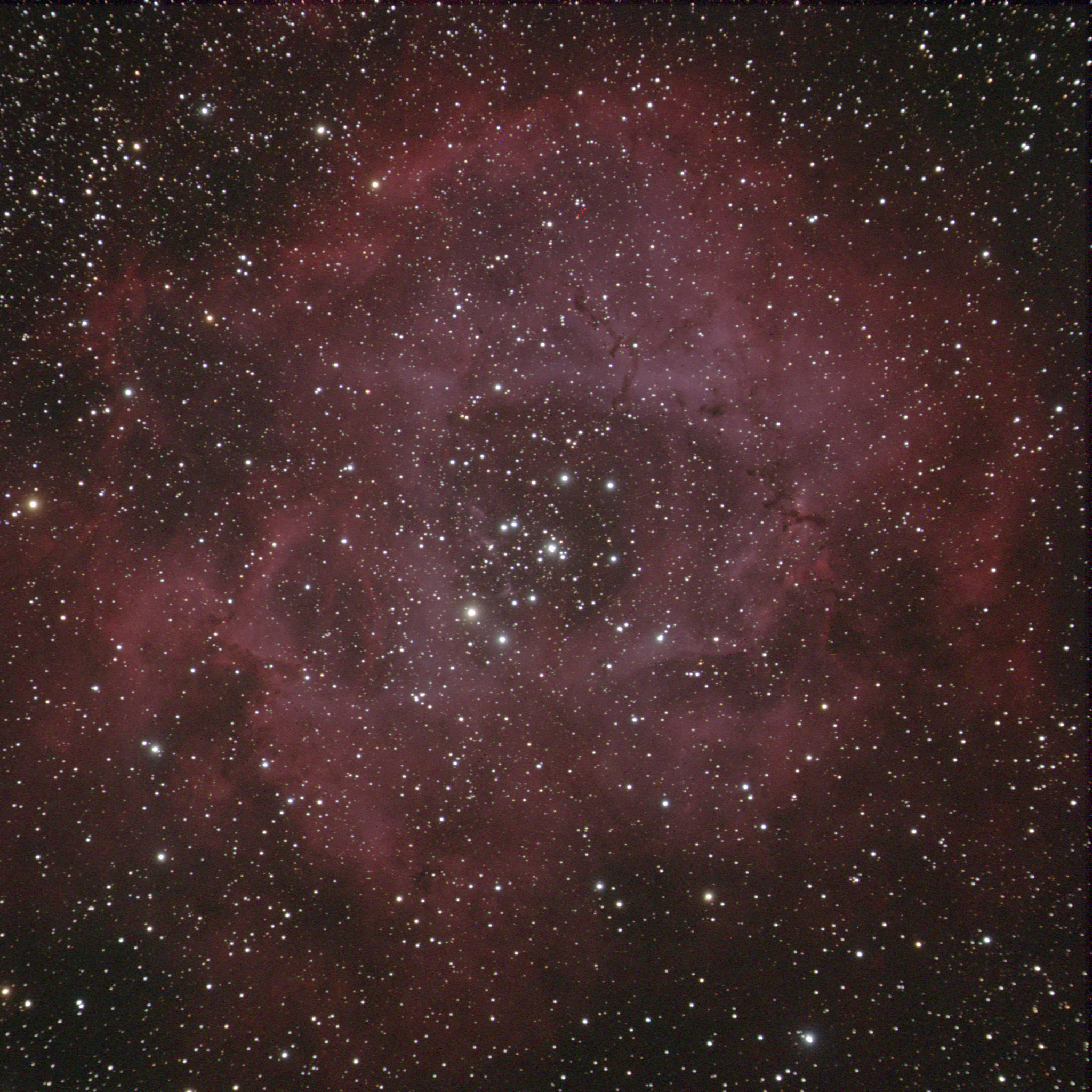
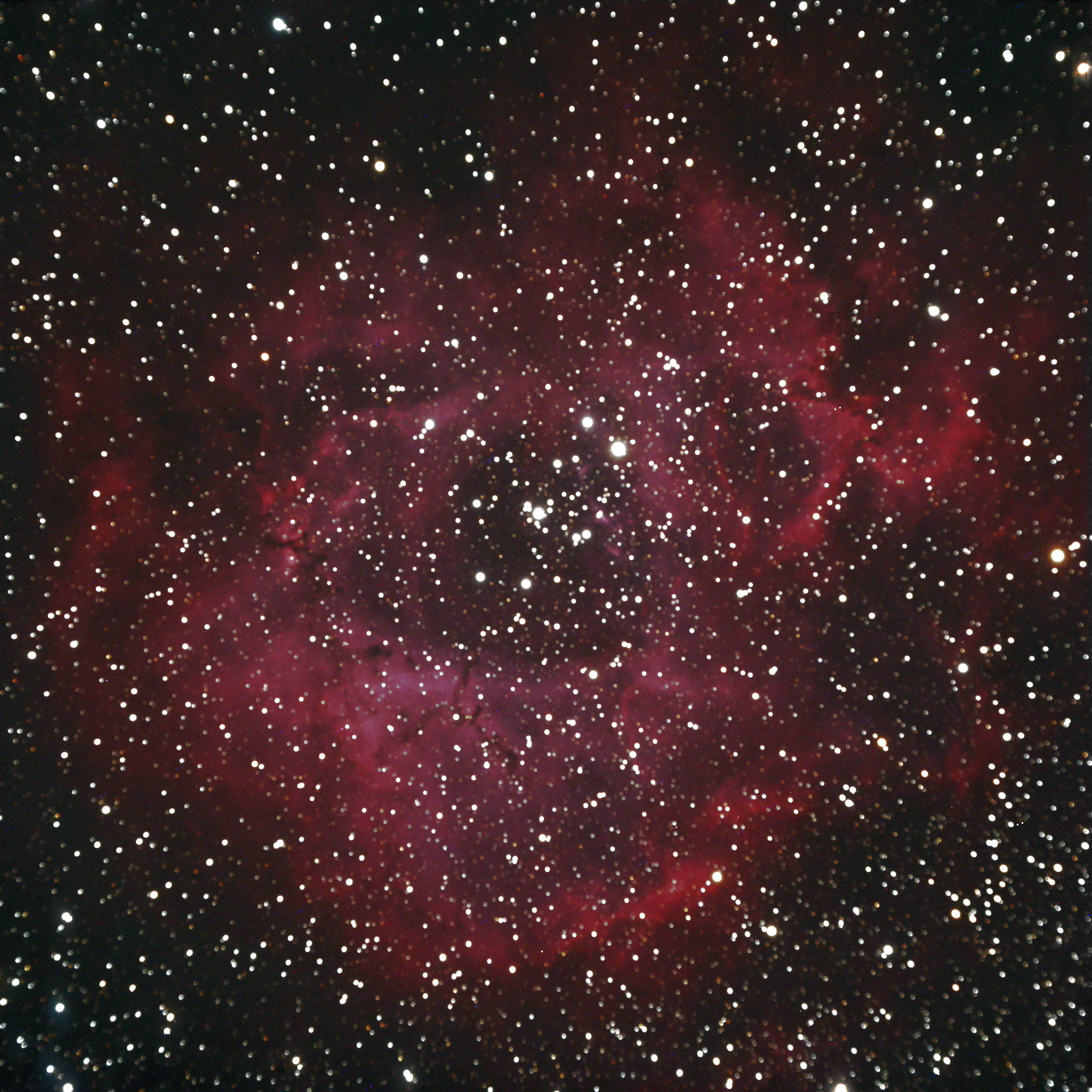
    Finally I went for a redo of a classic winter-sky object, one for which my Traveler with its wide field-of-view should be ideal, the Rosette nebula in the winter Milky Way.

    Here is my earlier shot of the Rosette, and the full size image of it here. On that night my focus wasn’t especially good. Since then my skill with focusing and processing has improved quite a bit, such that now I’m proud to show you my new Rosette image.

    Rosette
    The Rosette nebula region in Monoceros, 45 minutes exposure (3×15 minutes) Astro-Physics Traveler 105mm f/6, SBIG ST-4000XCM

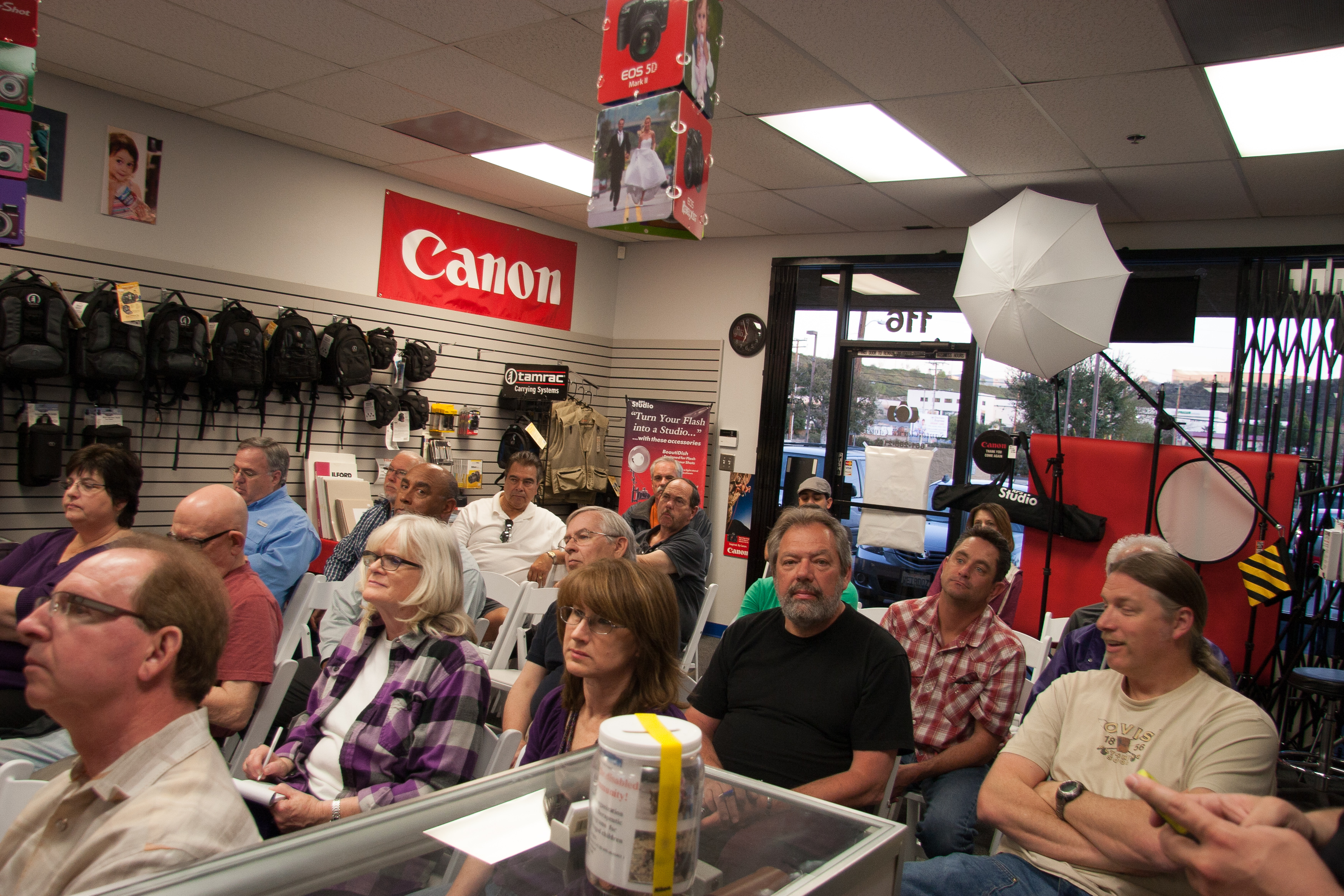
    So I certainly had enough to make a fair astrophotography presentation for a camera club. My talk was the following Tuesday evening at Santa Clarita Camera, for the Santa Clarita Valley Photographers Association.

    Camera Club
    I had about 30 camera club members for my presentation on deep-sky astrophotography.
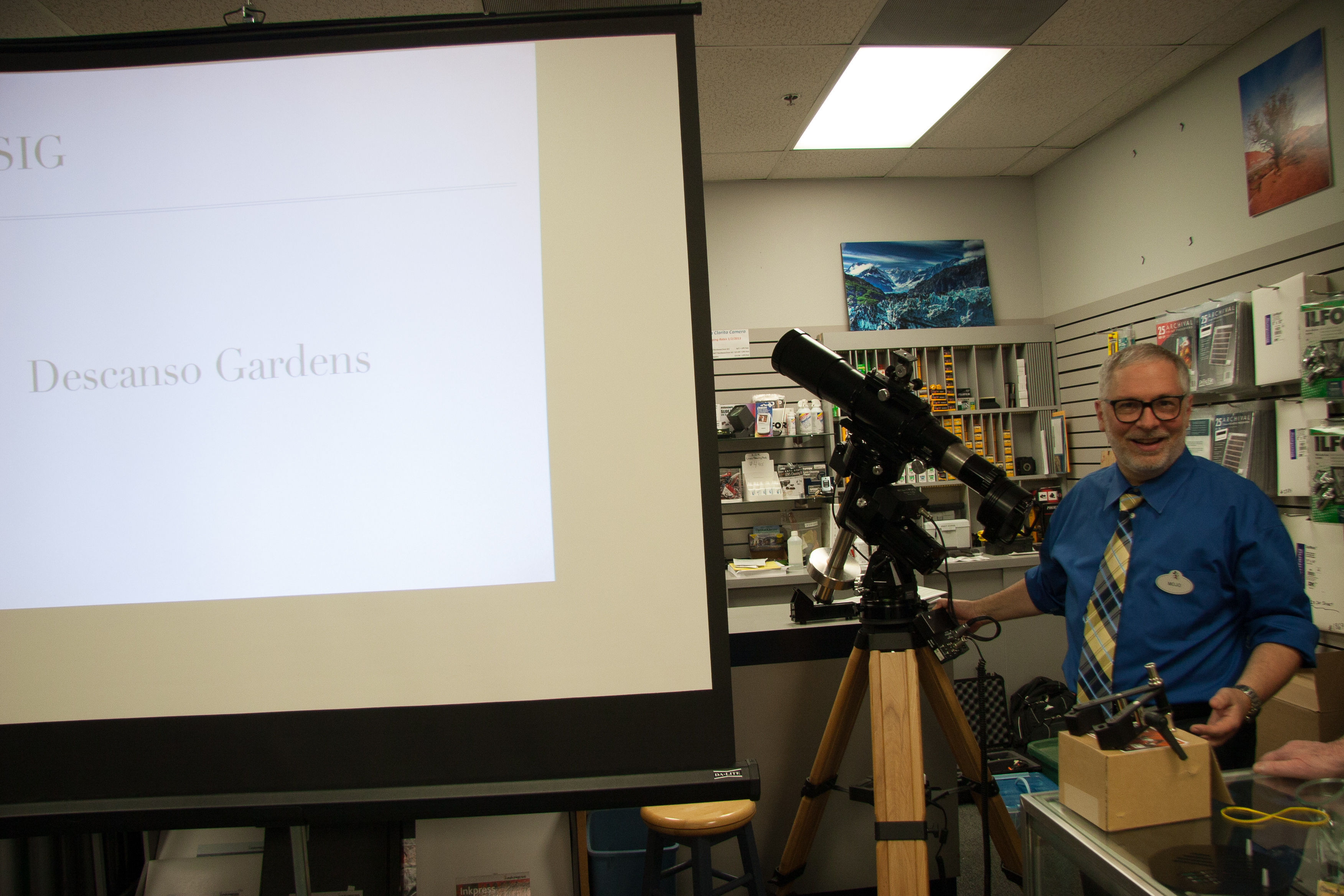
    Mojo with astrophotography gear
    I brought my A-P Traveler, mount, tripod, and camera for show-and-tell along with the talk. Not the usual gear found at a typical camera store.