Mojo's blog banner

Tag: M82

  • Many firsts at GMARS

    Many firsts at GMARS

    Observing report, February 23, 2020

    This would be my first night observing from a powered telescope pad at GMARS, Riverside Astronomical Society’s Goat Mountain Astronomical Research Station, in Landers, CA. It was a beautifully clear but cold February Sunday evening. It was also the first real observing night for a new mount, plus a new and unfamiliar collection of astrophotography tools.

    In preparation for the night, I’d spent hours setting up and practicing with the hardware and software at home. I felt like I’d accomplished everything I could with the hardware and power distribution. Everything was working well.

    My astrophotography computer was another matter. While Jane and I enjoyed traveling for our first year of retirement, my familiar inexpensive Asus laptop hadn’t been turned on for about a year. With any Windows PC, that leads to an immediate trip through “update hell.” Not only did I need hours of download and update time, the internal battery was completely toast.

    Getting the battery replaced turned out to be painless, and during the downtime I was able to research the more modern tools imagers were using to navigate and capture data. I was ready to move past the old days of ST-4 guiding, into the world of ASCOM and PHD2.

    The new mount is an Astro-Physics AP1100 GTO. It was acquired to support our mammoth AP180EDT refractor, replacing a somewhat aging and clumsy AP900 mount. I had only used the big refractor once to capture decent images over ten years ago, and had been unsuccessful since that time.

    The AP1100 GTO is truly decades advanced from the old mount. It feels elegant and precise, even with the massive telescope on top. I added power and data distribution from Kendrick, and I was able to reduce the number of cables from computer to telescope to one USB 3.0 cable.

    There was a clear night coming, leaving me with the mild anxieties of an unfamiliar site, on a “school night,” carrying a telescope that needs two people to mount into its rings and unload into its case.
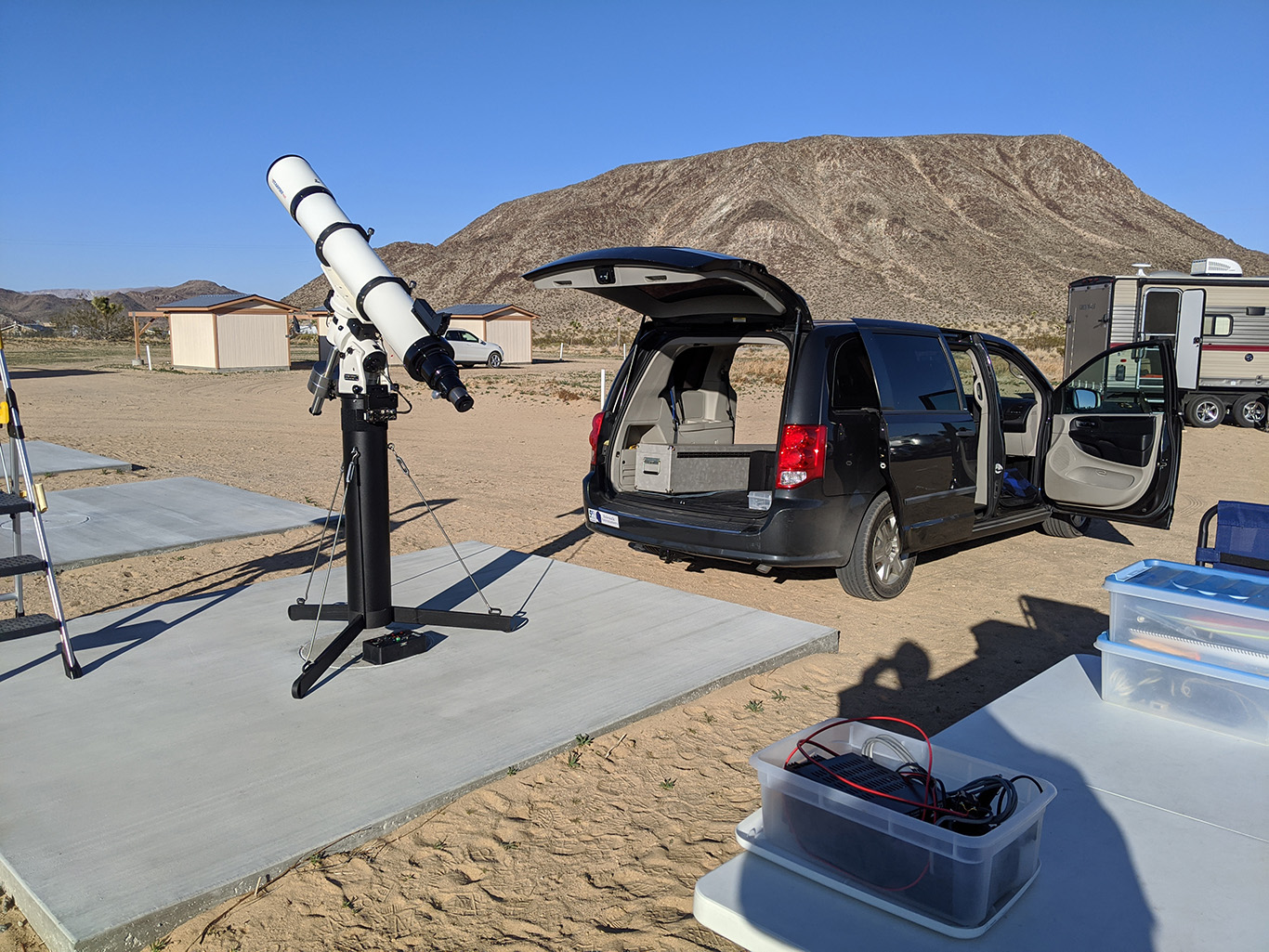
    AP180 telescope and mount.
    The AP180 EDT on its new AP1100GTO mount and portable pier.

    I arrived mid-afternoon and parked at my newly assigned pad, discovering plenty of friendly company — even some old friends from our in-town Sidewalk Astronomy group, Kay and Ken Hoevel. They were happy to help lift the telescope tube, and even insisted on feeding me marvelous grilled steak kebabs in the gorgeous evening twilight.

    I made lots of other new friends, discovering shared interests that seem common among astronomers — things like airplanes and ham radio.

    Kay told me one of her discoveries about GMARS: No matter what it is you left at home, there’s usually someone there who has one to lend you. In my case, it was a red flashlight, and a replacement 3V lithium battery. She managed to find spares of both in her kit.

    I spent a wonderful time under a clear dark sky. I had a comfortable observing chair and binoculars to enjoy the winter Milky Way while the camera was capturing ancient photons. The chatter of nearby observers was familiar and comforting.

    The new mount and old camera were both working like a dream. I was able to bounce around the late-winter early-spring sky, shooting 30 minutes of data on several old favorites for practice. I wrapped up about 1:00 a.m. by taking some flats to calibrate the data. I was ready to get out of the old. I couldn’t sleep though; I spent another few hours in my warm van doing some data reduction and stacking, relearning all my rusty skills.

    The night was beautifully clear, but the seeing matched the forecast of fairly poor. That would be evident in the large stars and soft detail in the images. I’m still delighted with the results, and excited about the prospects.

    Here are the targets for the evening:

    My first selection was a bit ambitious. With the f/6 Traveler it’s difficult to get enough pixels on small planetary nebulae to render much detail. I wanted to see how the f/9 180 would do. I chose the Eskimo, NGC 2392, in Gemini. The full field still dwarfs the little planetary, but look how much detail is visible in a full-resolution crop.
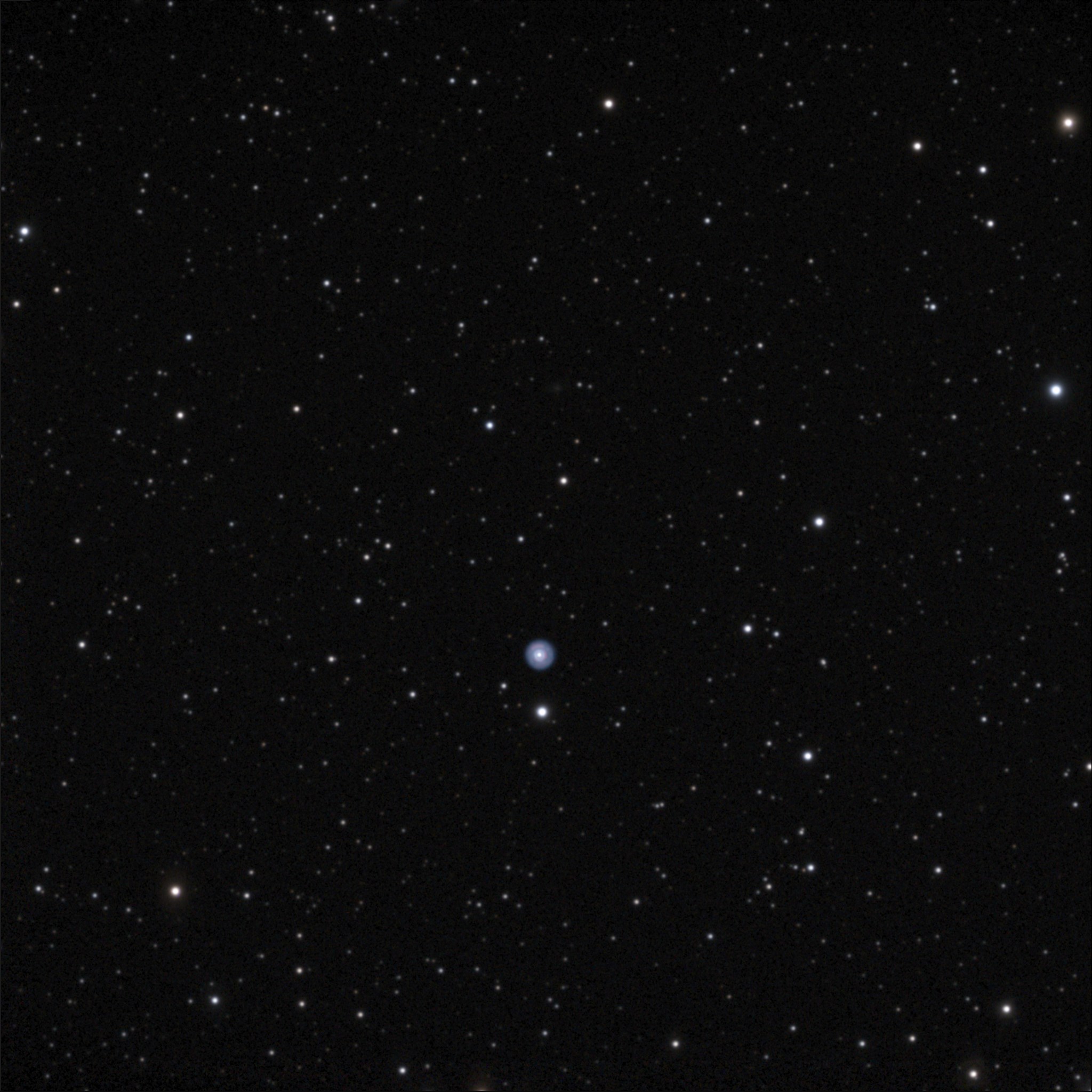
    NGC2392
    The Eskimo, NGC2392, planetary nebula in Gemini

    Here’s the cropped center of the image.
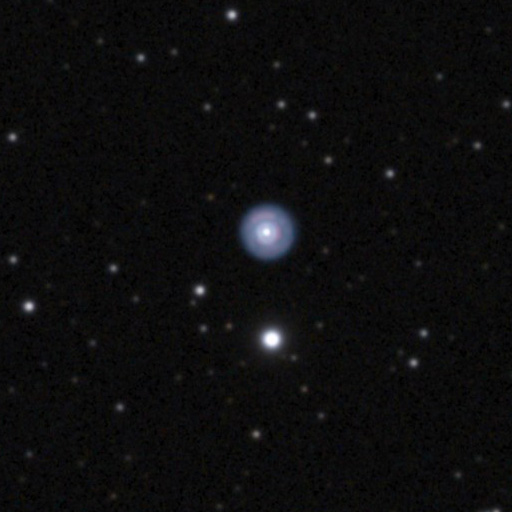
    NGC 2392
    Center full-resolution crop from the full-field NGC 2392 above, showing the interesting detail in the Eskimo.

    Ursa Major was in prime position, so I thought I’d grab several favorites from there, starting with M51 the Whirlpool.
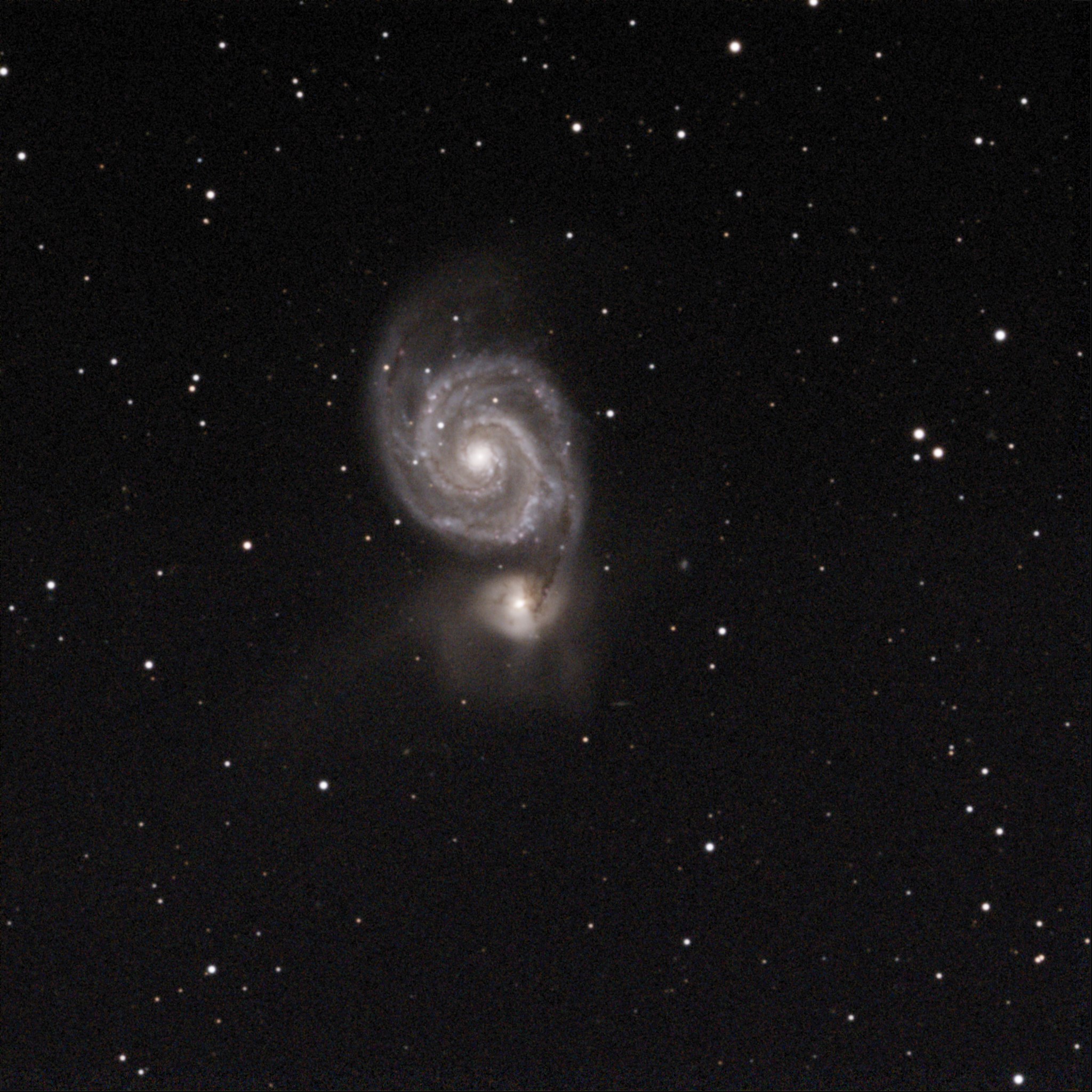
    M 51
    M51 the Whirlpool Galaxy in Ursa Major.

    In the big long-focus telescope, M81 and M82 won’t fit in a single field, so I had to capture them separately. Well worth doing. Here’s M81:
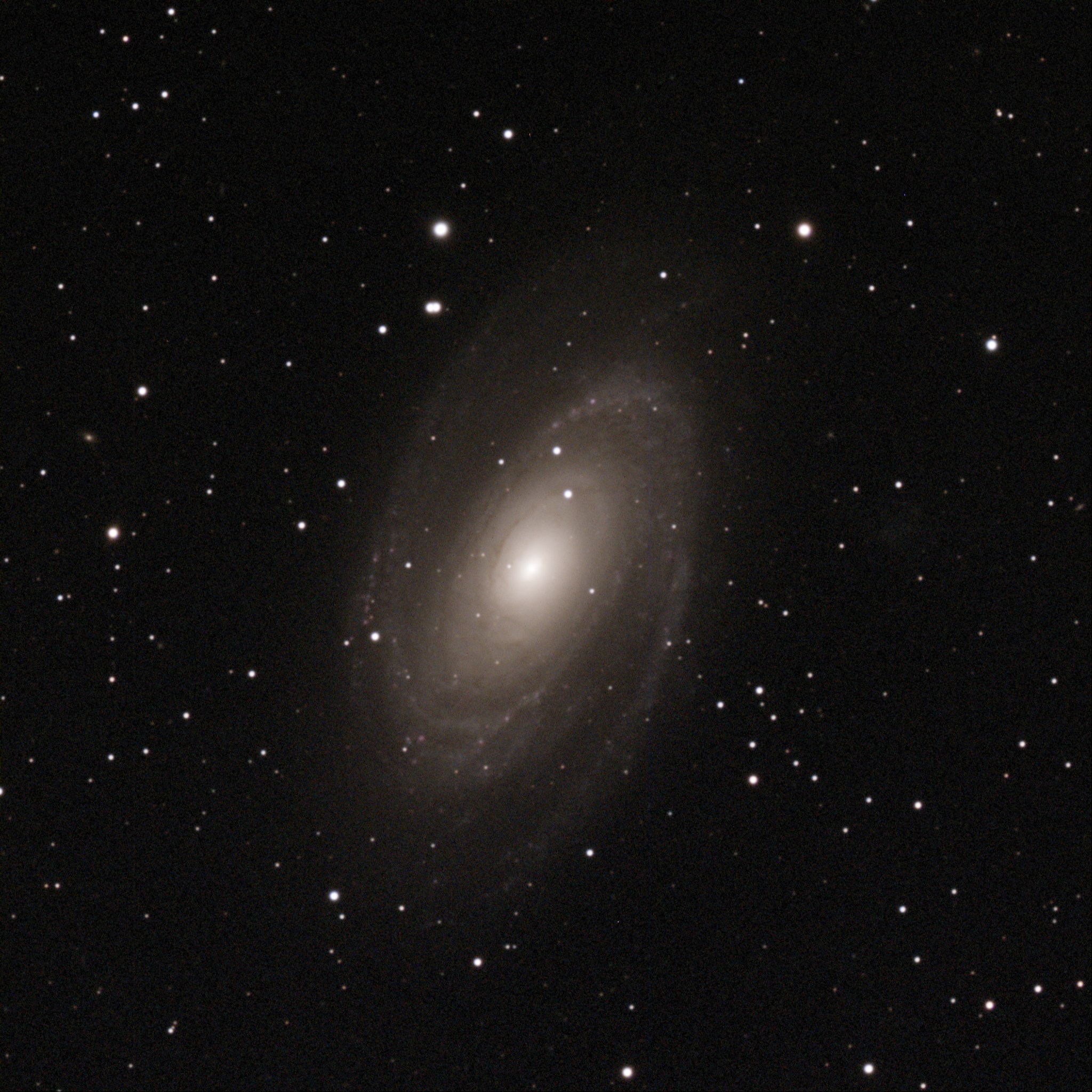
    M81
    M81 spiral galaxy in Ursa Major

    M82 also reveals lots of detail in the tangled center of this irregular galaxy:
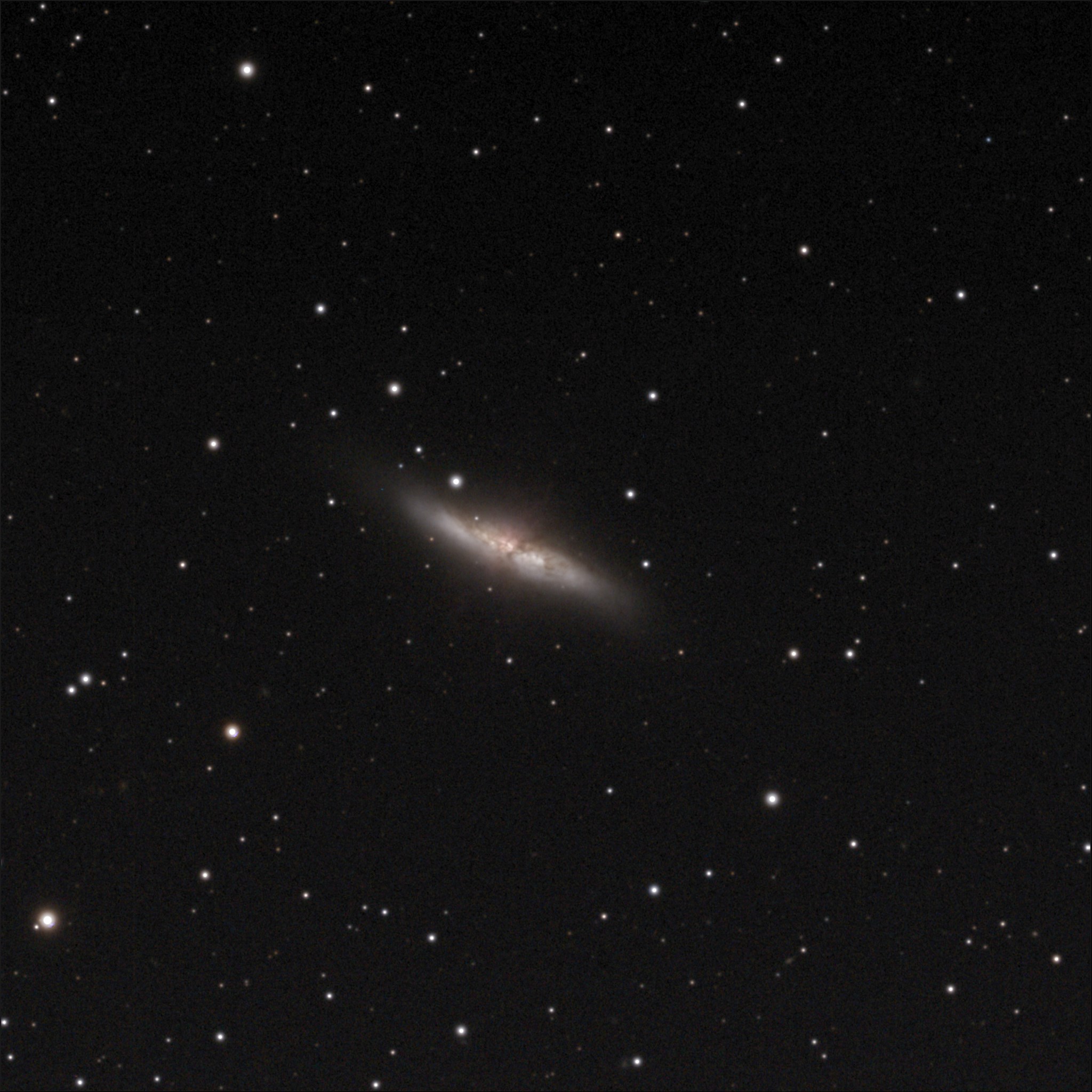
    M82
    M82 irregular galaxy in Ursa Major

    Seeing Coma Berenices rise in the dark eastern sky, I knew i had to grab the edge-on spiral NGC 4565:
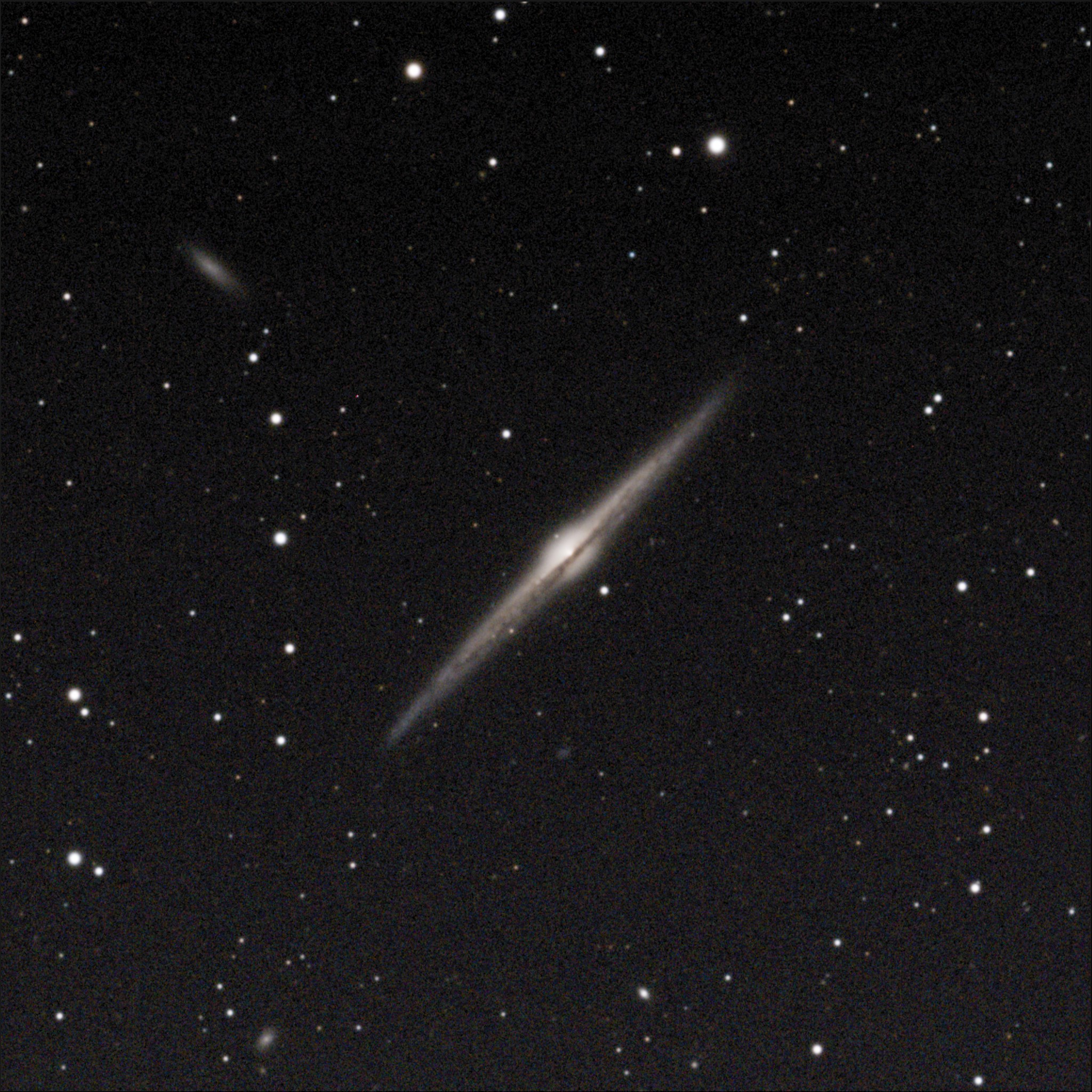
    NGC 4565
    NGC 4565 in Coma Berenices

    Clicking on any of the images above should give you the full 2048×2048 image.
  • Double your pleasure …

    Chuckwalla Bench, Colorado Desert, California, 29 October 2011

    As promised, last weekend was the first of two excellent dark sky weekends this month. The weather turned out to be perfect for this one as well.

    Jane and I went to our old favorite spot off I-10, Chuckwalla Bench, on BLM land south of Joshua Tree in the Colorado Desert. We were joined by Dave Hasenauer and his dob.

    Bad news about Red Cloud Rd., the dirt road we take to our favorite spot. The road is sadly in need of some maintenance. Portions of the road are very treacherous with deep ruts and deep sand. We didn’t encounter any problems this trip, but it will be a worry.

    We had crystal clear skies all night, with temperatures around 85°F at sunset, dipping close to 50°F in the wee hours.

    The evening twilight featured Venus in its new evening apparition setting in the west, Mercury just below, with Jupiter one day after opposition rising in the east.

    Early in the evening while spotting satellites, we managed to catch a bright fireball meteor (7:22 p.m.) probably around magnitude -10. I saw a double terminal burst from the fireball, which traced from Cassiopeia through Triangulum. It left a persistent train that was visible for several minutes in binoculars and Dave’s telescope.

    Jane even indulged in a little afocal astrophotography capturing some splendid crescent moon shots on her point-and-shoot camera.

    I had a couple of “firsts” in my astrophotography accomplishments, doing my first successful drift alignment when my polar alignment was slightly off, and finally successfully capturing useful “flats” for image calibration in the morning twilight.

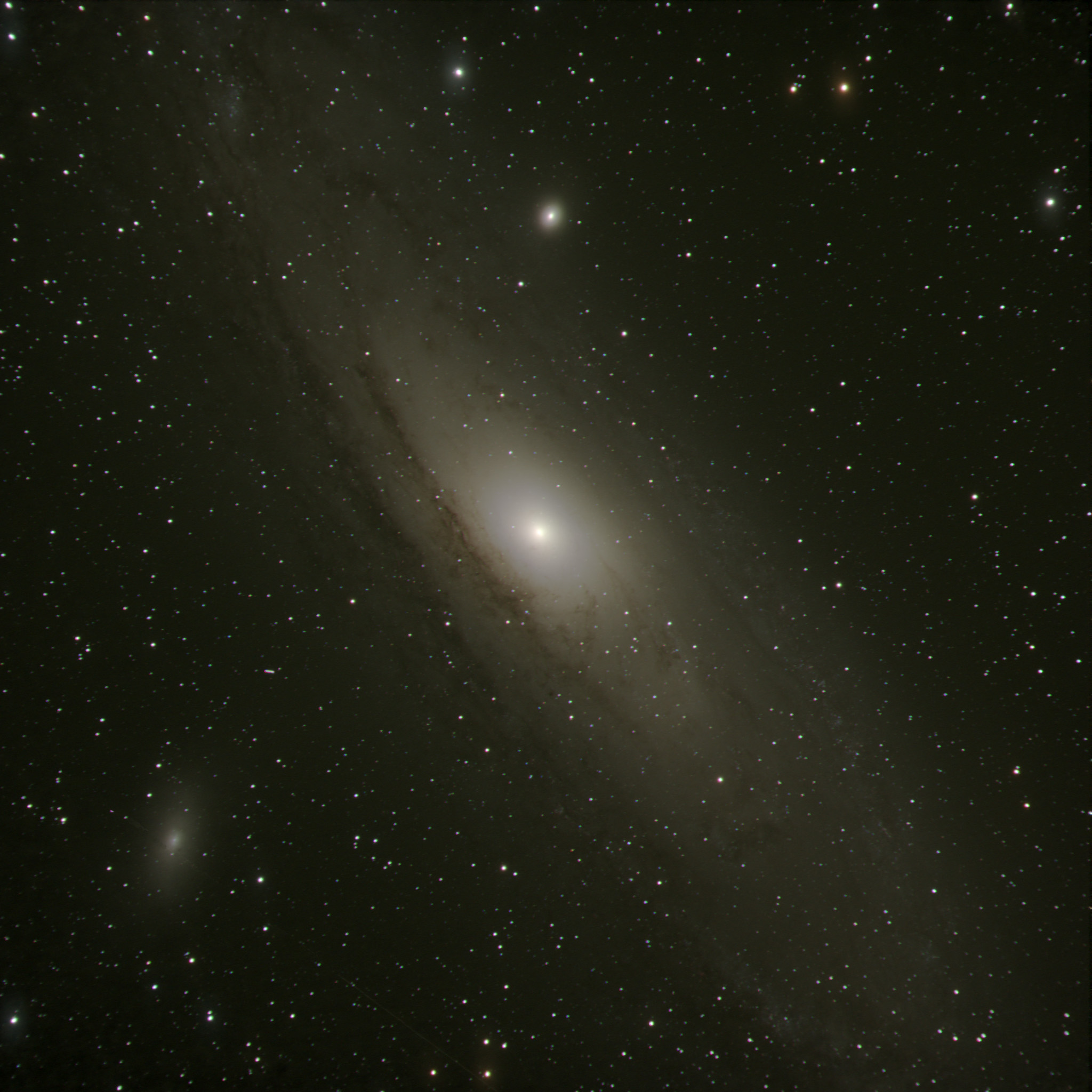
    I also had a brainstorm about how to process the color data from bright targets without data being clipped in the bright areas. With that in mind, first let me revisit my M31-M32-M110 the Great Galaxy in Andromeda from last week, this time in full color.

    M31 - M32 - M110, the Great Galaxy in Andromeda
    M31 from 22 Oct. 2011, 4×15 minute exposures

    (For all the images, click the image for the full-resolution version.)

    And I promised to revisit the Pegasus 1 galaxy cluster, this time giving it an hour of exposure, which it fully deserved. Here’s the full field first.

    Pegasus 1 Galaxy Cluster
    Pegasus 1 Galaxy Cluster, click for full-resolution.

    The one-hour exposure time cuts down the noise nicely, and calibrating it with a good flat field removes the vignetting. Check out this detail from the center of the cluster at full resolution:

    Pegasus 1 galaxy cluster detail
    Pegasus 1 galaxy cluster detail

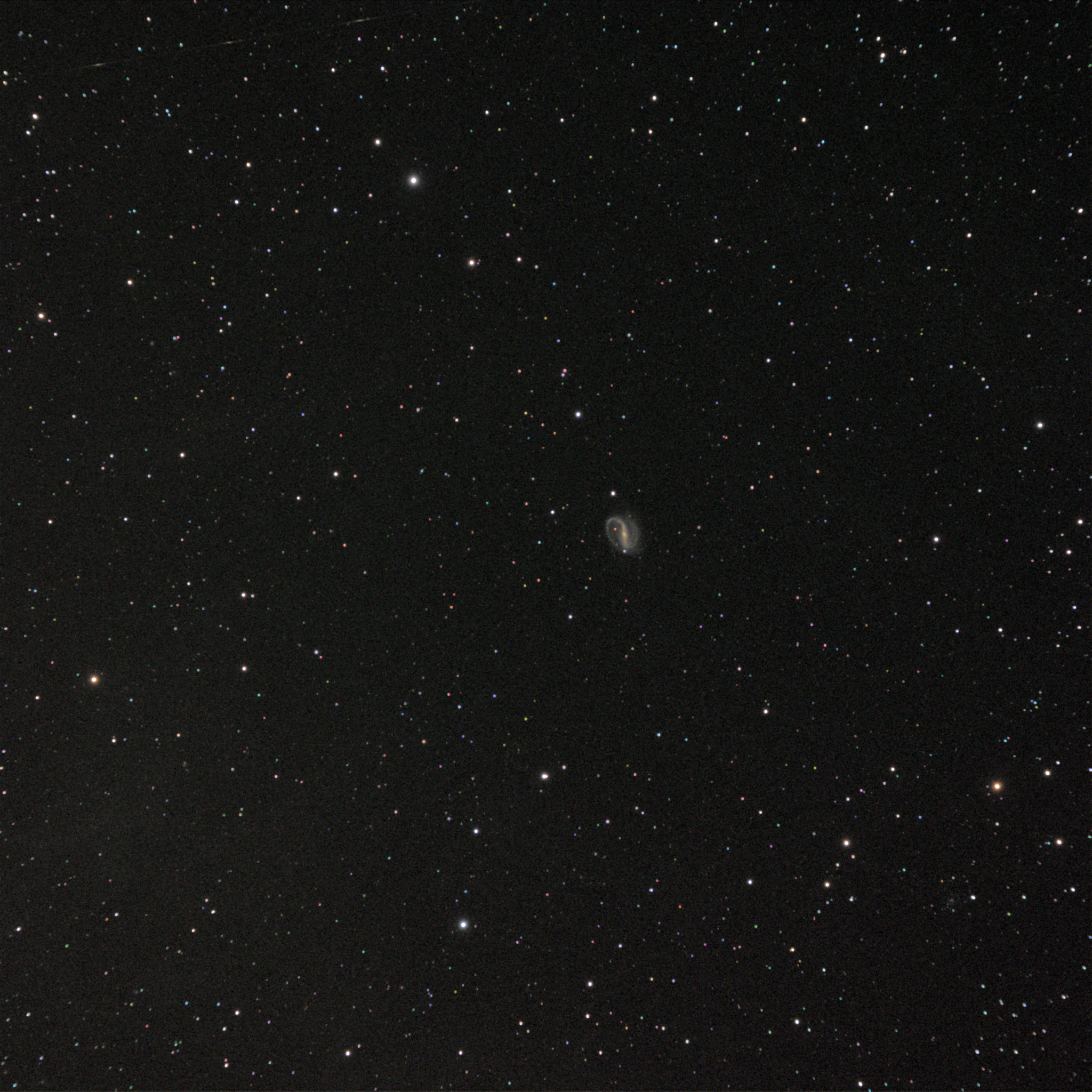
    Jane was observing this delightful face-on S-shaped spiral galaxy, NGC7479. It was such a small target that I didn’t think my short-focus 4-inch would do it much justice. It turned out to be a delightful crop with lots of detail.

    NGC7479
    Detail of NGC7479, click for the full field, 15-minute exposure

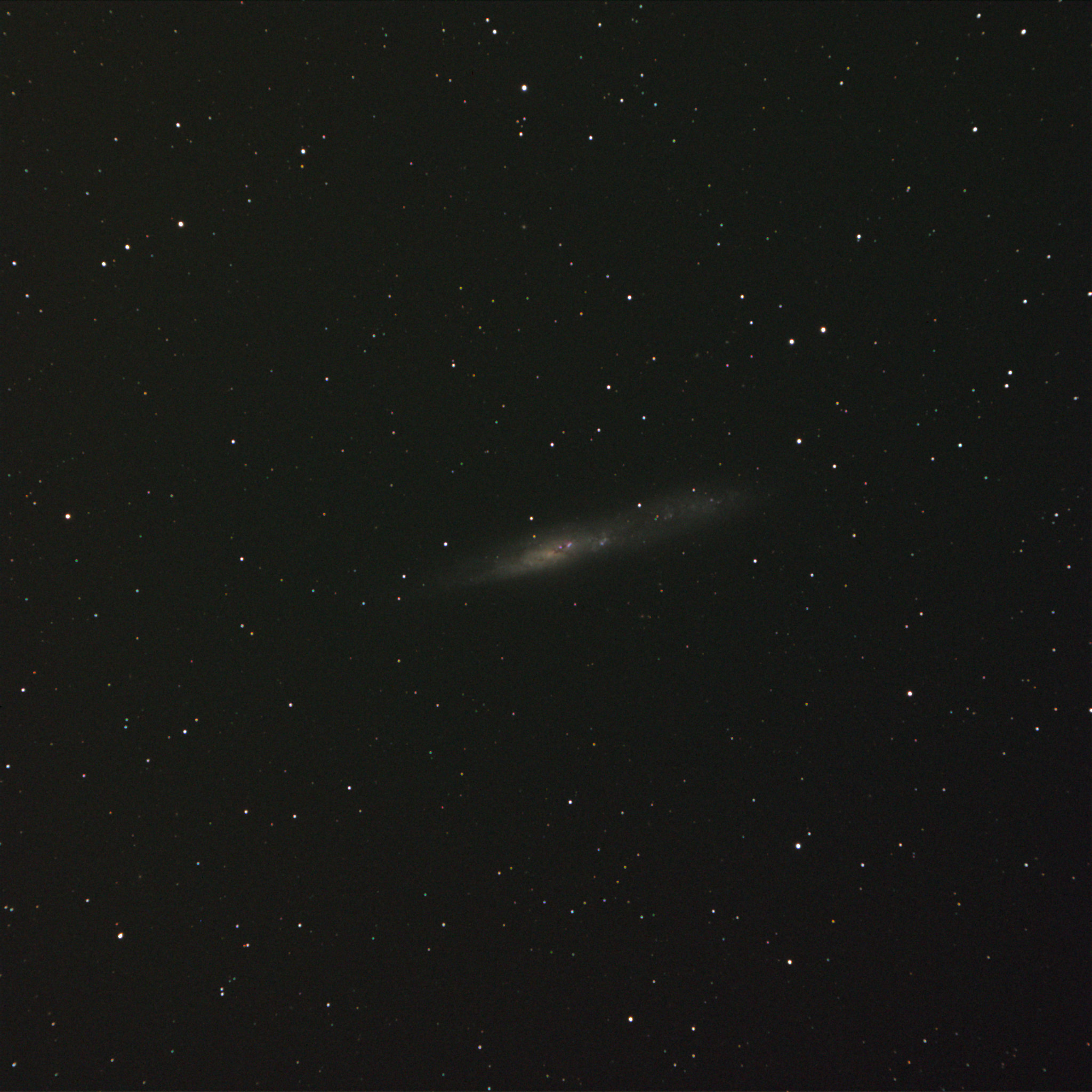
    Another surprisingly good image came from NGC55, a fabulous extended galaxy, so far south in the sky that it’s rare to be seen by northern-hemisphere astronomers. Complicating matters is a light dome from Inland Empire cities that encroaches on our southern horizon. Nevertheless, my 15-minute exposure was worth passing on. The full-resolution shot is very nice with lots of detail.

    NGC55
    NGC55, one 15-minute exposure, through a bit of "foreground" light pollution.

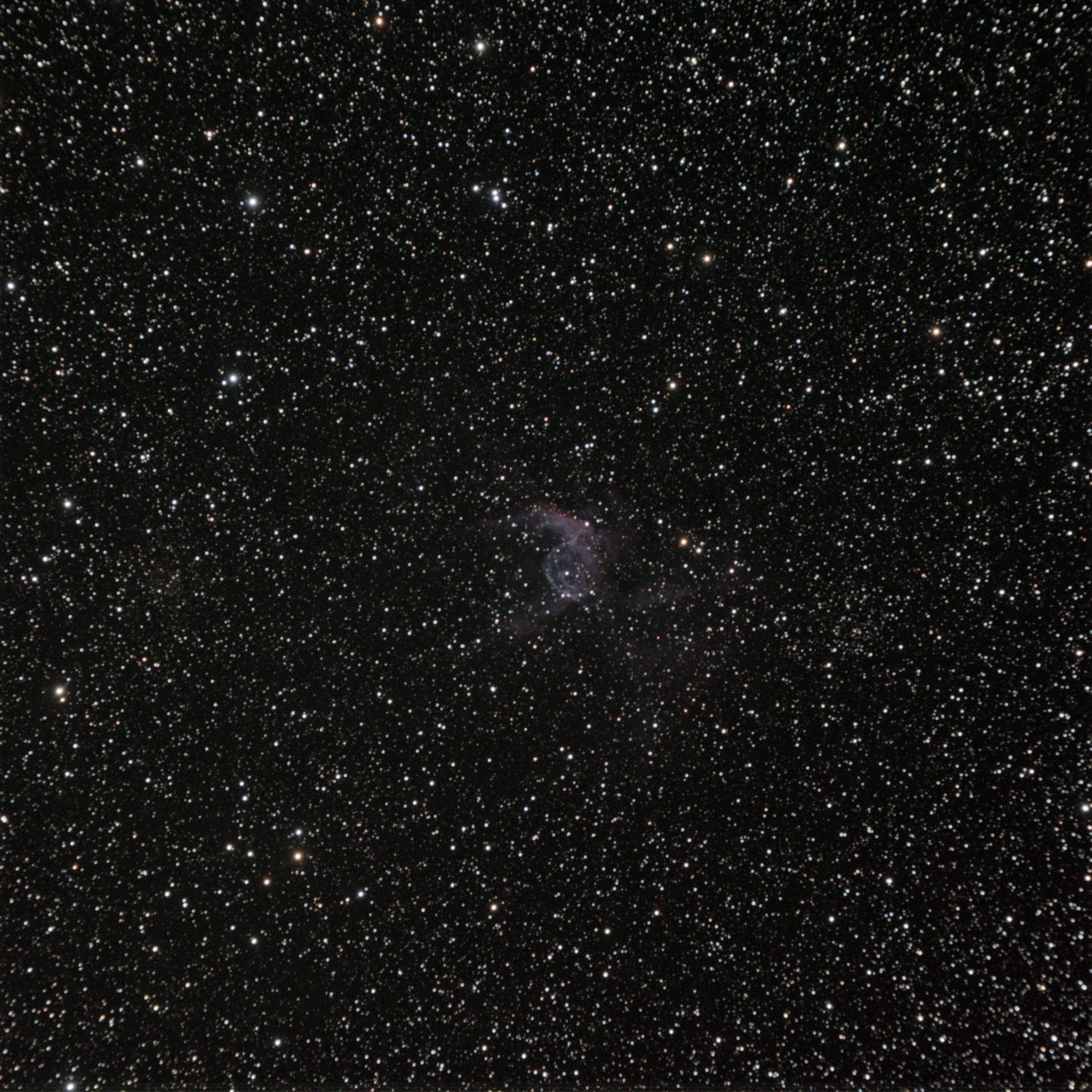
    Jane also suggested one of her favorite difficult winter visual targets, NGC2359, known as “Thor’s Helmet.” I collected an hour’s worth of photons. Here’s the detail from the center of the field, click for the whole thing.

    NGC2359 "Thor's Helmet"
    NGC2359 "Thor's Helmet," 4×15 minute exposures, detail from the center of the field.

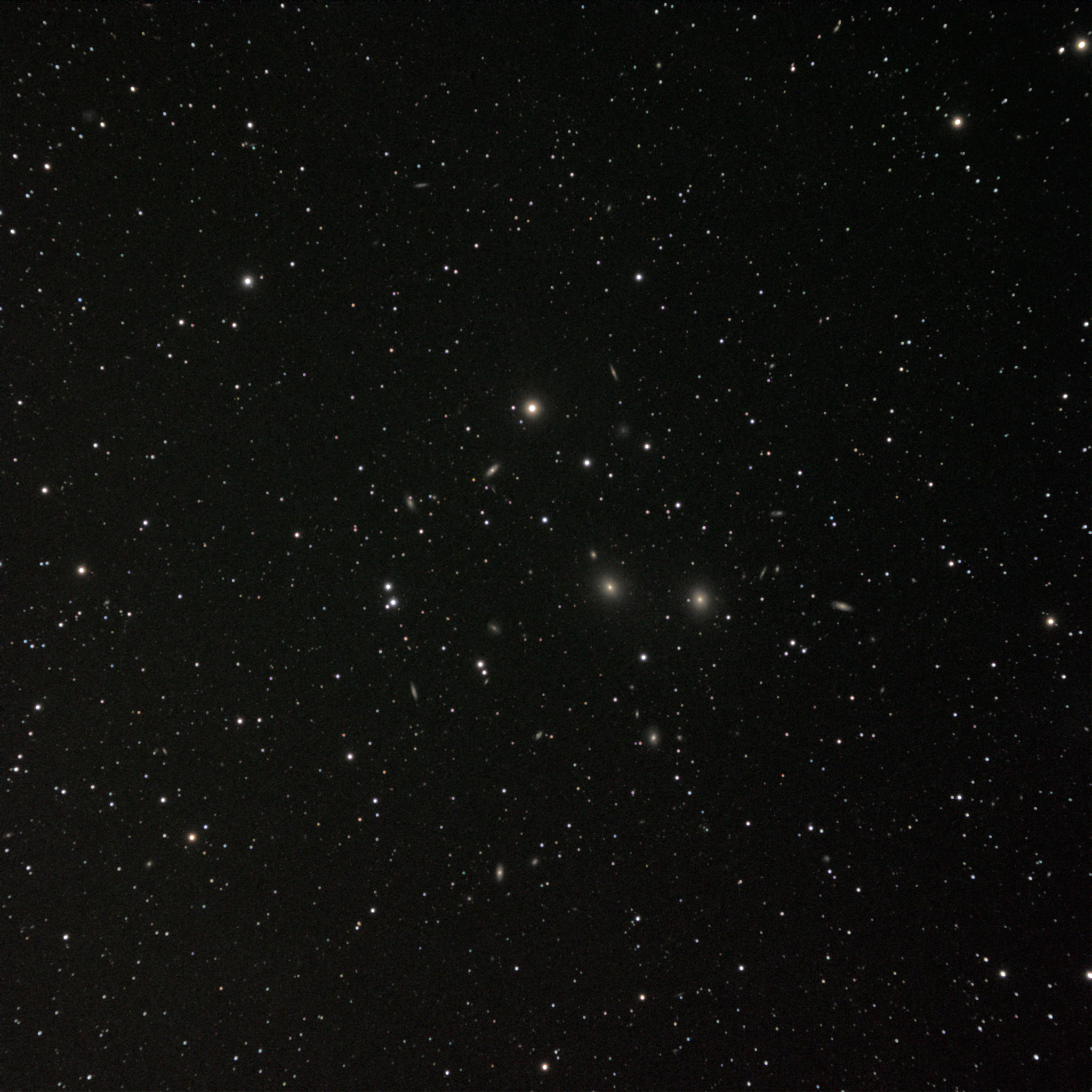
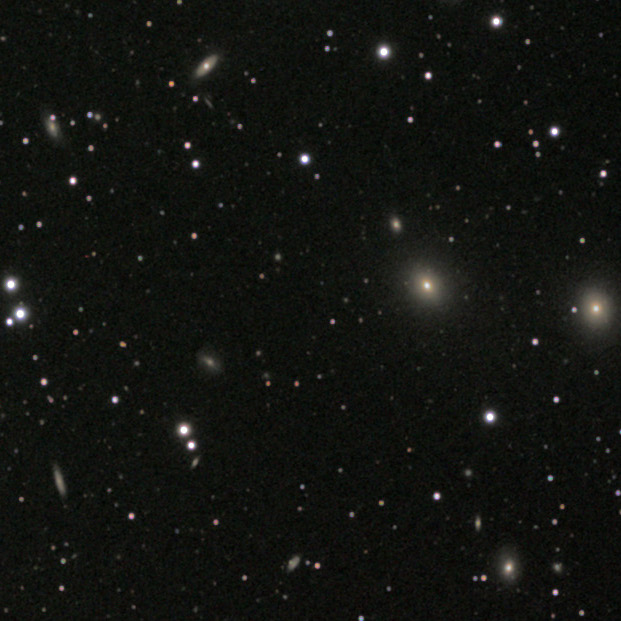
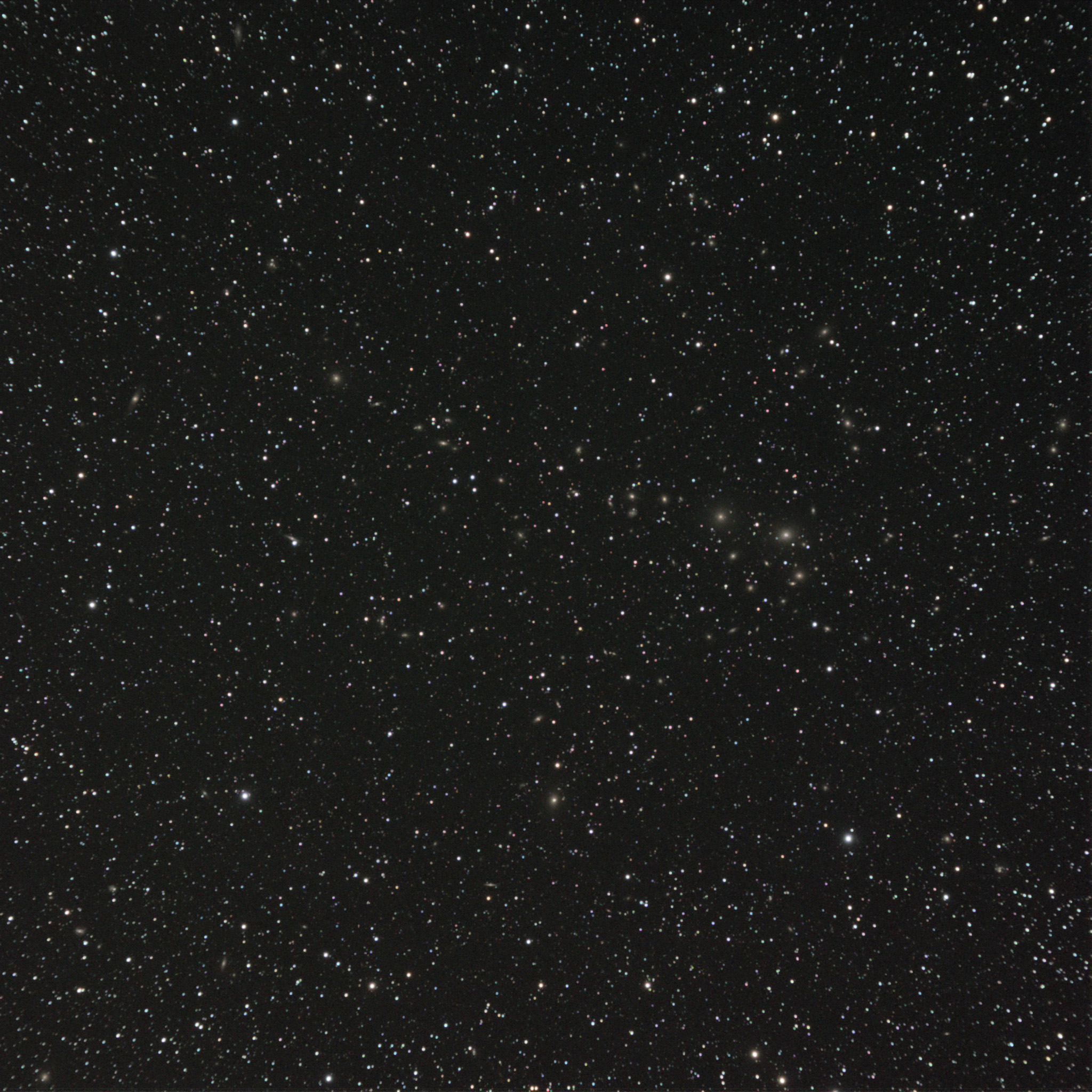
    I’ve long been fascinated with distant galaxy clusters, and they’re very difficult visual targets. Some find them to be uninteresting photography targets. I opted to try 30 minutes on Abell 426, a massive distant galaxy cluster in Perseus. Here is some detail from the center, but the full field is full of easter eggs.

    Abell 426 Galaxy Cluster
    Detail from the Abell 426 Galaxy Cluster in Perseus. Click for the full field.

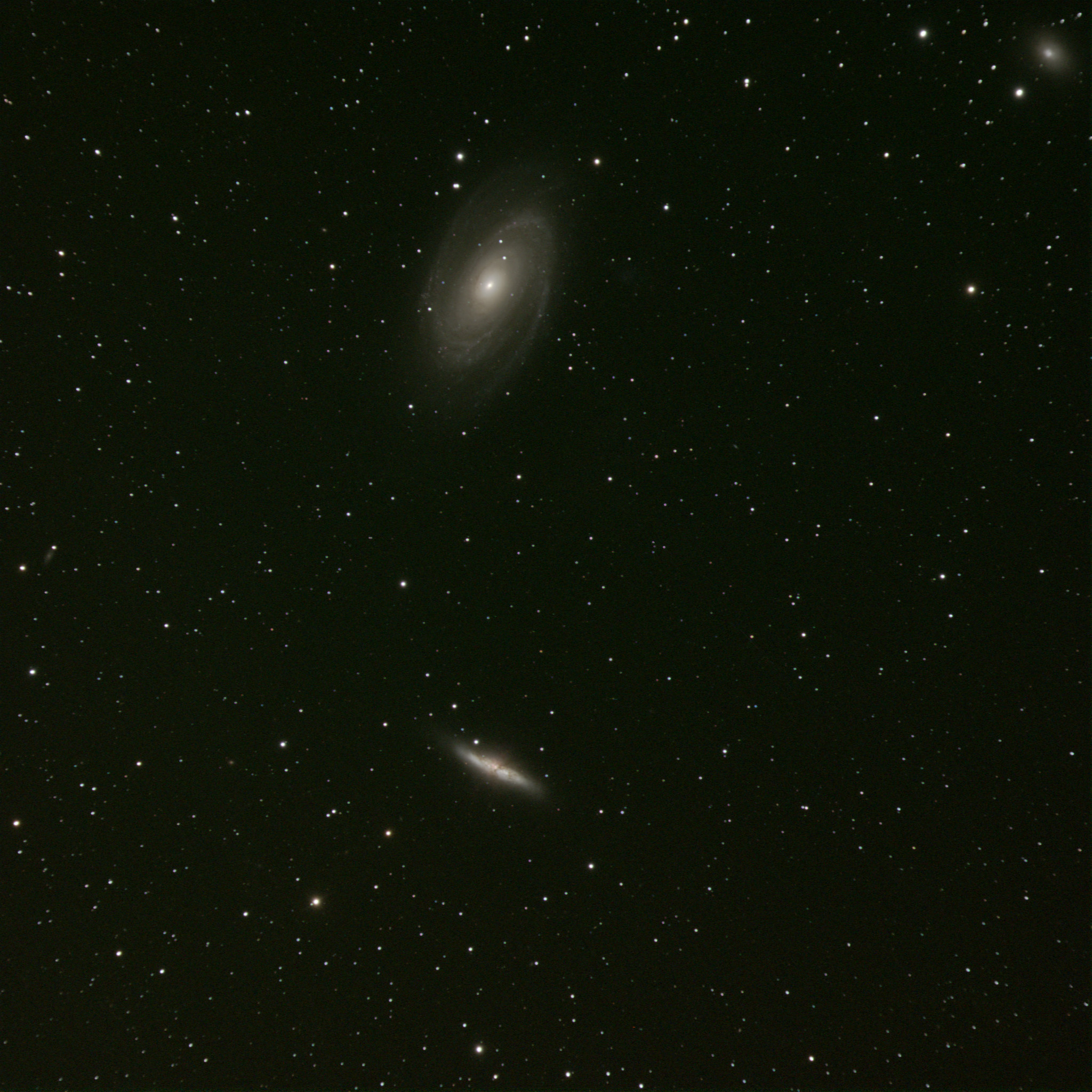
    My last target of the evening was to be an indulgent treat, the M81-M82 galaxy pair in Ursa Major. My mount battery finally quit just at the end of the second exposure, and morning twilight was about to arrive. A fabulous end to the evening.

    M81 - M82
    M81 the spiral (a.k.a. "Bode's Nebula"), and M82 a peculiar active galaxy, in Ursa Major


  • January observing, a Monoceros evening

    Click here for the full photo album with lots more pictures.

    Mt. San Jacinto
    The snow-capped peaks were beautiful from the Foothill Freeway

    It had been several months since our schedule, the weather, and the moon phase all cooperated to give us a chance to get out to our favorite astronomy spot. Jane and I, joined by Dave Hasenauer, ventured out to the Colorado Desert with promises of a chilly evening but mostly clear skies. The snow-capped peaks of San Jacinto and Gorgonio mountains were calling to us from almost our first moment on the road.

    Twilight on Chuckwalla Bench
    Twilight on Chuckwalla Bench

    During our twilight setup, some fellows from Arcadia stopped to check out the equipment. Dave was all set up and ready to show Jupiter if we could find it. While hunting in the twilight glow, we all exclaimed as a flock of probably 100 geese were approaching from the west. The geese turned out to be our guide to Jupiter! They flew right in front of the planet, and gave our eyes a convenient focus target. We all enjoyed the view through Dave’s big dobsonian.

    Jane had plans to attack the faint periodic comet 103P/Hartley, famous for its huge outburst of a year ago. Jane and Dave both claim to have found the glow of the incredibly diffuse comet. I tried for an image of it myself, but was convinced I didn’t have anything. This is my shot, with the comet buried deep in the winter Milky Way in Monoceros.

    Milky Way stars with a faint comet
    Can you find the comet?

    Can you find the comet? Here’s a full-resolution crop of the center of that field. Look right in the middle, and try to ignore that my focus wasn’t especially good for this picture!

    Comet 103P/Hartley
    Look for the faint cotton ball in the center.

    I was delighted that most of my hard-won imaging skills hadn’t been completely lost during the time away from it. I didn’t get a perfect focus for my first couple of shots of the evening, the comet Hartley photo above being one.

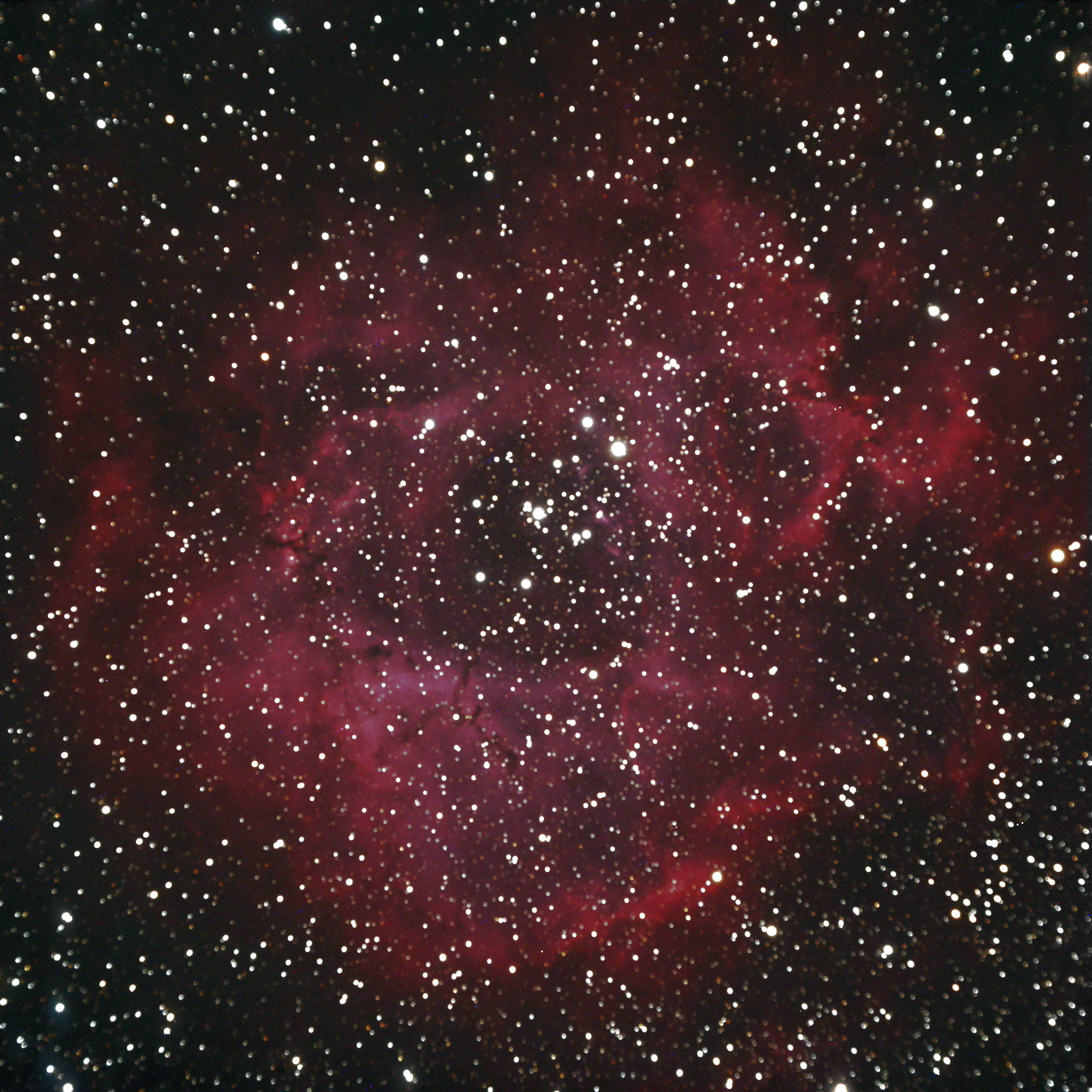
    Even with a less-than-perfect focus, this one of the Rosette Nebula in Monoceros turned out pretty well. This is only 30 minutes of exposure, and it’s pretty clear this object would benefit from a couple hours of exposure time.

    Rosette nebula
    The Rosette Nebula, click for the full frame

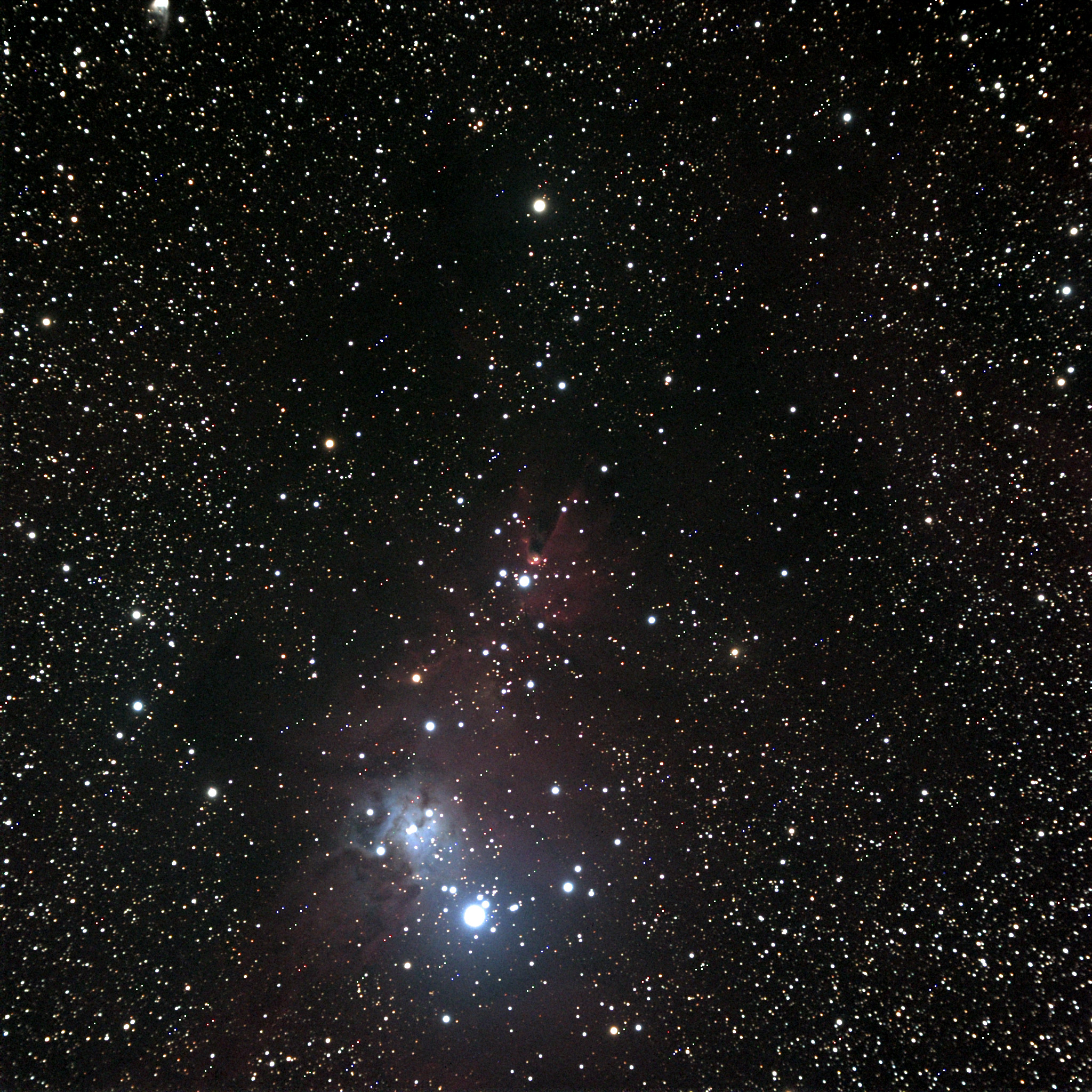
    The Cone nebula is another one that could benefit from a lot more exposure time, but at least by now I’d corrected the focus. I love this beautiful field, with a vast mix of Milky Way stars, emission, reflection, and dark nebulae. The “cone” that gives the nebula its name is near the center of the image. This is also two 15-minute exposures stacked.

    Cone nebula
    The Cone nebula in Monoceros, click for the full resolution image.

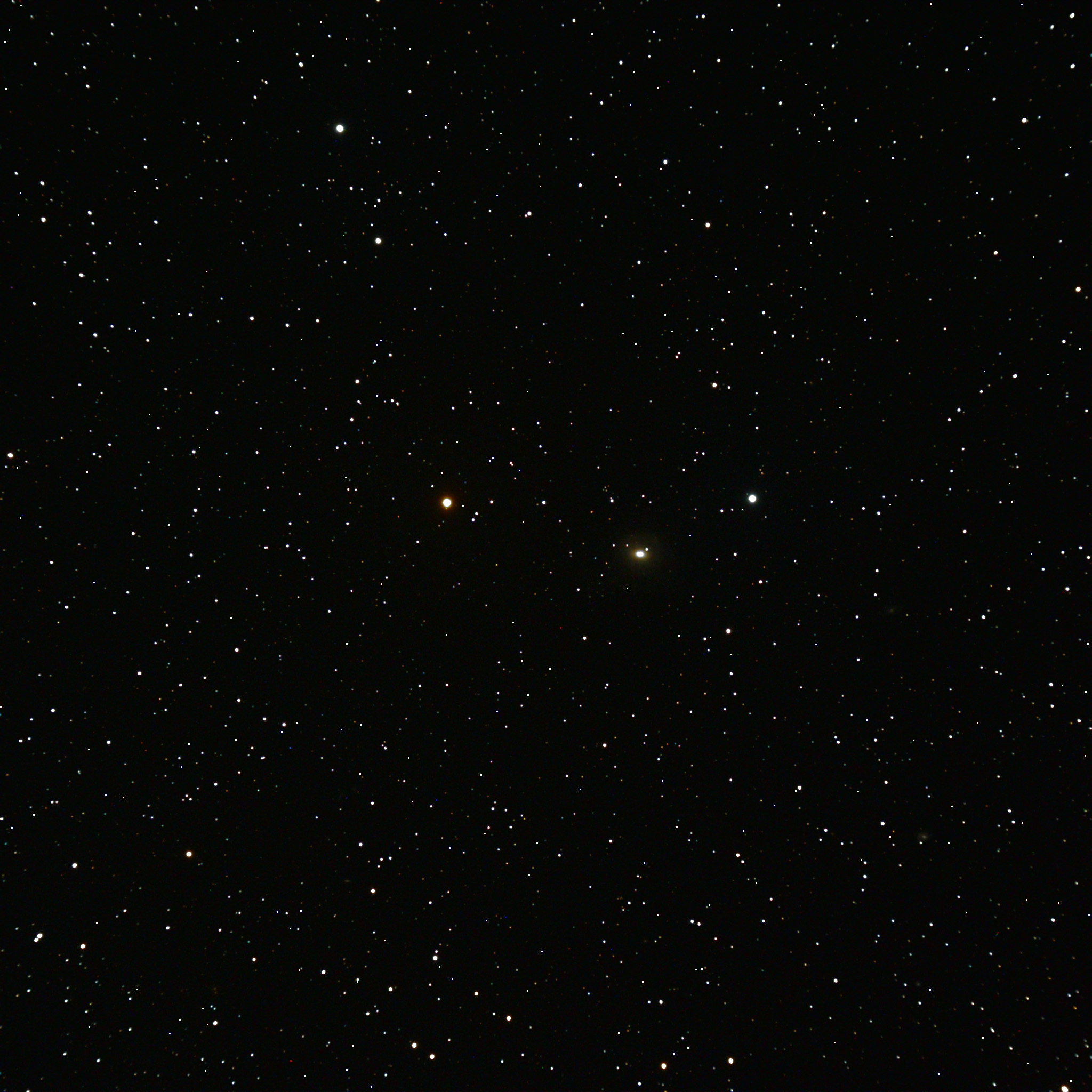
    A bright supernova was discovered just a couple weeks ago in small distant galaxy NGC 2655 in Camelopardalis, very high in the northern sky. Jane and Dave both enjoyed hunting it down, and the nova is bright and easy, itself as bright or brighter than the rest of the galaxy. Of course I had to get an image, here’s my crop of the field with the supernova marked.

    NGC2655 and supernova
    Supernova in NGC 2655, click to see the whole wide field image.

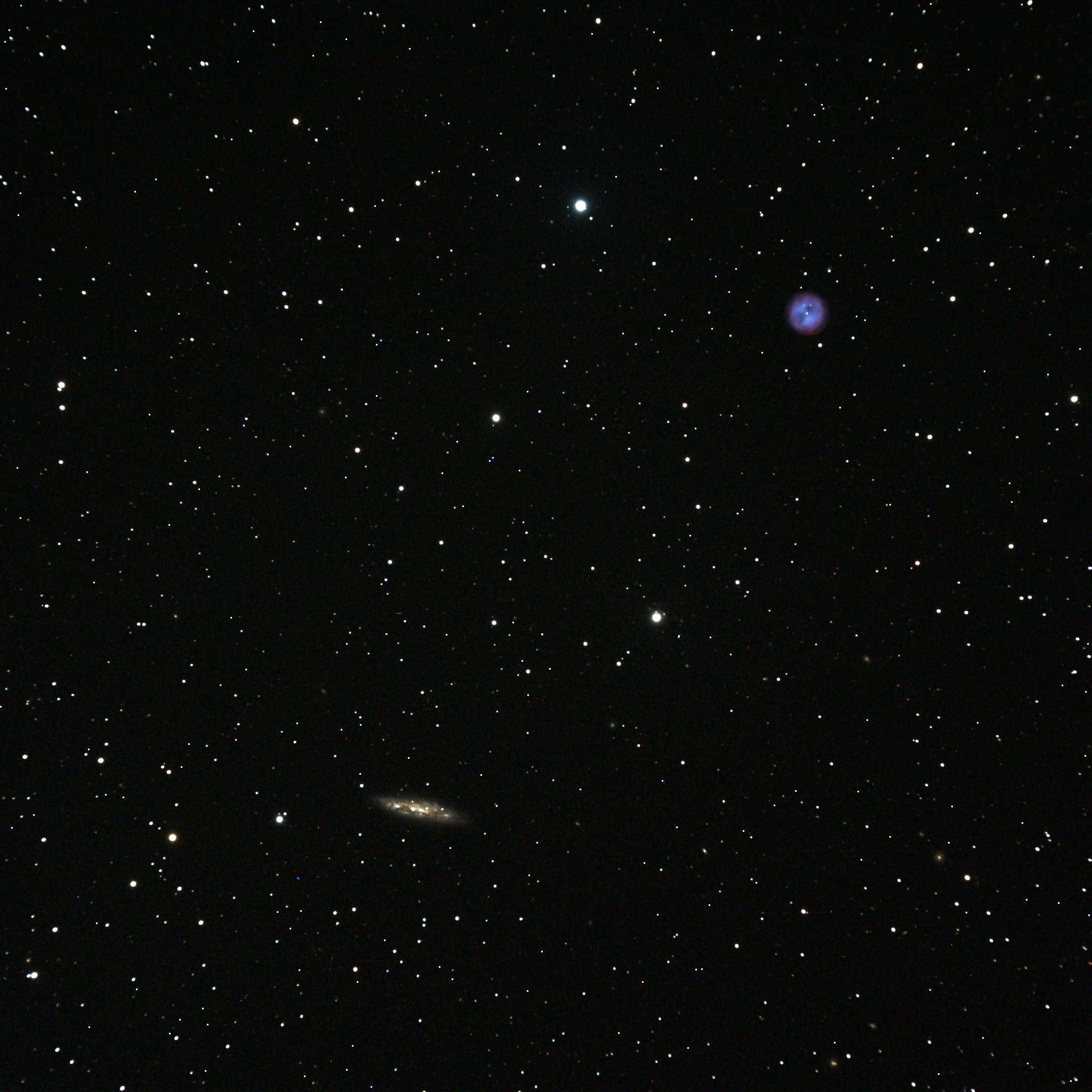
    Finally Jane suggested this great pairing, “The Owl and the Cigar,” she called it, M97 the Owl Nebula paired with galaxy M108 in Ursa Major. I only got one 15-minute exposure of this field, as the clouds were starting to move in, but I loved the colors in the Owl nebula, and the detail in M108. It’s fun to contemplate the difference in their distances, with the Owl being the gasping exhalation of a single star in our galaxy, and M108 being billions of stars in a very distant galaxy.

    M97 and M108
    The Owl and the Cigar, M97 (top) and M108, click for full resolution

    The first half of the night was interrupted several times by loud flights of two or three helicopters passing nearby. We speculate that they may have been in service to the border patrol, using infrared or intensified imaging. Our little site must have been interesting to see from their vantage point.

    Pre-dawn Chuckwalla Mountain with the moon and Venus
    Pre-dawn Chuckwalla Mountain with the moon and Venus

    By the time the sky show was interrupted by clouds, we all were tired and cold and felt like we’d had a full evening. Amazingly it was only 11:00 p.m.! We all tucked ourselves into warm sleeping bags to catch a few hours of sleep. Meanwhile the sky cleared again for spectacular pre-dawn show of the moon and Venus. We all got up to enjoy the old crescent moon, Saturn, and watch for Mercury to rise over Chuckwalla mountain.

    With the local star finally clearing the horizon, we packed and headed off to breakfast at Chiriaco Summit. By the time Jane and I arrived back home in Monrovia, it was raining!

    P.S.: In the photo album linked here, I included some detail photos of my astrophotography equipment, with captions, for the benefit of some friends who’ve wondered how these things happen.