Mojo's blog banner

Tag: NGC5907

  • Finally some observing weather

    See Jane’s observing report from the same evening — some great binocular observing with Kemble’s Cascade.
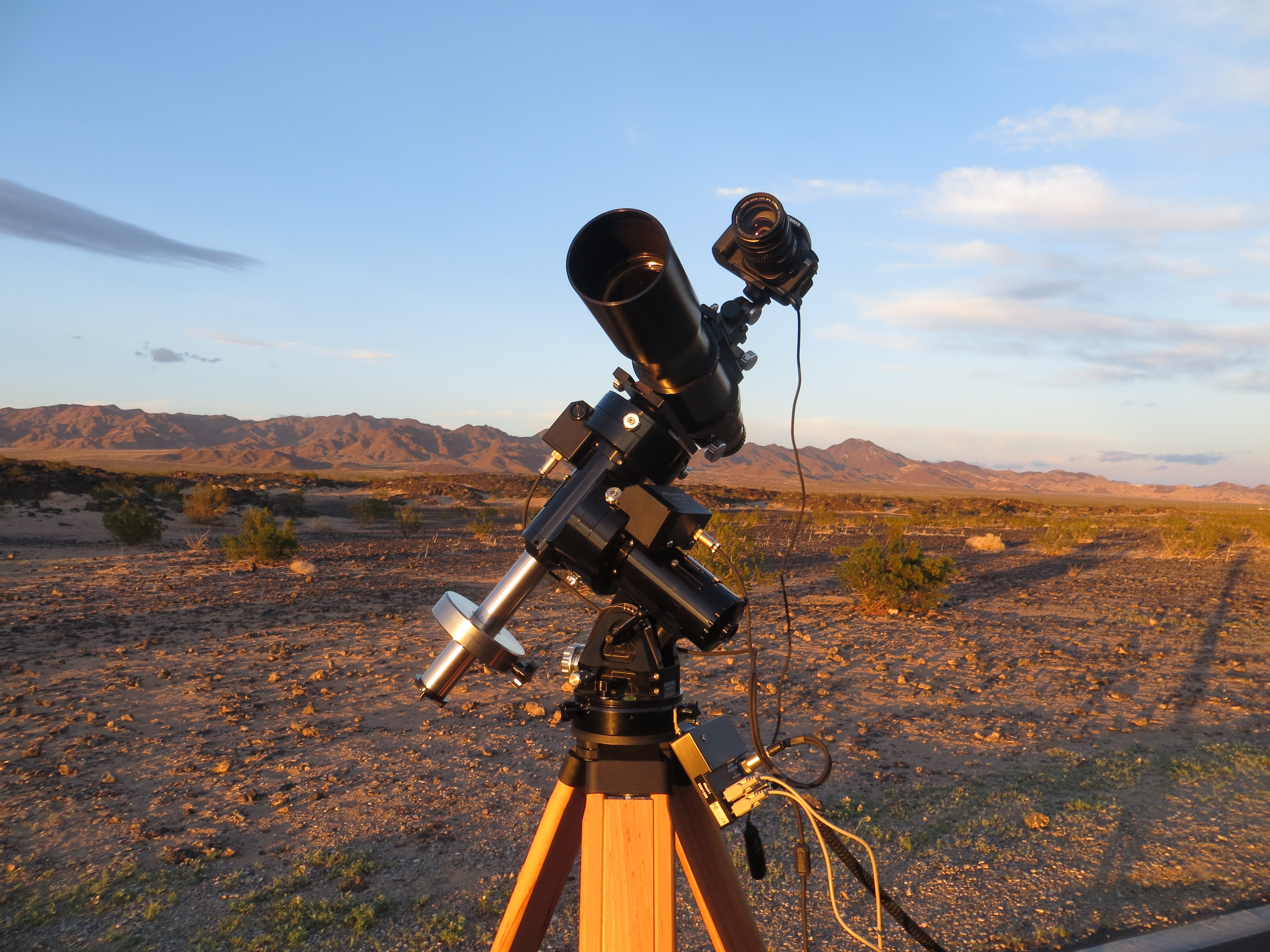
    IMG_0890
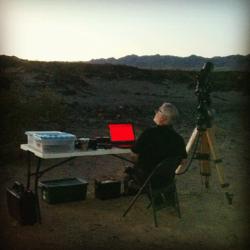
    The 20D mounted piggyback on the Traveler and Mach One GTO mount, hoping to catch comet PANSTARRS on its first opportunity.

    Several months ago, David Green of the Santa Clarita Valley Photographers Association invited me to give a talk on astrophotography in March.

    I thought, “No problem! We’ll have several dark sky weekends between now and then for me to get some photos and screen captures, and I’ll have a fine talk.”

    Famous last words! I must have jinxed the weather. But my luck turned just in time to get out with Jane on March 9 for some dark sky observing and astrophotography at Amboy Crater.

    This trip would be the last remote observing session for our not-so-trusty Dodge Grand Caravan. It had been plagued with electrical troubles for the past several months, and on this trip it started behaving erratically on the climb up the Cajon pass on I-15. We opted to brave the possibility of being stranded, and carried on to Amboy Crater. Luckily everyone survived the trip!
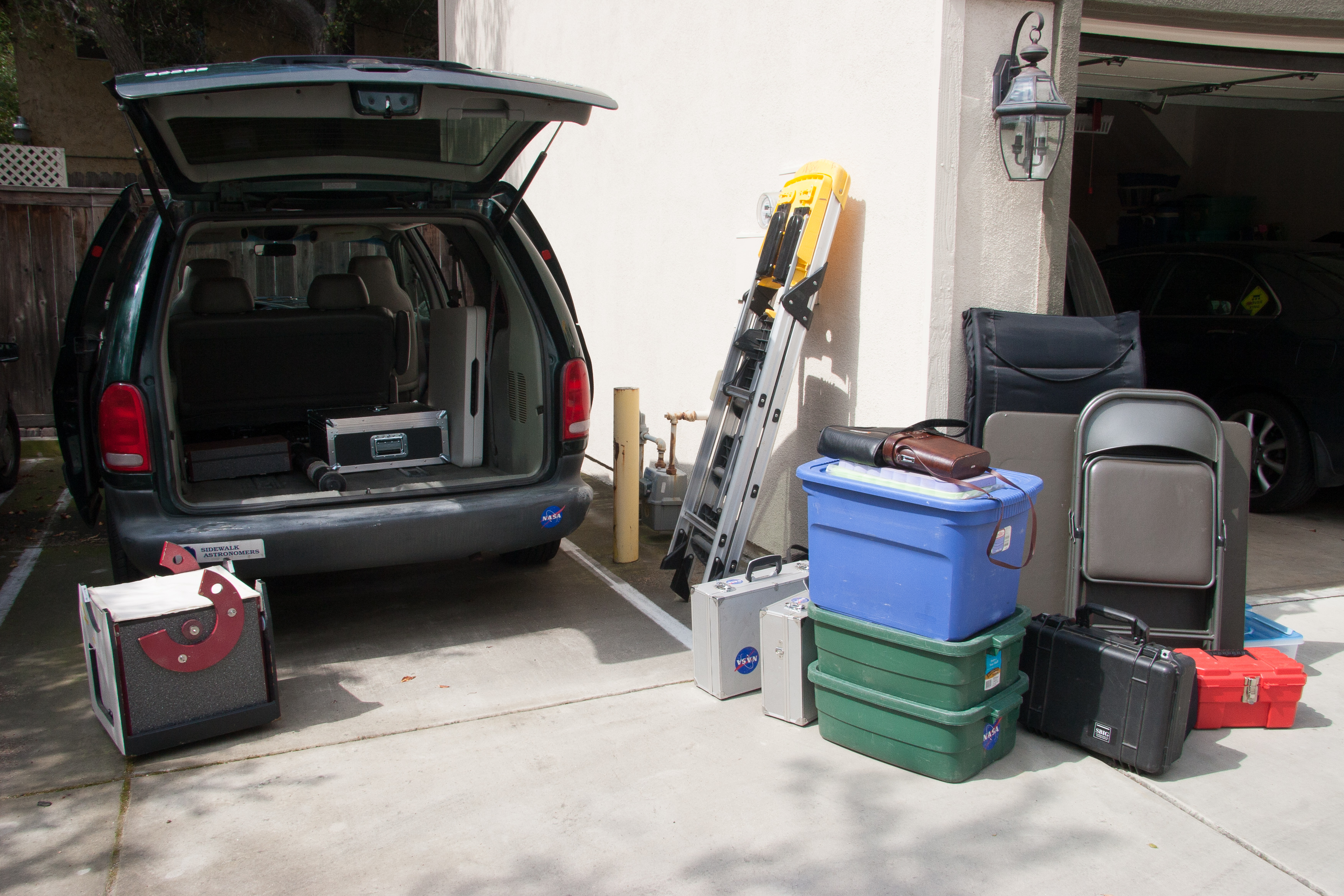
    IMG_6204
    Getting everything staged to load into the van.
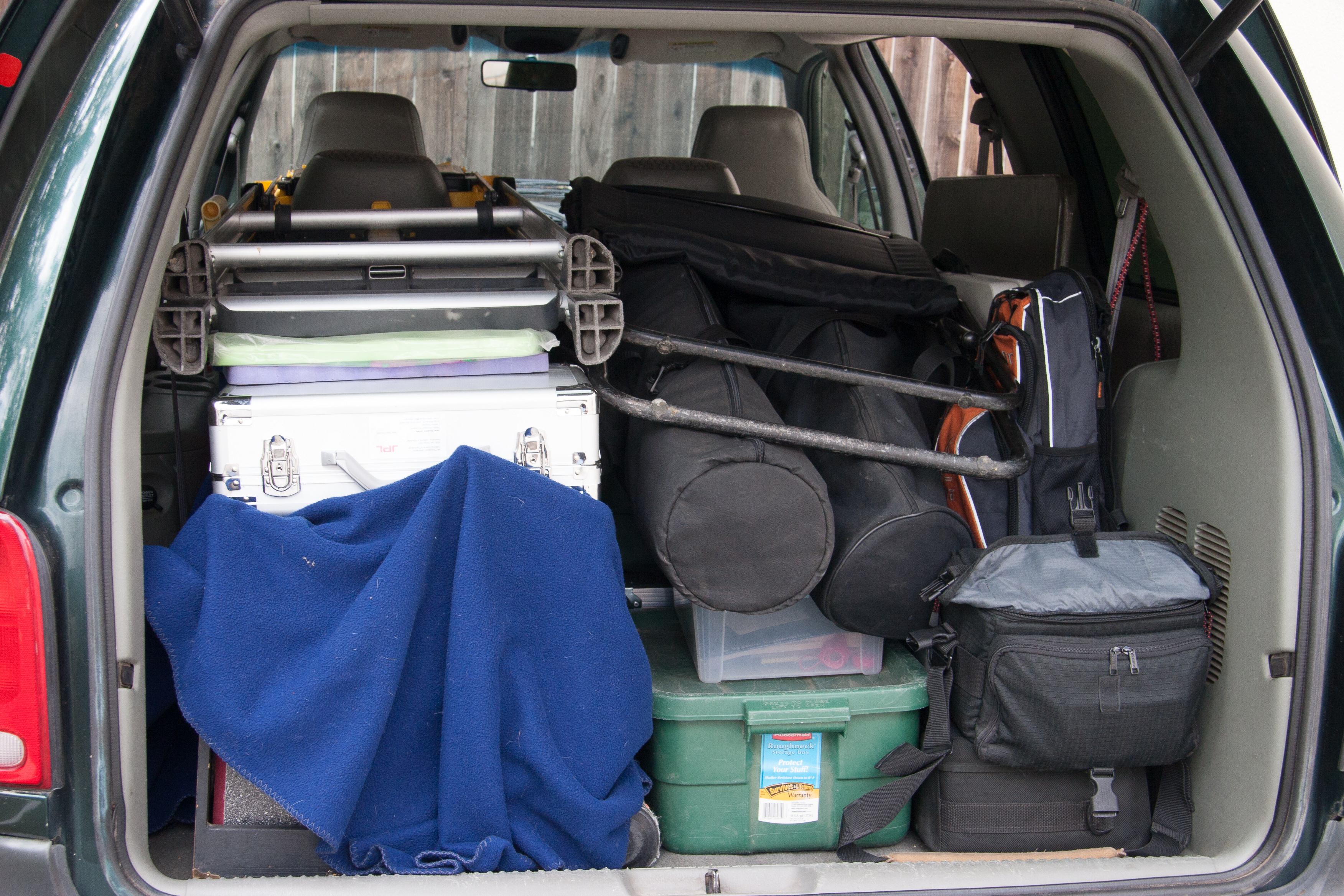
    IMG_6207
    Astro-pack


    Our first hope was for a shot of comet PANSTARRS in its first opportunity on the northern portion of its pass through the system.

    Those clouds you see in the set-up pictures hung around the western horizon just enough to keep the comet out of view.
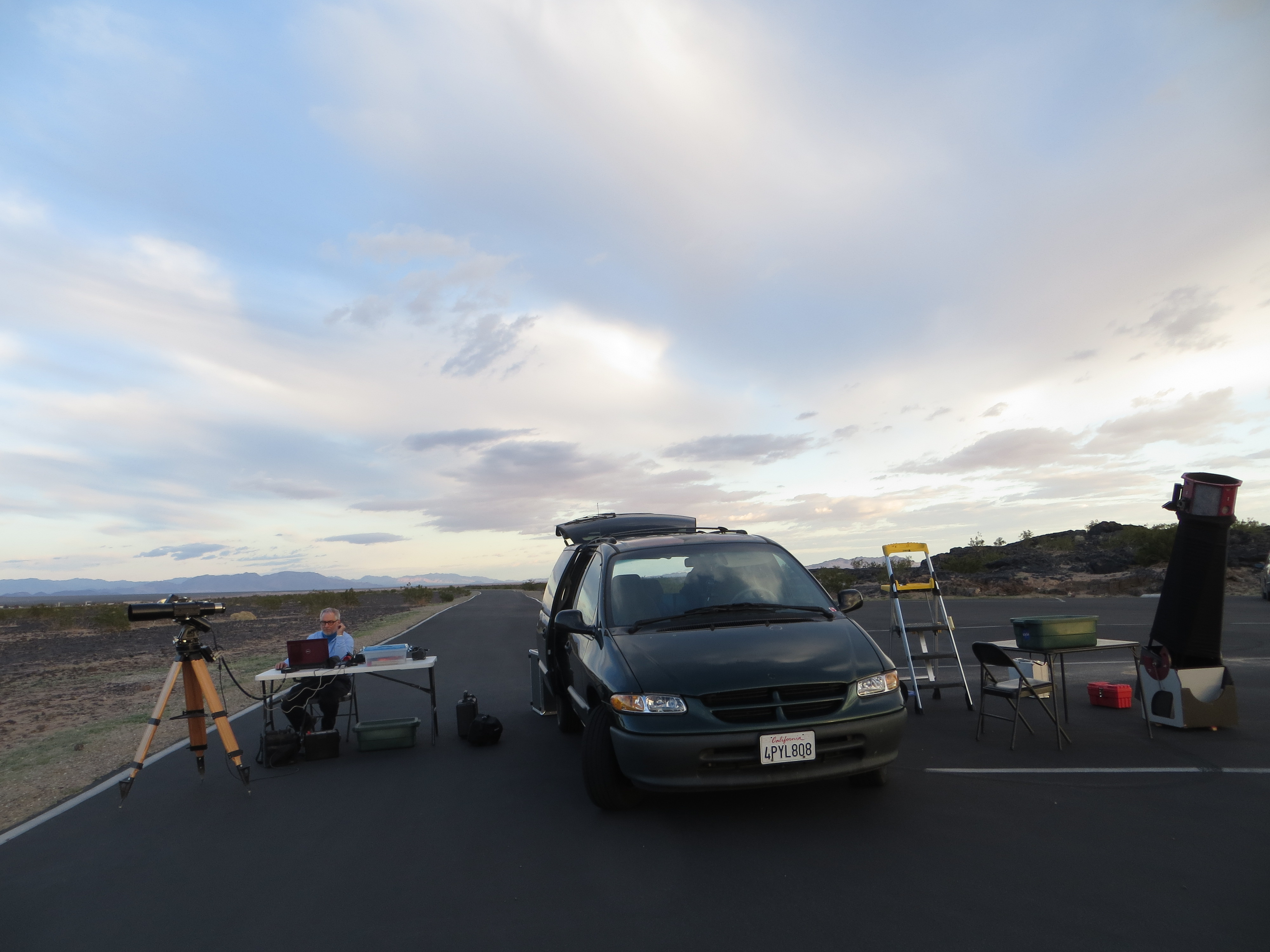
    IMG_0875
    Astrophotography on the left, visual astronomy on the right. Those clouds kept PANSTARRS hidden, but cleared nicely later in the evening.

    My first target was going to be an easy favorite visual target, but one of which I didn’t have a good astrophoto. M64, M65, and NGC3628 are three galaxies in Leo that form a striking group. There are other galaxy groups in Leo, but I believe this one is the set known as the Leo Trio.
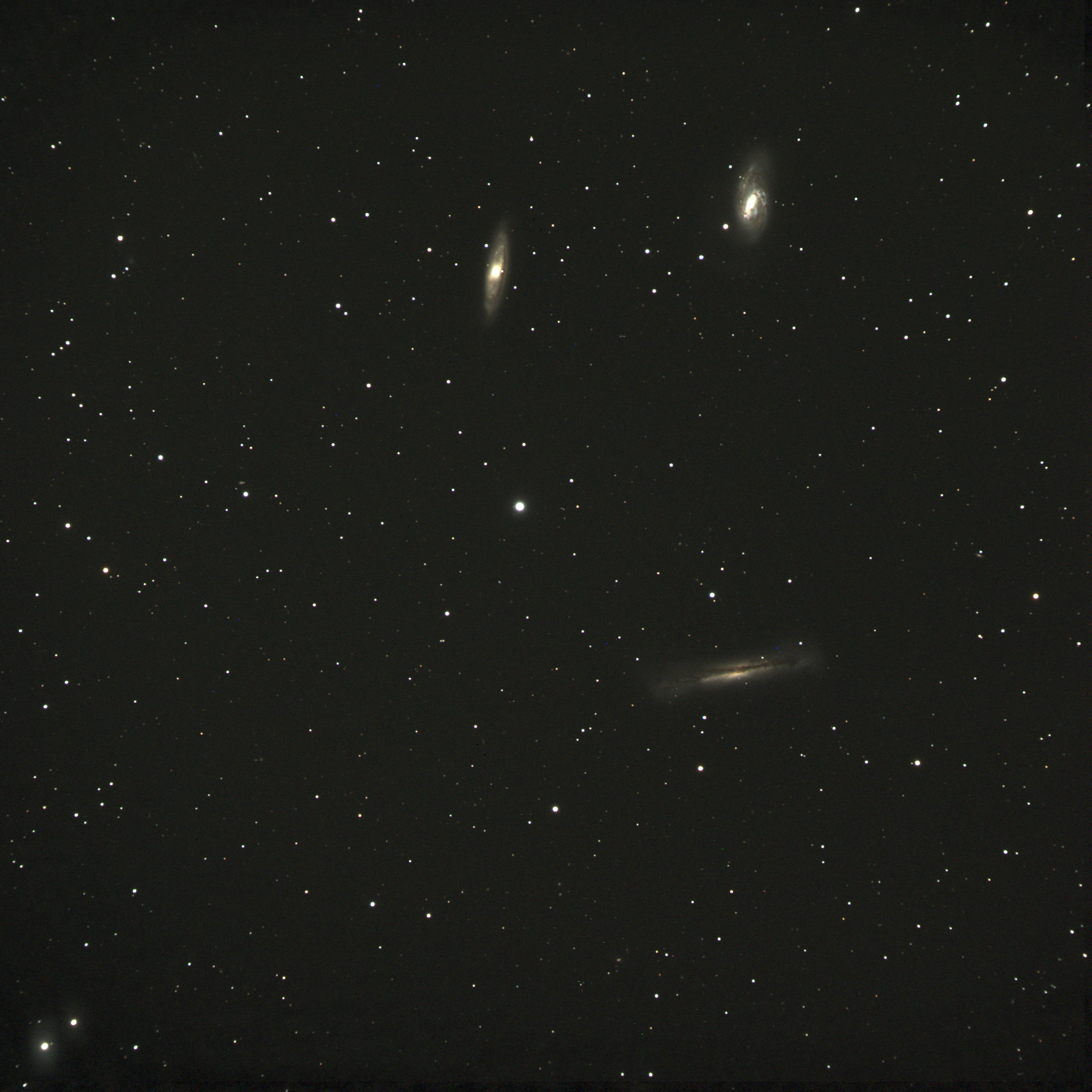
    Three galaxies in Leo
    The Leo Trio, M65, M66, and NGC3628. 45 minute exposure (3×15 min.) SBIG ST-4000XCM, Astro-Physics Traveler, 105mm f/6

    I went for a couple of other interesting easy targets that should be fun. The Whirlpool and NGC5907 “Splinter” are best with longer focal length telescopes, for a narrower field, but I enjoy these wide field shots too.
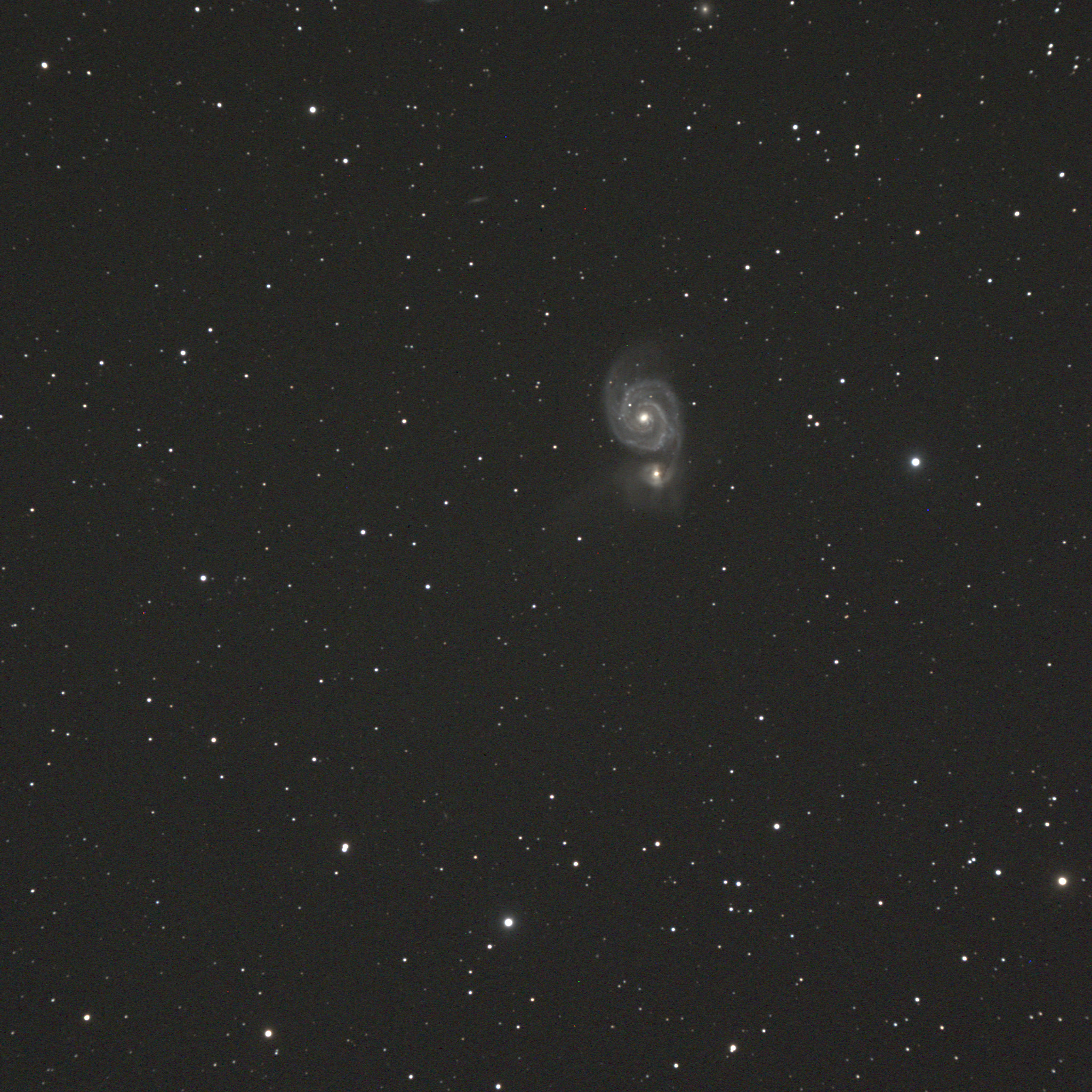
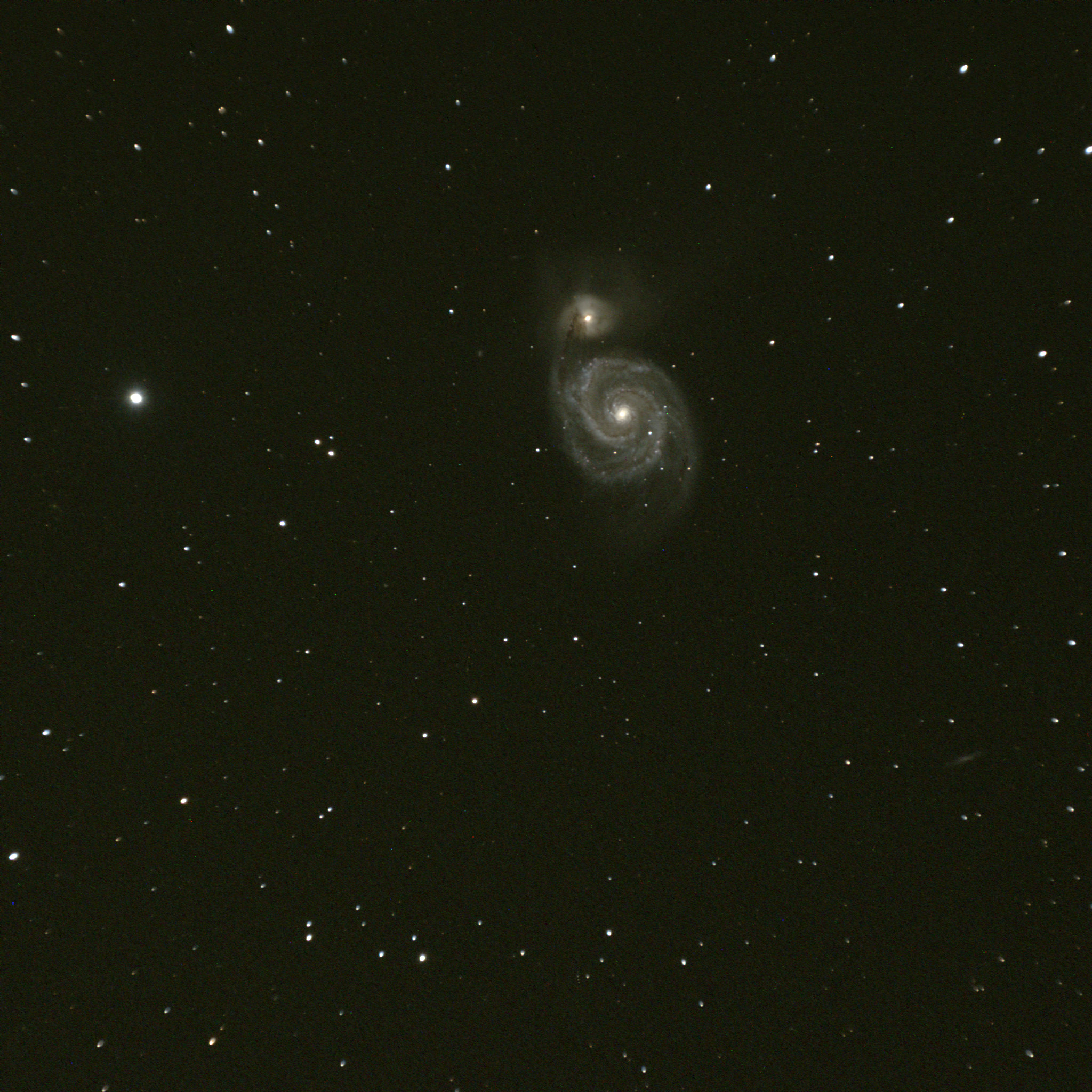
    The Whirlpool galaxy
    M51 the Whirlpool Galaxy in Ursa Major, Astro-Physic Traveler 105mm f/6, SBIG ST-4000XCM camera

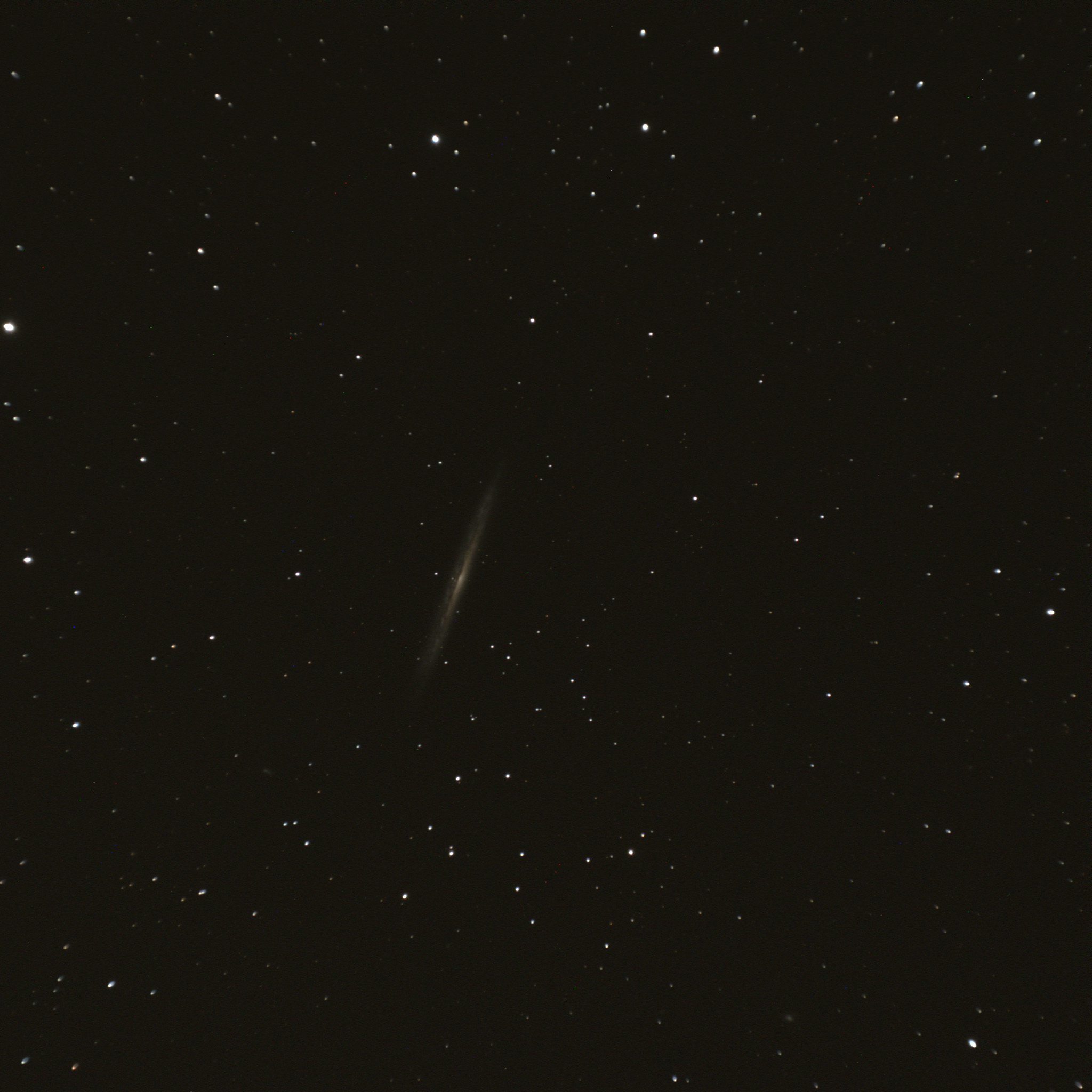
    The “Splinter” in Draco is a lovely edge-on spiral.
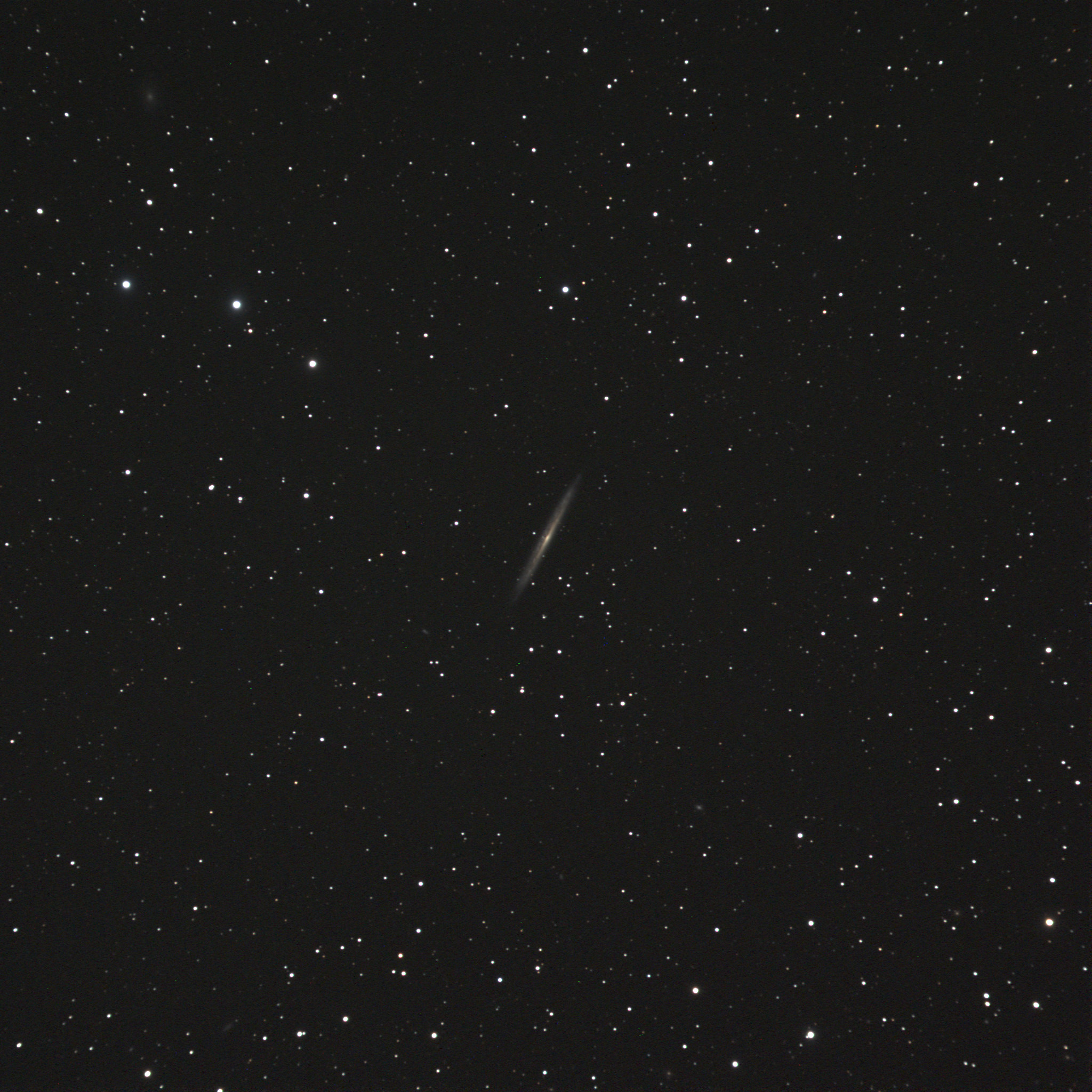
    NGC5907
    “The Splinter” galaxy NGC5907, edge-on spiral in Draco. Astro-Physics Traveler 105mm f/6, SBIG ST-4000XCM

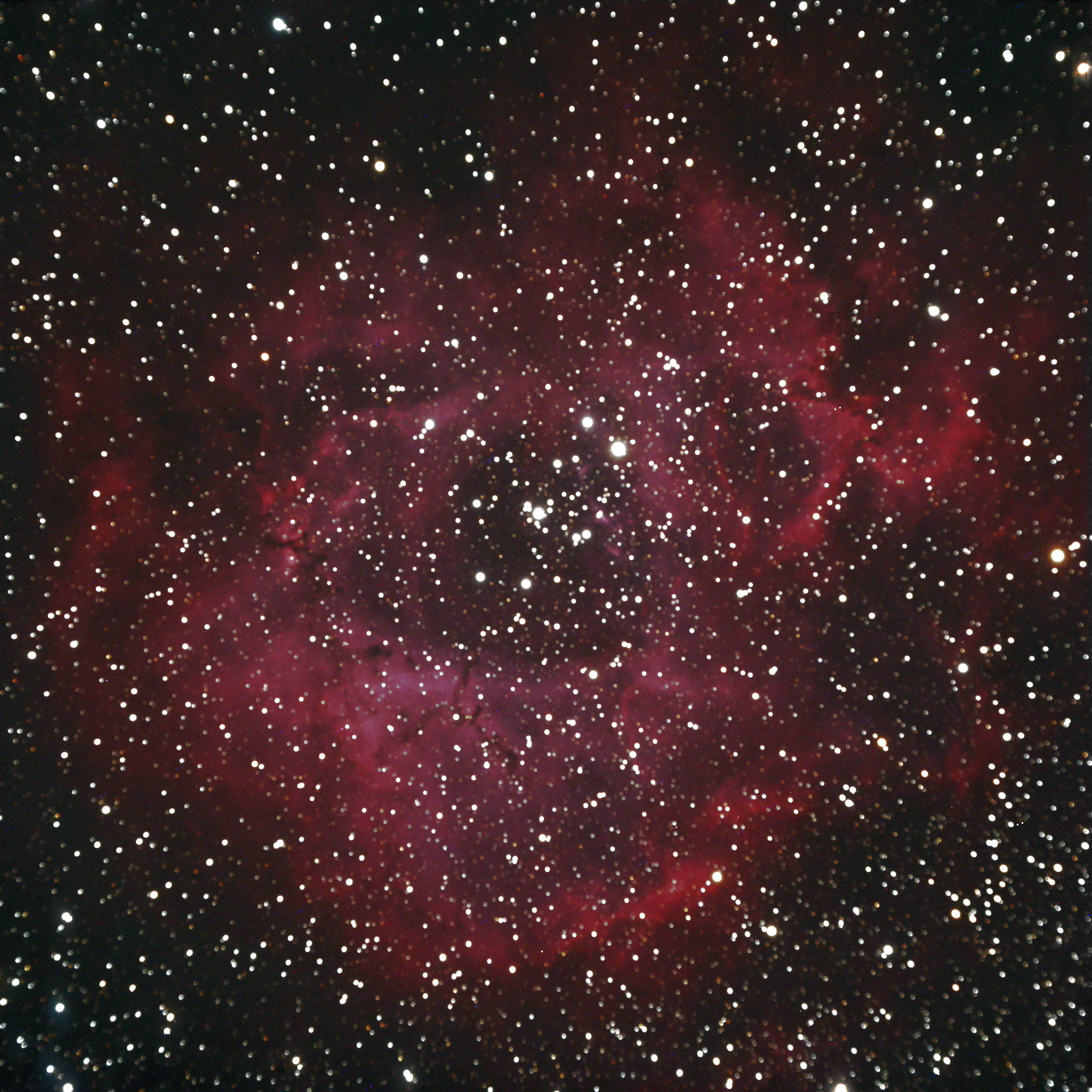
    Finally I went for a redo of a classic winter-sky object, one for which my Traveler with its wide field-of-view should be ideal, the Rosette nebula in the winter Milky Way.

    Here is my earlier shot of the Rosette, and the full size image of it here. On that night my focus wasn’t especially good. Since then my skill with focusing and processing has improved quite a bit, such that now I’m proud to show you my new Rosette image.
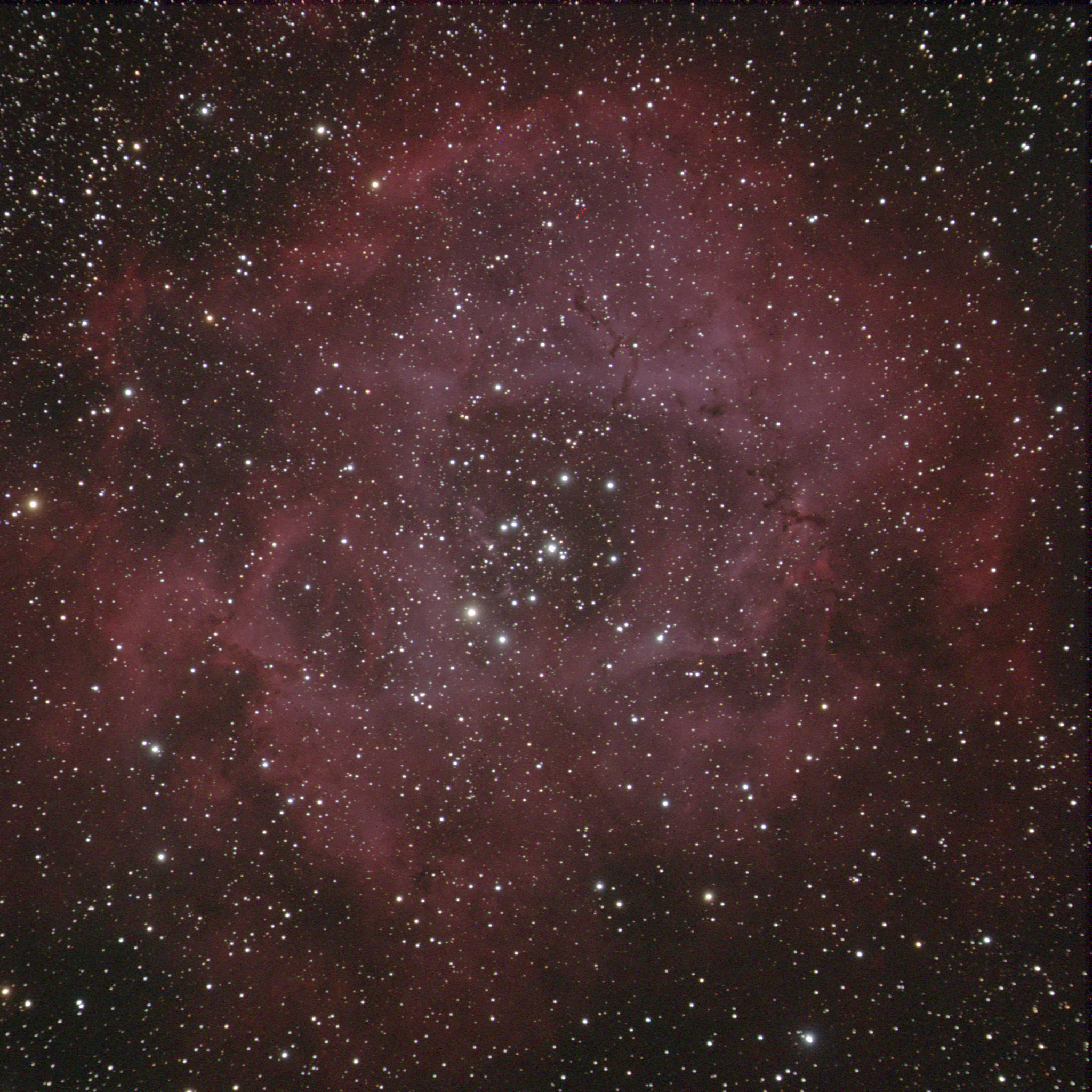
    Rosette
    The Rosette nebula region in Monoceros, 45 minutes exposure (3×15 minutes) Astro-Physics Traveler 105mm f/6, SBIG ST-4000XCM

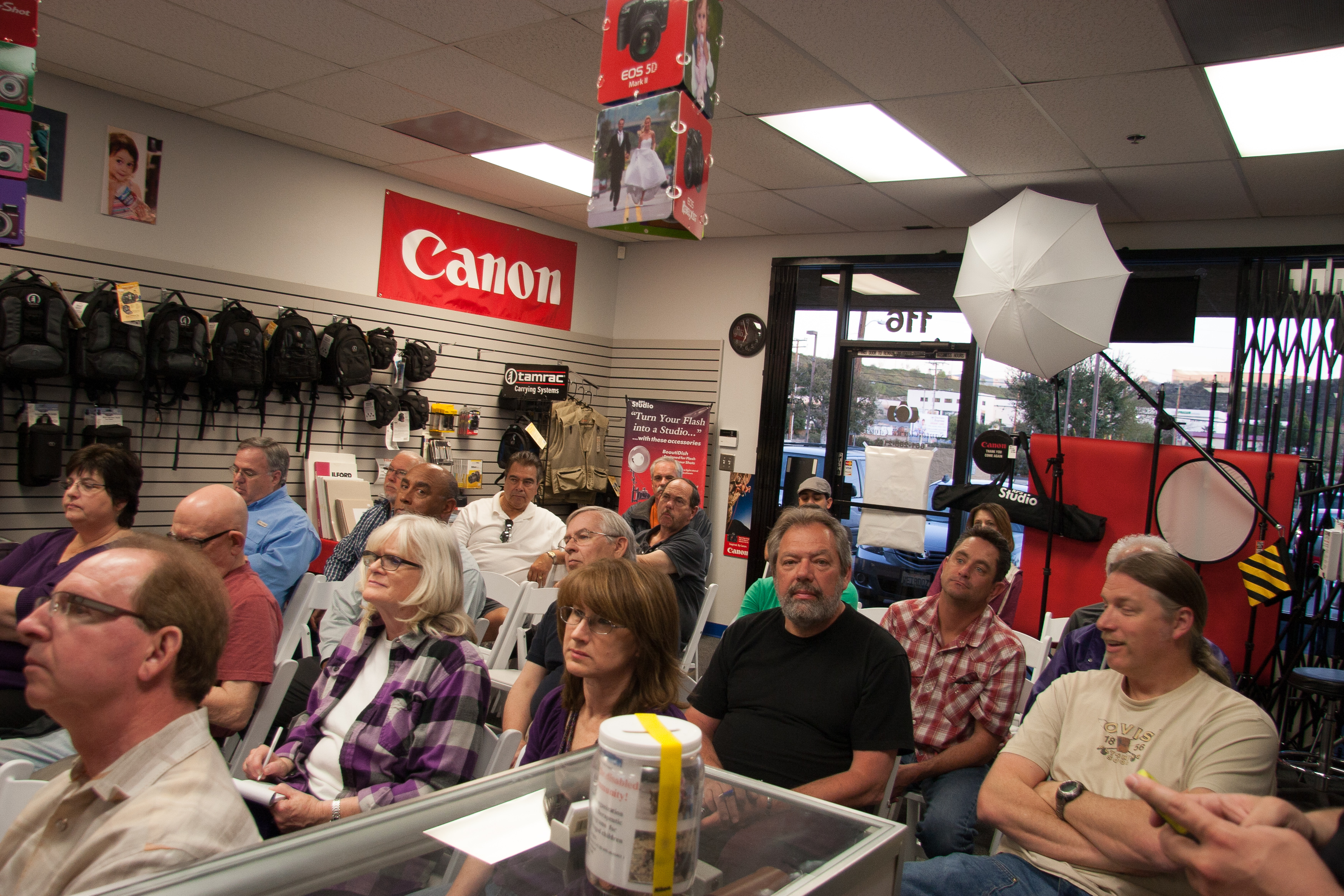
    So I certainly had enough to make a fair astrophotography presentation for a camera club. My talk was the following Tuesday evening at Santa Clarita Camera, for the Santa Clarita Valley Photographers Association.
    Camera Club
    I had about 30 camera club members for my presentation on deep-sky astrophotography.
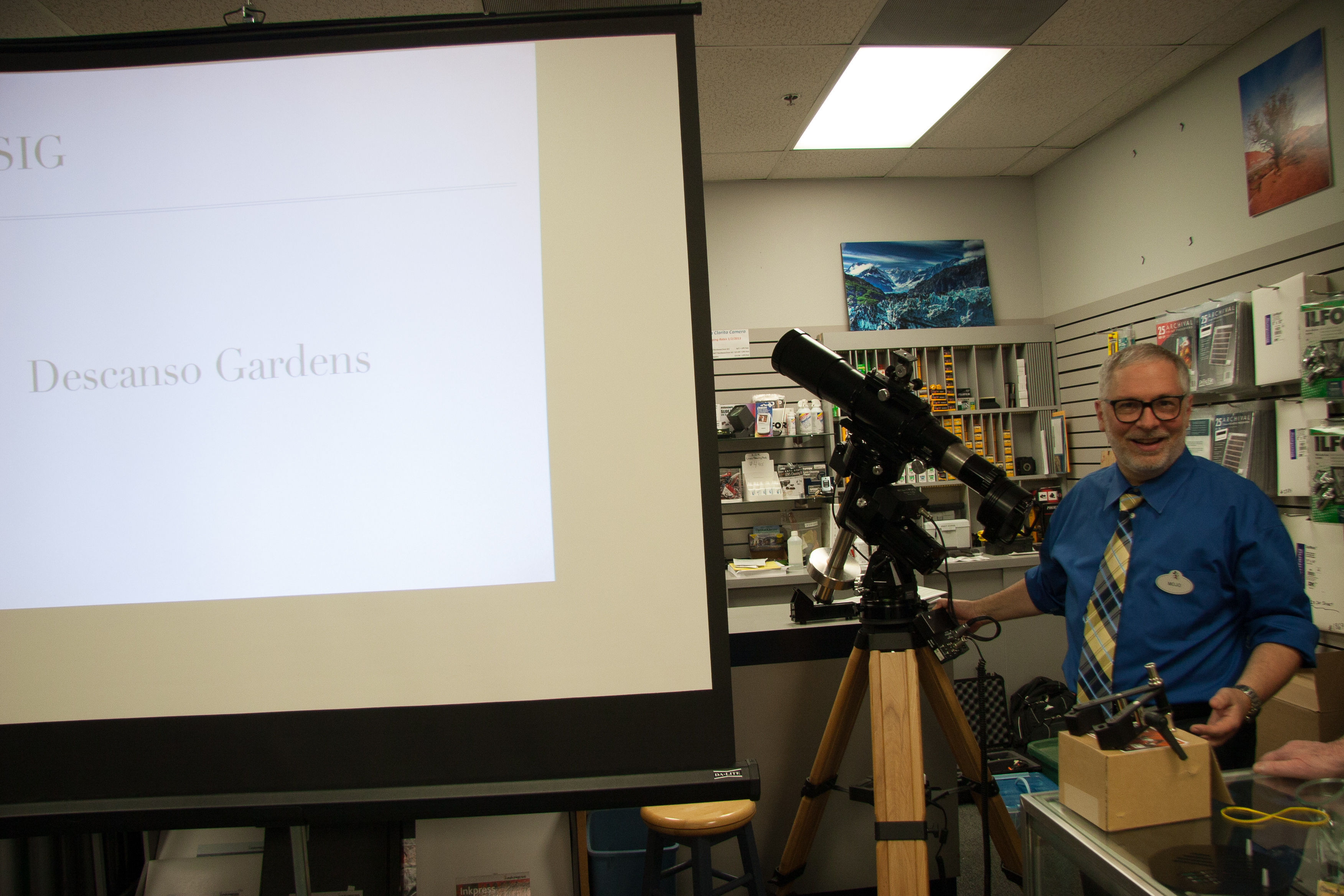
    Mojo with astrophotography gear
    I brought my A-P Traveler, mount, tripod, and camera for show-and-tell along with the talk. Not the usual gear found at a typical camera store.
  • Galaxy season

    Mojo at Amboy Crater
    Jane snapped Mojo waiting for darkness at the Amboy Crater visitor area.

    Observing report, April 21, 2012, Amboy, CA

    We’ve had a string of bad luck with new moon weekends for the past six months, so when this new moon Saturday showed nearly perfect conditions, Jane and I were quick to pack the van and get out to Amboy Crater.

    My only agenda for the session was to relearn my rusty imaging skills, and perhaps bag some Spring galaxies from Virgo and Ursa Major. Jane had plans to mostly eschew optical equipment and spend the morning counting meteors from the Lyrid meteor shower. (She’ll have a report on that elsewhere.)

    Conditions all night were as delightful as advertised. There was no wind, not a sign of a cloud. The temperature dropped quickly from 98°F on arrival to 62°F close to sunrise, calling for a light jacket. Humidity stayed well below 20% all night. We were prepared for the heat with lots of ice and Propel sports drinks.

    We were the only ones taking advantage of the smooth blacktop and hospitable visitor station at Amboy Crater. The great conditions kept both of us going without a nap all night. It made for a struggle returning home on little sleep, but we both managed to grab naps during the day.

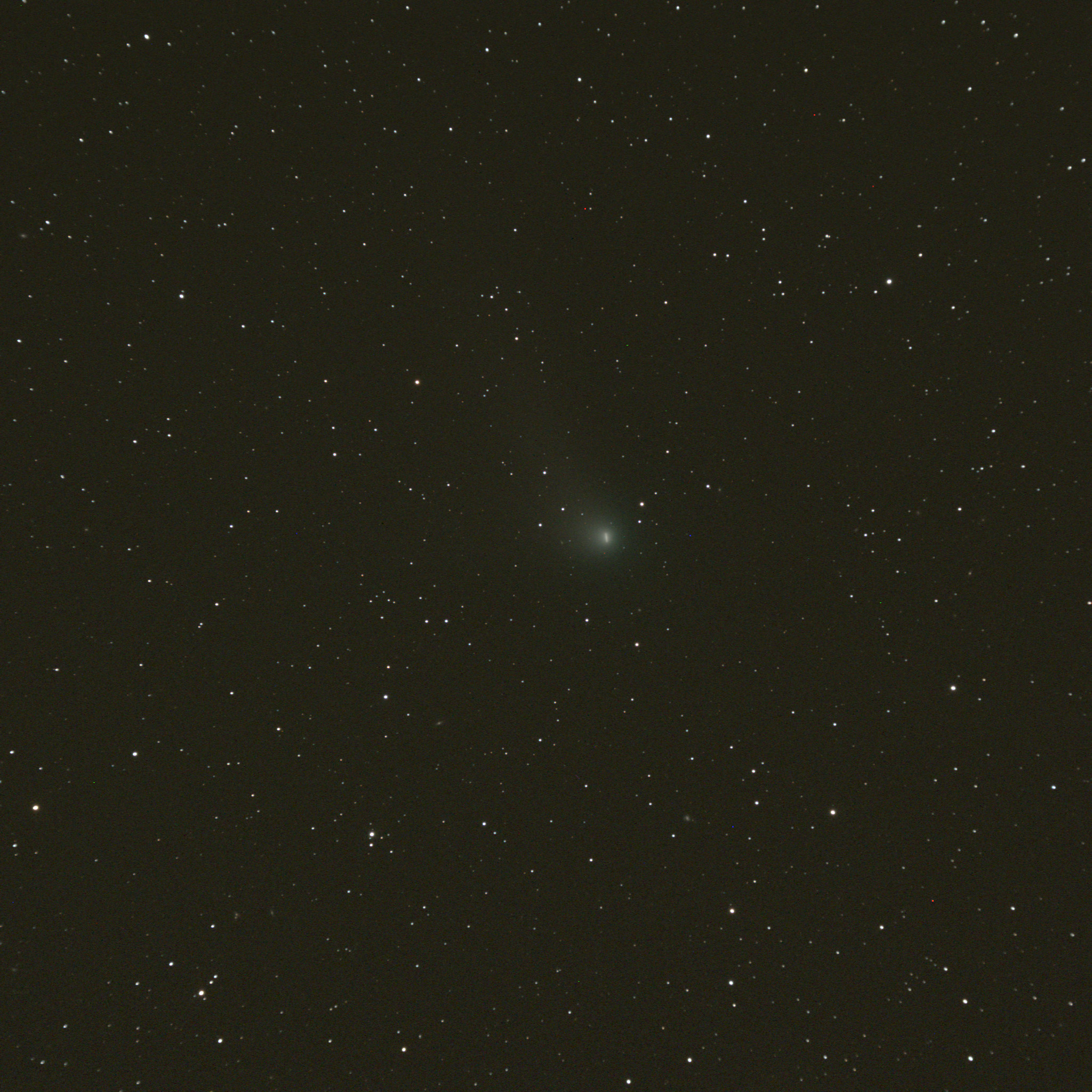
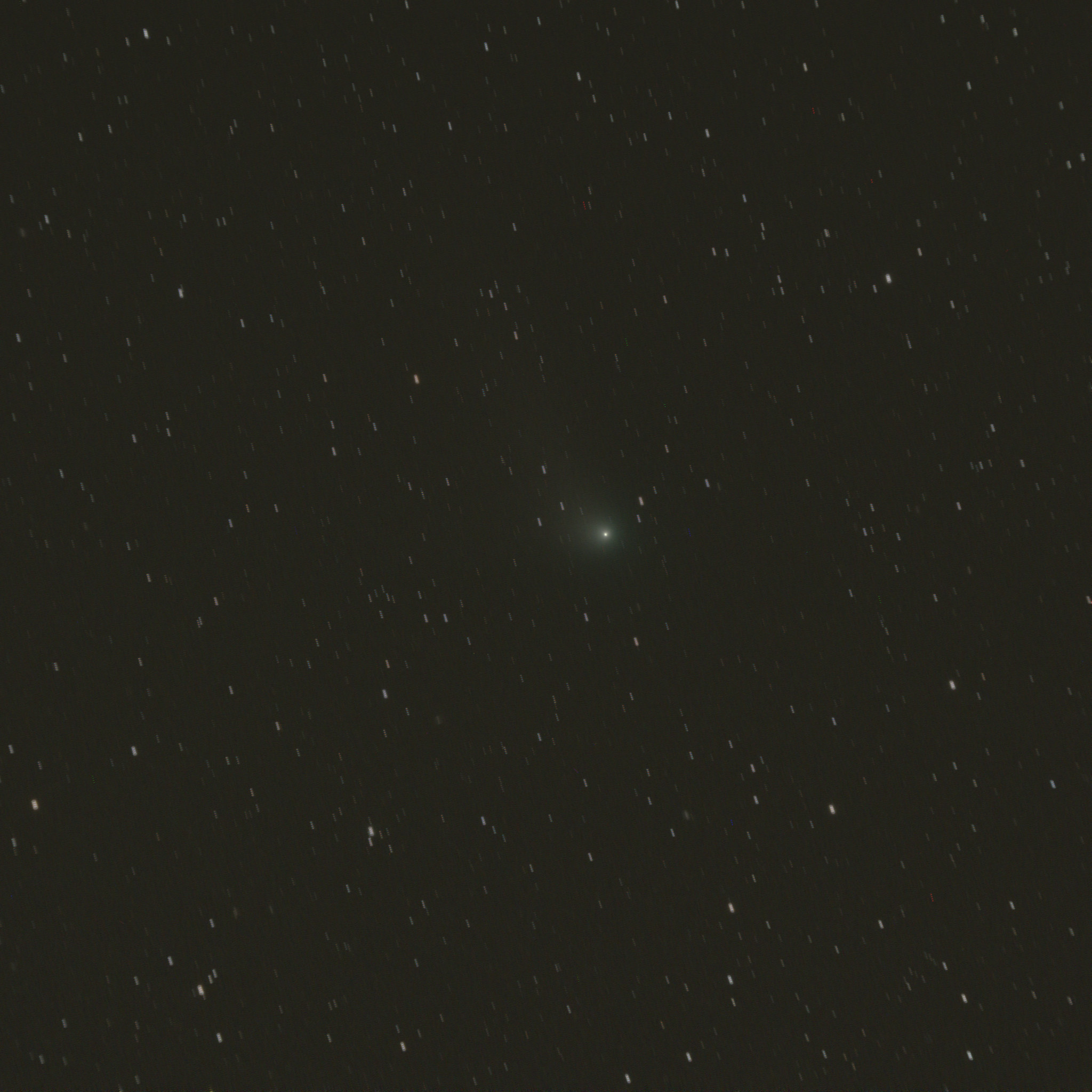
    I imaged comet C2009/P1 Garradd to start the evening. I took four 5-minute exposures, allowing me to make two versions of the image.

    The first version stacks the images so the stars all match. The motion of the comet against the background stars blurs the head of the comet in the line of its travel.

    Comet Garradd moves against fixed stars
    Comet Garradd moves against fixed stars

    The second image aligns each exposure on the head of the comet, so the perspective moves with the comet over 20 minutes, making a trail of stars in the background.

    Comet Garradd fixed against a moving background
    Comet Garradd fixed against a moving background

    The rest of the evening focused on distant galaxies. For this session I added a barlow lens ahead of the camera to get a slightly narrower field of view.

    Each of the 400×400 thumbnails below links to the full-size image, which is 2048 x 2048 pixels.

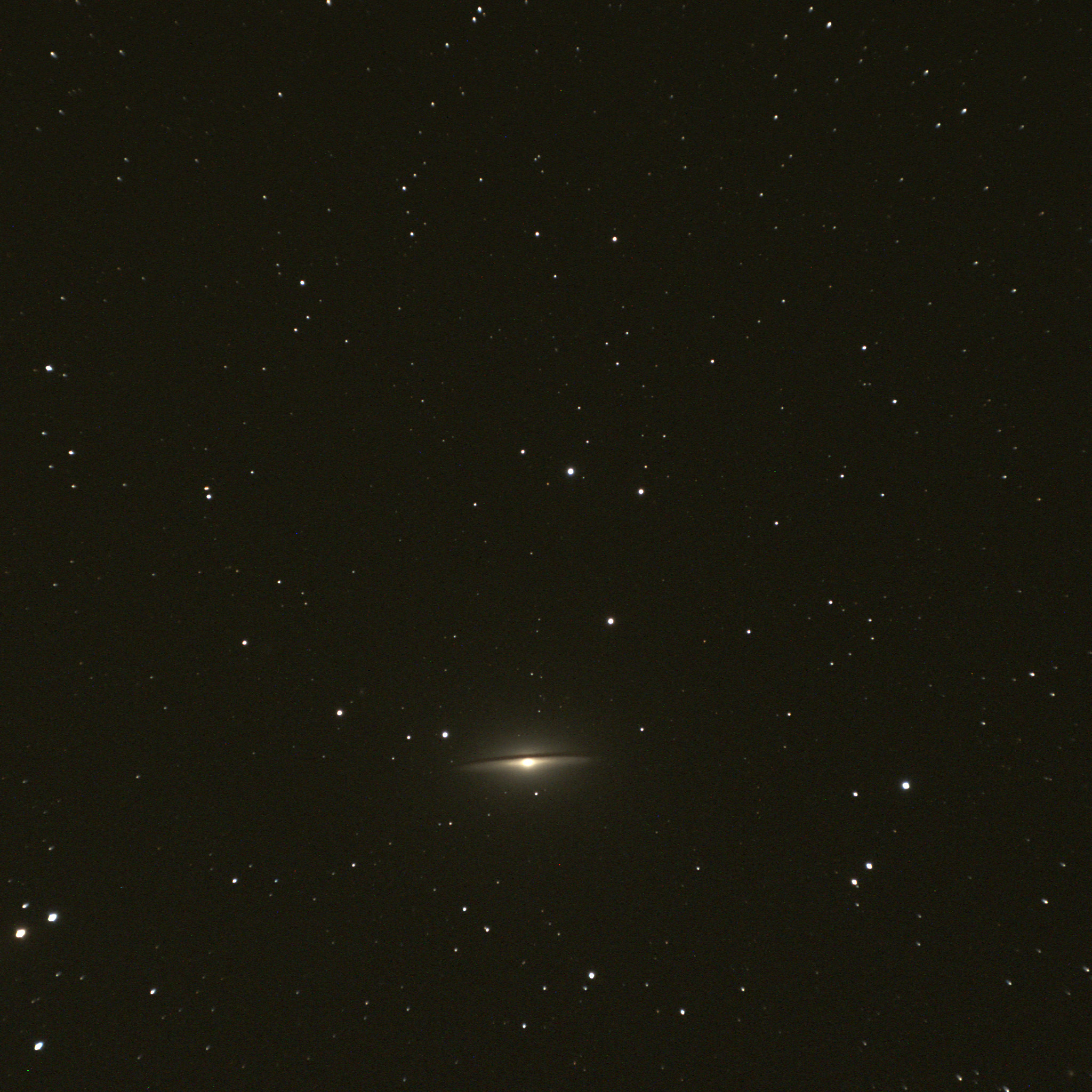
    M104
    M104 the Sombrero galaxy in Virgo
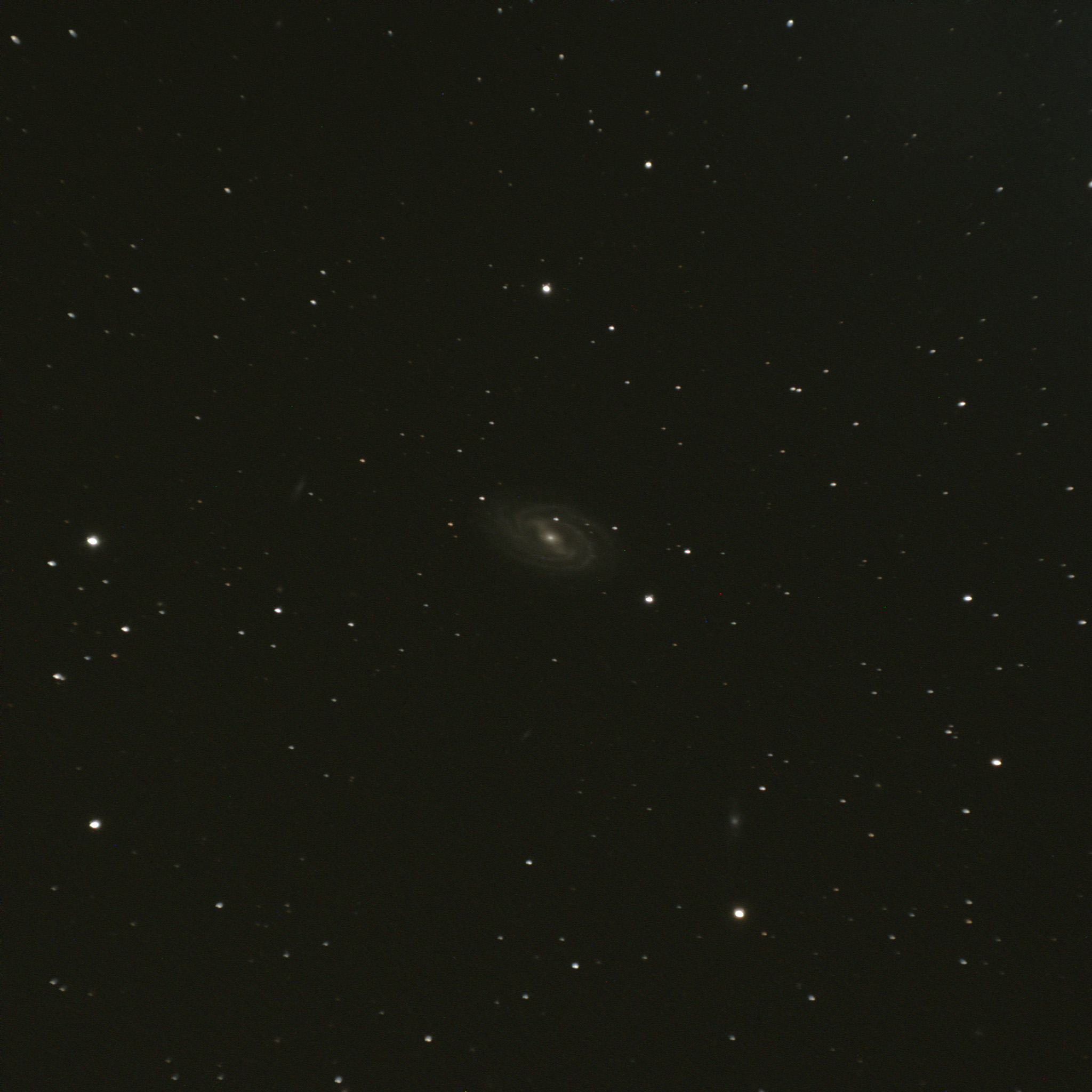
    M109
    M109 in Ursa Major, a faint barred spiral. Note a few distant spirals in the full-size image.
    NGC5907
    NGC5907, an edge-on spiral galaxy in Draco
    M51
    M51 the Whirlpool galaxy pair in Ursa Major, one of the most photographed and observed objects in the sky.