Mojo's blog banner

Tag: Rosette

  • Finally some observing weather

    See Jane’s observing report from the same evening — some great binocular observing with Kemble’s Cascade.
    IMG_0890
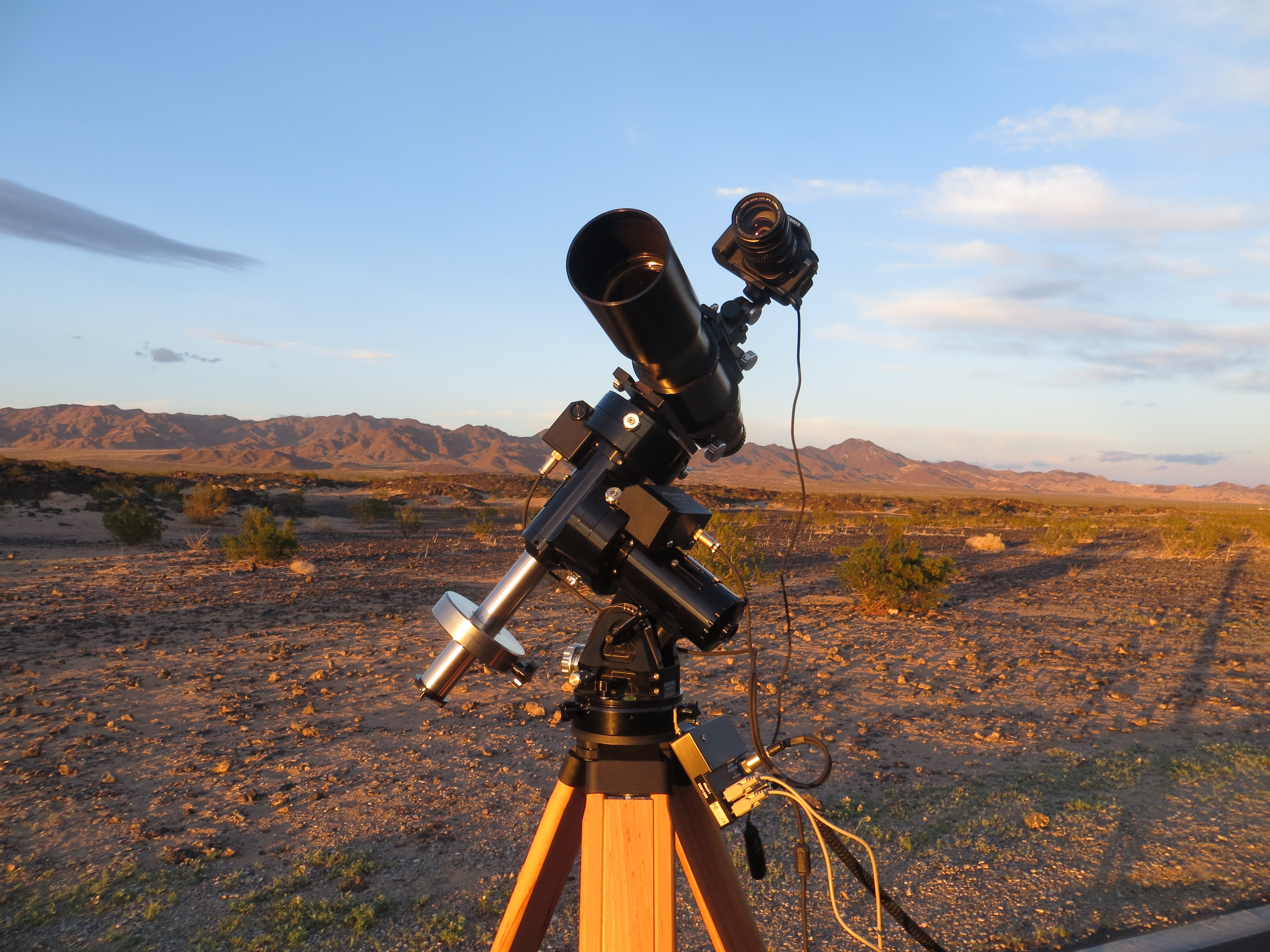
    The 20D mounted piggyback on the Traveler and Mach One GTO mount, hoping to catch comet PANSTARRS on its first opportunity.

    Several months ago, David Green of the Santa Clarita Valley Photographers Association invited me to give a talk on astrophotography in March.

    I thought, “No problem! We’ll have several dark sky weekends between now and then for me to get some photos and screen captures, and I’ll have a fine talk.”

    Famous last words! I must have jinxed the weather. But my luck turned just in time to get out with Jane on March 9 for some dark sky observing and astrophotography at Amboy Crater.

    This trip would be the last remote observing session for our not-so-trusty Dodge Grand Caravan. It had been plagued with electrical troubles for the past several months, and on this trip it started behaving erratically on the climb up the Cajon pass on I-15. We opted to brave the possibility of being stranded, and carried on to Amboy Crater. Luckily everyone survived the trip!
    IMG_6204
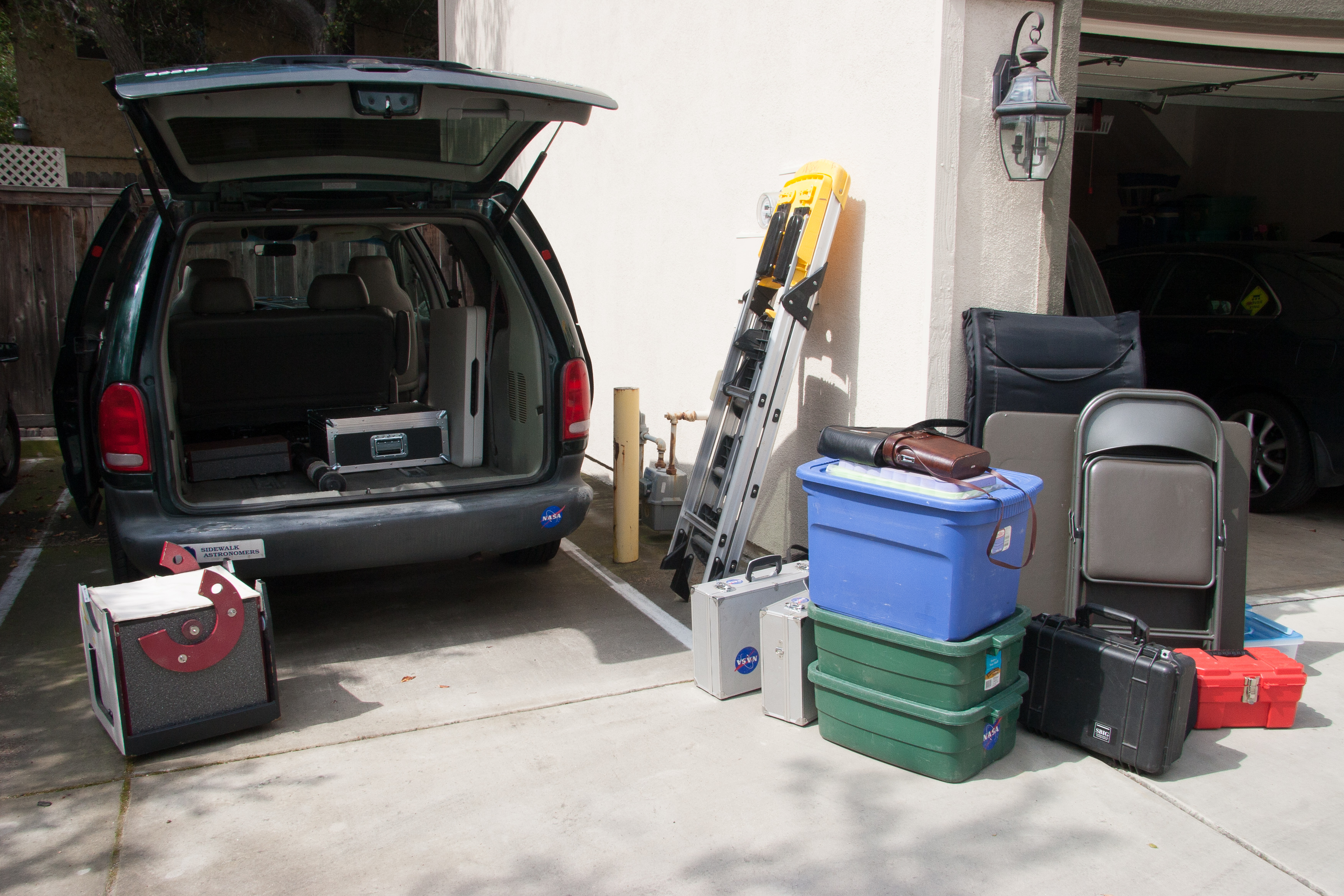
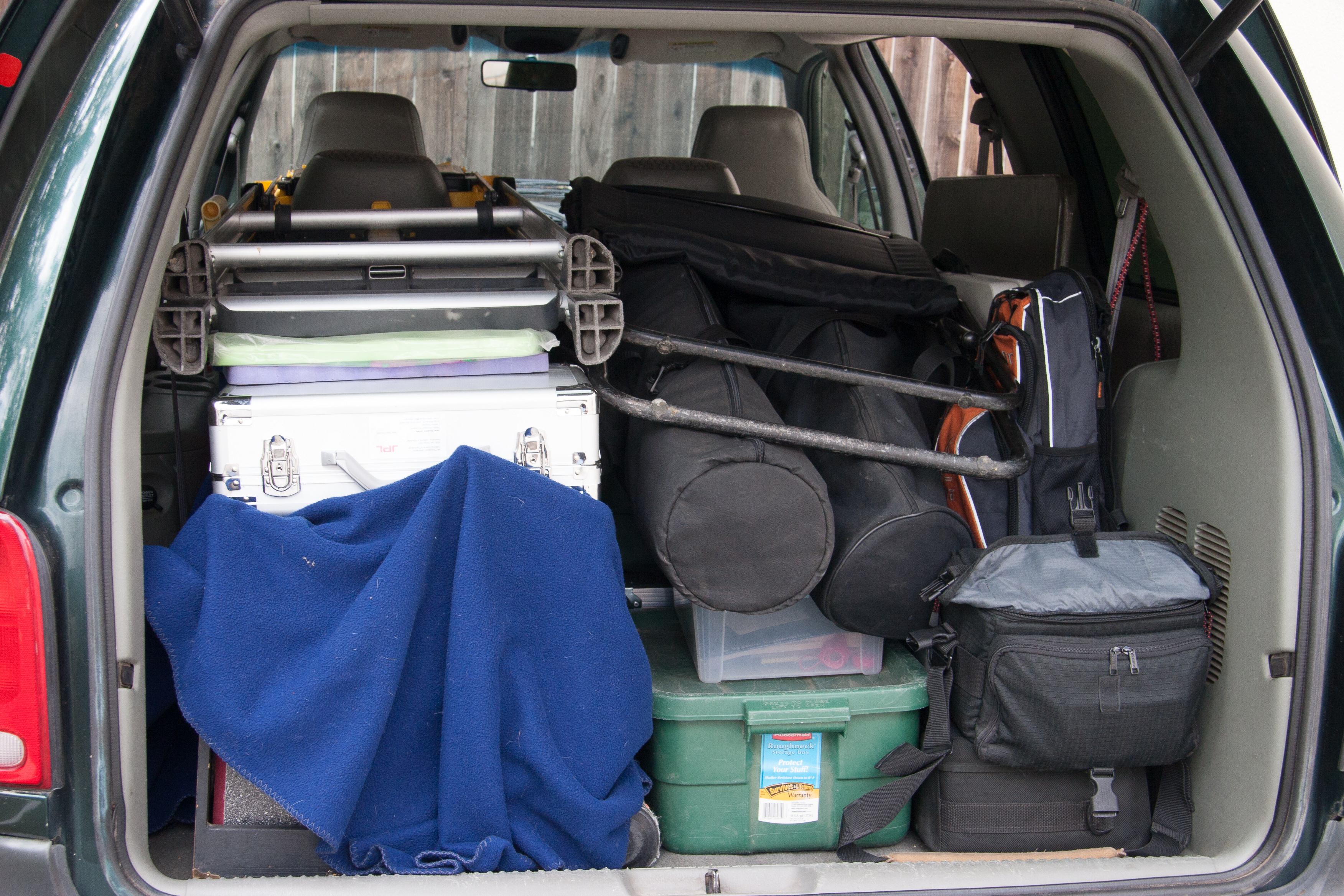
    Getting everything staged to load into the van.
    IMG_6207
    Astro-pack


    Our first hope was for a shot of comet PANSTARRS in its first opportunity on the northern portion of its pass through the system.

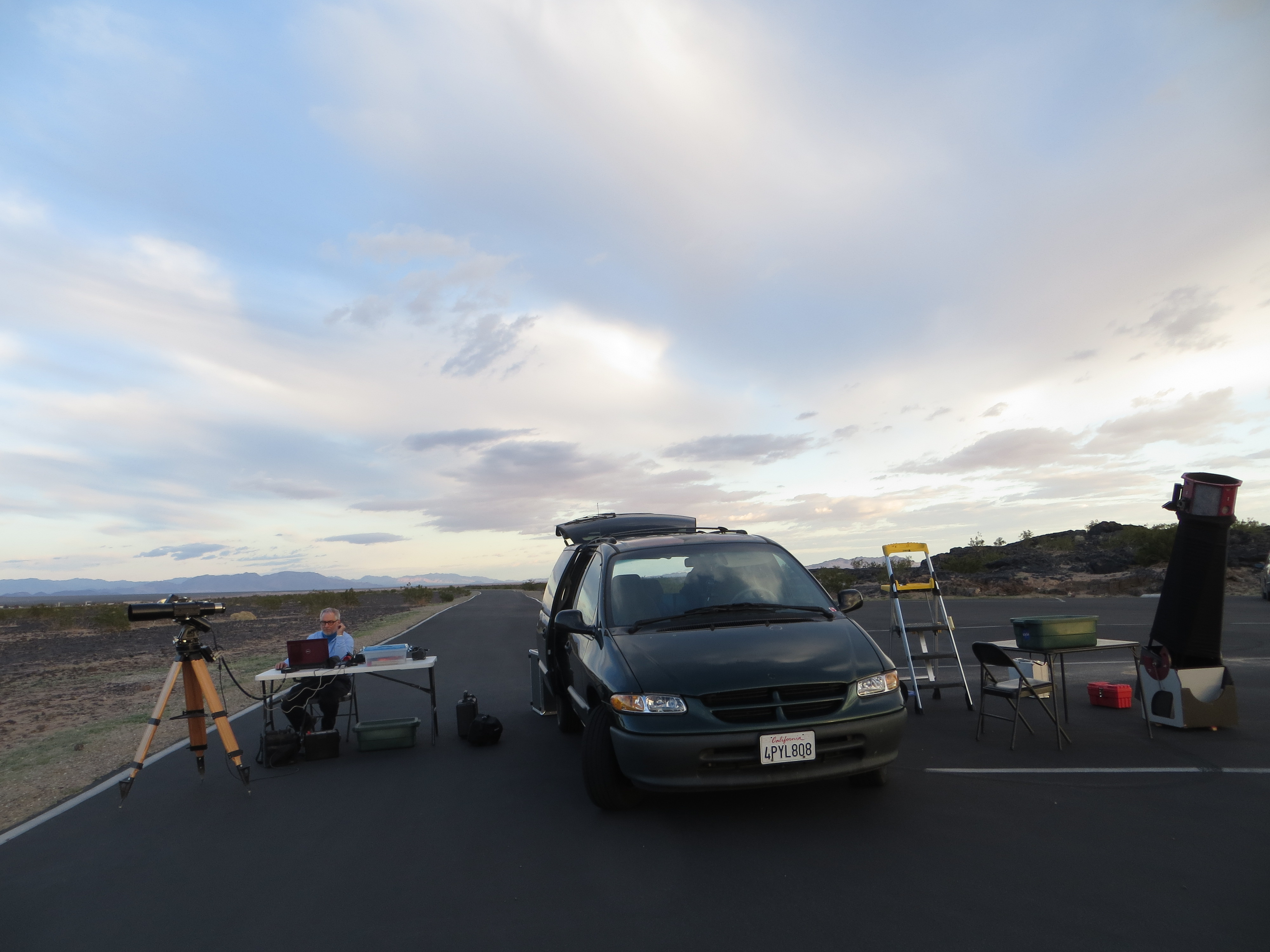
    Those clouds you see in the set-up pictures hung around the western horizon just enough to keep the comet out of view.
    IMG_0875
    Astrophotography on the left, visual astronomy on the right. Those clouds kept PANSTARRS hidden, but cleared nicely later in the evening.

    My first target was going to be an easy favorite visual target, but one of which I didn’t have a good astrophoto. M64, M65, and NGC3628 are three galaxies in Leo that form a striking group. There are other galaxy groups in Leo, but I believe this one is the set known as the Leo Trio.
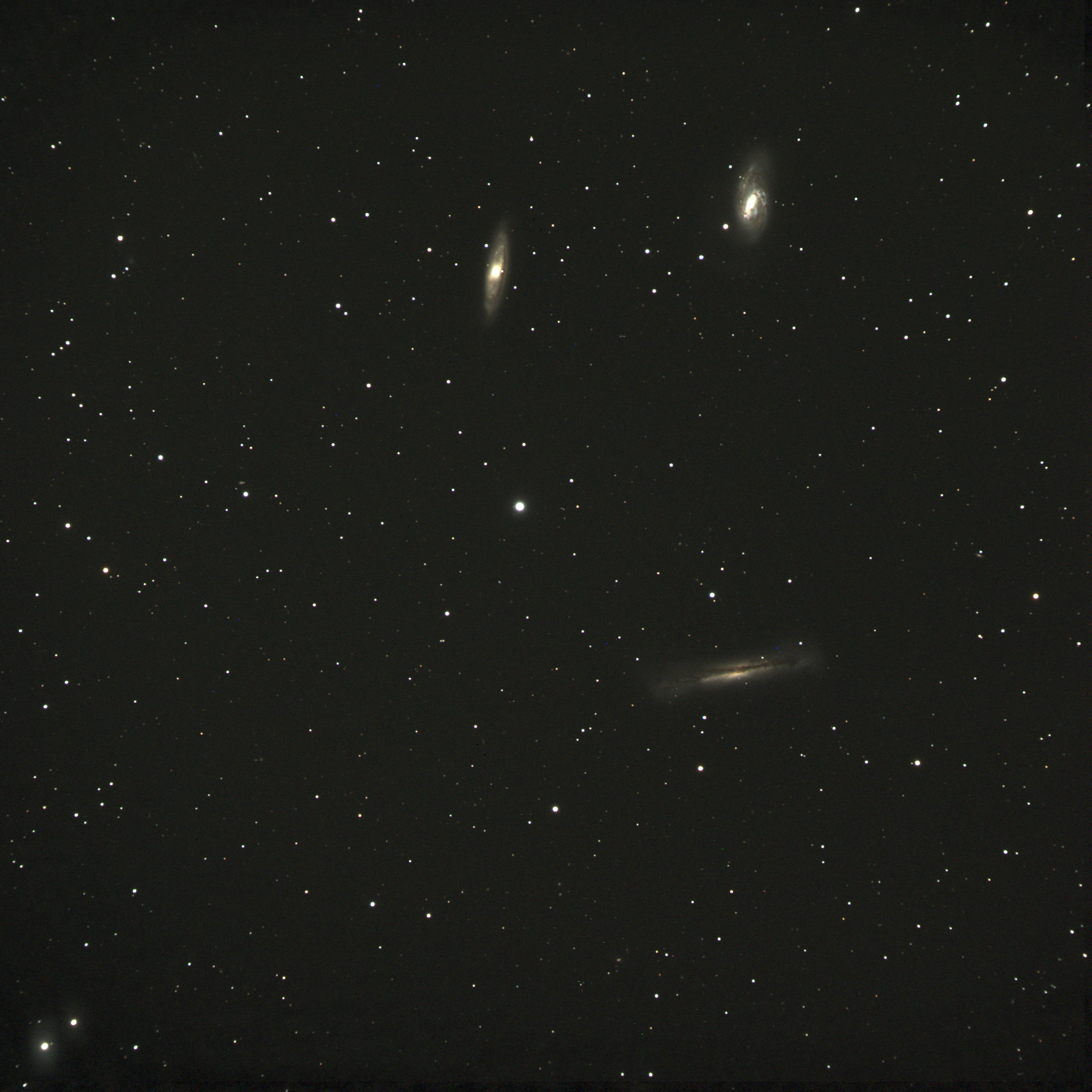
    Three galaxies in Leo
    The Leo Trio, M65, M66, and NGC3628. 45 minute exposure (3×15 min.) SBIG ST-4000XCM, Astro-Physics Traveler, 105mm f/6

    I went for a couple of other interesting easy targets that should be fun. The Whirlpool and NGC5907 “Splinter” are best with longer focal length telescopes, for a narrower field, but I enjoy these wide field shots too.
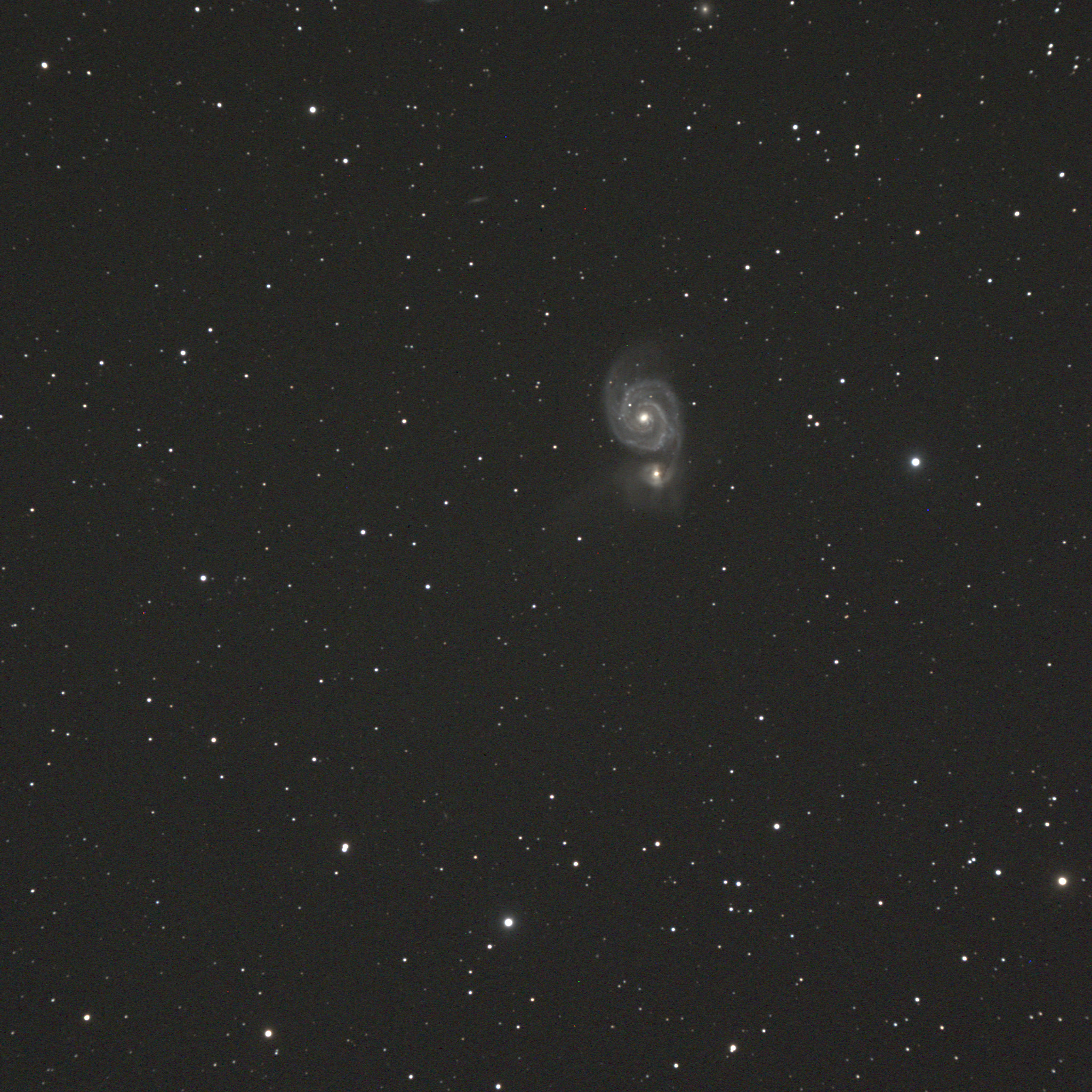
    The Whirlpool galaxy
    M51 the Whirlpool Galaxy in Ursa Major, Astro-Physic Traveler 105mm f/6, SBIG ST-4000XCM camera

    The “Splinter” in Draco is a lovely edge-on spiral.
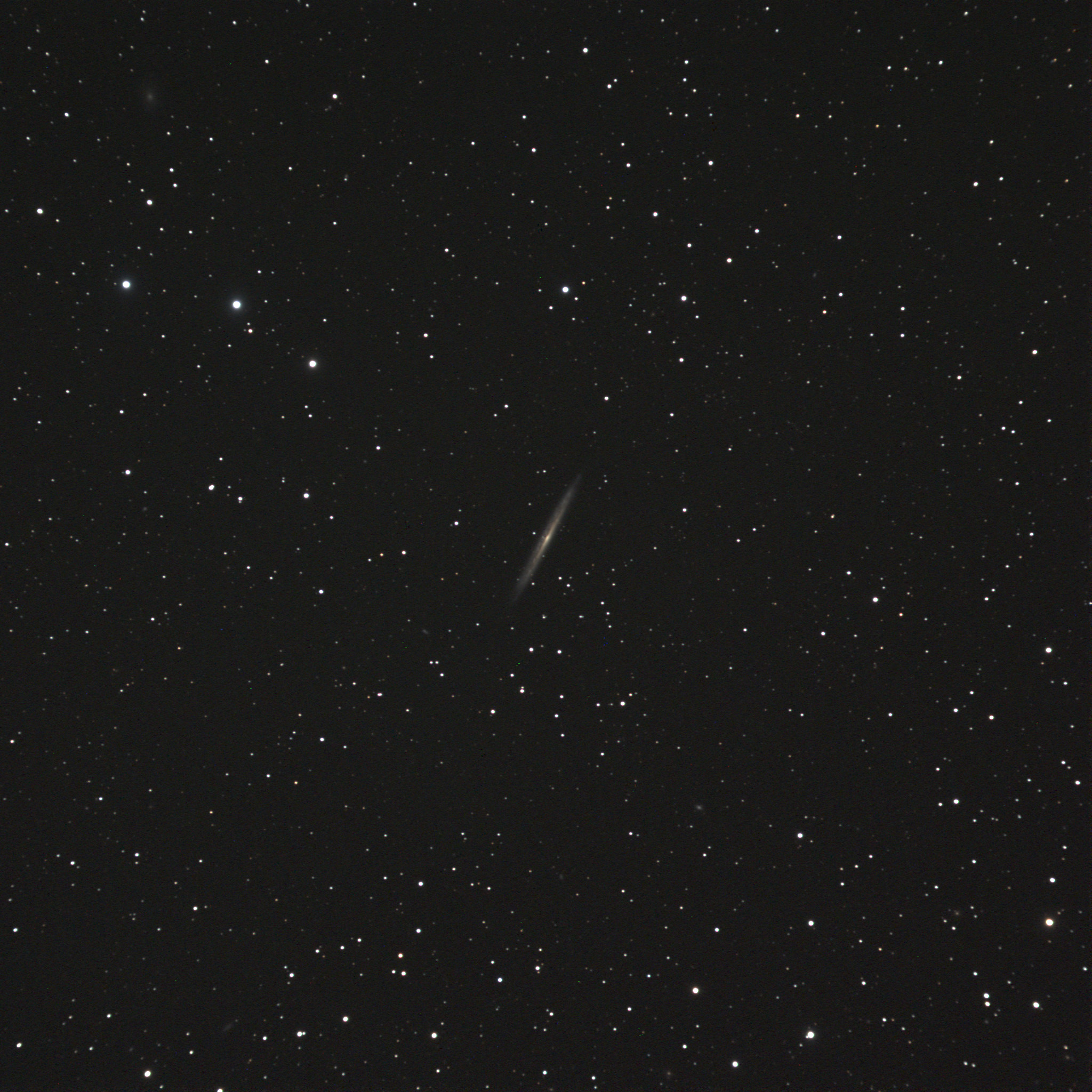
    NGC5907
    “The Splinter” galaxy NGC5907, edge-on spiral in Draco. Astro-Physics Traveler 105mm f/6, SBIG ST-4000XCM

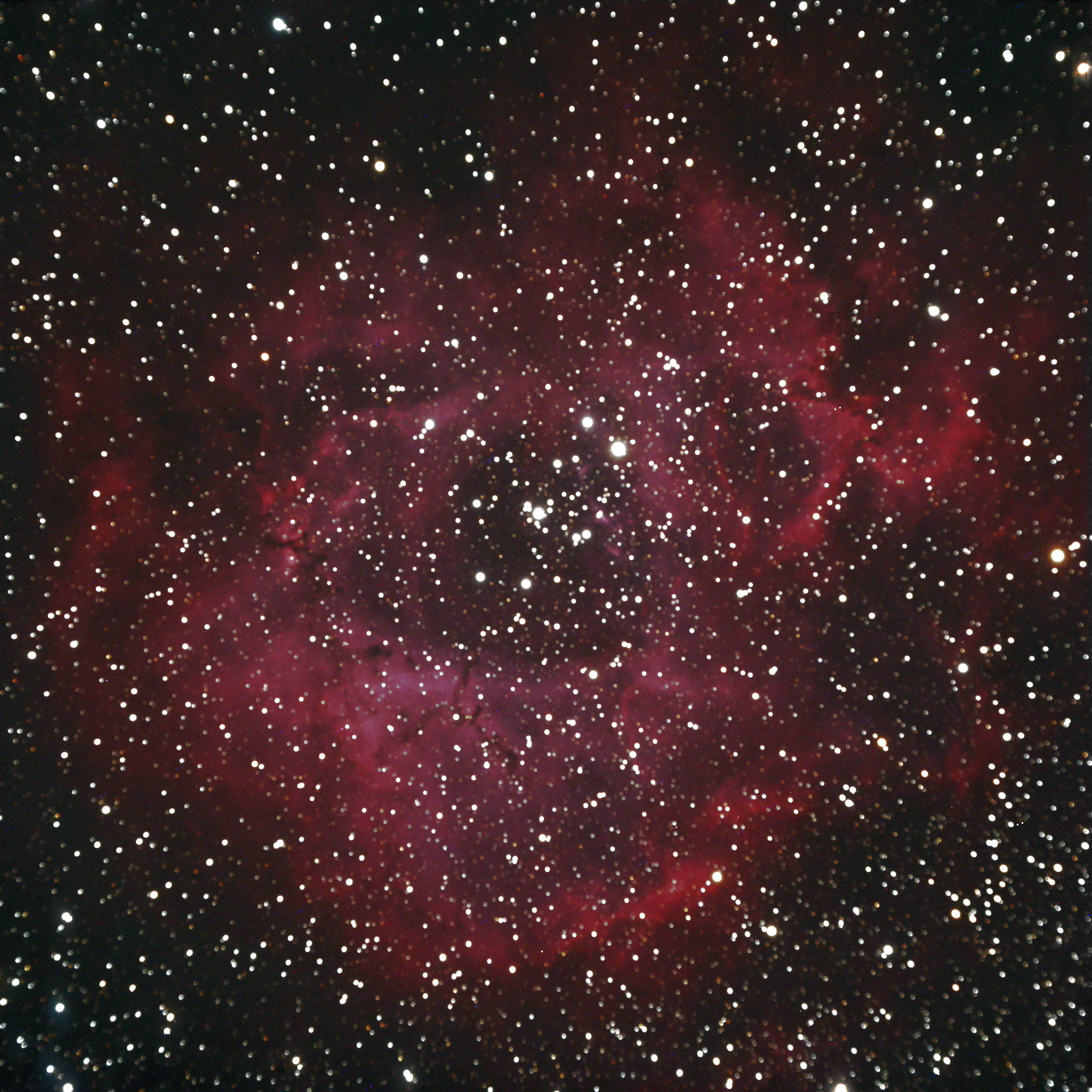
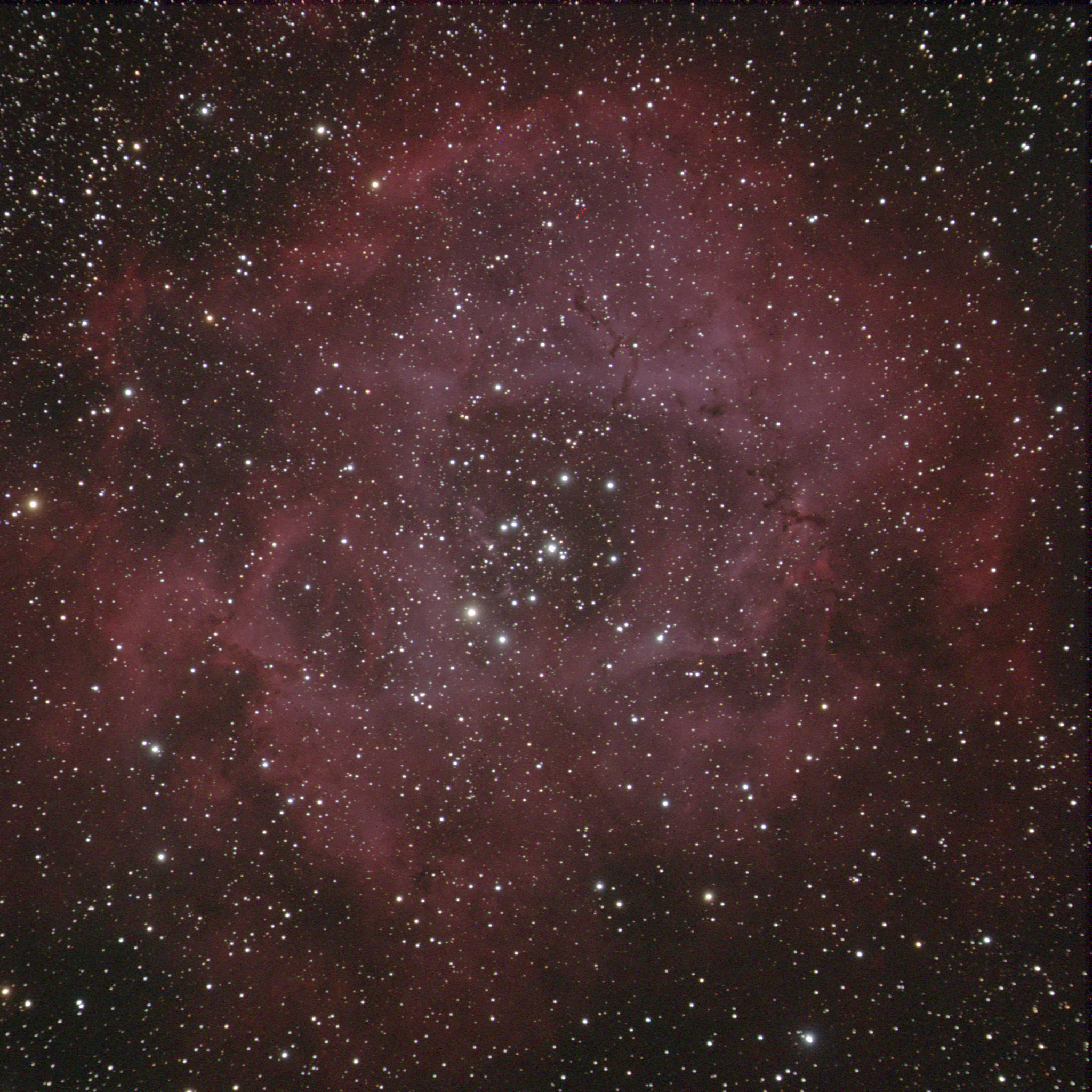
    Finally I went for a redo of a classic winter-sky object, one for which my Traveler with its wide field-of-view should be ideal, the Rosette nebula in the winter Milky Way.

    Here is my earlier shot of the Rosette, and the full size image of it here. On that night my focus wasn’t especially good. Since then my skill with focusing and processing has improved quite a bit, such that now I’m proud to show you my new Rosette image.
    Rosette
    The Rosette nebula region in Monoceros, 45 minutes exposure (3×15 minutes) Astro-Physics Traveler 105mm f/6, SBIG ST-4000XCM

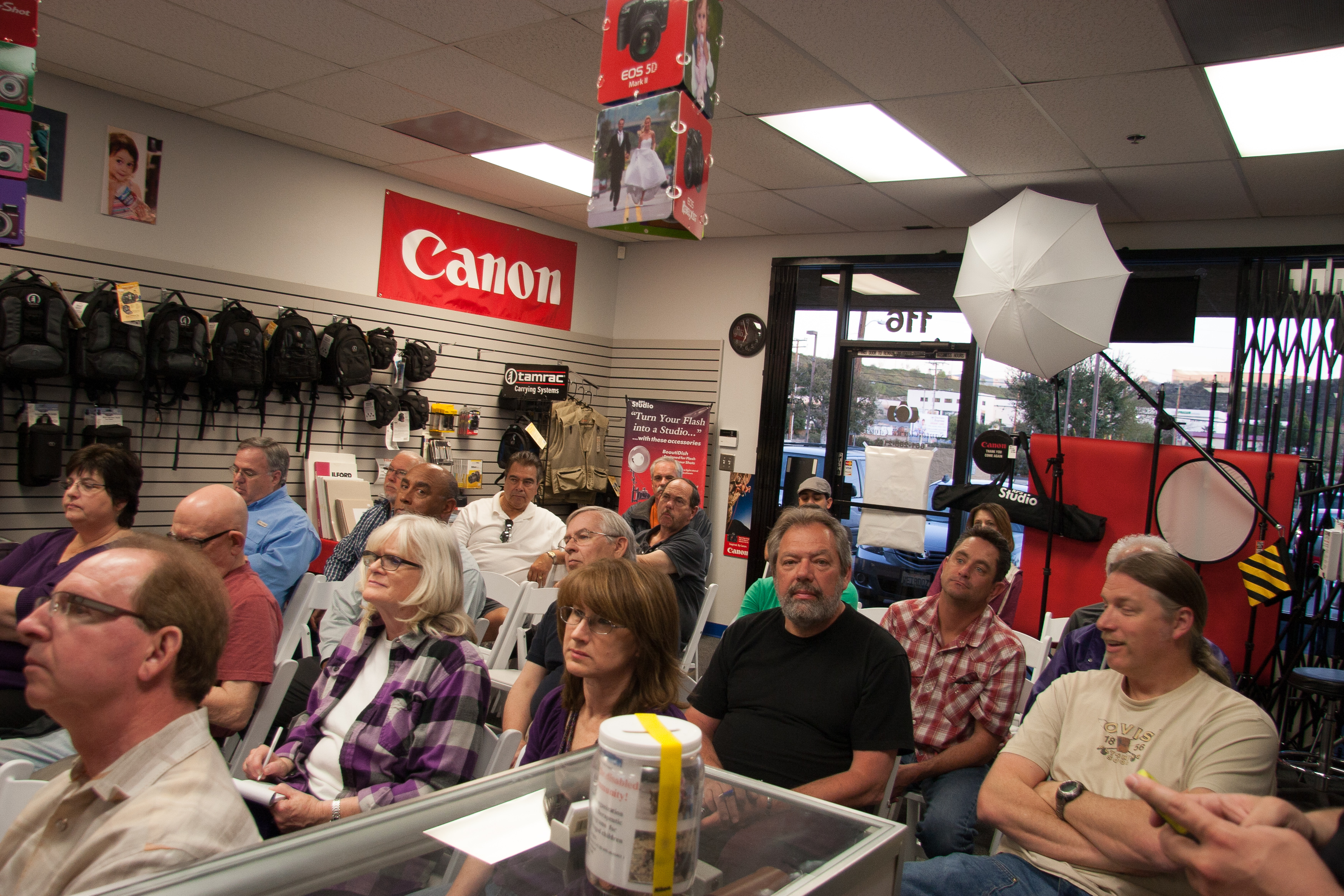
    So I certainly had enough to make a fair astrophotography presentation for a camera club. My talk was the following Tuesday evening at Santa Clarita Camera, for the Santa Clarita Valley Photographers Association.
    Camera Club
    I had about 30 camera club members for my presentation on deep-sky astrophotography.
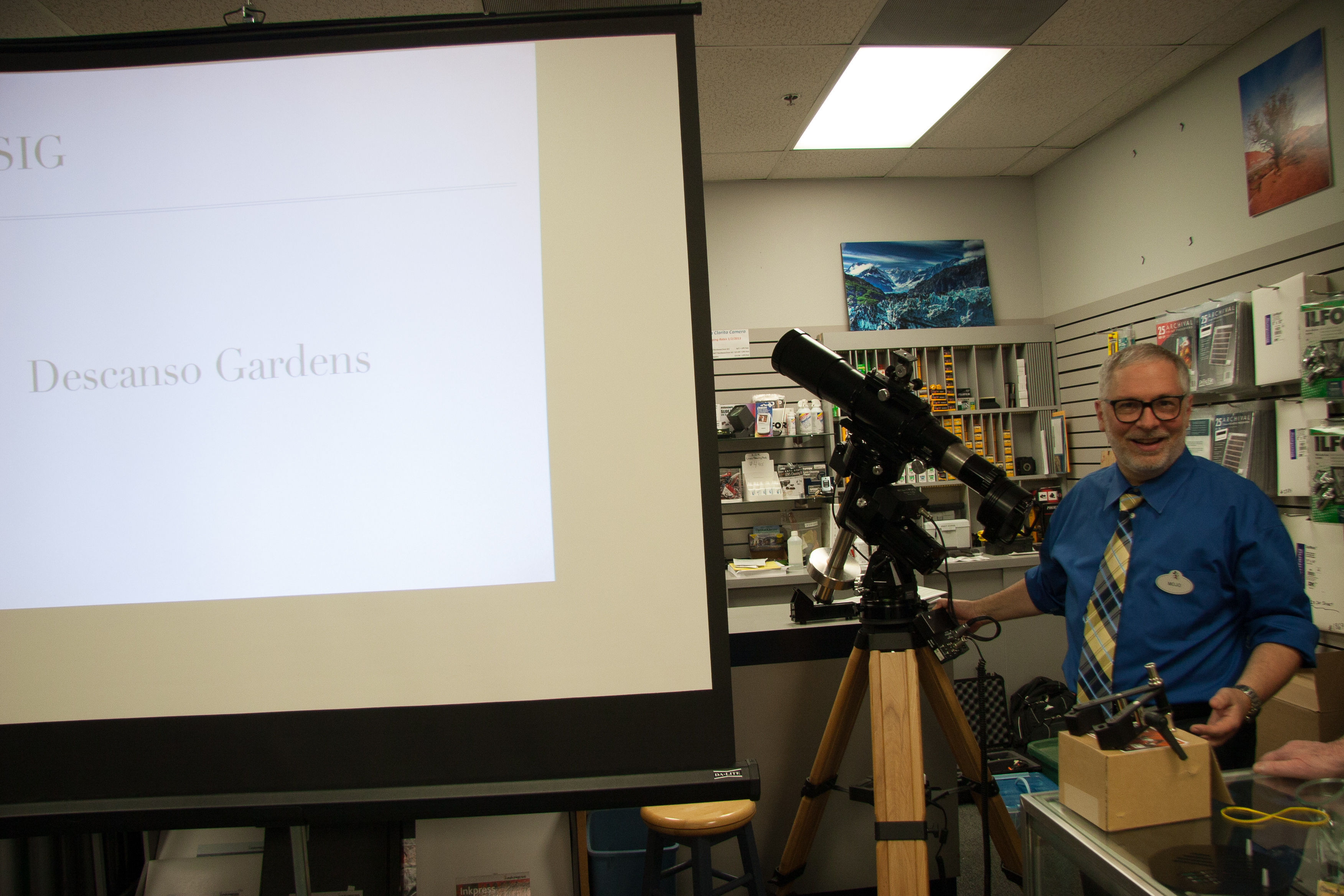
    Mojo with astrophotography gear
    I brought my A-P Traveler, mount, tripod, and camera for show-and-tell along with the talk. Not the usual gear found at a typical camera store.
  • January observing, a Monoceros evening

    Click here for the full photo album with lots more pictures.

    Mt. San Jacinto
    The snow-capped peaks were beautiful from the Foothill Freeway

    It had been several months since our schedule, the weather, and the moon phase all cooperated to give us a chance to get out to our favorite astronomy spot. Jane and I, joined by Dave Hasenauer, ventured out to the Colorado Desert with promises of a chilly evening but mostly clear skies. The snow-capped peaks of San Jacinto and Gorgonio mountains were calling to us from almost our first moment on the road.

    Twilight on Chuckwalla Bench
    Twilight on Chuckwalla Bench

    During our twilight setup, some fellows from Arcadia stopped to check out the equipment. Dave was all set up and ready to show Jupiter if we could find it. While hunting in the twilight glow, we all exclaimed as a flock of probably 100 geese were approaching from the west. The geese turned out to be our guide to Jupiter! They flew right in front of the planet, and gave our eyes a convenient focus target. We all enjoyed the view through Dave’s big dobsonian.

    Jane had plans to attack the faint periodic comet 103P/Hartley, famous for its huge outburst of a year ago. Jane and Dave both claim to have found the glow of the incredibly diffuse comet. I tried for an image of it myself, but was convinced I didn’t have anything. This is my shot, with the comet buried deep in the winter Milky Way in Monoceros.

    Milky Way stars with a faint comet
    Can you find the comet?

    Can you find the comet? Here’s a full-resolution crop of the center of that field. Look right in the middle, and try to ignore that my focus wasn’t especially good for this picture!

    Comet 103P/Hartley
    Look for the faint cotton ball in the center.

    I was delighted that most of my hard-won imaging skills hadn’t been completely lost during the time away from it. I didn’t get a perfect focus for my first couple of shots of the evening, the comet Hartley photo above being one.

    Even with a less-than-perfect focus, this one of the Rosette Nebula in Monoceros turned out pretty well. This is only 30 minutes of exposure, and it’s pretty clear this object would benefit from a couple hours of exposure time.

    Rosette nebula
    The Rosette Nebula, click for the full frame

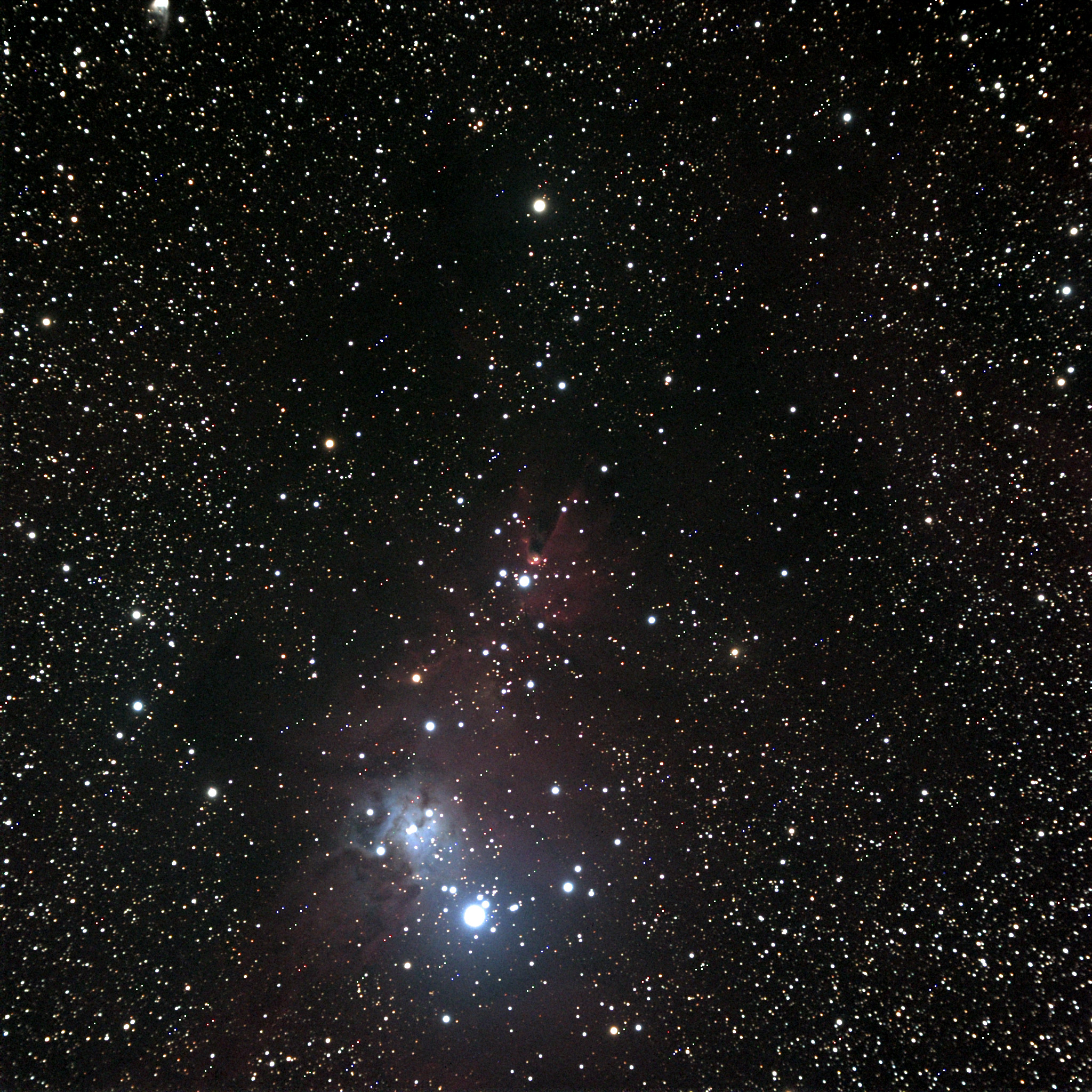
    The Cone nebula is another one that could benefit from a lot more exposure time, but at least by now I’d corrected the focus. I love this beautiful field, with a vast mix of Milky Way stars, emission, reflection, and dark nebulae. The “cone” that gives the nebula its name is near the center of the image. This is also two 15-minute exposures stacked.

    Cone nebula
    The Cone nebula in Monoceros, click for the full resolution image.

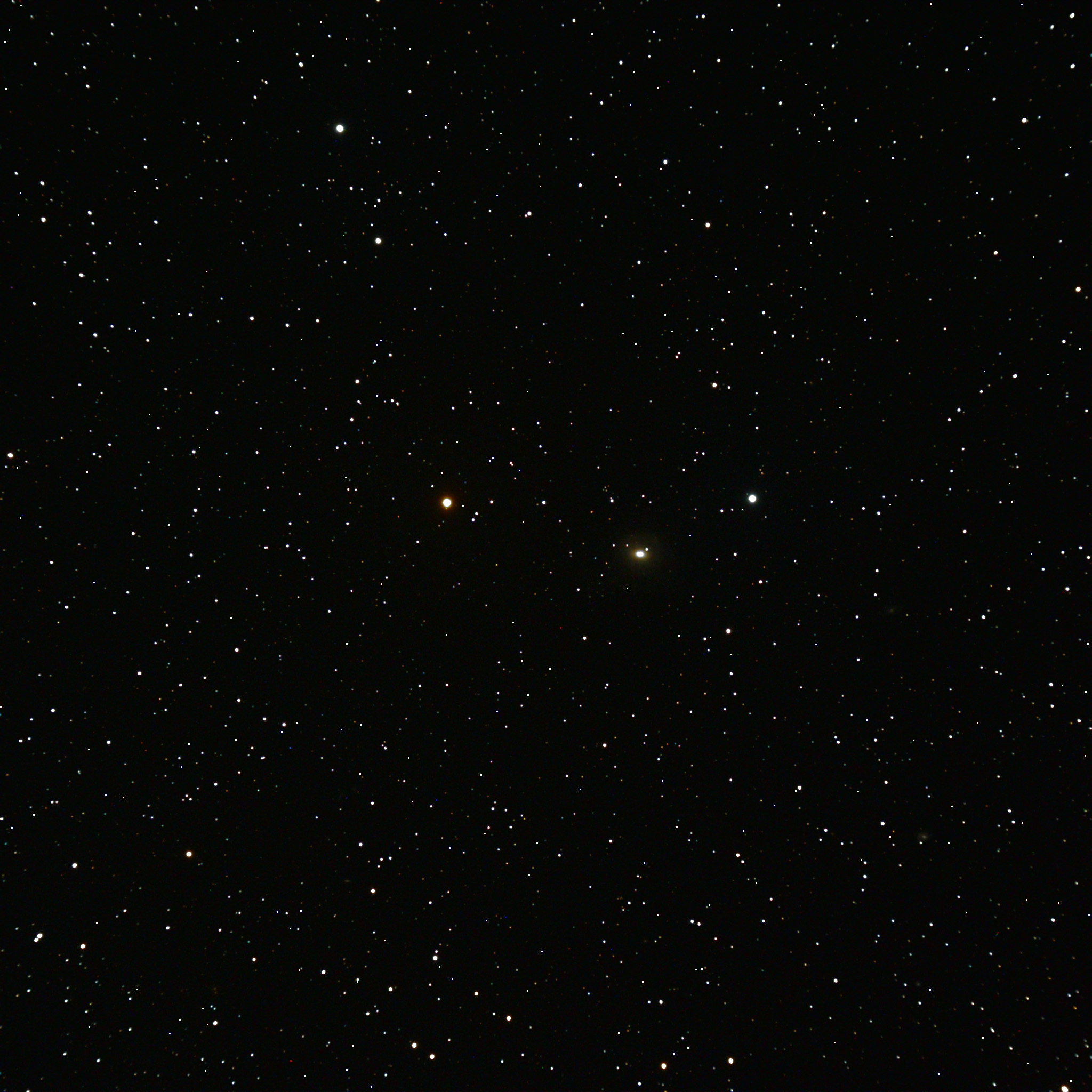
    A bright supernova was discovered just a couple weeks ago in small distant galaxy NGC 2655 in Camelopardalis, very high in the northern sky. Jane and Dave both enjoyed hunting it down, and the nova is bright and easy, itself as bright or brighter than the rest of the galaxy. Of course I had to get an image, here’s my crop of the field with the supernova marked.

    NGC2655 and supernova
    Supernova in NGC 2655, click to see the whole wide field image.

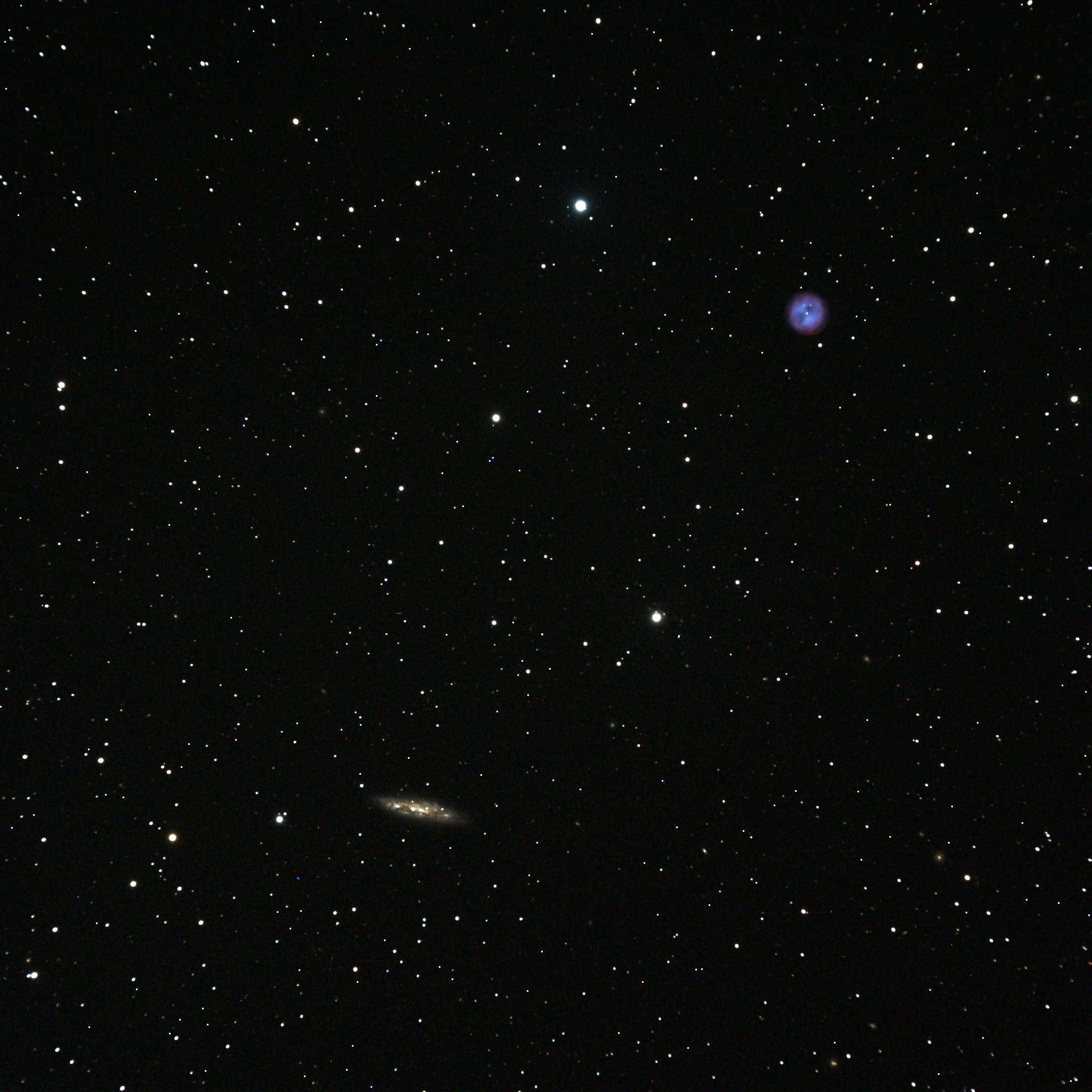
    Finally Jane suggested this great pairing, “The Owl and the Cigar,” she called it, M97 the Owl Nebula paired with galaxy M108 in Ursa Major. I only got one 15-minute exposure of this field, as the clouds were starting to move in, but I loved the colors in the Owl nebula, and the detail in M108. It’s fun to contemplate the difference in their distances, with the Owl being the gasping exhalation of a single star in our galaxy, and M108 being billions of stars in a very distant galaxy.

    M97 and M108
    The Owl and the Cigar, M97 (top) and M108, click for full resolution

    The first half of the night was interrupted several times by loud flights of two or three helicopters passing nearby. We speculate that they may have been in service to the border patrol, using infrared or intensified imaging. Our little site must have been interesting to see from their vantage point.

    Pre-dawn Chuckwalla Mountain with the moon and Venus
    Pre-dawn Chuckwalla Mountain with the moon and Venus

    By the time the sky show was interrupted by clouds, we all were tired and cold and felt like we’d had a full evening. Amazingly it was only 11:00 p.m.! We all tucked ourselves into warm sleeping bags to catch a few hours of sleep. Meanwhile the sky cleared again for spectacular pre-dawn show of the moon and Venus. We all got up to enjoy the old crescent moon, Saturn, and watch for Mercury to rise over Chuckwalla mountain.

    With the local star finally clearing the horizon, we packed and headed off to breakfast at Chiriaco Summit. By the time Jane and I arrived back home in Monrovia, it was raining!

    P.S.: In the photo album linked here, I included some detail photos of my astrophotography equipment, with captions, for the benefit of some friends who’ve wondered how these things happen.