Mojo's blog banner
  • Moving Whiteoaks.com — Building a mail server

    Don’t do this. This is stupid. Running a mail server is a pain in the ass.

    If your startup or family or organization needs a domain and email, just point your domain at Google and use their great mail, calendar, and shared documents tools. Avoid all the battles with spammers, black lists, hackers and security updates.

    So why would I do this? Maybe because I always have — I’ve had a server connected to the net since 1995. I enjoy being master of my domain(s). In a perverse way it’s a challenging hobby as well.

    My server for whiteoaks.com lives in the linen closet at the top of my staircase. It really doesn’t get enough cooling, and when the processor gets too busy it complains about the heat. The version of Linux on it is old and long unsupported. I’ve been having to build package upgrades from source — like gcc, apache, php (4 and 5), and mysql.

    I know I’ve needed to build a new server, but I’ve been dreading putting together a machine and painstakingly migrating my services, users and domains to a new environment.

    Meanwhile Jane and I have discovered the joys of streaming Netflix and Amazon to the home theater. That means sharing my server’s DSL line to download TV and movies — not great for either service.

    I pay Verizon about $95 per month for a commercial DSL account with 3 mbps download and 768 kbps upload. For a server, 768 kbps is pretty slow. Moving to the cloud would give my server cloud-sized speed as well, and let me switch to a consumer internet account at home — cheaper and probably faster.

    So it’s really long past time that I moved out of my linen closet and into the cloud.

    Much techie stuff follows. Feel free to skip down!

    I spent several hours pricing out servers from Rackspace and others, trying to figure out what it would cost me. Right now I run everything — email, DNS, a dozen or so web sites — from one eight-year-old server with 1GB of ram and 40GB of disk.

    I wanted to upgrade my mail service to use Zimbra, and I knew it would require its own dedicated server with 1GB of ram. On Rackspace, that’s “flavor 3” and would cost me about $40 per month.

    Here’s why I wanted Zimbra: It’s available in a free open source community edition. It’s built on top of all the open source packages I was already using and familiar with: Postfix, Clamd, Spamassassin, MySQL. Zimbra provides a first-class web mail client that would enable my users (mostly family) to do things like change their password and set up filters to route mail into folders.

    Over my vacation, I did an experiment. (I did a lot of this using wi-fi on a Delta flight. A first-class seat makes for a delightful work environment!)

    I spun up a 1GB Rackspace server using Ubuntu 10.04LTS as the base. I set up a subdomain “rs.whiteoaks.com” using Rackspace’s excellent DNS support. I made an MX record to point to the new machine mail.rs.whiteoaks.com. Rackspace DNS support even let me set the reverse DNS to resolve mail.rs.whiteoaks.com to this server — essential on an email server!

    (Rackspace DNS is so good that I can easily drop my own BIND DNS server, with no regrets. Let them deal with DNS security!)

    On the new server I went through the Zimbra install script, interrupted only to install a couple of missing packages, and found myself a few minutes later with a genuine working email server that would send and receive email.

    As an experiment, I made an image of that server, destroyed the server, and created one from the image. It came up okay, but I couldn’t connect IMAP clients to it, such as my Android phone email. (I later realized that the self-signed SSL certificate created during the Zimbra install needed to be recreated for the new IP address.)

    Zimbra does not include a first-class mailing list manager. I host mailing lists for several astronomy clubs, OTASTRO, Bridgemojo and such — not huge lists, but as large as a few hundred members.

    The best non-commercial mailing list manager for many years has been Mailman, supported by the community at http://list.org. I’ve always used
    Mailman for my lists.

    This led to much teeth-gnashing as I started researching how to integrate Zimbra and Mailman.

    Zimbra really doesn’t like to have anything else running on its server. I understand this. It’s not just a control-freak thing, it means they can build and create an easily-installed turnkey box.

    This has led to two strategies for integrating Mailman and Zimbra: the cowboy strategy of running Mailman on the Zimbra server alongside Zimbra, and the officially supported strategy of running Mailman on its own separate server, with a Zimbra-provided API hook for better integration.

    I knew I was going to have another server for my web services, so I thought I would start out with the “separate server” strategy. Installing Mailman is simple enough, but then it has to be knitted carefully into an Apache web server as well as Postfix.

    This quickly began to seem like the more fragile and complex of the two solutions. It would require patching Mailman and Zimbra to support Zimbra’s API to manage all of the required mailing list aliases. It also will not support multiple domains, which makes that strategy dead on arrival.

    So back to the cowboy approach, knit Mailman into the Zimbra server, hopefully without making too much of an impact on Zimbra’s ecosystem.

    This took some doing, but was a good project for a Sunday while watching the final round of the Masters.  🙂

    I won’t get directly into the details here. I know there will be sysadmins curious about the problems I encountered and solved. None of the “how-tos” and forum threads covered every problem, and many of them were several years old. I owe it to the community to write up as much of my problems and solutions as I can. I promise to do that in a follow-up blog post.

    The final result is a thing of pride and beauty. Here’s a little of what I did.

    Mailman needs to be knitted into two services: Apache (web service) and Postfix (mail service). On Zimbra’s box, Zimbra owns both of these.

    The web service knit turned out to be reasonable and elegant. The solution I liked is to move the Zimbra server out of the way to another port (81 in my case).  Zimbra provides a local configuration flag to change that port that will be preserved in an upgrade. Then I installed a server-wide Apache package and configured it for Mailman in a virtual host. In another virtual host, I set up an http proxy that will forward to Zimbra’s apache instance on localhost port 81.

    With this setup, the Mailman web users will find the familiar Mailman applications at lists.rs.whiteoaks.com, and the Zimbra users will find their email applications at mail.rs.whiteoaks.com.

    The second knitting job requires patching Mailman into Zimbra’s owned and operated Postfix instance. There are only three spots that need to be patched in the Postfix main.cf configuration file, alias maps, virtual alias maps, and mydestination. Patching them works fine.

    But here’s the rub: every time Zimbra restarts Postfix it will rebuild main.cf from its configuration. This is annoying at first, and brilliant in retrospect. By setting Zimbra’s local configuration variables, the Mailman hooks will be preserved not only through restarts, but through package upgrades of Zimbra. (Details forthcoming, I promise.)


    A few days ago I began forwarding my main email inbox to the mail server on my Zimbra instance, and yesterday I migrated the mailing lists for Bridgemojo.  Both are working swimmingly.

    A clean untrained Spamassassin lets through a lot of marginal junk mail, but I was delighted to learn that clicking “Junk” in Thunderbird and moving spam to the Junk folder would automatically train Spamassassin.  Likewise finding good email in the Junk folder and clicking “Not Junk” would also train Spamassassin.

    I can now use “push email” from the Zimbra IMAP server on my Android phone. My old “wu” imapd servers could not support push along with a desktop email client without getting hopelessly tangled. The old servers are also developing a habit of hanging and locking up changes to the mailbox until I find the problem and kill it.

    I knew this would be the hardest part of migrating to the cloud. Moving the web services should be a piece of cake. One additional 512MB server should handle those easily, especially with no mail services chewing up memory.

    Before publishing this, I moved mojo.whiteoaks.com to my cloud server. Life is good. 🙂
  • Double your pleasure …

    Chuckwalla Bench, Colorado Desert, California, 29 October 2011

    As promised, last weekend was the first of two excellent dark sky weekends this month. The weather turned out to be perfect for this one as well.

    Jane and I went to our old favorite spot off I-10, Chuckwalla Bench, on BLM land south of Joshua Tree in the Colorado Desert. We were joined by Dave Hasenauer and his dob.

    Bad news about Red Cloud Rd., the dirt road we take to our favorite spot. The road is sadly in need of some maintenance. Portions of the road are very treacherous with deep ruts and deep sand. We didn’t encounter any problems this trip, but it will be a worry.

    We had crystal clear skies all night, with temperatures around 85°F at sunset, dipping close to 50°F in the wee hours.

    The evening twilight featured Venus in its new evening apparition setting in the west, Mercury just below, with Jupiter one day after opposition rising in the east.

    Early in the evening while spotting satellites, we managed to catch a bright fireball meteor (7:22 p.m.) probably around magnitude -10. I saw a double terminal burst from the fireball, which traced from Cassiopeia through Triangulum. It left a persistent train that was visible for several minutes in binoculars and Dave’s telescope.

    Jane even indulged in a little afocal astrophotography capturing some splendid crescent moon shots on her point-and-shoot camera.

    I had a couple of “firsts” in my astrophotography accomplishments, doing my first successful drift alignment when my polar alignment was slightly off, and finally successfully capturing useful “flats” for image calibration in the morning twilight.

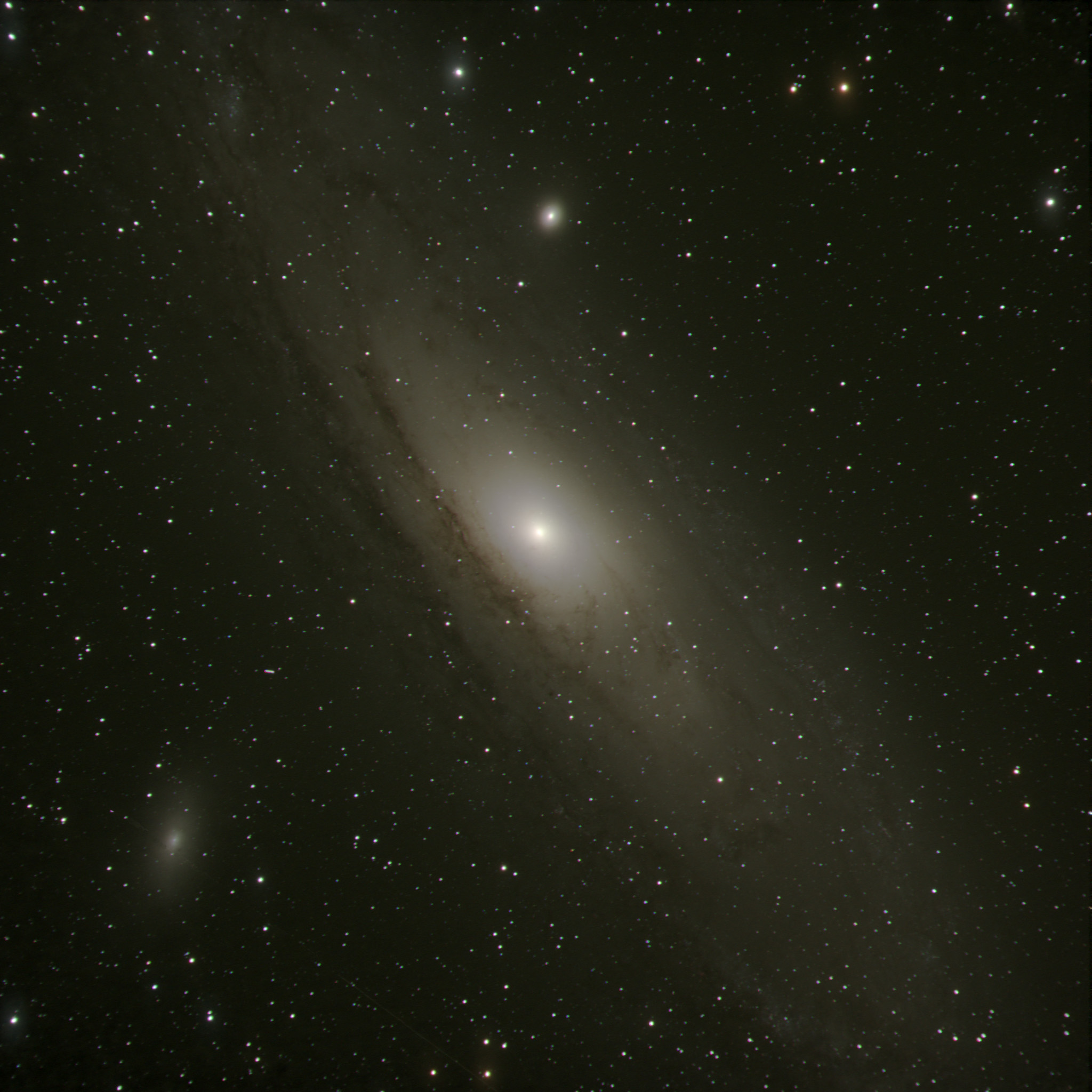
    I also had a brainstorm about how to process the color data from bright targets without data being clipped in the bright areas. With that in mind, first let me revisit my M31-M32-M110 the Great Galaxy in Andromeda from last week, this time in full color.

    M31 - M32 - M110, the Great Galaxy in Andromeda
    M31 from 22 Oct. 2011, 4×15 minute exposures

    (For all the images, click the image for the full-resolution version.)

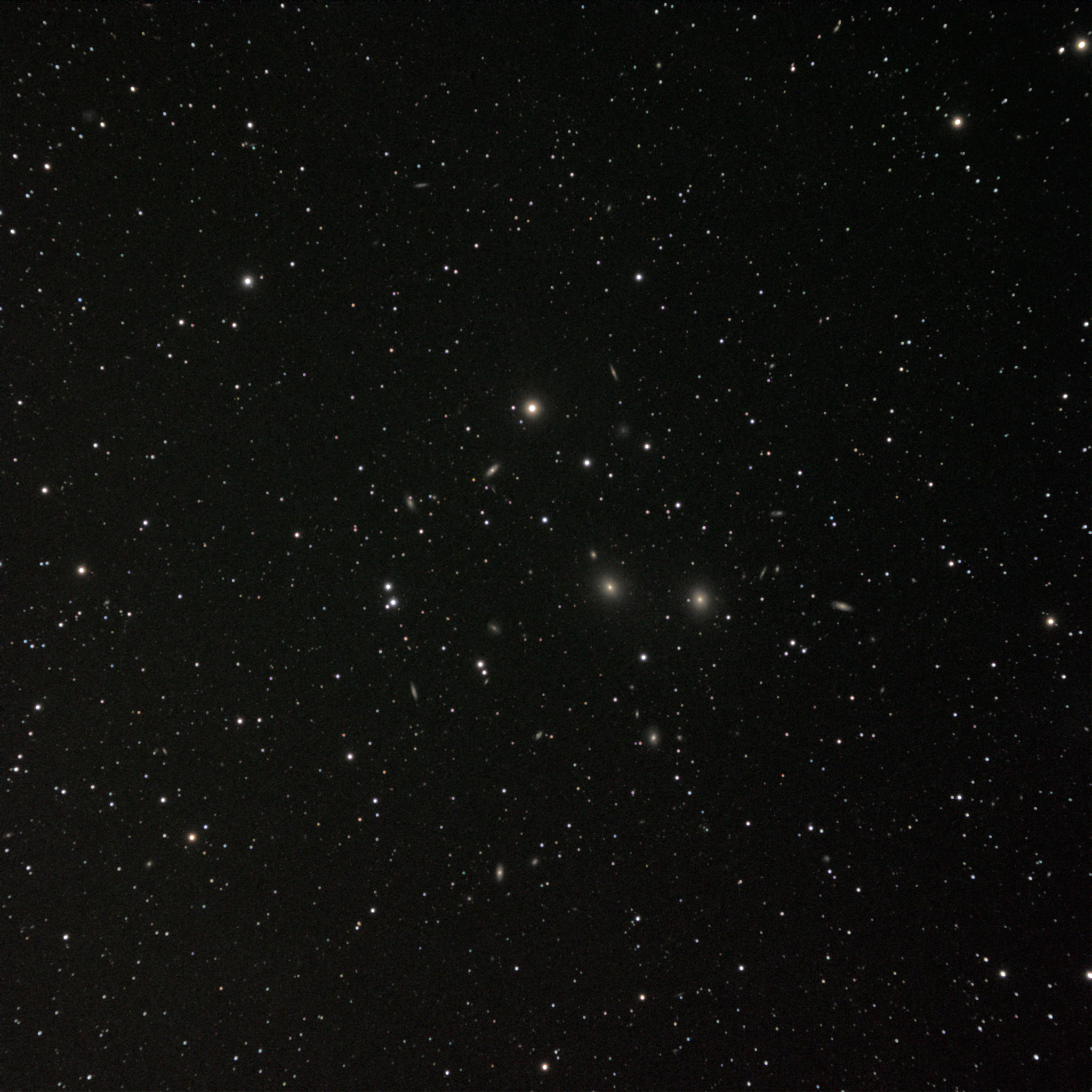
    And I promised to revisit the Pegasus 1 galaxy cluster, this time giving it an hour of exposure, which it fully deserved. Here’s the full field first.

    Pegasus 1 Galaxy Cluster
    Pegasus 1 Galaxy Cluster, click for full-resolution.

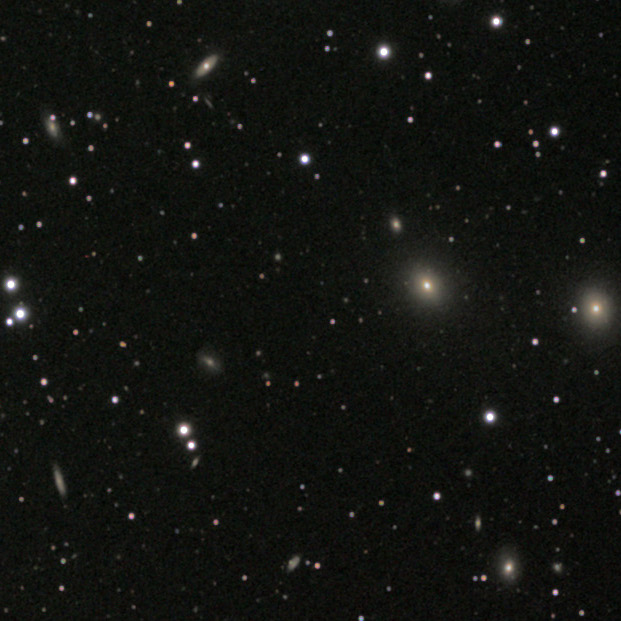
    The one-hour exposure time cuts down the noise nicely, and calibrating it with a good flat field removes the vignetting. Check out this detail from the center of the cluster at full resolution:

    Pegasus 1 galaxy cluster detail
    Pegasus 1 galaxy cluster detail

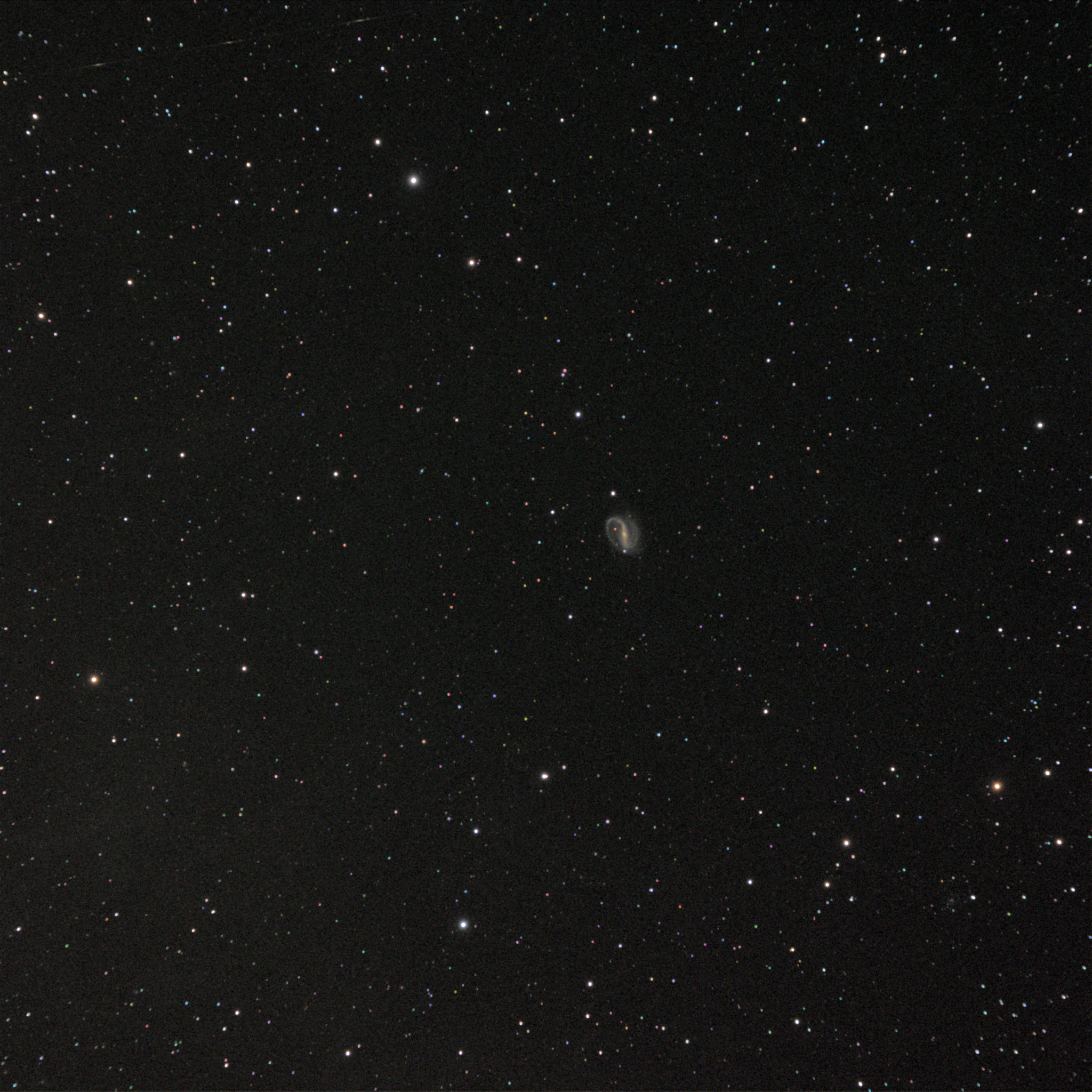
    Jane was observing this delightful face-on S-shaped spiral galaxy, NGC7479. It was such a small target that I didn’t think my short-focus 4-inch would do it much justice. It turned out to be a delightful crop with lots of detail.

    NGC7479
    Detail of NGC7479, click for the full field, 15-minute exposure

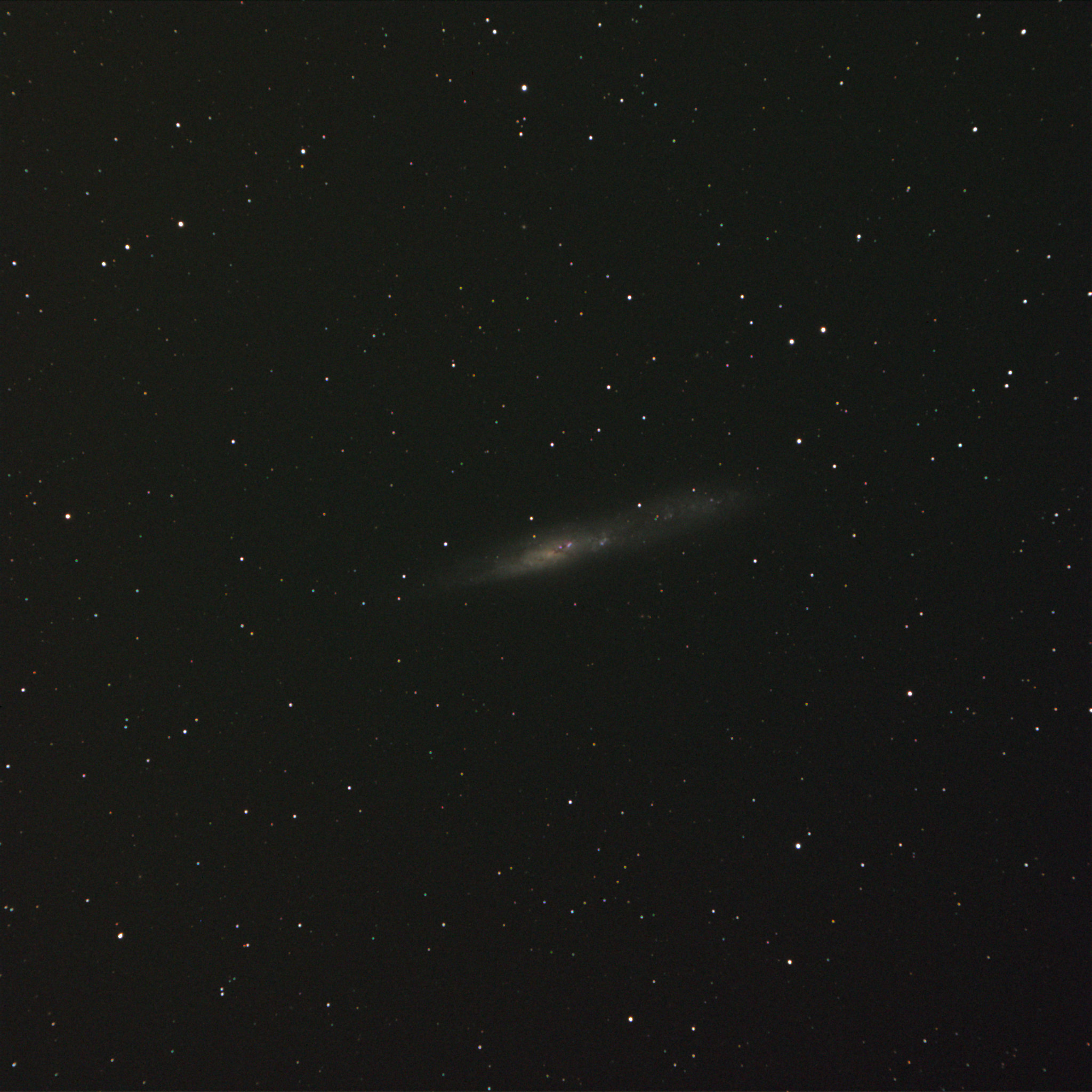
    Another surprisingly good image came from NGC55, a fabulous extended galaxy, so far south in the sky that it’s rare to be seen by northern-hemisphere astronomers. Complicating matters is a light dome from Inland Empire cities that encroaches on our southern horizon. Nevertheless, my 15-minute exposure was worth passing on. The full-resolution shot is very nice with lots of detail.

    NGC55
    NGC55, one 15-minute exposure, through a bit of "foreground" light pollution.

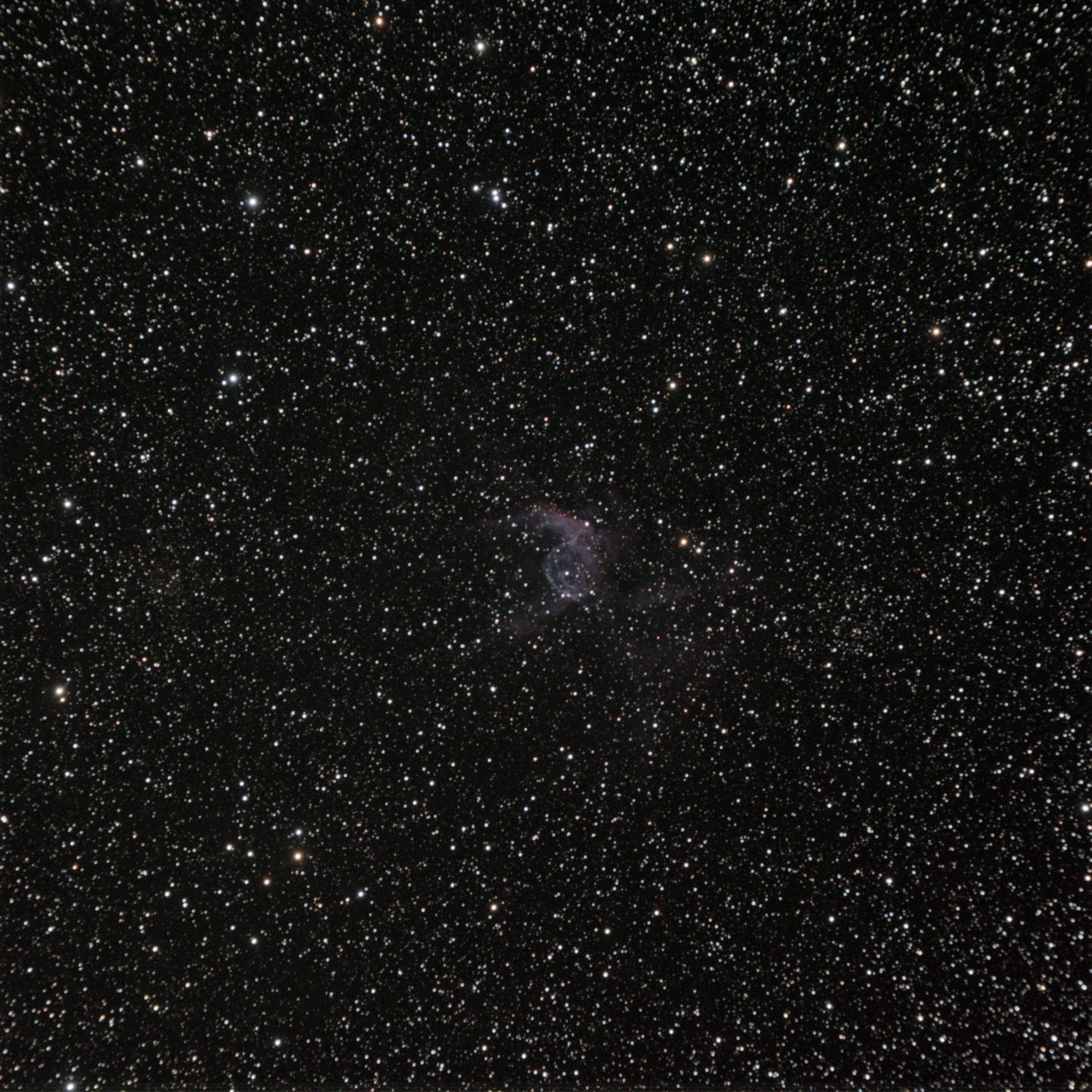
    Jane also suggested one of her favorite difficult winter visual targets, NGC2359, known as “Thor’s Helmet.” I collected an hour’s worth of photons. Here’s the detail from the center of the field, click for the whole thing.

    NGC2359 "Thor's Helmet"
    NGC2359 "Thor's Helmet," 4×15 minute exposures, detail from the center of the field.

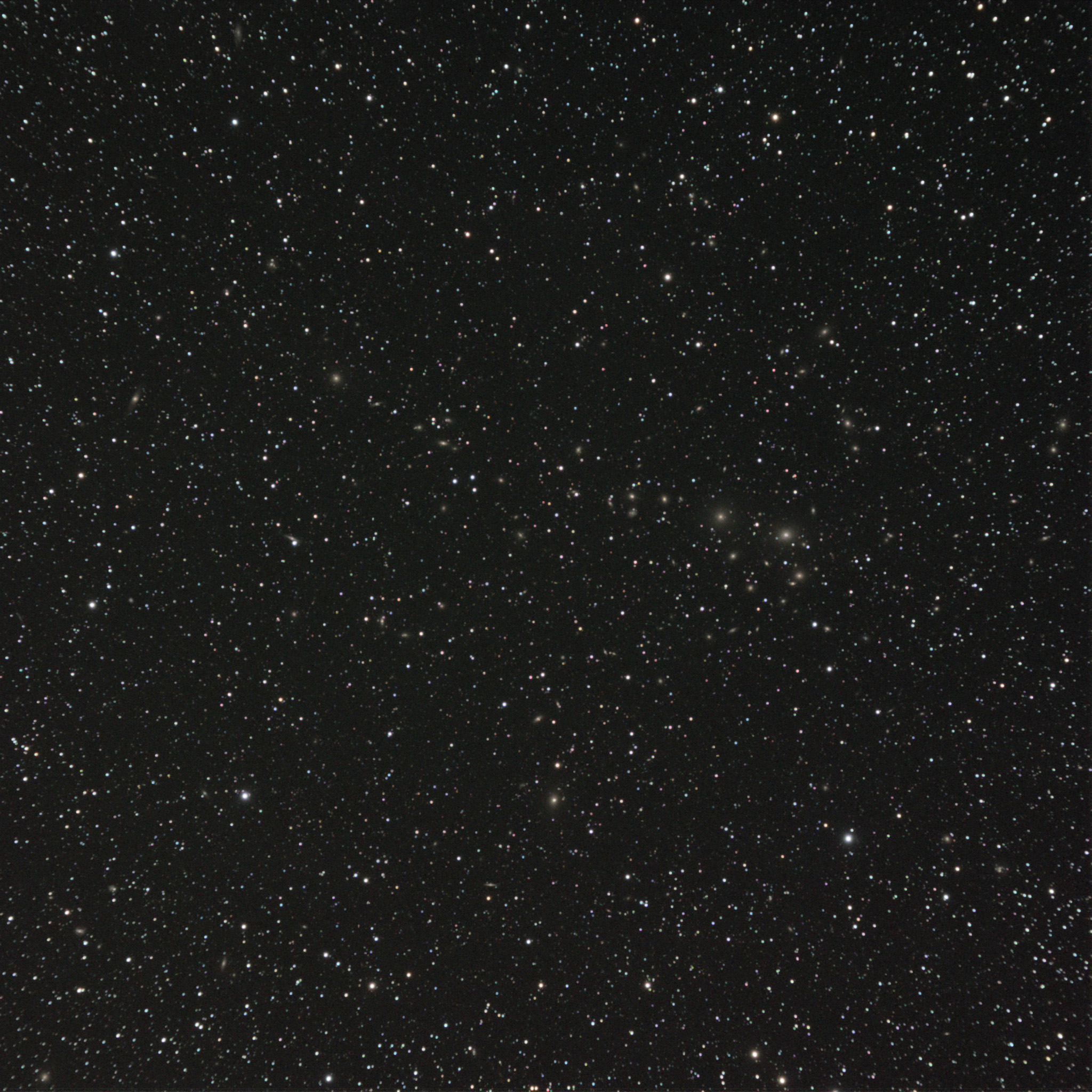
    I’ve long been fascinated with distant galaxy clusters, and they’re very difficult visual targets. Some find them to be uninteresting photography targets. I opted to try 30 minutes on Abell 426, a massive distant galaxy cluster in Perseus. Here is some detail from the center, but the full field is full of easter eggs.

    Abell 426 Galaxy Cluster
    Detail from the Abell 426 Galaxy Cluster in Perseus. Click for the full field.

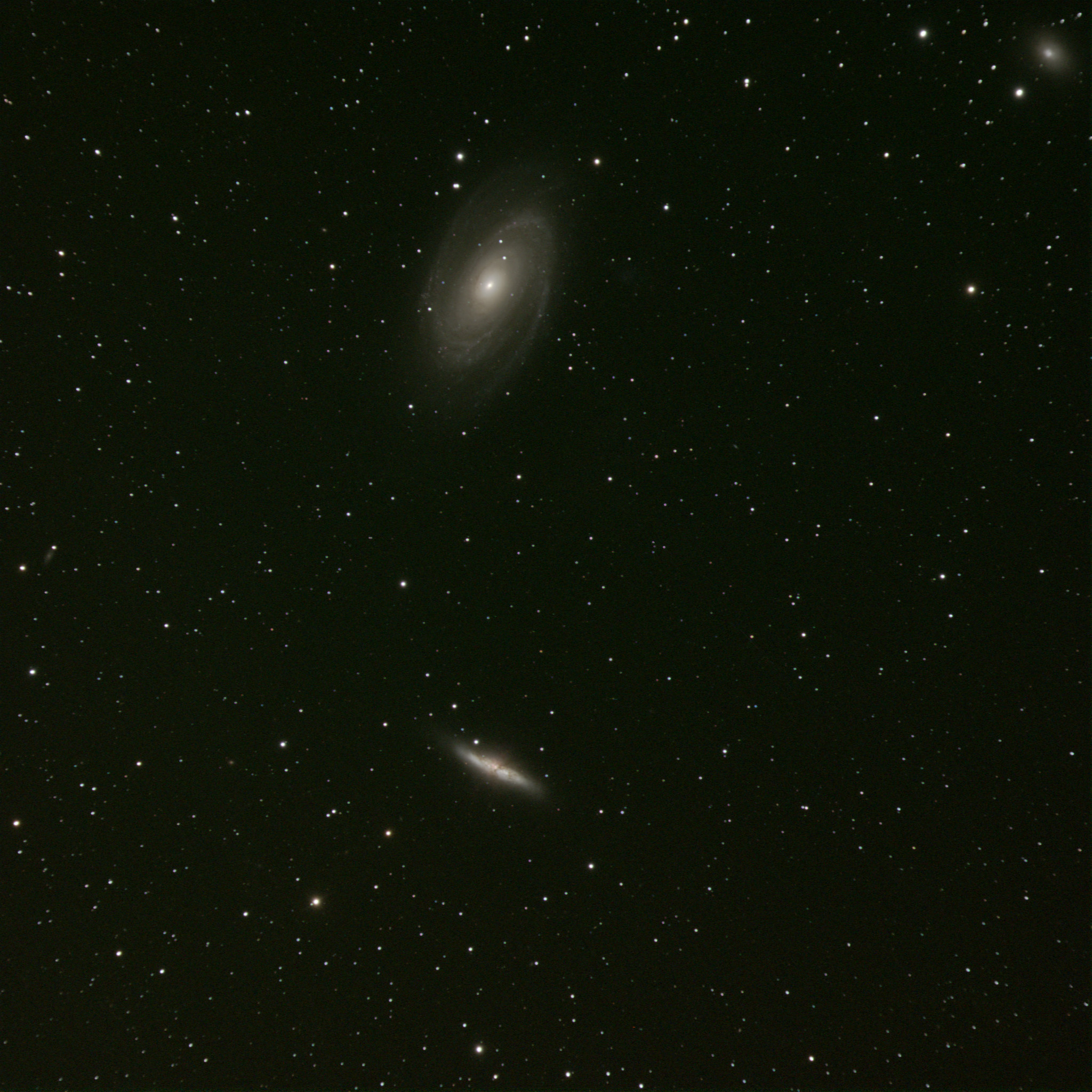
    My last target of the evening was to be an indulgent treat, the M81-M82 galaxy pair in Ursa Major. My mount battery finally quit just at the end of the second exposure, and morning twilight was about to arrive. A fabulous end to the evening.

    M81 - M82
    M81 the spiral (a.k.a. "Bode's Nebula"), and M82 a peculiar active galaxy, in Ursa Major


  • Observing at Amboy Crater

    Observing report, October 22, 2011

    Full photo album with site pictures here.

    Amboy Crater National Natural Landmark
    It's very easy to miss this sign from National Trails Highway, the delightful old U.S. Highway 66.

    This month is blessed with two very good dark sky observing weekends, and we opted to take the first one at a spot we’ve been thinking about for a couple of years now.

    Amboy Crater National Natural Landmark is a volcano crater in California south of I-40, near the town of Amboy, CA. We first visited the site in the spring of 2010. The hike to the crater was fabulous, and the wildflowers were stunning.

    Our regular site at Chuckwalla Bench is also a Bureau of Land Management (BLM) site, but unlike Chuckwalla Bench, Amboy Crater features a paved road, pit toilets, parking spots, and picnic tables. Here’s a Google Maps link to the landmark and its facilities.

    The downside is that the drive is about 25 miles longer than the trip to Chuckwalla Bench. It makes for about three-and-a-half hours driving each way.

    Astronomically, Amboy Crater is one of the darkest locations in the state, with frequently clear skies and sometimes overly hot conditions.

    Mojo with Amboy Crater
    Mojo set up for astrophotography with Amboy Crater in the background.

    This past Saturday evening had a nearly perfect forecast. We arrived on a hot dry afternoon, and enjoyed shirt-sleeve or light jacket conditions all evening with a crystal clear sky. We were joined by one other astrophotographer (Robin), and two seasoned visual observers (Cliff and Steve).

    My astrophotography is extremely casual. Living in the midst of Los Angeles county, I have no desire, nor is there much reason to, have a permanent observatory of any kind. We’ve both become adept at hauling our portable observatory to locations that offer good dark skies.

    Actually we have quite an advantage over astronomers in the eastern half of the U.S. The California deserts offer excellent astronomy, and are within a few hours drive of home.

    My telescope is an Astro-Physics Traveler, 105mm aperture (about 4 inches) with a short f/6 focal length. The mount is an Astro-Physics Mach-One GTO “go to” mount, and my camera is an SBIG ST-4000XCM, the perfect camera for my style of casual astrophotography. It’s a “one-shot color” camera, meaning I can shoot and process color images in a relatively short time, with extra processing to extract the data from the Bayer matrix. It wouldn’t be the best sensor for doing astrometrics or narrow-band imaging with specialty filters, but it’s great for playing around and taking pretty pictures (or trying to!).

    I had shot M31, the Great Galaxy in Andromeda, before, probably with my Canon 20D DSLR, but I wanted to take advantage of my wide field and gather an hour or so of data and see what I could get.

    I enjoyed watching twilight fade and set up with a very good polar alignment. By now I’ve managed to learn the quirks of Software Bisque’s CCDSoft, and was able to calibrate the autoguiding with great success.

    After returning home, I discovered that my first 15-minute exposure was not useable! The brighter stars in the image were fogged, probably by condensation on the CCD sensor glass. I have this mental image of bringing a telescope full of relatively moist L.A. basin air out to the desert, cooling the chip down to -5° C, and having every drop of moisture in that air condense on the chip.

    After the first exposure, the combination of the imager fan and the dessicant plug mounted next to the chip managed to pull out all that moisture and leave me with a dry and clear chip. The dry desert air kept me clear for the rest of the evening.

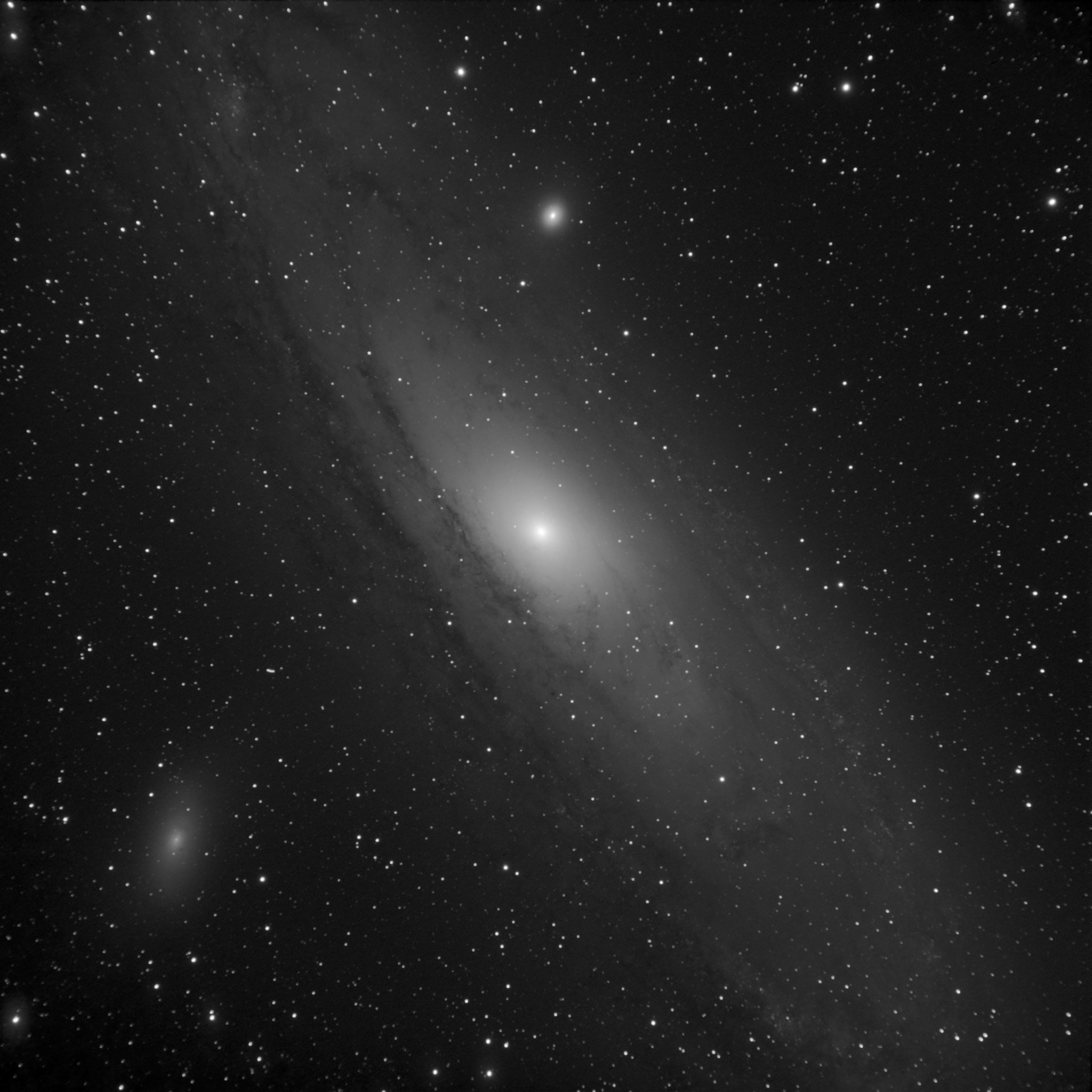
    Here is a luminance-only (monochrome) rendition of my M31 the Great Galaxy in Andromeda

    M31 the Andromeda Galaxy
    The Great Galaxy in Andromeda, M31, with M32 and M110 nearby. 3×15 minute exposures, luminance only. (Click for full 2048×2048 resolution).)

    Now after going to all the trouble of having a one-shot color camera, why am I presenting a monochrome rendition of M31?

    I have a processing problem with the color version that I haven’t resolved yet. This galaxy has an enormous dynamic range, and this monochrome image is compressed down from a 16-bit master luminance image.

    I’m only able to process the color information with 8-bit dynamic range. And my processing skill isn’t yet strong enough to preserve the color data when compressing it down to computer range. Here is the color version of this image. Note that the galaxy core is completely clipped to white in the color data, and I’m left with an ugly yellow ring around the core.

    It’s an interesting problem, and I’m sure that I can find a way to do some “high dynamic range” (HDR) techniques to recover that color data near the core.

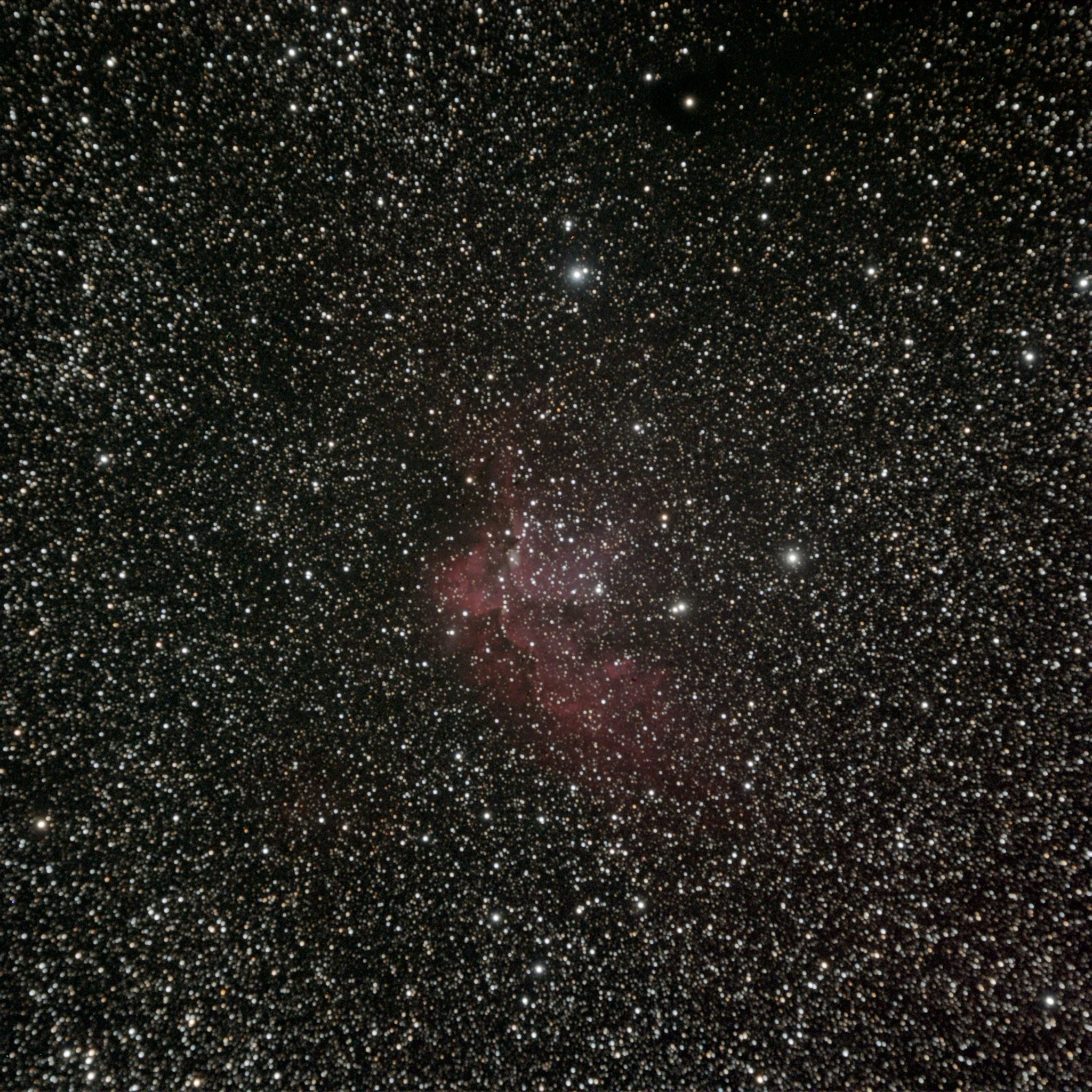
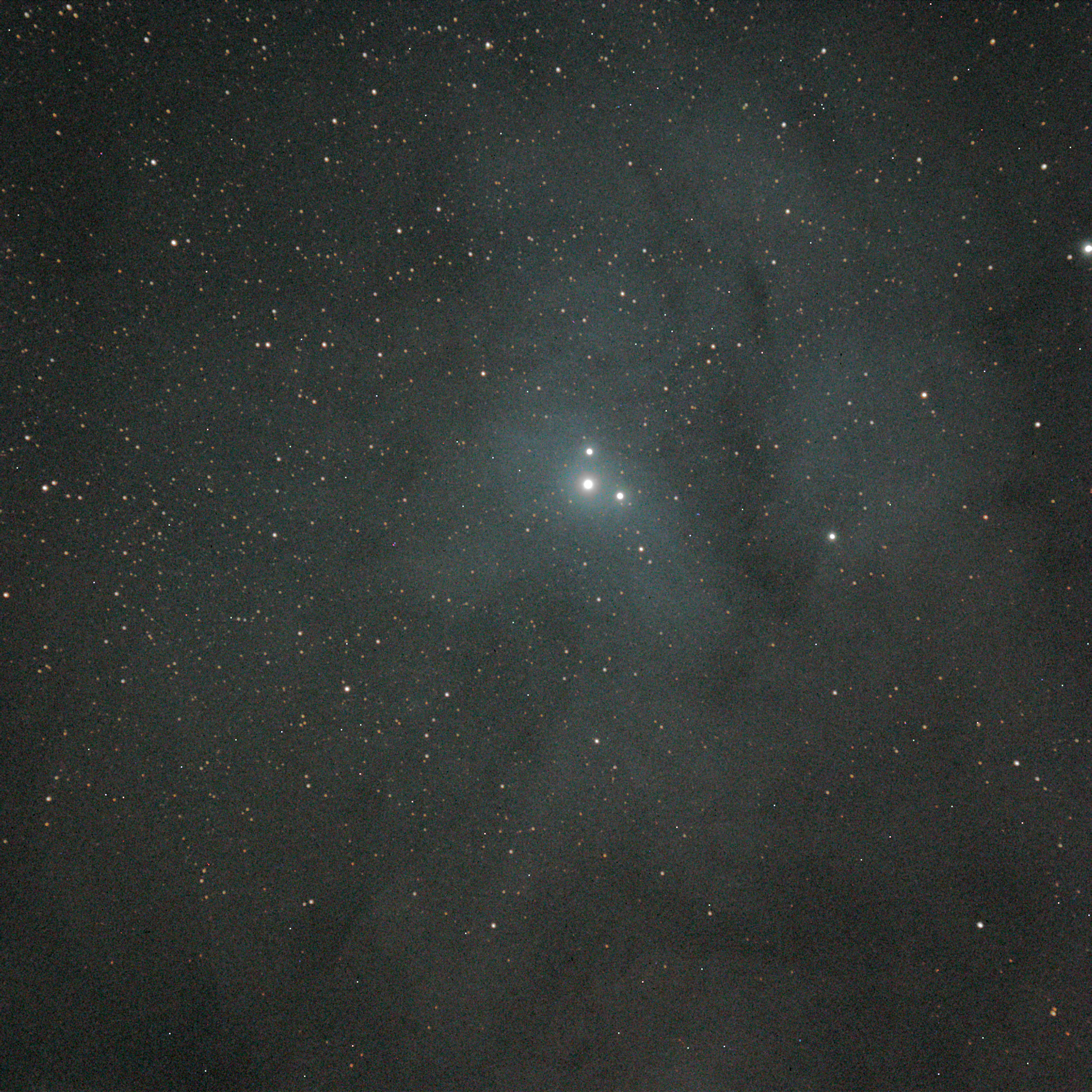
    At that point, Jane called me over to see an interesting emission nebula she was observing visually in her 17.5-inch dob. The nebulosity was just detectable visually, and I really wanted an image to compare. Fun object, full of Milky Way stars, the nebula, and even some dark nebulosity in the upper right.

    NGC7380
    NGC7380 emission nebula and cluster, 3×15 minute exposures

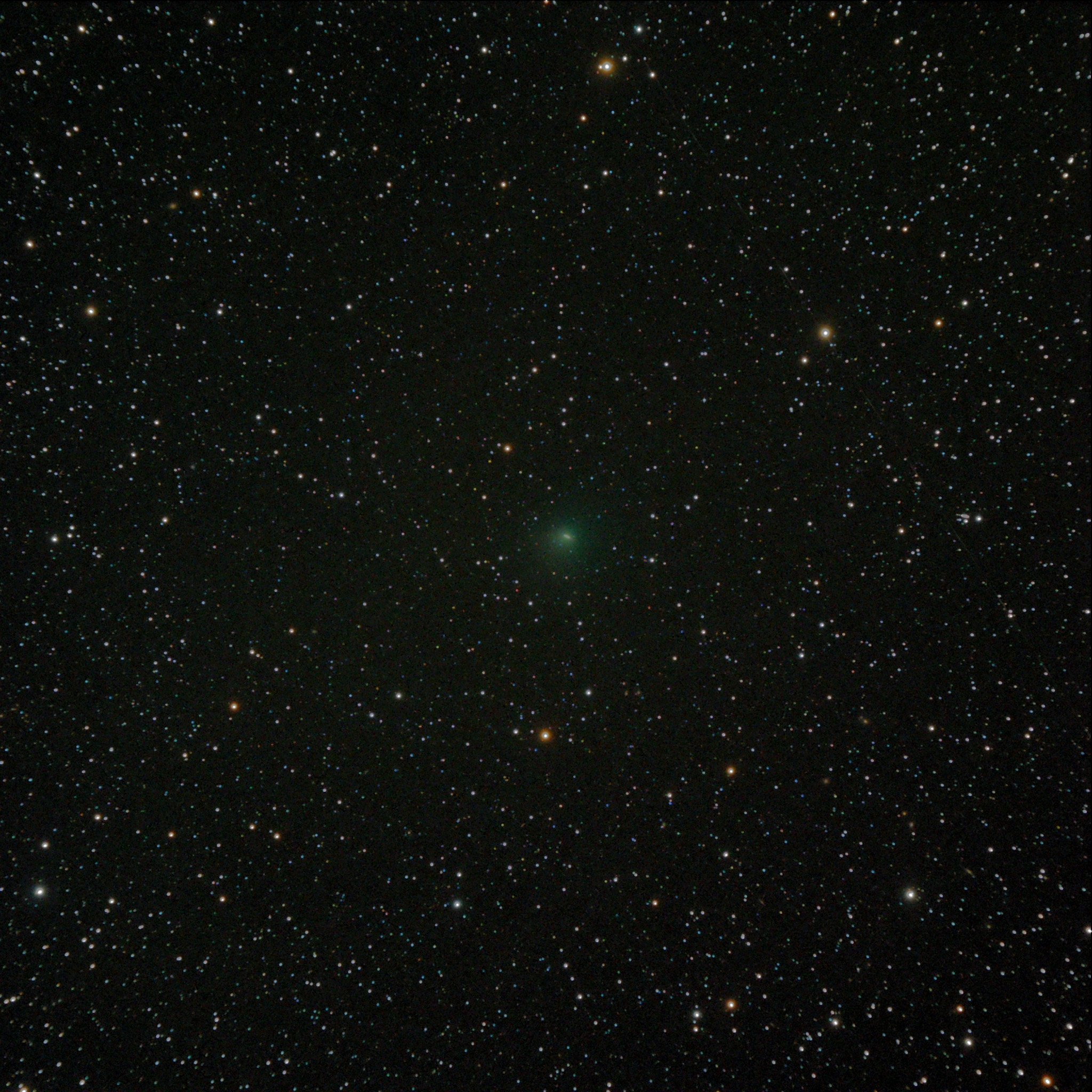
    Jane hunted down comet C/2010 G2 (Hill), a magnitude 10 interloper. It was a very difficult visual observation, but she nailed it, and I saw it as well.

    C/2010 G2 (Hill)
    10th magnitude comet C/2010 G2 (Hill)

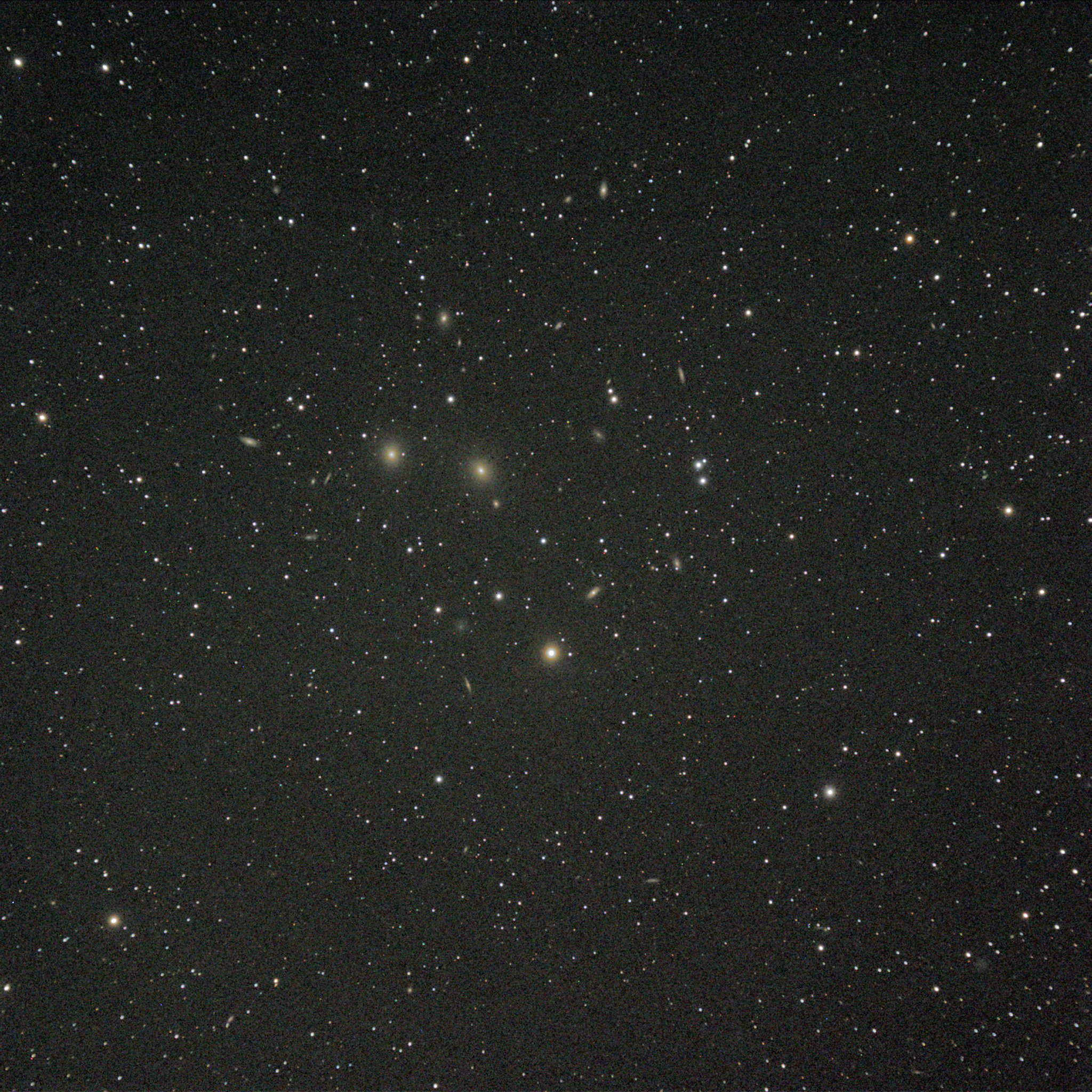
    Meanwhile Jane was also tracking down interesting galaxy groups, and had fun searching the fairly distant Pegasus 1 galaxy cluster in her 17.5-inch. I couldn’t resist imaging this as well.

    My own misfires only left me with one usable 15-minute exposure of this fascinating galaxy group. Even with just one 15-minute exposure and lots of noise, it’s fun to see how many galaxies you can find in the full-resolution image. The two brightest members are magnitude 12.

    Here we go from a relatively nearby solar system object, comet Hill, to a 200-million light-year distant galaxy cluster!

    Pegasus 1 galaxy cluster
    The Pegasus 1 galaxy cluster, one 15-minute exposure. Click for the full-resolution version, and see how many galaxies you can find in the somewhat noisy image.

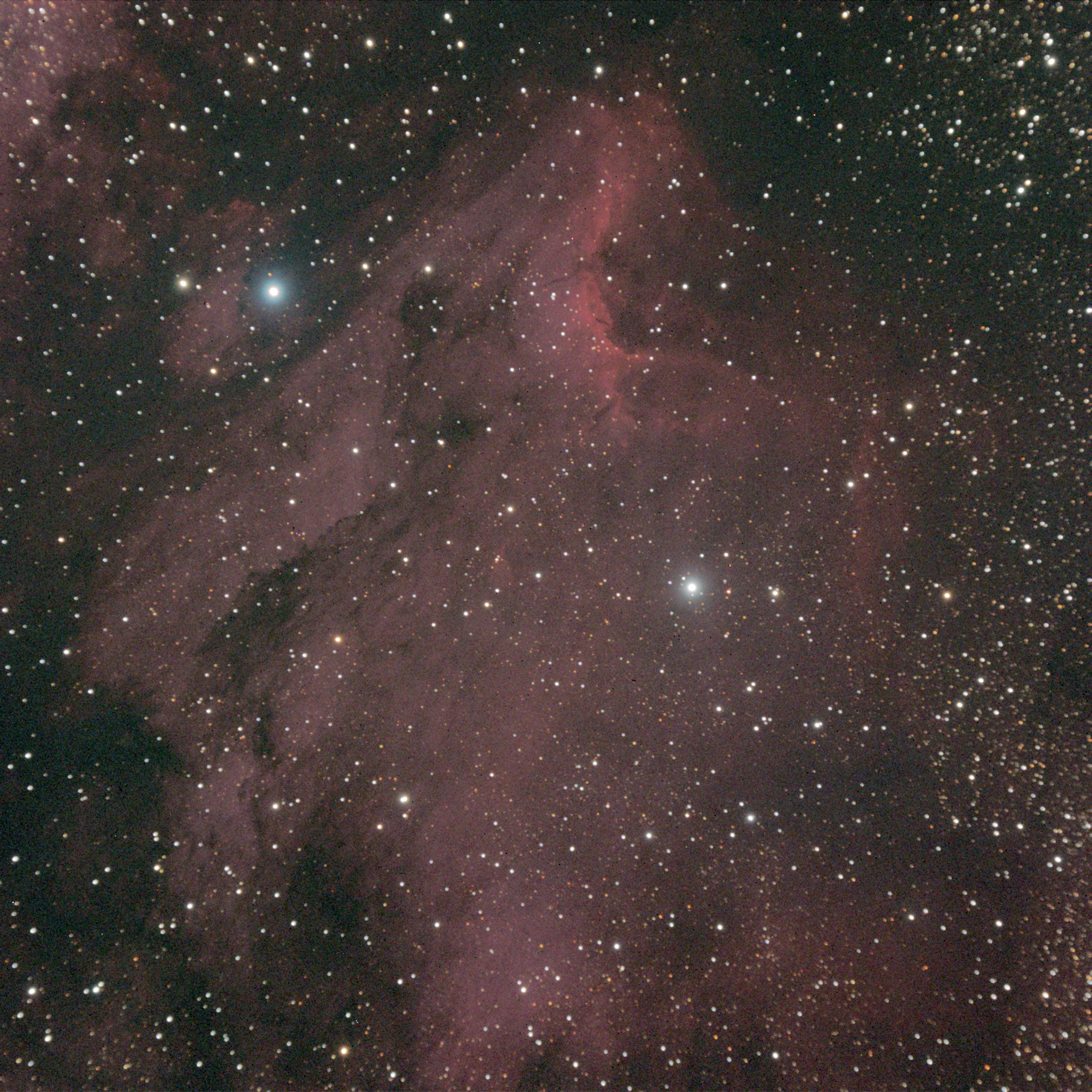
    Now I was just playing around. As it turns out, the Pelican Nebula was well placed, and The Sky 6 told me it would just fit in my field of view. This emission nebula is most famous for being “that thing next to the North America Nebula.”

    The Pelican Nebula
    The Pelican Nebula, one 15-minute exposure

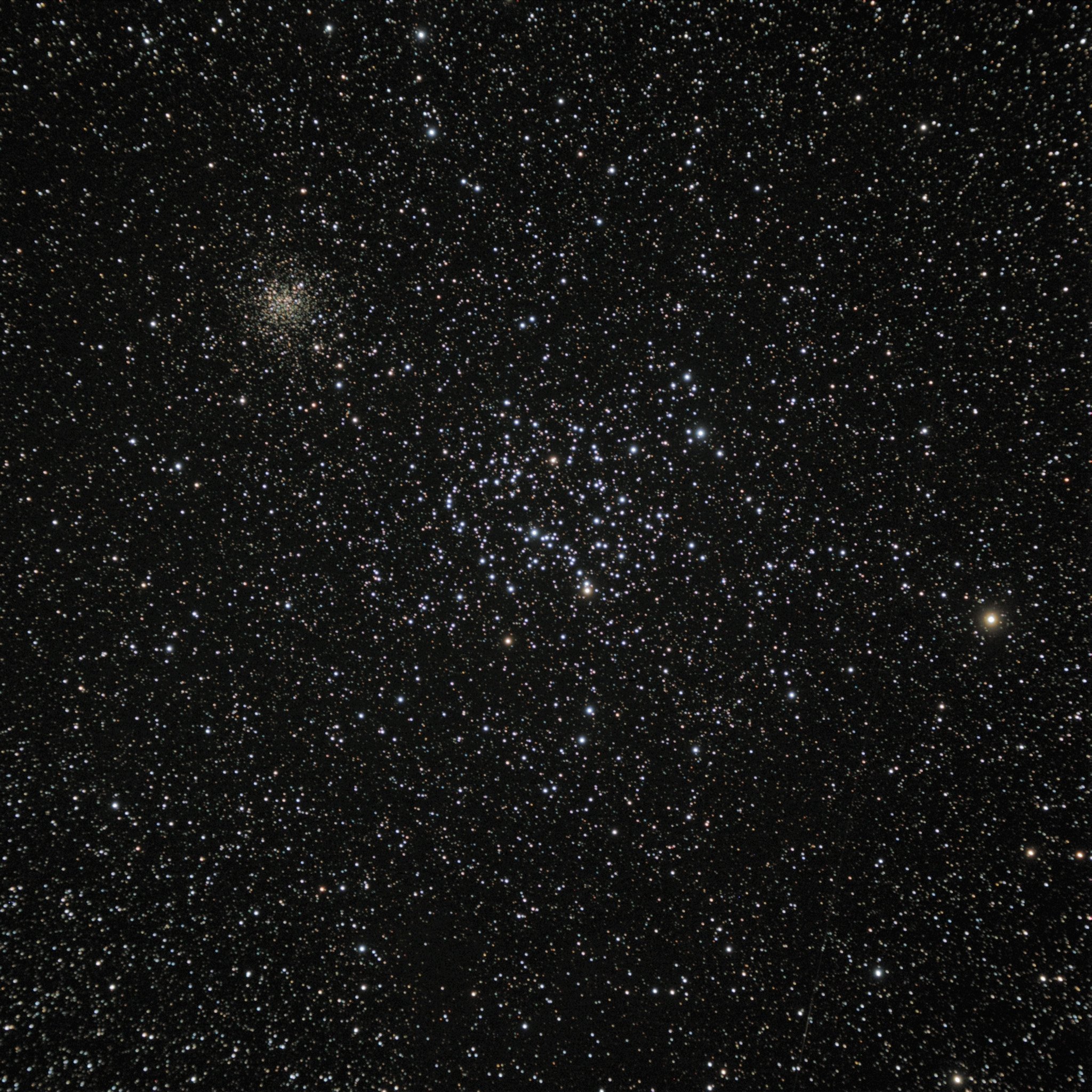
    One of my favorite visual targets is the enormous nearby open cluster M35 in Gemini in the winter Milky Way. Part of its appeal as a visual target is seeing the ten-times more distant open cluster NGC2158 which is about the same actual size as M35. The image didn’t disappoint.

    M35 with NGC2158
    Open cluster M35 in Gemini with distant sister cluster NGC2158. 2×15-minute exposures.

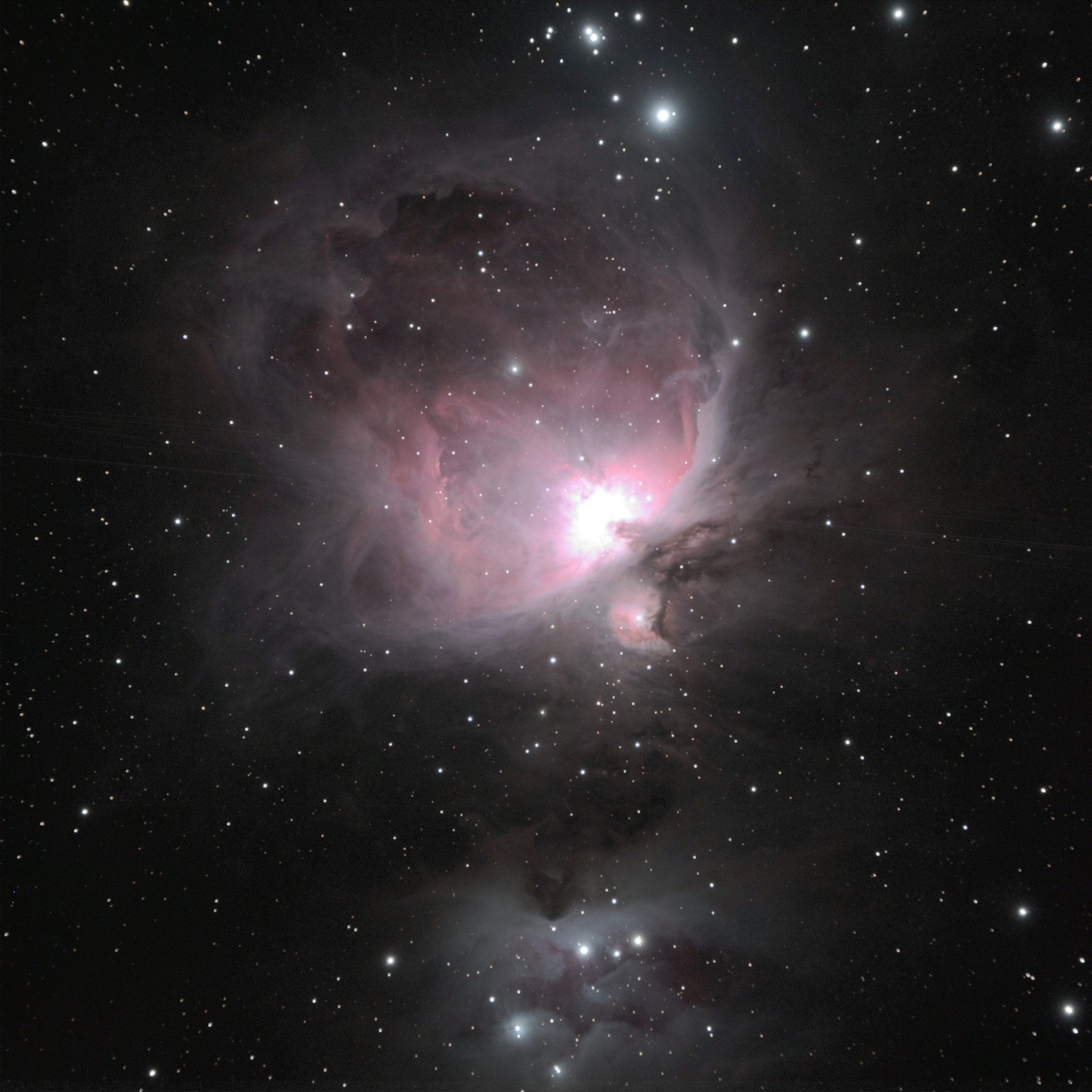
    Finally, even though it’s almost cliché, I had to see what I could do with M42 the great Orion Nebula. It actually turned out to be a delightfully pleasing image. Sure the trapezium area is blown out to white, and maybe I can work out a way to recover that, but it sure is a fun picture. B^)

    M42 the great Orion Nebula
    M42 the great Orion Nebula, 2×15-minute exposures


  • Cutting the cord, life without DirecTV (or cable)

    “Thank you for calling DirecTV, and thank you for being a loyal customer since 2004! How may I assist you today?”

    “I’m calling to close my account.”

    It took some doing. After being transfered to a specialist in such matters, who tried to tempt me with such things as a six-month discount, a new TiVo box when they become available, a free premium channel or two, and so on, they finally did disconnect the account.

    When asked why, I was armed with:

    • Their migrating all HD services away from my HR10-250 TiVo DirecTV receiver
    • Their continuing inability to deliver a new TiVo model years after the first offered “release date”
    • Being forced to pay for hundreds of channels when I only ever rarely watch half a dozen

    Call me a TiVo fanboy if you like; I won’t dispute it. I’ve just never been entirely happy with the user experience of the DirecTV models and DirecTV’s insistence on lobotomizing the TiVo software to get rid of streaming and sharing features.

    Nearly everything Jane and I watch (Jeopardy, Glee, The Mentalist, House, The Late Late Show with Craig Ferguson) is available free over the air. Our home is spittin’ distance from the transmitters on Mt. Wilson — I could get the signals with a paper clip stuck in the antenna port, but I have an antenna in the attic.

    So my DirecTV bill of some $90/month would get me an occasional glimpse at the Daily Show, the Weather Channel, Conan on TBS, rarely CNN, and NASA-TV. DirecTV pulled ESPN and the local Fox sports channels from the HR10-250 in HD, so I never even bothered with the games there.

    Three months ago I put a Roku box in my system, and we’ve been loving streaming from Netflix, Amazon, even Radio Paradise HD. (Current favorites in our queue: Dr. Who, Have Gun – Will Travel.)

    Everything else we might want to watch (Entourage, Saving Grace, Big Love) is either available on disks or streaming. I’ve long since lost the need to see a show the night it’s broadcast.

    Now in place of my DirecTV receivers, I have a pair of TiVo Premiere models. I put an XL model in the living room home theater and the standard model in the bedroom. I’ve had enough experience with TiVo to know that I should go ahead and buy the lifetime service subscriptions for both boxes. The total bill was roughly equivalent to 13 months of DirecTV.

    I’m tickled with the new TiVos. I love how they work to download a rented (or purchased!) movie from Amazon. The RSS feed support is going to be fun — Jane’s What’s Up podcast will just appear in the Now Showing queue. I love being able to share recorded shows between the two boxes. (But not downloads, why TiVo?)

    It’s also fun to see what the local broadcasters are doing to make use of their digital bandwidth. KTLA is using sub-channel 5.2 to market their library of classic TV using the moniker Antenna TV. It’s like having a free version of Nickelodeon on hand (Mad About You, Gidget).

    Just before I wrote this, I did a Google search, “life without cable,” yielding 11,600,000 results. Interestingly, the first page of results all seemed to imply that giving up cable meant giving up network programming as well. Not one of them mentioned the bounty that was available in free over-the-air broadcasting.

    I have every reason to believe that our deprivation will be barely noticed and short-lived, and I’m happy to do my part to disrupt the MVPD business model. Give me a la carte programming choices and I could change my mind.

    And of course if Verizon were to install FiOS in my neighborhood …. 🙂
  • The NASA Tweetup to launch Juno

    This past weekend, August 4-5, 2011, I saw my first rocket launch live from Kennedy Space Center. Well actually, I was at Kennedy, the rocket launched from Cape Canaveral Air Force Station, Launch Complex 41, about three miles away.

    See, it’s those details that I love. Maybe it’s the sign of a true geek, or just my borderline OCD.

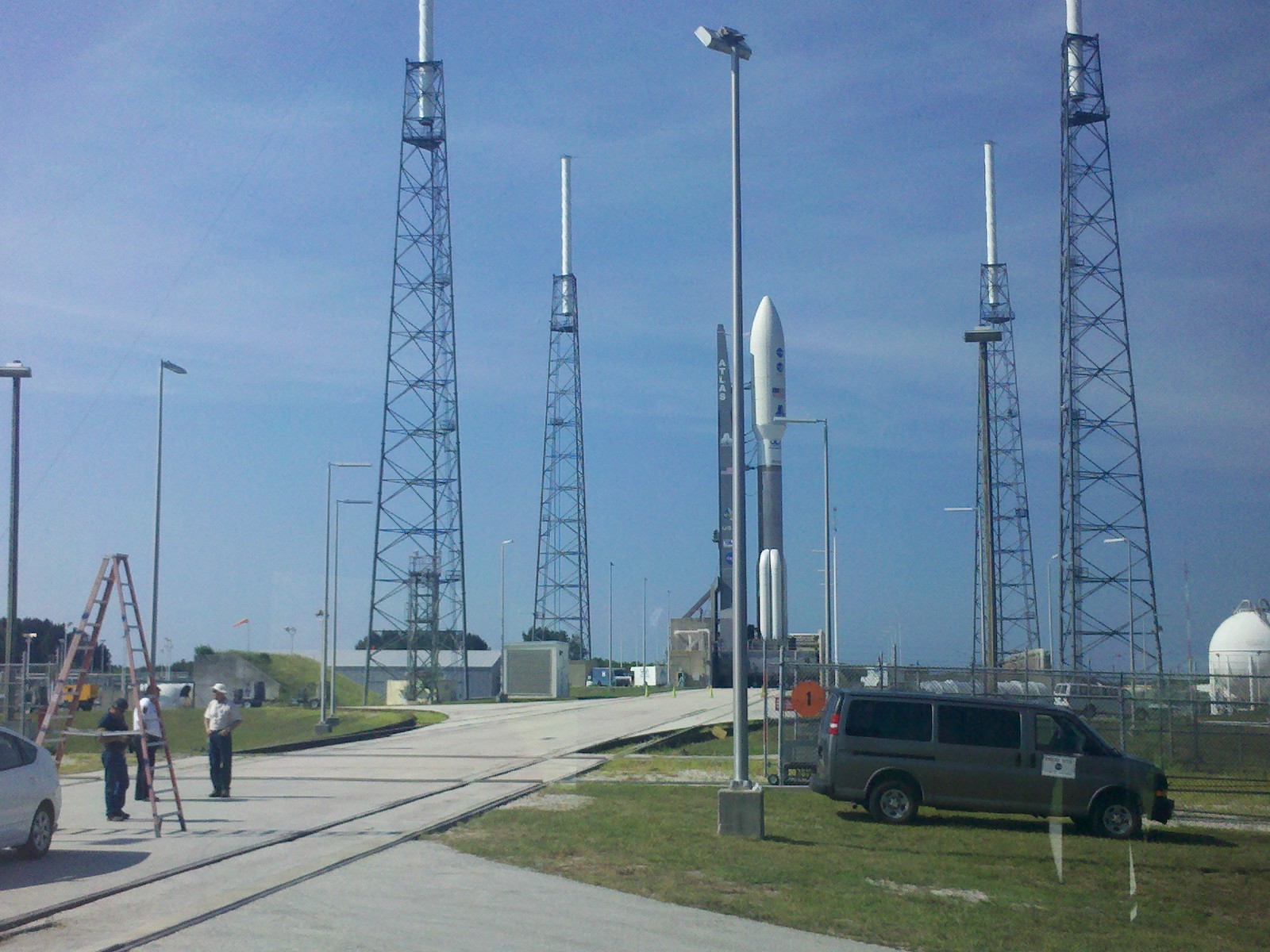
    LC41 Atlas Centaur Juno
    Juno's ride, an Atlas V in 551 configuration (5-meter payload fairing, 5 solid rocket strap-ons). Under the fairing is a Centaur second stage and Juno. Around the launch platform are four giant lightning rods on towers.

    The Juno spacecraft was launched on a five-year trek to Jupiter, in a beautiful trajectory that makes perfect sense when you see it. It’ll loop out in an elliptical solar orbit that takes it just past Mars, like it wants to get to Jupiter but can’t quite make it.

    It will swing back towards Earth, inevitably, as if in defeat. “Hey buddy, could you help me out here?” It will pick up enough energy from the slingshot pass for a bigger orbit that just reaches Jupiter, where it will be captured and spend a year in a polar orbit studying the amazing planet.

    But that’s not what I came to talk about. The occasion for me being at the launch was remarkable.

    NASA is taking social media, especially Twitter, very seriously. Yes it seems whimsical, silly, even stupid, right down to the name “Tweetup,” a meet-up of Twitter users. As it turns out, there’s brilliance in the whimsy.

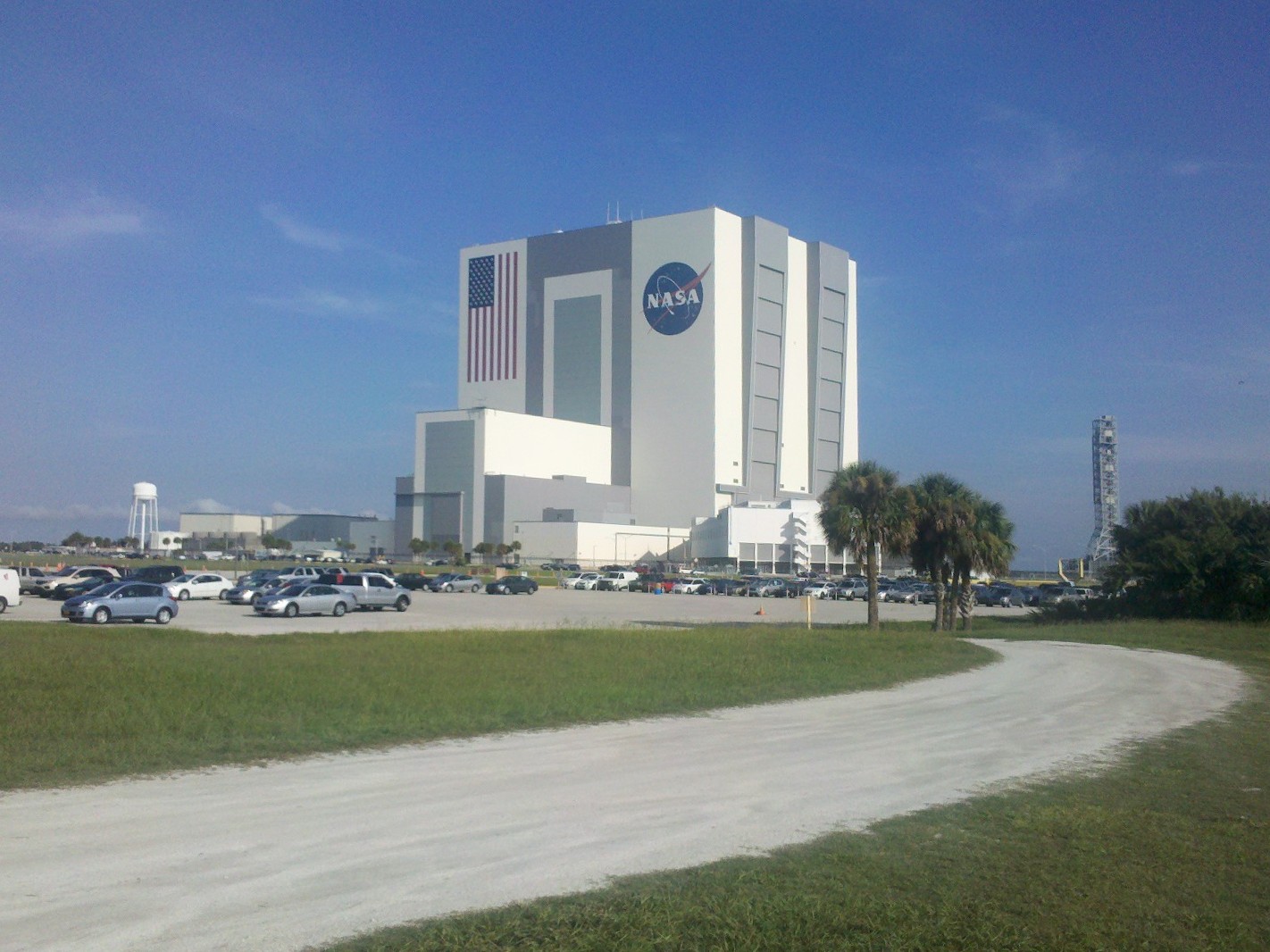
    VAB
    Our view of the Vehicle Assembly Building from the media parking area.

    The Tweetup was a two-day affair, based in a large tent pitched in the classic Kennedy media area next to the famous countdown clock, in the shadow of the enormous Vehicle Assembly Building. Even the old CBS News shack is there. The invited guests were 150 tweeps (Twitter people), normal people with extraordinary interests and talents, each one screened and badged. Six were foreign nationals.

    After the launch, on Friday night at dinner with a JPL executive he described us as “multipliers.” Each individual there was like the eyes and ears for at least a hundred others. It makes sense.

    I never imagined the unprecedented access we would have. This was nothing like the theme-park-like tours offered across the way at the visitor’s center. Don’t get me wrong — I’ve enjoyed those tours immensely and highly recommend a trip there. But a NASA Tweetup puts you right in the thick of things.

    We spent the first morning in the tent, beginning with everyone introducing themselves. We had beautiful material packets, and a program with everyone’s Twitter handle.  We had talks from notables such as Scott Bolton, Juno’s principal investigator; Jim Adams, the planetary science deputy director at NASA; and the mission designer Steve Matousek.

    The best part was that we could ask them questions — both in the form of “press conference” style questions and informal chats. They knew we were their people. The talks were streamed live on Ustream by Kennedy’s professional A/V crew.

    I had a voice mail message that night from my mom back in California saying she saw me asking a question at NASA on TV. I still don’t know what she was watching or which of my questions she saw, but I know it was from one of her local news outlets. My guess is that they picked up a question I asked of Jim Adams about the connection between this Atlas V rocket and the Atlas rockets that launched Mercury in the 60’s (their name is the only thing in common).

    During the event, all my “rocket geek” history started twitching, from my days as a kid building and launching model rockets, and following along with every mission configuration with my own kit-built static models.

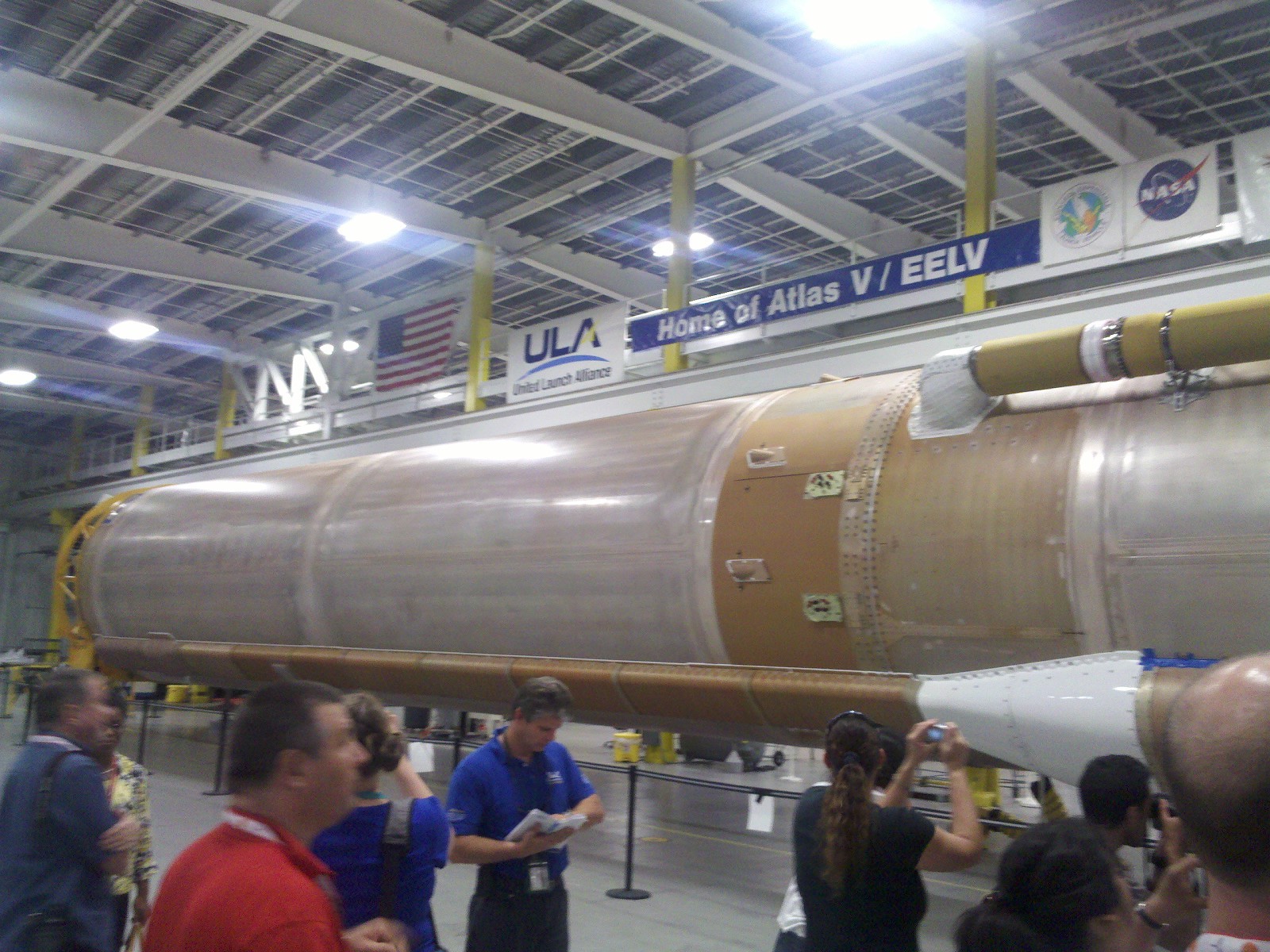
    Atlas V booster for MSL
    In the hangar where this Atlas V booster will soon be mated to the Mars Curiousity (MSL) Lander

    Then came the afternoon tour. At Cape Canaveral Launch Complex 17 we saw the Delta II rocket in its service structure ready to be loaded with the Grail mission launching next month. Reps from NASA launch services and United Launch Alliance stood next to each other embodying their strange and strained relationship of government and industry — part sales and business, part science, exploration, and bureaucracy. ULA has a warehouse with five Deltas available for missions. “I’ll take one,” I said.

    They walked us into the Atlas Space Operations Center, where we were told not to take pictures, though you can see it in all of the Atlas launch coverage. Next, in the first of several OMG moments, we were escorted into a large hangar and stood ten feet from the Atlas V booster waiting to take MSL, the Mars Curiosity rover, to Mars in November. Here we could take pictures.

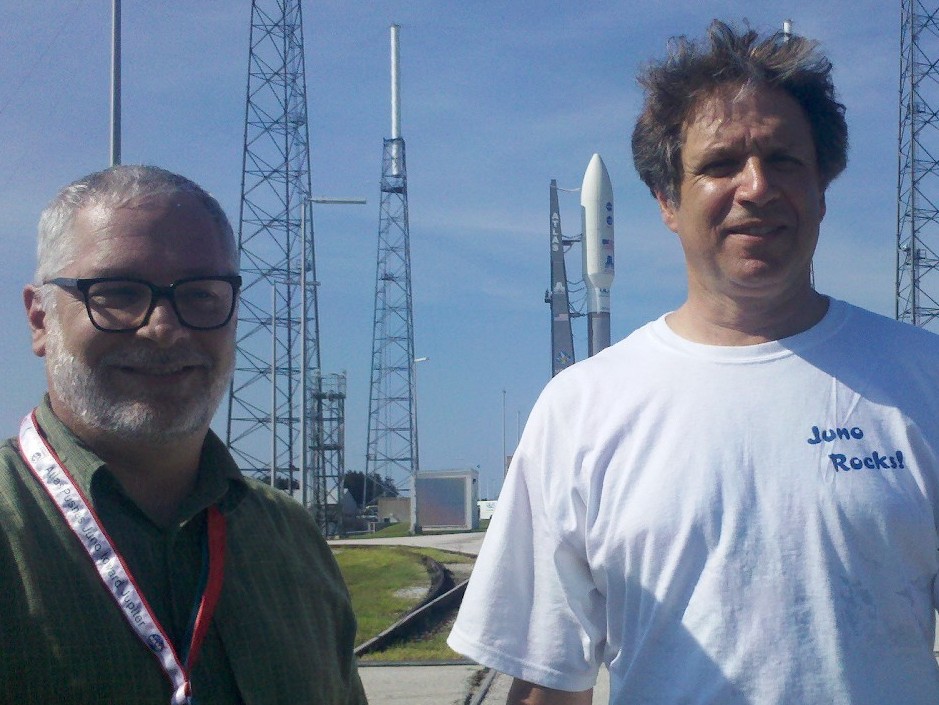
    Mojo with Scott Bolton at LC41
    Mojo poses with Juno Principal Investigator Scott Bolton at Launch Complex 41 the day before launch.

    The next surprise came when we were dropped off at Launch Complex 41, a few hundred feet from the Atlas/Centaur/Juno stack ready to fly. P.I. Scott Bolton was there with his family, joining us to gaze at the rocket and spacecraft, joking that “it’s all a boondoggle! The payload is really full of cork.” Together we were all spending one last moment with the hardware nearby.

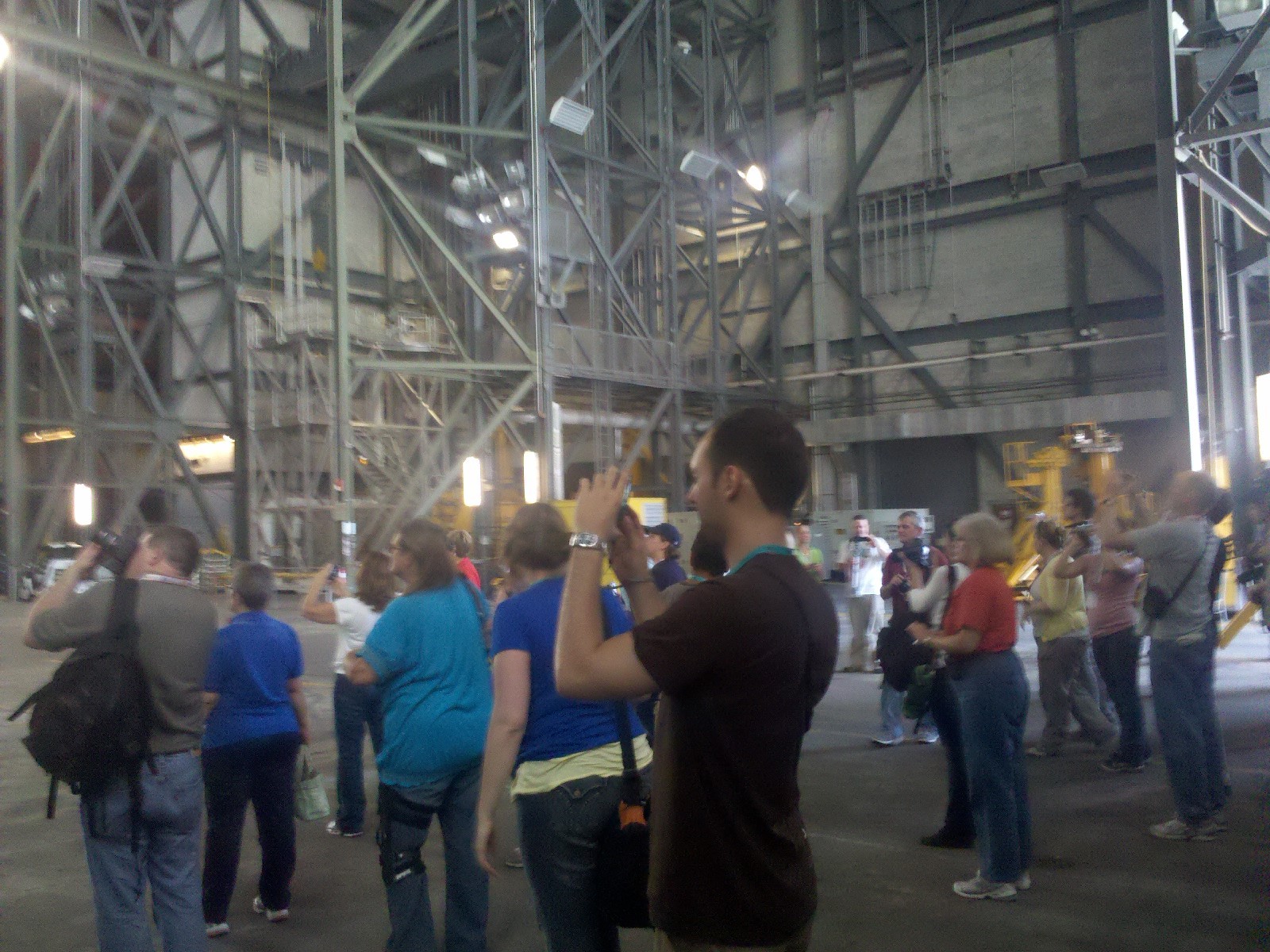
    Our last stop was the VAB, the enormous Vehicle Assembly Building, built for the Saturn V rocket, and never a part of any tour. Until recently, it was a busy working industrial place, and the quiet and emptiness inside was eerie and sad.

    Inside the VAB
    Tweeps agape in the eerily quiet and sadly empty Vehicle Assembly Building.

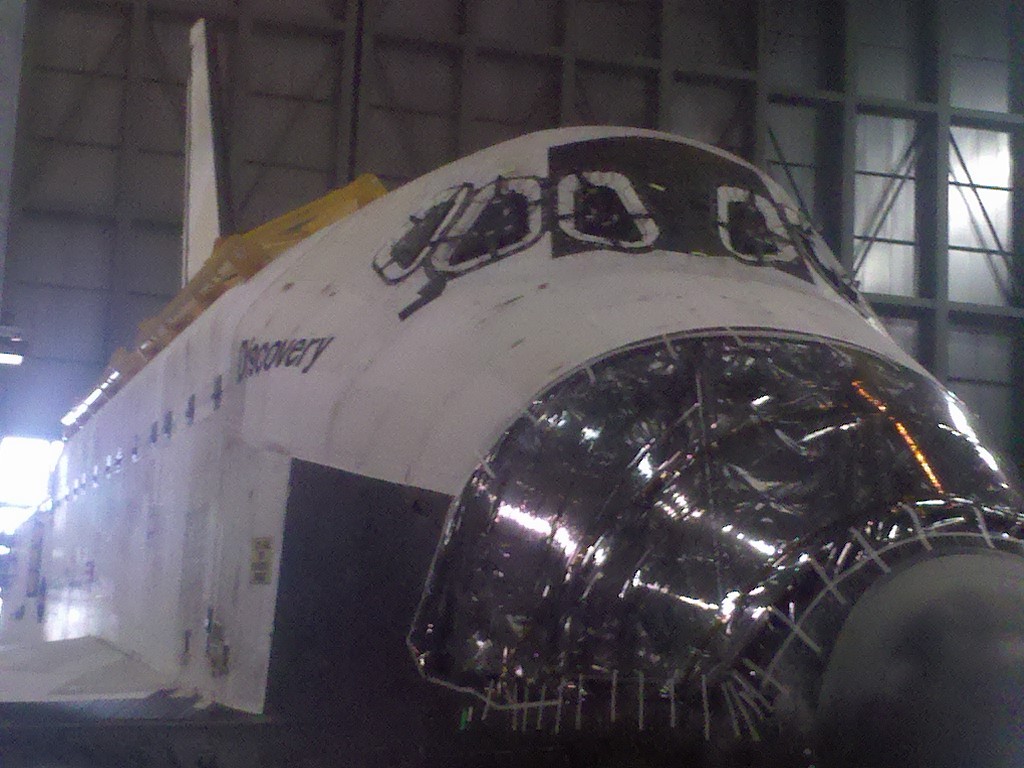
    Nestled in one corner of the VAB was shuttle Discovery, its forward reaction control system removed as part of its preparation to be a museum piece.

    There wasn’t a dry eye getting back on the bus.

    Discovery in the VAB
    Discovery in the VAB with its forward RCS removed in prep for museum duty. The other orbiters were at the Orbiter Processing Facility.

    Emotionally drained and amazed, we all adjourned for the night, hoping for worthy launch weather the next day. It was looking good. Friday morning, August 5, would be launch day.

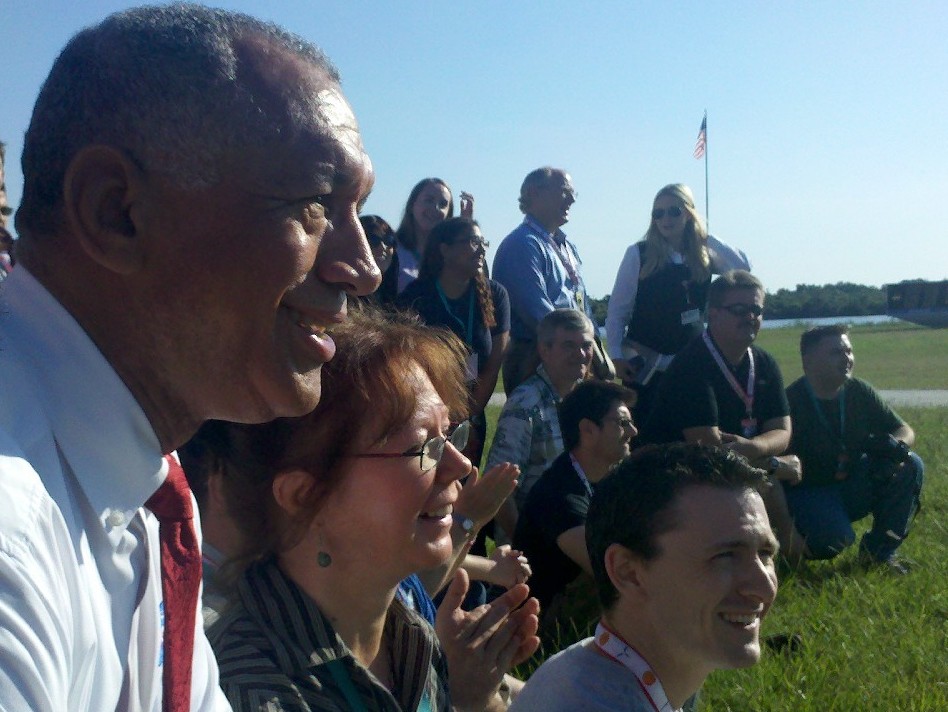
    And yet NASA wasn’t finished dazzling us. I thought the program was teasing us by listing NASA Administrator Charlie Bolden among the speakers. It was no tease. There he was shaking hands, clasping shoulders, speaking and taking questions, and joining us for the group photo.

    Charlie Bolden
    I snapped this picture of Charlie Bolden as we all posed outside for the Tweetup group picture.

    Andy Aldrin spoke. Maybe that name sounds familiar — he’s Buzz Aldrin’s son, and now an executive at United Launch Alliance. We had lots of great questions for him about “man-rating” the Atlas V, which he had fun correcting to “human-rating.”

    Off-mic I shouted “How about alien-rating?”

    With a smile he said, “Hey if there’s a business case for it, I’m all over it.”

    We asked Andy about the elephant in the room: his being the son of Buzz Aldrin. “That’s the first time I’ve heard my dad referred to as an elephant.” Where he grew up, it seemed like everyone’s dad was an astronaut. “My dad was cool because he could pole vault.” (At least no one asked him about Dancing with the Stars.)

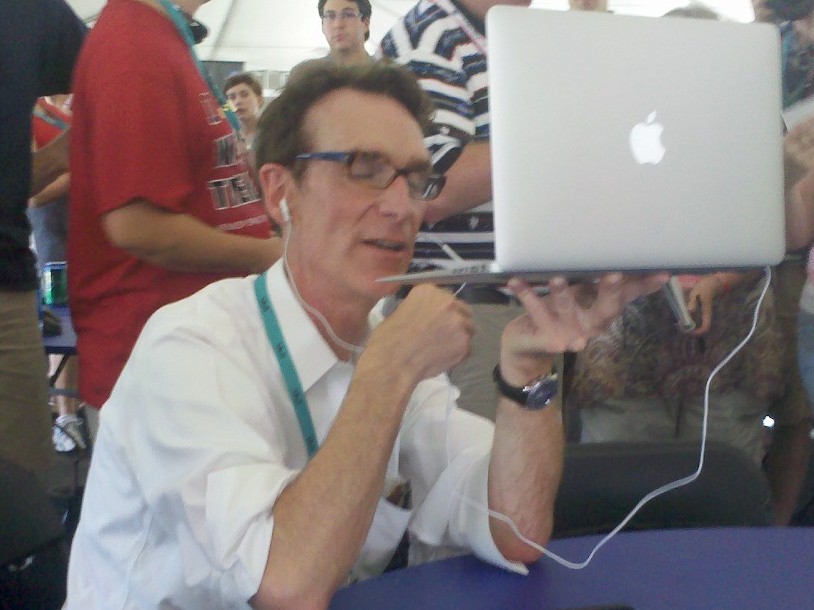
    The biggest ovation may have been for Charlie Bolden, but the second biggest was for Bill Nye @theScienceGuy. The room was full of people, perhaps a generation behind me, who grew up with his entertaining science features. They were enthralled to be sharing a tent and watching a launch with him. There was a long line for autographs after the launch.

    Bill Nye
    Bill Nye does a Skype feed for the Planetary Society in the Tweetup tent after the launch.

    Bill Nye fielded a great question about getting girls into science and technology. He had some interesting insights around the different timing in development between girls and boys and when we teach algebra. That needs fixing, somehow. “When someone learns algebra they learn to predict the future.”

    The launch itself had all the best features and drama of a launch: a downward counting clock, a helium recharge anomaly finally traced to a ground system, a range safety hold, and finally a mind-blowing launch sequence that ended with fully-deployed solar panels.

    I took one launch picture, which isn’t worth posting. Mostly I just enjoyed watching it. My favorite launch production is ULA’s gorgeous highlight reel that’s truly “rocket porn.” Watch a couple of their launch highlight reels and tell me if you don’t agree.

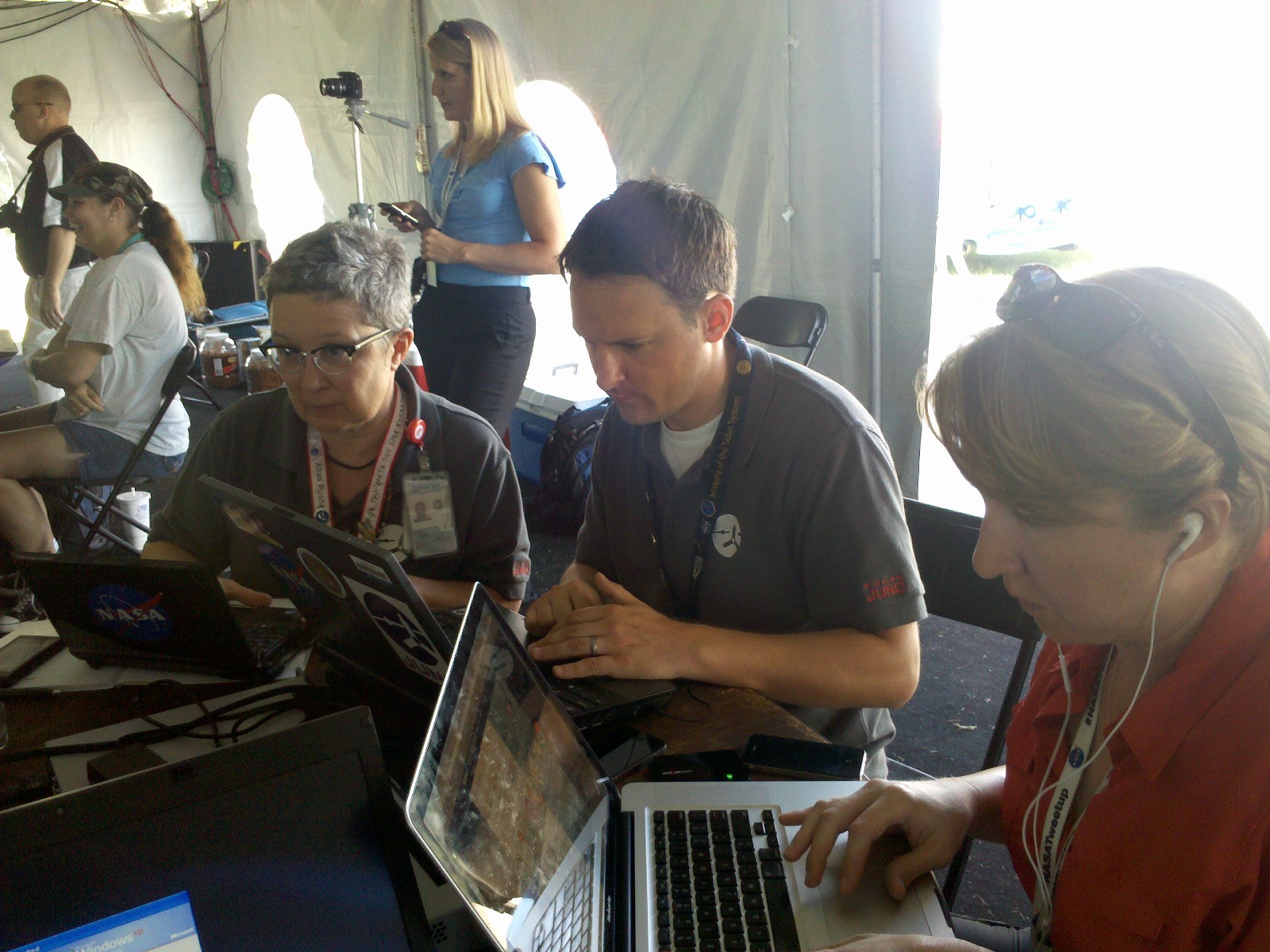
    Three NASA tweeters
    Three prominent NASA tweeters during a launch hold. Left to right, Jane Houston Jones @CassiniSaturn, Preston Dyches @NASAJuno, Stephanie Smith @NASAJPL

    I stayed the next couple of days with Jane in the Cocoa Beach Courtyard by Marriott. We traded smiles and stories with the small army of scientists and technicians who had descended on Florida for the launch, everyone sharing the afterglow. The lobby and bar held a constant gathering of Juno folk.

    On Saturday we traveled with Preston Dyches (@NASAJuno) and his wife Margot to the Universal Orlando resort. We just had to visit the new Wizarding World of Harry Potter. The signature attraction, “Harry Potter and the Forbidden Journey,” really raises the bar for a theme park thrill ride. Amazing tech and execution.

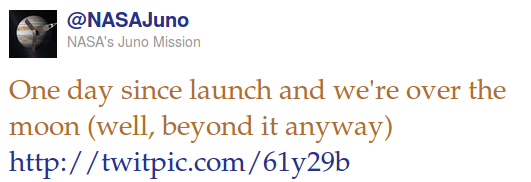
    Much of the fun that day was to have Preston in the back seat of Jane’s rental car contemplating what to tweet from the @NASAJuno Twitter account for that day. We all agreed that a tweet exactly 24 hours after the launch would be ideal. From his iPhone, he used JPL’s Solar System Simulator to generate a plot that showed Juno already beyond lunar orbit.

    When the time came to actually send the tweet, we were all having frozen “butterbeers” at the Hog’s Head pub in Universal’s Islands of Adventure. For a while we wondered if the signal from AT&T would be steady enough, but they eventually came through. Here’s the tweet he sent.

    Juno tweet

    Sunday, Jane and I visited the official public KSC visitor’s center, trolled the gift shop, and watched Hubble 3-D in the IMAX theater. We were amazed and delighted to see her Galileo telescope on display in the IMAX theater as part of a Galileo exhibit. Sunday night I flew home.

    There are so many other delicious details that I took back with me:

    I love the Atlas V with its massive efficient Russian RD-180 engines.

    I love how the main propellant RP-1 (Rocket Propellant 1, or Refined Petroleum 1, basically very pure kerosene) is liquid at ambient temperature, while the LOX liquid oxygen requires cryogenic handling.

    I was fascinated to recognize that the white section of the booster was really just ice around the LOX tank, while the lower RP-1 section kept it’s metallic bronze color. I wonder how much ice weight they have to compensate for at launch?

    I’m amazed that they can mount five solid rocket boosters around the Atlas in a non-symmetrical pattern, and the main engine can compensate.

    I had no idea that ULA was a joint venture between Boeing and Lockheed-Martin in an effort to minimize redundancies.

    I’d love to spend a day in Andy Aldrin’s office.

    It’s remarkable to see that they build Atlas vehicles in a vertical assembly building, then roll them out to the pad, whereas Deltas are stacked at the pad in a service structure, which they then roll away for launch.

    NASA is giving these Tweetups a first-class budget with serious attention to detail. The tent roof had industrial-strength WiFi nodes mounted every twenty feet. Each round table had a power strip. The tent was fed with tons of air conditioning. It’s probably some of the most efficient spending on public outreach they’ve ever done.

    The pictures are all mine, taken with the mediocre camera in my original Motorola Droid. They’ll serve. Click each for the full-size.

    Thank you for bringing out my latent rocket geek! Go Juno!

  • January observing, a Monoceros evening

    Click here for the full photo album with lots more pictures.

    Mt. San Jacinto
    The snow-capped peaks were beautiful from the Foothill Freeway

    It had been several months since our schedule, the weather, and the moon phase all cooperated to give us a chance to get out to our favorite astronomy spot. Jane and I, joined by Dave Hasenauer, ventured out to the Colorado Desert with promises of a chilly evening but mostly clear skies. The snow-capped peaks of San Jacinto and Gorgonio mountains were calling to us from almost our first moment on the road.

    Twilight on Chuckwalla Bench
    Twilight on Chuckwalla Bench

    During our twilight setup, some fellows from Arcadia stopped to check out the equipment. Dave was all set up and ready to show Jupiter if we could find it. While hunting in the twilight glow, we all exclaimed as a flock of probably 100 geese were approaching from the west. The geese turned out to be our guide to Jupiter! They flew right in front of the planet, and gave our eyes a convenient focus target. We all enjoyed the view through Dave’s big dobsonian.

    Jane had plans to attack the faint periodic comet 103P/Hartley, famous for its huge outburst of a year ago. Jane and Dave both claim to have found the glow of the incredibly diffuse comet. I tried for an image of it myself, but was convinced I didn’t have anything. This is my shot, with the comet buried deep in the winter Milky Way in Monoceros.

    Milky Way stars with a faint comet
    Can you find the comet?

    Can you find the comet? Here’s a full-resolution crop of the center of that field. Look right in the middle, and try to ignore that my focus wasn’t especially good for this picture!

    Comet 103P/Hartley
    Look for the faint cotton ball in the center.

    I was delighted that most of my hard-won imaging skills hadn’t been completely lost during the time away from it. I didn’t get a perfect focus for my first couple of shots of the evening, the comet Hartley photo above being one.

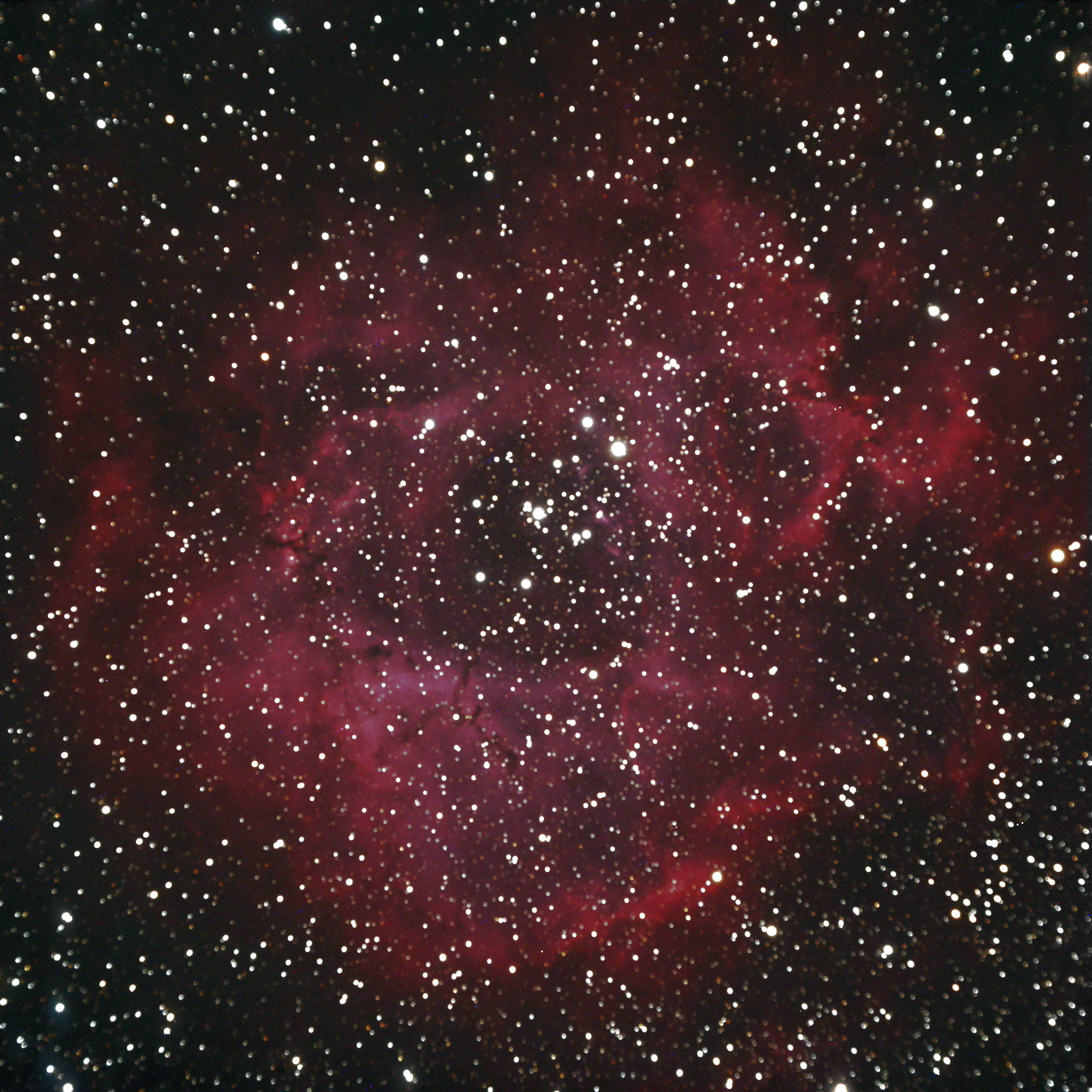
    Even with a less-than-perfect focus, this one of the Rosette Nebula in Monoceros turned out pretty well. This is only 30 minutes of exposure, and it’s pretty clear this object would benefit from a couple hours of exposure time.

    Rosette nebula
    The Rosette Nebula, click for the full frame

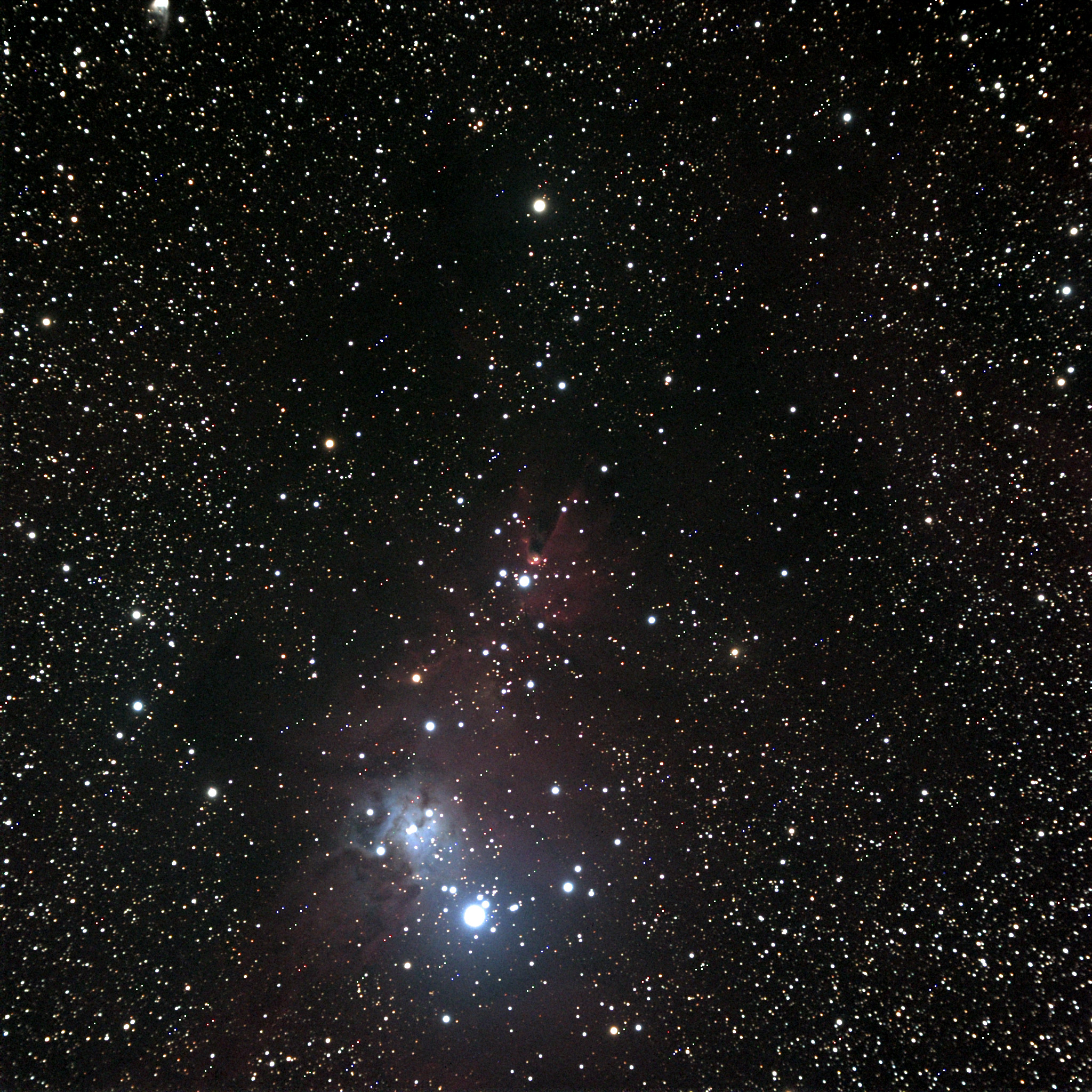
    The Cone nebula is another one that could benefit from a lot more exposure time, but at least by now I’d corrected the focus. I love this beautiful field, with a vast mix of Milky Way stars, emission, reflection, and dark nebulae. The “cone” that gives the nebula its name is near the center of the image. This is also two 15-minute exposures stacked.

    Cone nebula
    The Cone nebula in Monoceros, click for the full resolution image.

    A bright supernova was discovered just a couple weeks ago in small distant galaxy NGC 2655 in Camelopardalis, very high in the northern sky. Jane and Dave both enjoyed hunting it down, and the nova is bright and easy, itself as bright or brighter than the rest of the galaxy. Of course I had to get an image, here’s my crop of the field with the supernova marked.

    NGC2655 and supernova
    Supernova in NGC 2655, click to see the whole wide field image.

    Finally Jane suggested this great pairing, “The Owl and the Cigar,” she called it, M97 the Owl Nebula paired with galaxy M108 in Ursa Major. I only got one 15-minute exposure of this field, as the clouds were starting to move in, but I loved the colors in the Owl nebula, and the detail in M108. It’s fun to contemplate the difference in their distances, with the Owl being the gasping exhalation of a single star in our galaxy, and M108 being billions of stars in a very distant galaxy.

    M97 and M108
    The Owl and the Cigar, M97 (top) and M108, click for full resolution

    The first half of the night was interrupted several times by loud flights of two or three helicopters passing nearby. We speculate that they may have been in service to the border patrol, using infrared or intensified imaging. Our little site must have been interesting to see from their vantage point.

    Pre-dawn Chuckwalla Mountain with the moon and Venus
    Pre-dawn Chuckwalla Mountain with the moon and Venus

    By the time the sky show was interrupted by clouds, we all were tired and cold and felt like we’d had a full evening. Amazingly it was only 11:00 p.m.! We all tucked ourselves into warm sleeping bags to catch a few hours of sleep. Meanwhile the sky cleared again for spectacular pre-dawn show of the moon and Venus. We all got up to enjoy the old crescent moon, Saturn, and watch for Mercury to rise over Chuckwalla mountain.

    With the local star finally clearing the horizon, we packed and headed off to breakfast at Chiriaco Summit. By the time Jane and I arrived back home in Monrovia, it was raining!

    P.S.: In the photo album linked here, I included some detail photos of my astrophotography equipment, with captions, for the benefit of some friends who’ve wondered how these things happen.

  • How SAYC Happened

    It’s sort of my fault.

    I was at the bridge club a few months ago when a young asian fellow stopped in to see how the games worked. The director invited him to kibitz my table, and I chatted with him a little between hands. He admitted that he enjoyed playing bridge and sometimes played online. And he mentioned that he played SAYC. That’s the Standard American Yellow Card published by the American Contract Bridge League (ACBL)

    I had to smile. That’s kind of my fault. I told him the story, but I’m not sure he believed me.

    It started with OKBridge

    It was 1993 or so when we first started playing bridge online using a system built by Matt Clegg called OKBridge. Matt had learned to play in college, and wanted to find a way to keep playing as his friends scattered around the map after school. OKBridge proved very popular, and started attracting players from every corner of the internet. I loved playing there and became friends with Matt.

    Those were the days when you would connect to the net from your Unix system, or dial-up to a Unix host such as Netcom with a terminal emulator. The OKBridge client was a “curses” terminal app, later growing into a Windows app and all the other doodahs you find today. I know Matt turned it into quite a business, but we haven’t kept in touch.

    While it was great joy picking up partners and opponents from the four-corners of the world, it was always difficult to agree on a system of bidding conventions quickly for a pick-up game.

    I had just the idea.

    Mojo “yellow card” Appleseed

    Long prior to this, the ACBL had developed a reasonably simple “standard” convention card with a few popular modern conventions for use specifically in individual tournaments, where you would have a different partner for every round. They called these “Yellow Card Individual” events at the tournaments. The convention card itself was printed on yellow paper and they offered a detailed document of exactly the specifications of the system.

    I recognized an opportunity. I called ACBL and ordered a stack of 500 Yellow Card convention cards and 100 of the accompanying booklet.

    On OKBridge and in discussions on Usenet rec.games.bridge, I offered to send a copy of the card and booklet to anyone who would send me a return envelope. I probably mailed thirty or forty cards and booklets.

    I was working for Caere Corporation in Los Gatos at the time; we specialized in optical character recognition. I had access to scanners and OCR software, and soon had an electronic rendition of the convention card itself as a GIF (in color, and yellow of course), and scanned the booklet after work to have the full text description of the system available.

    Everyone hates it

    I remember the reaction being mixed. The card itself didn’t match anyone’s existing card. Everyone had complaints about this or that agreement in the card. The experts wanted a 2/1 Game Force card, and the beginners couldn’t really take in everything on the card. If I sit down with a partner before a game, our card would be a lot different from SAYC.

    Even so, people saw the value of having something concrete that could be agreed to in seconds that should be well-understood, especially given the detailed text description. SAYC hadn’t been known by that abbreviation before then, it was just “the Yellow Card.” In the online bridge shorthand that quickly developed, SAYC as an abbreviation was inevitable.

    Fast-forward to November 2009 where I’m attending the ACBL’s Teacher Accreditation Program as a refresher at the San Diego Nationals. I’ve just returned to the game after a nine-year hiatus, and thinking of teaching bridge again. There I learned that they’ve tweaked the “Bidding” course to match with the specifications of the Yellow Card.

    In the past month or two I started playing online on BridgeBase, a beautifully constructed online bridge playing network. SAYC is the “default” convention card there.

    No one uses it right

    Now let me step on my soapbox for a moment.

    Here’s a typical profile note on BBO:

    “SAYC. Xfers, weak 2’s, jumps, NF Stayman, weak jump response”

    What’s wrong with this picture?

    First of all transfers, weak two-bids, and weak jump overcalls are already part of the SAYC convention card. Mentioning them again is redundant.

    Secondly, weak jump responses and non-forcing Stayman are not part of SAYC. You shouldn’t say you’re playing SAYC when you’re not playing SAYC! Sure, it’s Standard American at its roots, but it’s not the Yellow Card. [Edit: Actually NF Stayman is not excluded from the Yellow Card, (or any other system that uses Stayman).]

    To truly play SAYC you should use its set of conventions without changes, love ’em or hate ’em. And it’s not really that bad.

    The most complex convention on the card, arguably, is Jacoby 2NT major suit raises. People know the 2NT bid, but many people are unfamiliar with the opener’s rebids, which are spelled out quite precisely in the Yellow Card booklet.

    Come play with me

    So yes, I have a favorite convention card. I will also play SAYC. All I ask is that if we sit down at a table and you offer to play SAYC, say it like you mean it! There are great advantages to having a precisely spelled-out system that both parties understand.

    Find me on BBO as MojoLA.

    Postscript: It’s been many years since I’ve seen the original ACBL Yellow Card or its description booklet. I’ll try to find links to the originals and add them to the blog here, just for fun.

  • Sky full of planets and lightning

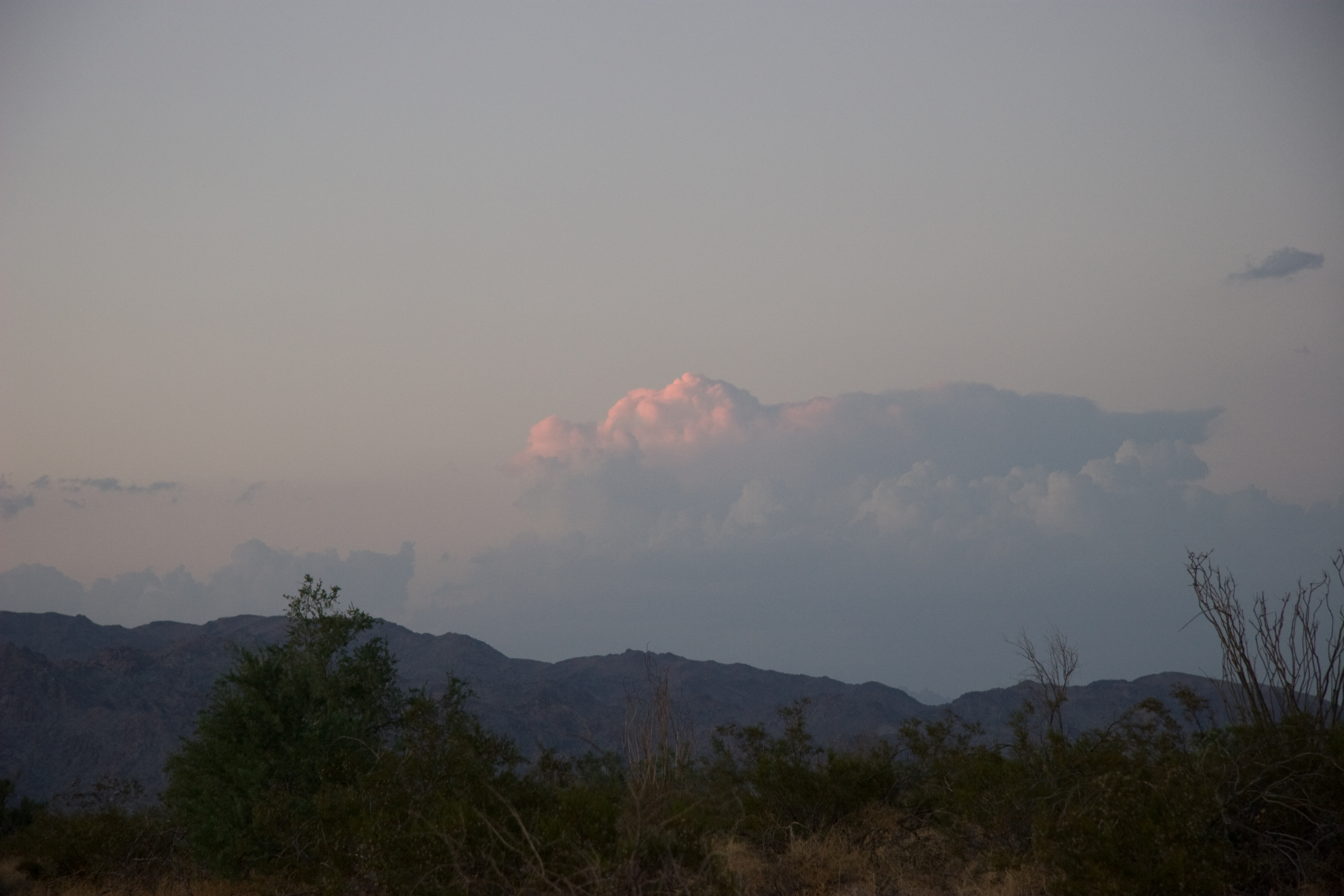
    Distant cumulus clouds catch sunset rays
    These cumulus clouds were nearly stationary all evening, making quite the light show with an electrical storm

    Observing report, August 7, 2010

    Chuckwalla, CA

    We hadn’t expected to be able to observe during this part of the summer from Chuckwalla Bench in the High Colorado desert south of Joshua Tree, but this August night’s forecast at Desert Center looked very inviting. The forecast high there was 101°F with a low of 74°F. I believe our actual location is at a higher altitude; it always seems at least a couple of degrees cooler.

    It was forecast to be breezy though, and that can make it uncomfortable to observe as well as blow telescopes and tripods around. We did have some periods when the wind was a nuisance, but for the most part it was pleasant t-shirt and shorts weather all night long.

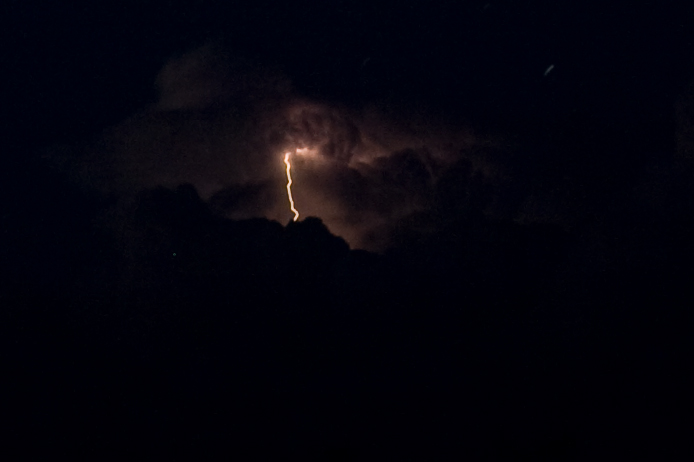
    Lightning in the desert
    I caught this great lightning bolt from the distant electrical storm, with the camera on a small tripod and the bulb left open for a while.

    We had crystal clear transparent skies overhead all night, with a great sugary Cygnus Milky Way transiting high overhead mid-evening, but there was an interesting weather phenomenon happening some number of miles north-northeast of us.

    As the sun was setting, we had this great view of some towering cumulus clouds catching the sunset glow to the northeast. Over dinner I thought I saw a lightning flash in the clouds. As it turned out, throughout the evening all the way to 2:00 a.m. we were entertained by a sometimes massive electrical storm that seemed to be nearly stationary. I caught this one good lightning strike off in the distance. The full-res version is a crop from the center of a very large picture.

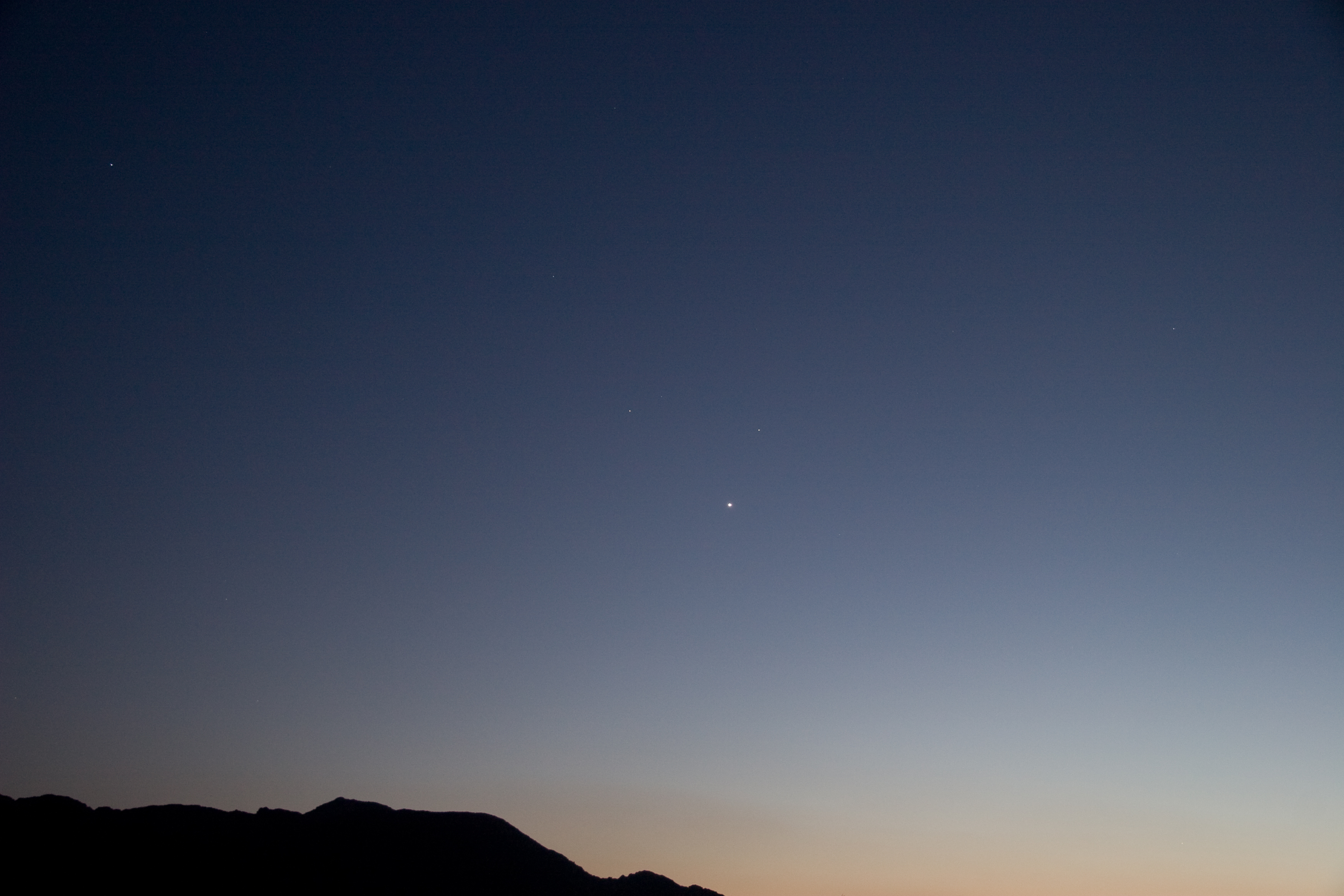
    It was also to be a fun evening to see a planet grouping in the west, following the sun to the horizon. I caught this great shot of bright Venus, with Saturn to the upper right, and Mars to the left. To the far left is the bright star Spica. Click to see the great full-resolution picture. In binoculars, Mercury was also visible, but deep in the red sunset glow well out of the field of this picture. In a few days the crescent moon will join the trio for another good picture.

    Venus, Mars, Saturn
    Bright Venus grouped with Mars (left above) and Saturn. Click for the full 4MB experience.

    I did take a couple of interesting piggyback Milky Way pictures. My focus wasn’t perfect, and the white balance doesn’t seem quite right. They are mostly untouched except for some slight darkening of the blacks. They are both five-minute exposures on my stock Canon 20D. I think if this camera were modified to remove the deep red filter, the red hydrogen-alpha glow of the North America nebula would show more.

    Cygnus Milky Way
    Cygnus Milky Way, north with bright Deneb to the lower left from center.

    And here is a late-night shot of Cassiopeia.

    Cassiopeia
    Cassiopeia reclines in the summer Milky Way. The "double cluster" is visible near bottom center.

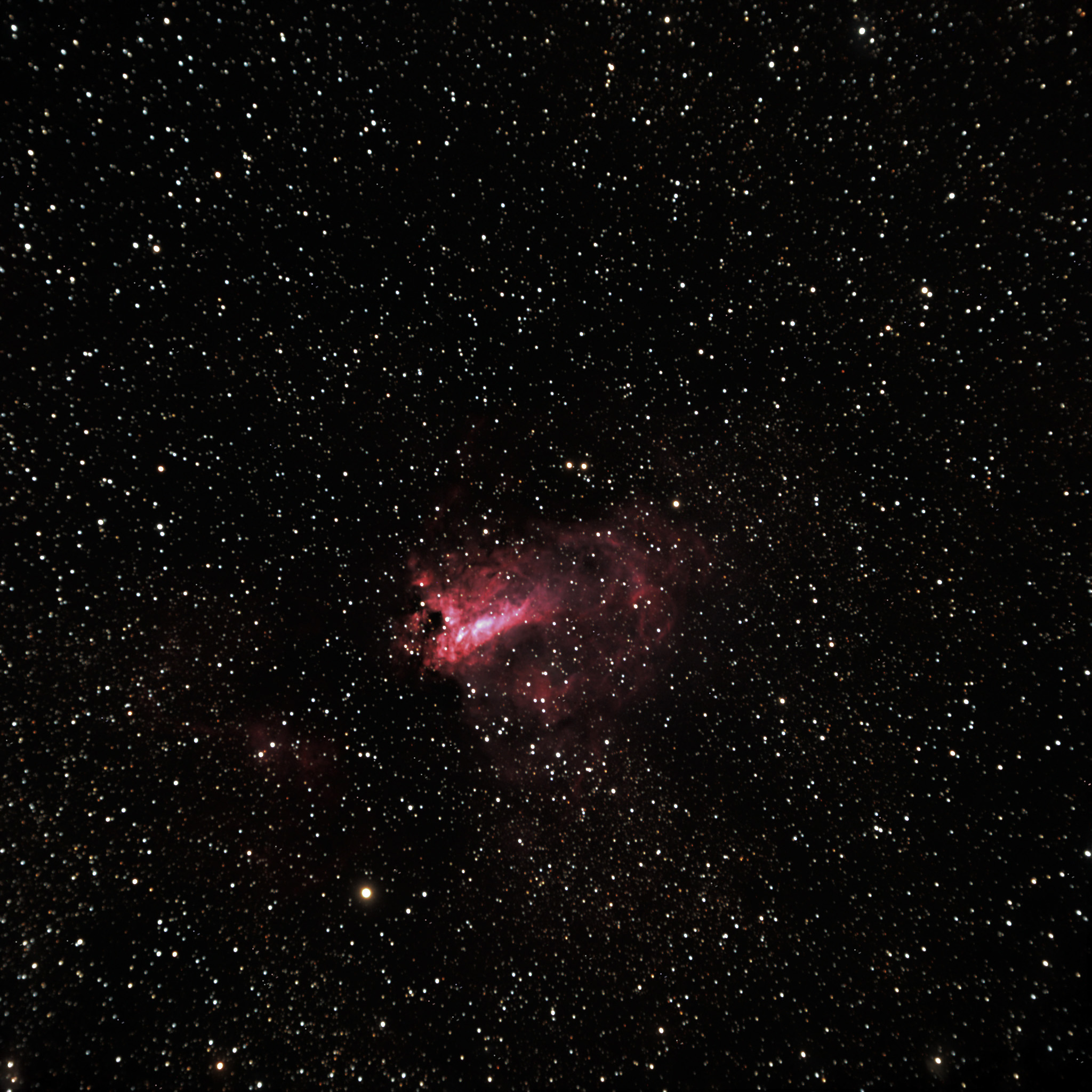
    And of course I did some exposures through the Astro-Physics Traveler as well. Here is the Swan Nebula, M17, four ten-minute exposures, ST-4000XCM one-shot color camera. Click on each for the full-resolution image.

    M17
    M17 also known as the Swan Nebula or Omega Nebula.

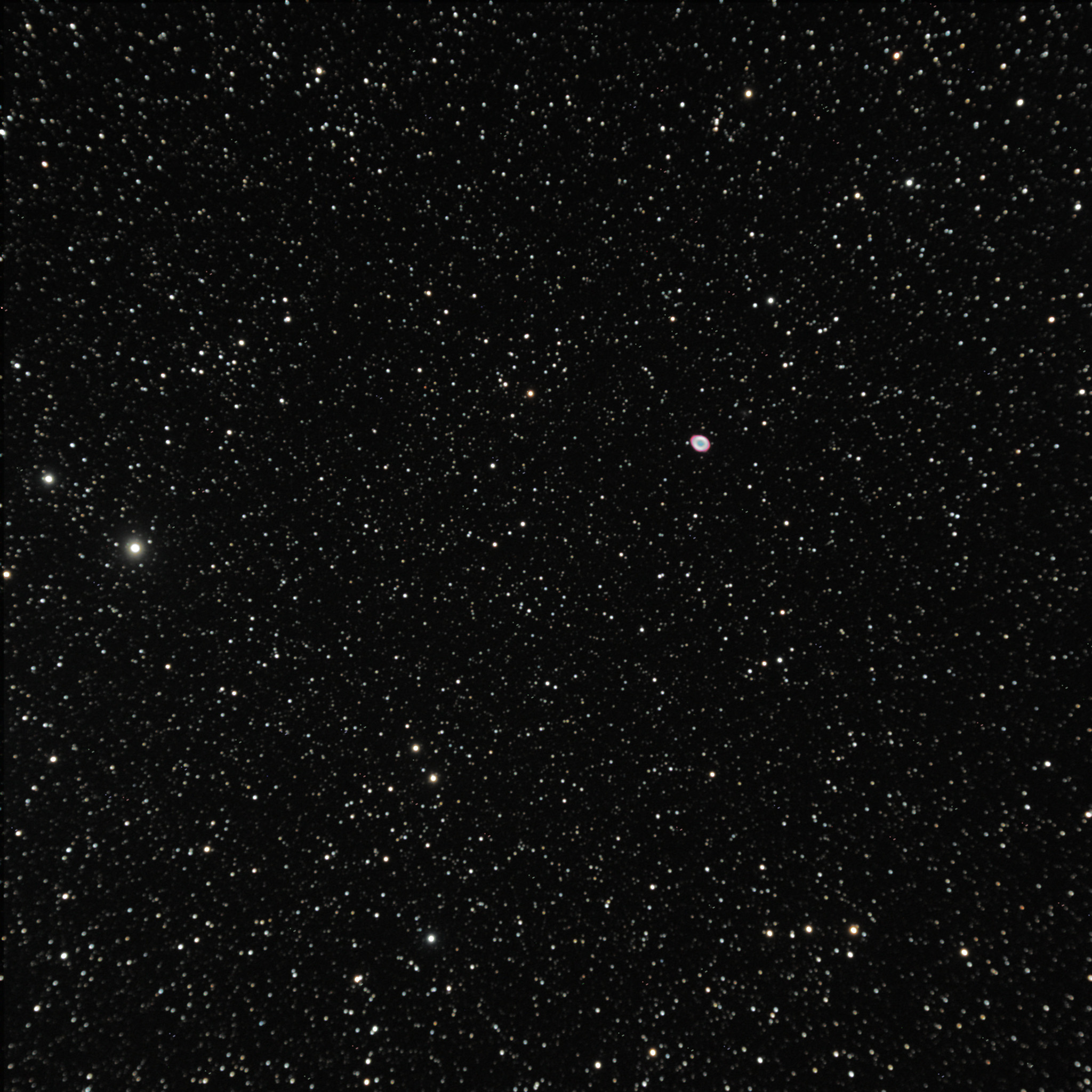
    I knew that the Ring Nebula, M57, would be an almost silly target for a telescope with this wide field of view. It would appear as a tiny donut swimming in a field of Milky Way stars, just as it often does visually in a telescope. Of course that made it irresistable. Here is the full field:

    M57
    There's the Ring Nebula, M57, just right of center.

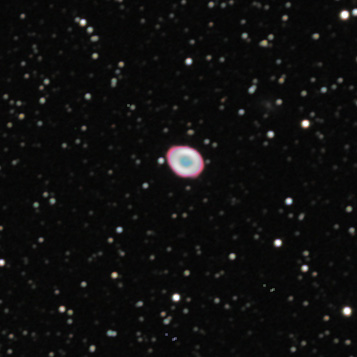
    And now as you can see in a crop at full resolution, it’s not a bad image at all. This is three ten-minute sub-exposures (30 minutes total).

    M57
    Full-resolution crop from the wide field above, M57 the Ring Nebula.

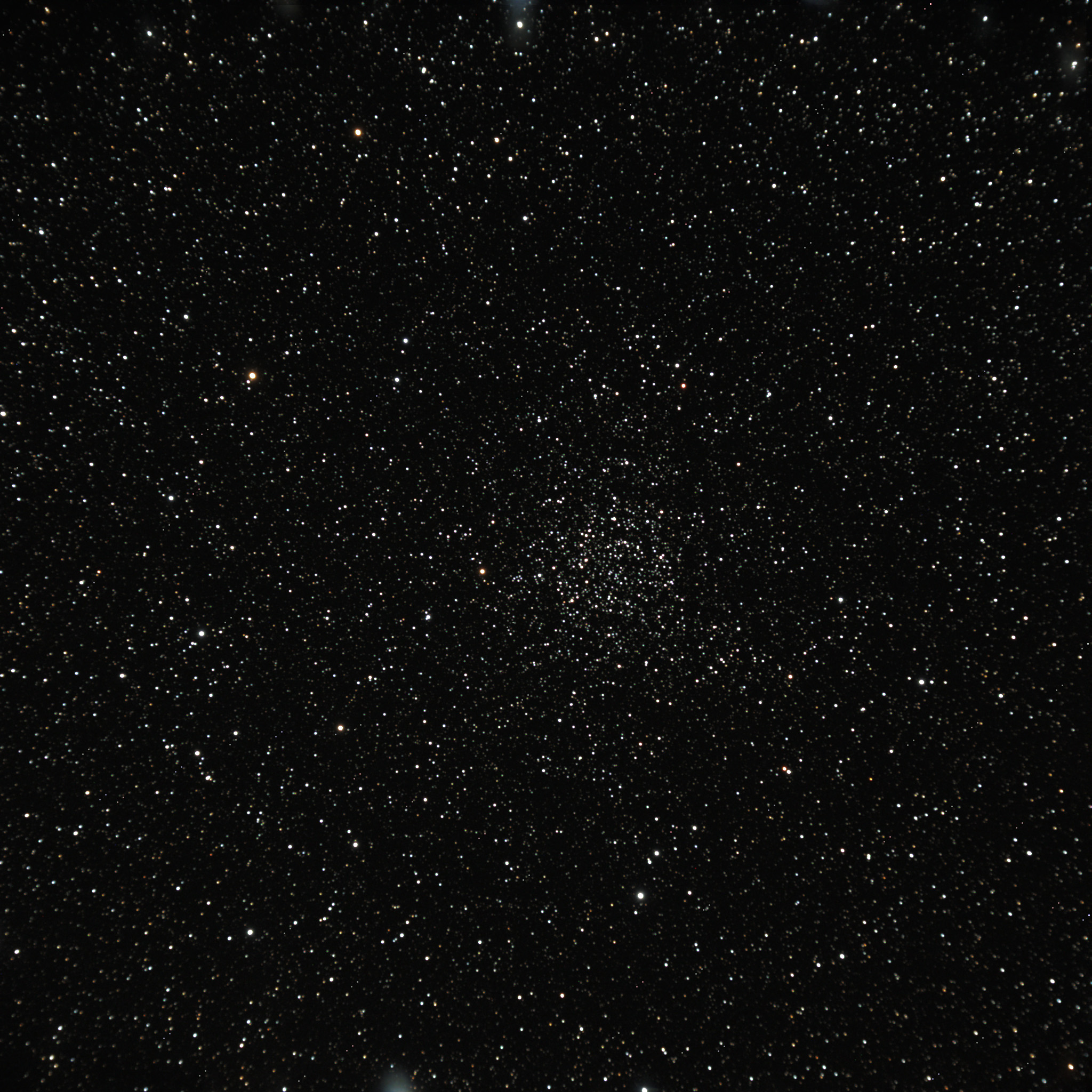
    Finally I wanted to get one of Jane’s (and my) favorite Cassiopeia star clusters, one discovered by Caroline Herschel, and known as the Magnificent Cluster, NGC7789. This scaled down version is not terribly impressive, but the full-res image is a treat to swim around in.

    NGC7789
    The Magnificent Cluster, NGC7789, in Cassiopeia

    On a techy note, for the first time I started to have some issues with haze forming on the chip. Given the presence of those nearby cumulus, I guess I can’t always count on the desert air to be completely water-free. 🙂
    Besides the great deep sky and planets, of course we also had lots of meteors from the forward edge of the Perseid meteor shower. Jane did some great counts, and I enjoyed some bright meteors while the shutters were open.

    ‘Til next time …

  • Just another full moon

    Almost-full moon rises over I-210 in Pasadena
    Almost-full moon rising over I-210 in Pasadena at 8:00 p.m., July 24, 2010.

    It was about 8:00 p.m. Saturday night. Jane and I were driving home from having just seen Salt in Pasadena. This beautiful moon was rising above the Foothill Freeway, with dark blue earth shadow just below it.

    I realized in this one picture was a whole astronomy lesson.

    The first thing I realized is that this moon had to be several hours away from exactly full.

    How did I know that? Notice that the moon is a few degrees above the line of the earth’s shadow. If you were to see the rising full moon at exactly the moment when the moon is directly opposite the sun in the sky (full moon) it should be directly on that line.

    Upon checking with an ephemeris, the moon seen is actually 22-1/2 hours away from full. It will travel about 22 diameters before reaching that moment of exactly “full.” It certainly appears closer than 22 diameters, but two things are in effect: one is the slight motion blur making the moon appear bigger, and two is that it will move in a line that’s quite a diagonal in this photo.

    The next thing I realized is that about one-half orbit ago (about 15 days), this moon was eclipsing the sun in a total eclipse. That means that now this moon must again be within a few degrees of crossing the ecliptic.

    That puts this moon as close to directly opposite the sun as it can be, short of actually passing through the shadow of the earth (a lunar eclipse).

    At the time Jane snapped this picture, the freeway had just turned from due east to a few degrees toward the south. That would match nicely with the sun having just set a few degrees to the north. Not as far north as last month, since we’re now about one month into summer.

    All fun realizations from a simple beautiful full moon rising. The geometry of the solar system is right there in the sky to see.

  • Short summer night

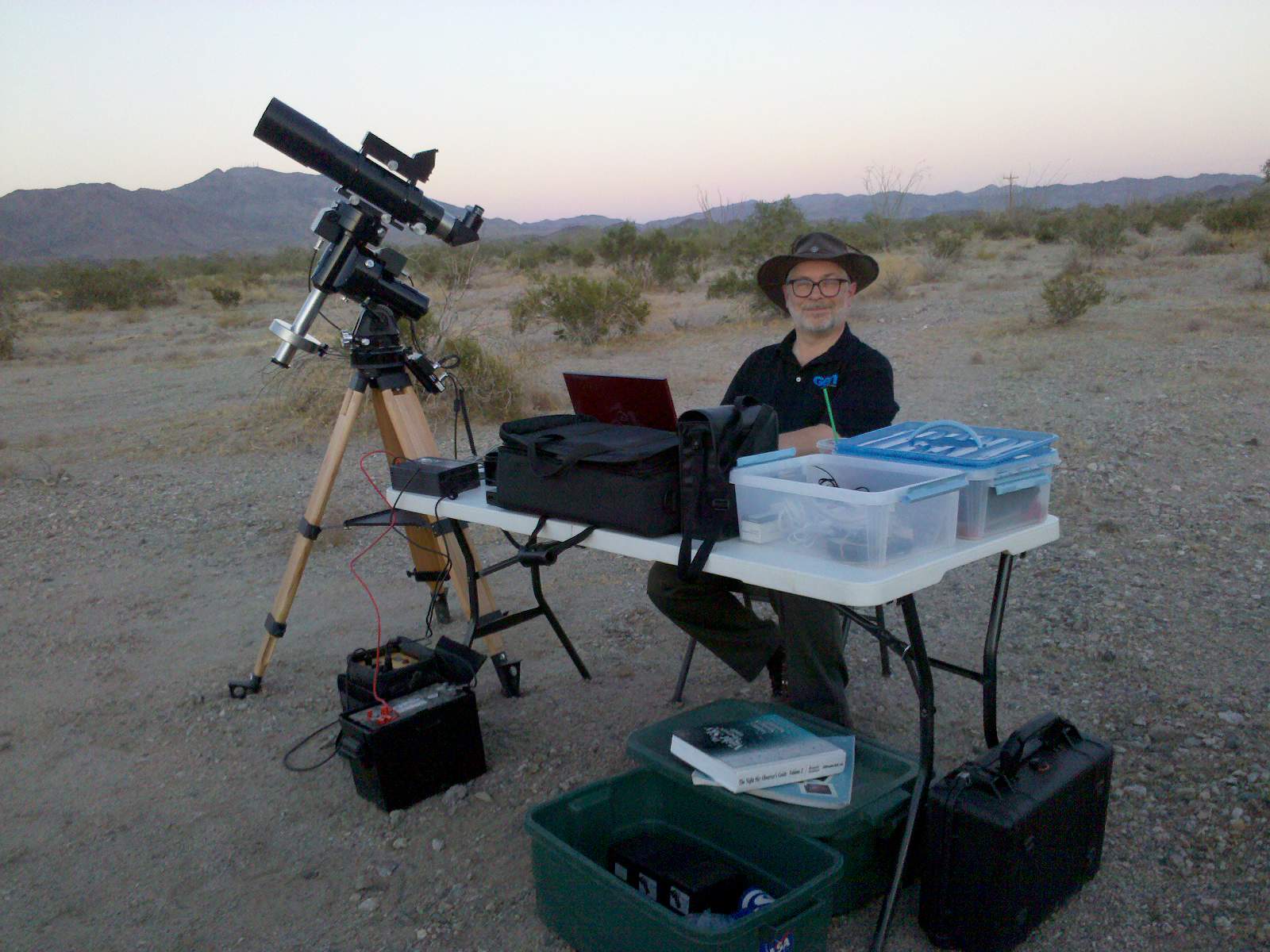
    Mojo in the desert
    Jane snapped this shot of me shortly after sunset, squinting into the bit of wind we had.

    Happy Independence Day!

    This weekend wasn’t our usual dark sky new moon weekend; there would be a third-quarter moon rising just at midnight. With summer sunset at 8:00, and no real dark sky until about 9:00, we were looking at a really short (for us) desert observing session of about three hours. Next week is when all the big June star parties are being held.

    The weather was fair, not too awfully hot, or too awfully windy, just a little of both. The sky was brilliantly clear, and seeing was not particularly good. Sometimes we just say WTF. 🙂
    This was one occasion when I was glad to be living “in the future.” I somehow managed to completely wedge the ASCOM driver that lets my laptop communicate with the telescope mount. That’s the kind of thing that really eats up the clock when the moon is about to chase away your dark sky!

    Right there in the middle of the desert, I was connected to the net by USB tether to my Motorola Droid. (Thank you PDANet!) I posted a plea for help on the Astro-Physics User Group mailing list. The author of the driver responded to my post and helped me set it right within an hour.

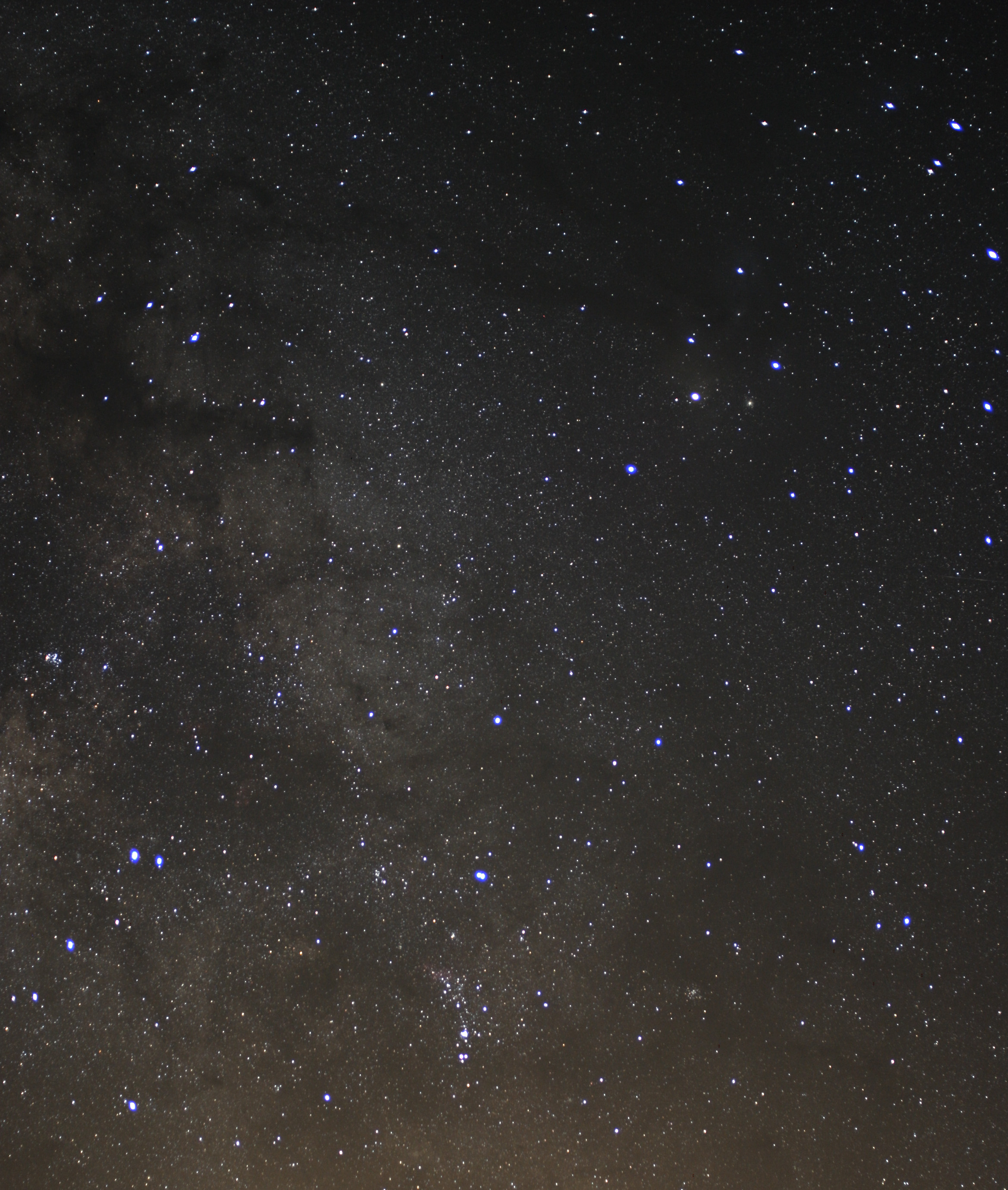
    I had time for maybe two short exposures of a couple of objects, and Jane badly wanted a piggyback shot of Scorpius. That would be my first priority, and I had fun shooting it. I used a fixed-focus 35mm f/2.0 lens on my Canon 20D, and the big constellation just barely fit in the frame. We have a fairly strong light dome to the south from the Inland Empire. I cropped the shot just below the constellation where the light is strongest.

    Scorpius
    The fishhook of Scorpius fills the frame, with lots of Milky Way and dark nebulae throughout. Some light glow to the south.

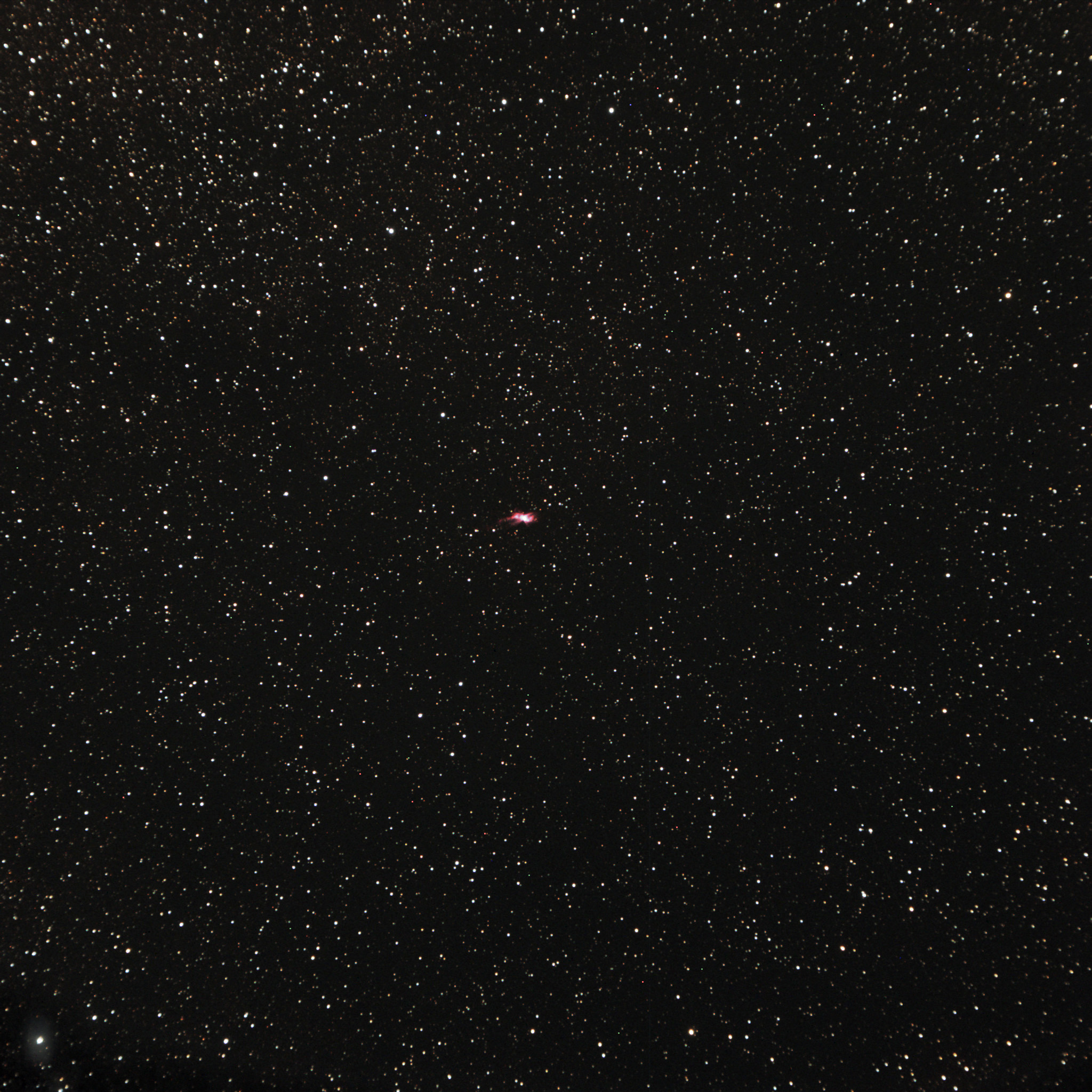
    Jane had the “Bug Nebula” NGC6302 on her observing list, and I tried a shot of it myself. It’s a tiny thing relatively speaking, so there’s not much to see in the full field. There’s one interesting object in the lower left corner which could be another planetary, or possibly an artifact of my own creation. It only shows up well in one of my two sub-exposures.

    NGC6302 region
    That little red blob in the middle is the "Bug Nebula." There might be another planetary in the lower left corner, that or an imaging artifact.

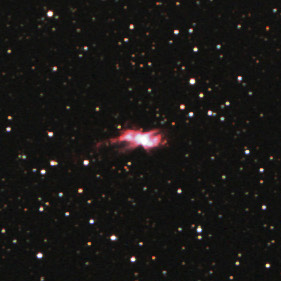
    Here’s a cropped version at full resolution of the bug itself. Jane’s view in her big dob was actually very nice.

    Cropped detail of the Bug Nebula
    Not very impressive, but it somewhat resembles the visual view we had through Jane's big dob, minus the red color

    With only a little time left before moonrise, I wanted to see what I could get of the nebula around Rho Ophiuchus. It’s only one ten-minute exposure, and you’ll find lots of impressive images of this region out there on the net. I’m still tickled with what I was able to capture.

    Rho Ophiuchus nebula
    One ten-minute exposure of the Rho Ophiuchus region

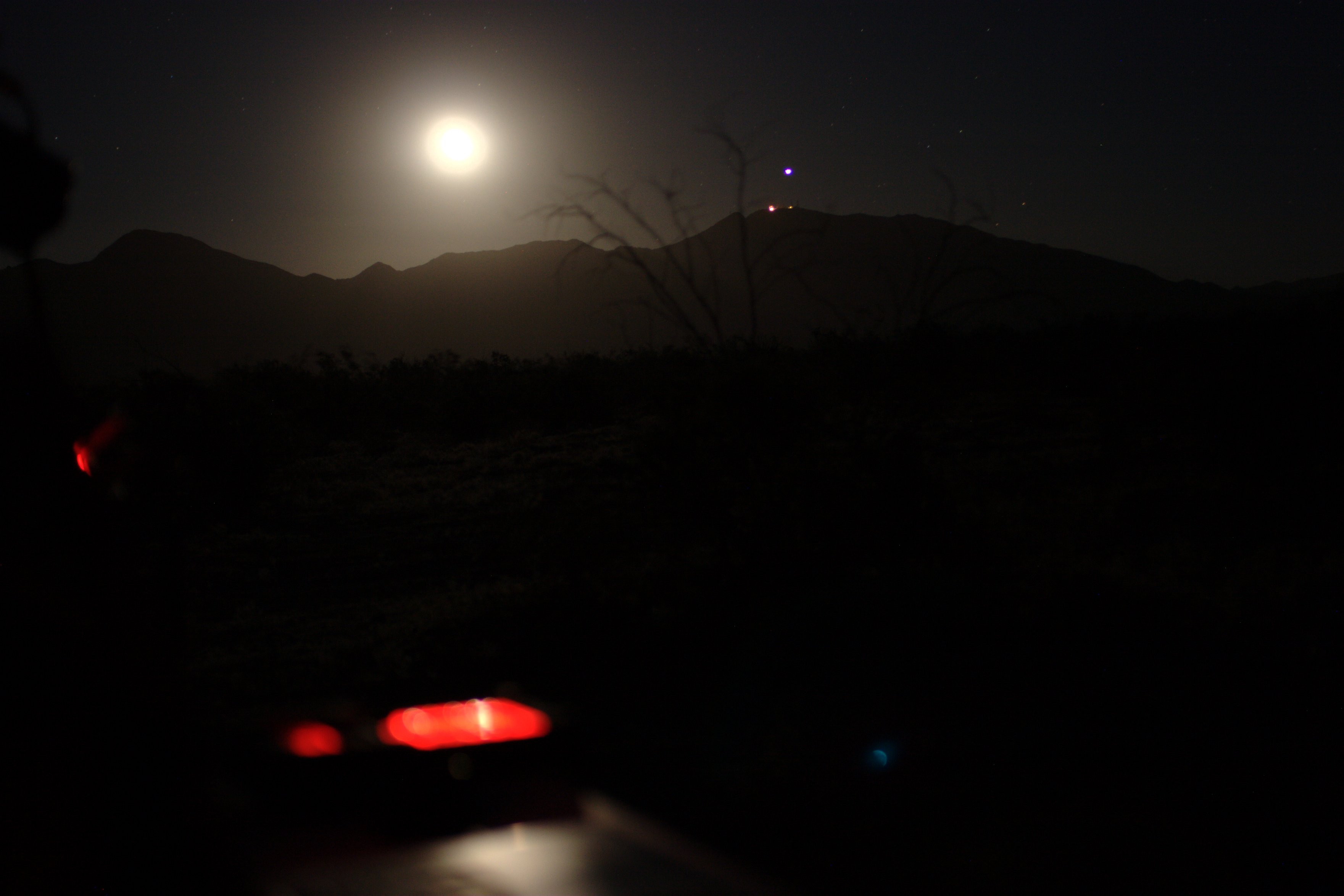
    Finally the moon put an end to the dark sky observing, but moonrise itself was quite an event. The moon was joined quickly by Jupiter to the south. Jane has a great afocal shot taken through the eyepiece of her Televue Ranger. You’ll have to see that one on her observing report!

    Moonrise over Chuckwalla Mountain
    Moonrise with Jupiter over Chuckwalla Mountain. There's a light from the microwave station on Chuckwalla Mountain just below Jupiter to the right of the moon.